Arch Network (ARCH) Airdrop Guide: How to Farm Points in the Archstronaut Program
 Jul, 19 2026
Imagine unlocking access to one of the most innovative layers of the Bitcoin ecosystem before the token even hits the market. That is exactly what the Arch Network a modular privacy infrastructure designed to enable asset-agnostic privacy across multiple blockchains is offering right now. If you have been looking for high-potential opportunities in Bitcoin DeFi, the Archstronaut Program is where you need to be. This isn't just another generic claim-and-wait scheme; it is an active engagement system that rewards real participation on the testnet.
Launched in June 2025, Arch Network has already attracted over 250,000 participants. The project aims to bring smart contracts to Bitcoin without using risky bridges, relying instead on advanced cryptography like FROST + ROAST multisigs. For early adopters, this means a chance to accumulate XP (experience points) that will likely translate into significant token allocations when the mainnet goes live. Let’s break down exactly how to maximize your position in this program.
What Is Arch Network and Why Does It Matter?
To understand the value of the airdrop, you first need to grasp what Arch Network actually does. Most Layer 2 solutions for Bitcoin rely on bridges-complex mechanisms that lock your BTC on one chain and mint a wrapped version on another. Bridges are notorious security risks, having lost billions in hacks over the years. Arch takes a different path.
It uses zero-knowledge proofs and a decentralized verifier network to allow programmability directly on Bitcoin's base layer or its immediate extensions. Think of it as giving Bitcoin the ability to run complex decentralized applications (dApps), lending protocols, and exchanges without compromising the security of the original UTXO model. The network supports both UTXO and account-based models, making it versatile for everything from gaming to social finance projects.
The technical foundation is robust. By requiring only 51% of validators to approve transactions, the system minimizes failure rates while maintaining decentralization. This approach taps into Bitcoin’s full liquidity and trustlessness, solving a major pain point in the current DeFi landscape. When the token launches, it will power a Proof-of-Stake consensus mechanism, incentivizing validators and potentially funding a DAO. Early participants in the Archstronaut Program are positioned to benefit from this transition.
Understanding the Archstronaut Program Structure
The airdrop distribution is managed through the Archstronaut Program, which operates on a points-based ranking system. You earn XP for various activities, and these points determine your tier and potential reward multiplier. The program is divided into distinct phases, each with specific goals:
- Phase I: Off-Chain Engagement - Focuses on community building via Twitter/X and Discord. Tasks include following accounts, joining channels, and sharing referral links.
- Phase II: Testnet Participation - Requires connecting a wallet and performing on-chain actions like swaps and liquidity provision on the testnet.
- Phase III: Mainnet Activities - Will involve similar tasks but on the live network after launch.
- Phase IV: Post-Launch - Extended rewards for continued usage and governance participation.
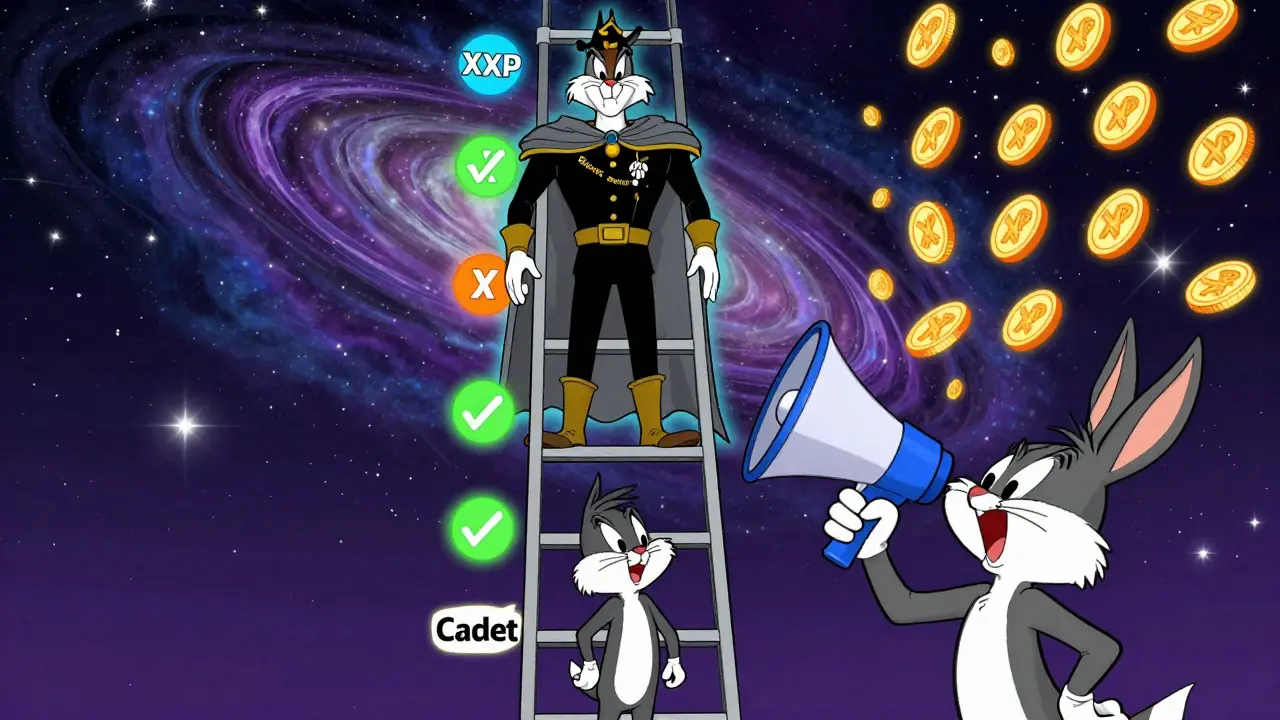
Your rank progresses from "Cadet" to "Galactic Overlord." Higher ranks unlock multipliers, meaning your XP earns faster. Referrals play a huge role here: you get 500 XP for each referral plus 10% of their total XP earnings. This creates a compounding effect if you build a strong network of active users.

Step-by-Step Guide to Maximizing Your XP
If you want to secure a substantial share of the airdrop, passive observation won’t cut it. You need to actively farm XP through daily and weekly missions. Here is the practical workflow to get started and stay ahead.
1. Set Up Your Wallet
You cannot participate without the right tools. Arch Network requires a Bitcoin-compatible wallet. Specifically, you need to connect a Unisat wallet, which is a popular browser extension wallet for Bitcoin Ordinals and Runes. Download Unisat, create a new wallet, and securely back up your seed phrase. Once installed, visit the official Arch Network dashboard and connect your wallet. This step is mandatory for tracking your progress.
2. Fund Your Testnet Wallet
Since we are currently in Phase II (Testnet), you need testnet tokens. Real money isn’t at risk here, but you do need TBTC (testnet Bitcoin) and USDC. Go to the Arch faucet or a supported testnet faucet to claim free USDC. Then, use the Uniset platform (the DEX integrated into Arch) to swap some USDC for TBTC. Keep a small amount of USDC for gas fees and transaction costs.
3. Complete Daily Missions
Log in to the dashboard every day. The daily missions typically involve:
- Swapping tokens on Uniset (e.g., TBTC to USDC).
- Providing liquidity to a trading pair.
- Completing a set number of transactions.
Consistency is key. Missing days can drop your rank, so set a reminder. These tasks are simple but require manual interaction. Automating them might violate terms of service, so stick to organic participation.
4. Leverage Referrals
Share your unique referral link on social media or within relevant crypto communities. Remember, you earn 10% of your referrals' XP. If you refer someone who becomes a "Galactic Overlord," your passive XP income will be significant. Make sure your referrals also complete daily tasks to keep those points flowing.
Key Metrics and Comparison
How does Arch Network stack up against other recent Bitcoin Layer 2 airdrops? Let’s look at the data.
| Feature | Arch Network (ARCH) | Typical Bridge-Based L2 |
|---|---|---|
| Tech Approach | Bridgeless, ZK Proofs | Wrapped Assets via Bridges |
| Security Model | FROST + ROAST Multisig | Custodial/Multi-sig Bridges |
| Funding Raised | $7M - $25M (Private) | Often $50M+ |
| Airdrop Mechanism | XP-based Ranking System | Snapshot or Volume-based |
| Current Phase | Testnet (Active) | Mainnet Live |
Note that Arch’s funding is relatively modest compared to giants like Stacks or Rootstock. Some analysts suggest this could mean a smaller total airdrop pool. However, the lower competition and higher barrier to entry (technical setup) might result in better individual payouts for active farmers. Also, keep in mind that as of mid-2026, Arch has not undergone a full public security audit, which is a risk factor to monitor.
Risks and Considerations
No airdrop is free money. There are always risks involved. First, there is no guarantee of the final token allocation size. The team has hinted at rewards, but nothing is legally binding until the token generation event (TGE). Second, interacting with testnets and new wallets exposes you to potential phishing sites. Always double-check URLs. Only use the official Arch Network dashboard and verified partners like Unisat.
Third, time investment matters. If you stop participating for weeks, your rank may decay, reducing your multiplier. Finally, consider the opportunity cost. Are there other high-value airdrops you should be focusing on? Diversify your efforts, but don’t spread yourself too thin. Arch’s unique bridgeless tech makes it a standout candidate, but it shouldn’t be your only bet.
Future Outlook: What Comes After Mainnet?
Once Arch Network launches on mainnet, the game changes. Phase III will require real capital to provide liquidity and trade. This is where serious investors will step in. For airdrop farmers, the goal is to enter the mainnet phase with the highest possible rank. This ensures that when you start staking or providing liquidity with real funds, your historical XP boosts your initial rewards.
The long-term vision includes a DAO governing the network. Token holders will vote on parameters like validator fees and protocol upgrades. Early participants often receive governance weight bonuses, giving them a say in the network’s direction. With Bitcoin DeFi growing rapidly, Arch’s ability to offer secure, private, and programmable solutions positions it well for adoption. The question isn’t just whether the airdrop will pay off, but whether ARCH becomes a core utility token in the Bitcoin ecosystem.
Is the Arch Network airdrop confirmed?
While the team has not issued a formal legal confirmation of a specific token amount, the Archstronaut Program is explicitly structured around XP accumulation for future rewards. Industry standards and previous announcements strongly indicate that active testnet participants will receive tokens upon mainnet launch.
Do I need to spend real money to participate?
No. During the current testnet phase (Phase II), you only need testnet tokens (TBTC and USDC) which are free from faucets. You do not need to deposit real Bitcoin or Ethereum. Real capital is only required if you choose to participate in Phase III on the mainnet.
Which wallet do I need for Arch Network?
You need a Bitcoin-compatible wallet that supports Ordinals and Runes. The recommended and most widely used wallet for Arch Network is Unisat. Connect this wallet to the Arch dashboard to track your XP and complete missions.
How much XP do I get for referrals?
You earn 500 XP immediately for each successful referral. Additionally, you receive 10% of the total XP earned by your referred users. This means referring active users who complete daily missions significantly boosts your own score passively.
Is Arch Network safe to use?
The technology uses advanced cryptographic methods like ZK proofs and FROST multisigs to avoid bridge risks. However, as a new project launching in 2025/2026, it has not yet undergone a comprehensive public security audit. Always use a dedicated wallet with minimal funds for testnet interactions and verify all links to avoid phishing.