Bytedex Crypto Exchange Review: What You Need to Know Before Trading
 Feb, 26 2026
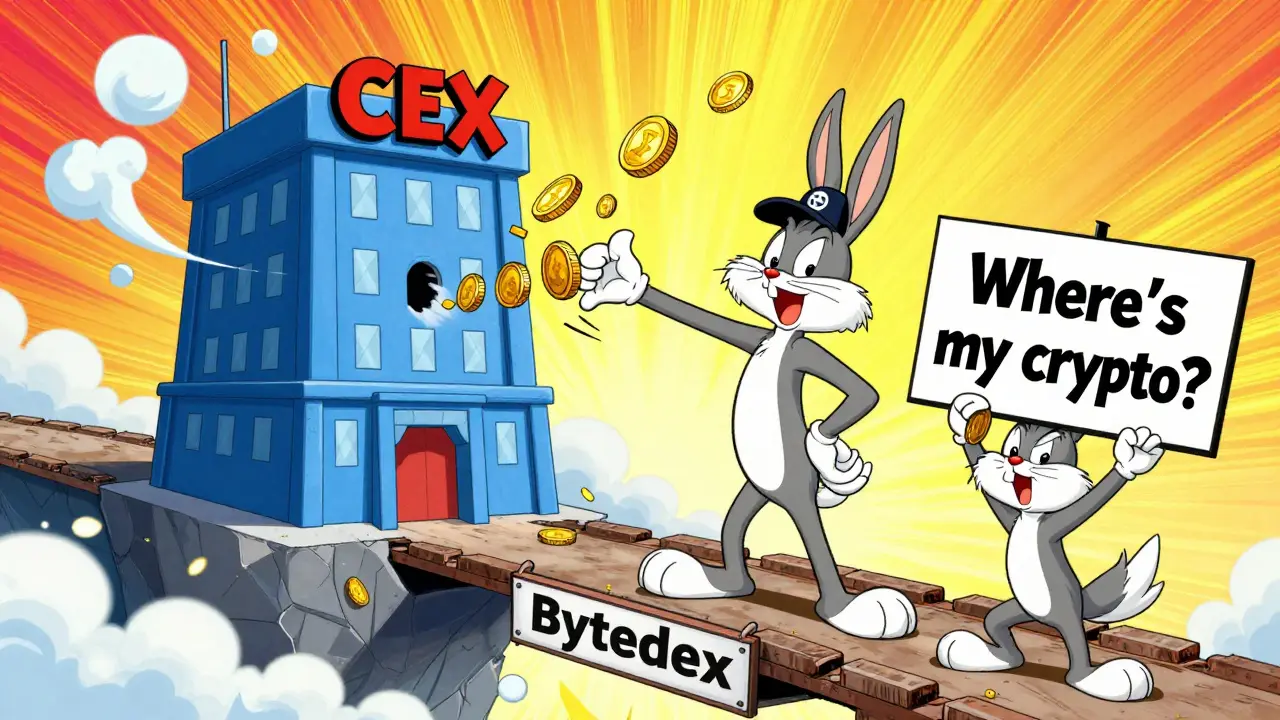
When you hear "crypto exchange," you probably think of Binance, Coinbase, or Kraken. But what if there’s a platform trying to blend the best of both worlds - the speed of centralized trading and the security of decentralized control? That’s the promise of Bytedex is a hybrid cryptocurrency exchange that combines centralized liquidity with decentralized asset control, built on its own blockchain and powered by its native BEXT token. Also known as ByteDx, it’s not another clone of an existing exchange - it’s an attempt to redefine how users interact with digital assets.
But here’s the catch: Bytedex doesn’t have the user base, reviews, or transparency of the big players. If you’re thinking about using it, you need to know what’s real and what’s still just a claim on a website.
How Bytedex Works: CEX Meets DEX
Most crypto exchanges are either centralized (CEX) or decentralized (DEX). Centralized ones like Binance hold your keys, move your funds, and process trades fast - but you’re trusting them with your assets. Decentralized ones like Uniswap let you keep control, but trades are slow, gas fees spike, and the interface can be confusing.
Bytedex says it’s doing both. It uses its own blockchain to run a hybrid system. When you deposit crypto, it goes into a secure wallet under your control. But when you trade, it routes orders through a centralized matching engine for speed. The idea? You get instant trades without giving up custody.
This isn’t entirely new - other platforms have tried it - but Bytedex claims its custom blockchain cuts transaction times significantly. It supports smart contracts, which means you can interact with DeFi protocols directly from the platform. That’s useful if you’re doing yield farming or staking, but again, there’s no public audit or technical breakdown to confirm how it actually works under the hood.
The BEXT Token: Fuel for the Platform
Every platform needs its own coin, and Bytedex has BEXT is the native utility token of the Bytedex exchange, with a fixed maximum supply of 311.95 million tokens. Also known as Bytedex Token, it’s used for paying trading fees, participating in governance, and accessing premium features.
As of February 2026, BEXT trades at around $0.01623 USD, according to Crypto.com. That’s low - but not unusual for a new token. The problem? Other major trackers like Coinbase and Bitget don’t list a price. Coinbase shows £NaN. Bitget says "data unavailable." That’s a red flag. If a token can’t be tracked reliably across major platforms, it’s hard to trust its market legitimacy.
There’s no clear use case beyond fee discounts. No staking rewards. No token burns. No liquidity pools on public DEXs. Without real demand from users or developers building on top of it, BEXT feels more like a placeholder than a functional asset.
The Mobile App: Real, But Limited
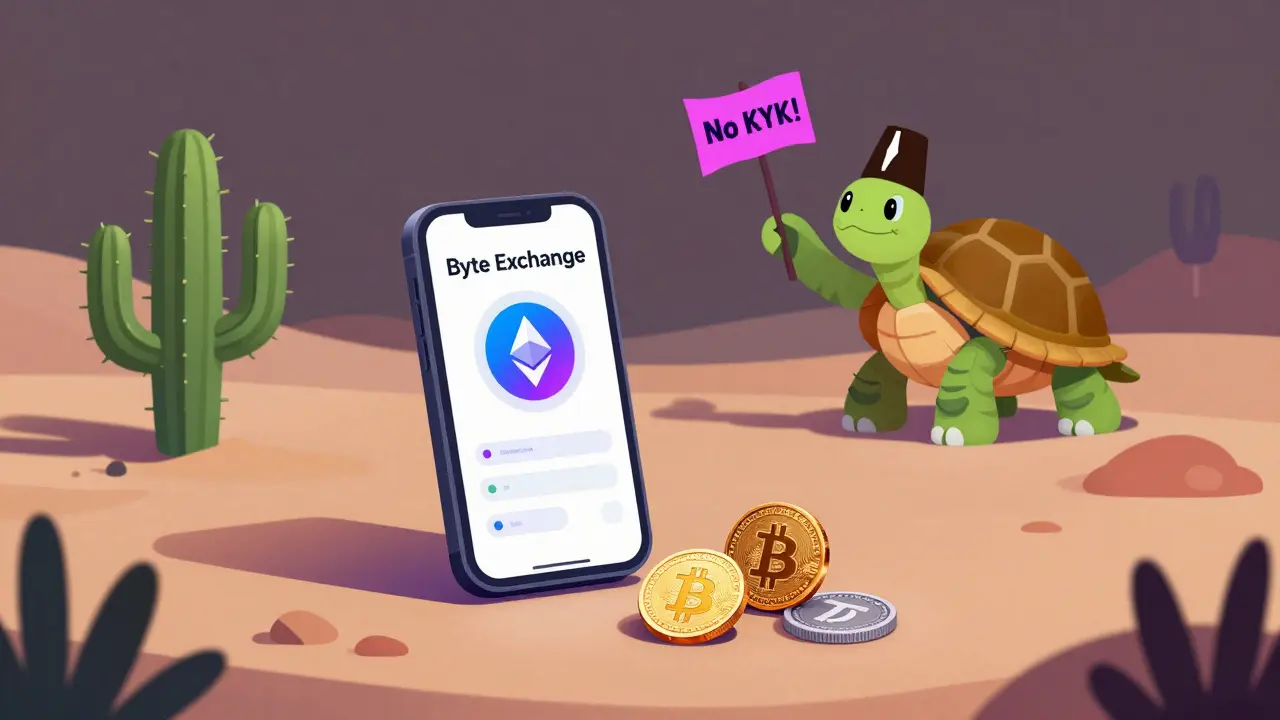
Here’s one thing you can verify: there’s an app. Called Byte Exchange, it’s on the Google Play Store, developed by Bytedx Teknoloji A.Ş. is a Turkish technology company behind the Byte Exchange mobile application, which allows trading of BTC, ETH, and USDT. The app has over 1,000 downloads. That’s not much compared to Binance’s 100 million+, but it’s real.
The app supports Bitcoin, Ethereum, and Tether. It has a clean interface. You can buy, sell, and check live prices. It’s rated for all ages - meaning no KYC is required. That’s unusual. Most exchanges, even small ones, ask for ID verification. If Bytedex doesn’t require it, that raises compliance questions.
But here’s what’s missing: no iOS version. No web platform. No support for altcoins like Solana, Cardano, or Polygon. No fiat on-ramps. No withdrawal options beyond crypto. If you’re serious about trading, this app is a toy. Not a tool.
No Reviews. No Expert Analysis. No Trust Signals
This is the biggest problem with Bytedex: there’s zero public feedback.
No Reddit threads. No Twitter discussions. No YouTube reviews. No articles from CoinDesk, Cointelegraph, or Decrypt. No security audits from CertiK or Hacken. No mention in crypto podcasts or newsletters.
Compare that to even a lesser-known exchange like KuCoin. It has thousands of user reviews, YouTube tutorials, and Reddit threads debating its fees and uptime. Bytedex? Nothing.
When a platform has no community, it’s not because it’s too new. It’s because no one’s talking about it. And if no one’s talking about it, why should you risk your money on it?
Security: Claims Without Proof
The website says it uses "top-tier encryption" and "cryptographic security." It mentions "secure wallet functionality." But that’s marketing speak. Every exchange says that.
What’s missing?
- Proof of cold storage usage
- Insurance coverage for user funds
- History of security incidents
- Third-party audit reports
Without these, you’re trusting invisible systems. And in crypto, that’s a dangerous gamble. There’s no record of hacks - but there’s also no record of transparency.
Regulatory Gray Zone
Bytedex is operated by a Turkish company. Turkey has strict crypto rules - exchanges must register with the Capital Markets Board. But there’s no public record showing Bytedex is licensed there. Nor is there evidence it’s registered in the EU, US, UK, or Australia.
That means if something goes wrong - your funds get frozen, the app shuts down, or your wallet gets hacked - you have zero legal recourse. No regulator to complain to. No consumer protection law to fall back on.
And since the app doesn’t require KYC, it’s likely operating outside financial regulations entirely. That might sound appealing for privacy, but it’s a huge risk.
Who Is Bytedex Really For?
If you’re a beginner looking to dip your toes into crypto, Bytedex is a bad choice. The lack of educational resources, customer support, and clear fees makes it confusing.
If you’re an experienced trader, you won’t find the tools you need - no charting, no limit orders, no margin trading. The app doesn’t even support most altcoins.
Who’s left? Maybe someone in Turkey who wants to trade BTC or ETH without KYC. Or someone curious about hybrid exchanges who’s willing to experiment with a low-volume, low-visibility platform.
But even then, you’re gambling. Not investing.
The Bottom Line
Bytedex has a clever idea: blending centralized speed with decentralized control. But ideas don’t pay bills. Execution does.
Right now, Bytedex is a prototype with a mobile app, a token with no real demand, and zero credibility in the crypto world. It’s not a scam - there’s no evidence of theft or fraud. But it’s also not a reliable exchange.
If you’re looking to trade crypto safely, stick with platforms that have years of history, public audits, regulated operations, and millions of users. Bytedex doesn’t meet any of those standards.
Until it does - don’t deposit. Don’t trade. Don’t buy BEXT. Wait for proof. Not promises.
Colin Lethem
February 26, 2026 AT 07:52lori sims
February 28, 2026 AT 05:14Reggie Fifty
March 1, 2026 AT 15:20Kristi Emens
March 3, 2026 AT 05:53Deborah Robinson
March 4, 2026 AT 22:46Michelle Mitchell
March 5, 2026 AT 09:12Kaitlyn Clark
March 6, 2026 AT 18:53christopher luke
March 7, 2026 AT 14:29Mary Scott
March 8, 2026 AT 12:59Andrew Hadder
March 9, 2026 AT 23:46Derek Sasser
March 11, 2026 AT 18:36Neeti Sharma
March 12, 2026 AT 11:21Nadia Shalaby
March 13, 2026 AT 18:45