NFTP Airdrop by NFT TOKEN PILOT: What We Know and What to Watch For
 Mar, 14 2026
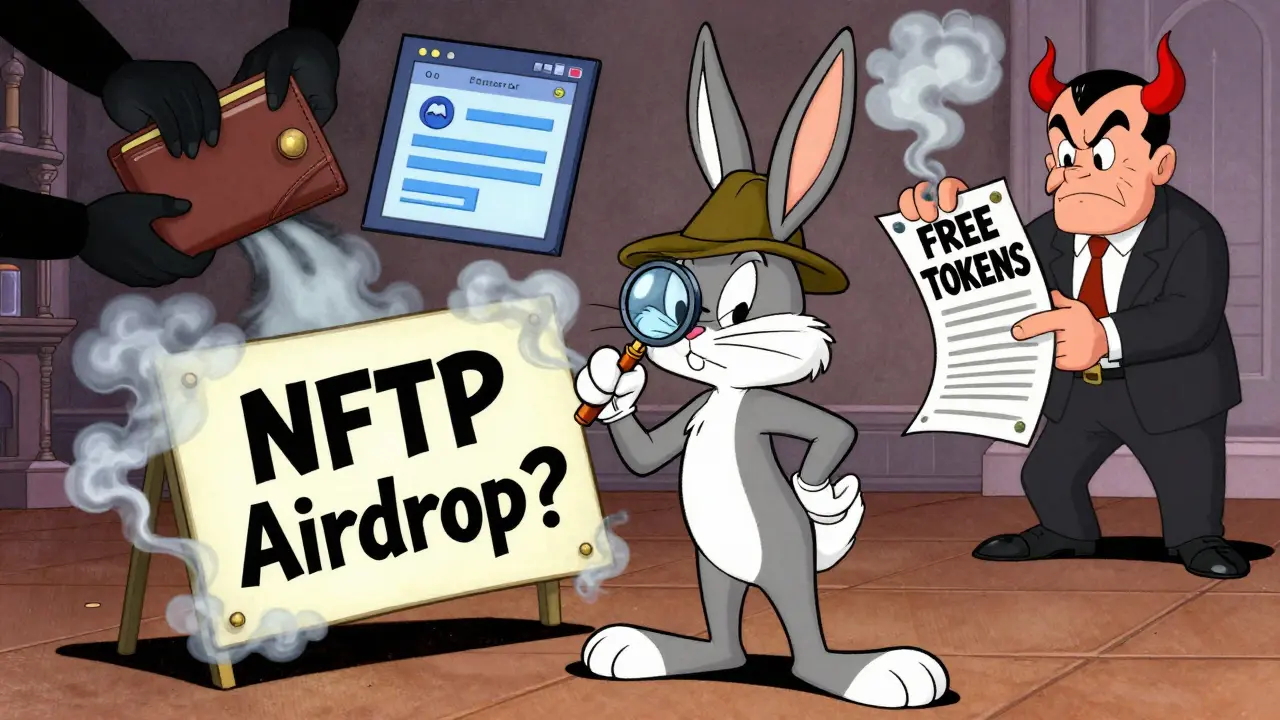
There’s no official confirmation, no whitepaper, and no verified roadmap. Yet, whispers about the NFTP airdrop by NFT TOKEN PILOT are spreading across Twitter, Discord, and Telegram. People are claiming they’ve already claimed tokens. Others say it’s a scam. So what’s real? And what should you do if you’ve heard about this?
Let’s cut through the noise. Right now, there’s zero public data from NFT TOKEN PILOT about NFTP. No website. No GitHub. No social media accounts with blue checks. No announcements on CoinMarketCap or CoinGecko. If this project exists, it’s operating in complete secrecy - or it’s not real at all.
What Is NFTP Supposed to Be?
Based on scattered claims online, NFTP stands for NFT TOKEN PILOT. Some say it’s a new token meant to reward early participants in NFT communities. Others claim it’s tied to a future NFT marketplace or a tool for tracking NFT ownership across chains. But none of that is verified.
There’s no record of NFT TOKEN PILOT launching any product before. No past airdrops. No public team members. No press coverage. Not even a LinkedIn profile for the supposed founders. That’s unusual. Even shady projects usually leave a trail - a Discord server, a Medium post, a Twitter thread. NFTP has none of that.
How Would an NFTP Airdrop Work? (If It’s Real)
Assuming NFTP is legitimate (and that’s a big assumption), here’s what a real airdrop would need to include:
- Eligibility rules - Which wallets held which NFTs? Which platforms did you interact with?
- Tokenomics - How many tokens total? What’s the vesting schedule? Is there a lock-up?
- Smart contract audit - Was the contract reviewed by a third party? Is it on Etherscan or PolygonScan?
- Claim process - Do you need to sign a transaction? Connect a wallet? Submit a form?
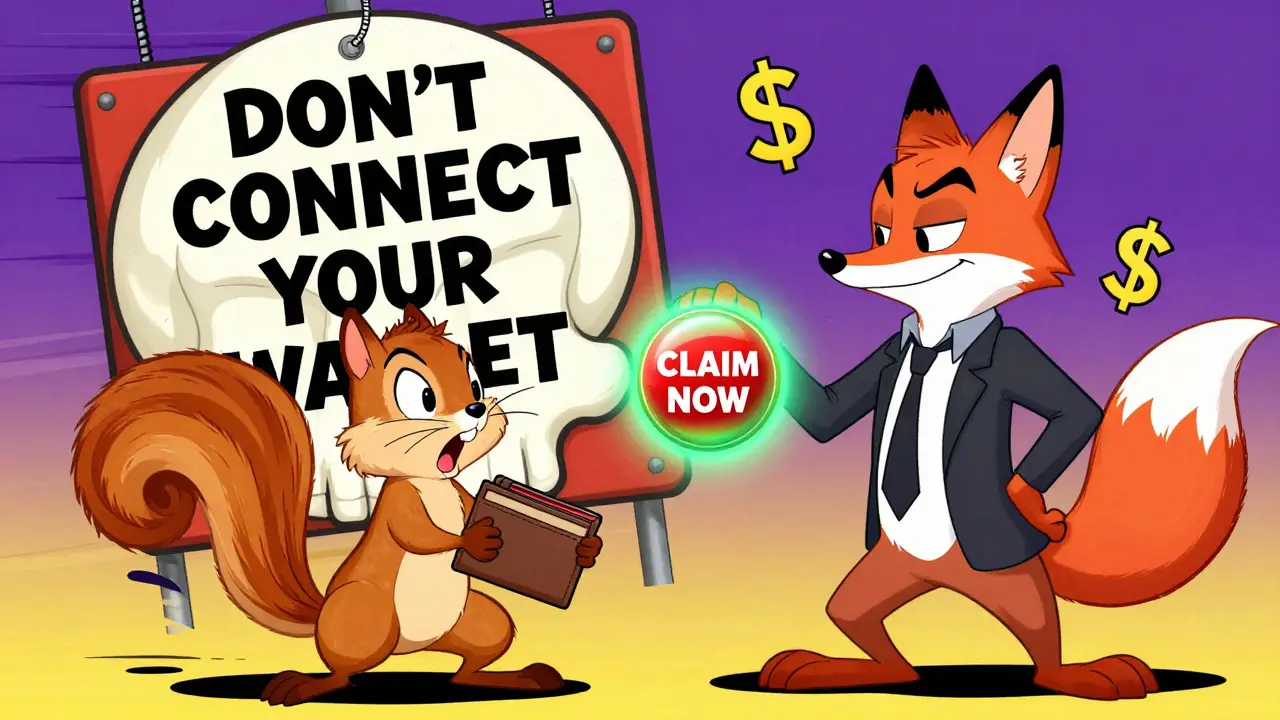
None of these details exist publicly for NFTP. If you’re being asked to send ETH to claim your tokens, or to connect your wallet to an unknown site, you’re being targeted.
Red Flags Everywhere
Here’s what you should never do - and what you’re likely being asked to do right now:
- Don’t sign any transaction asking for unlimited token approval.
- Don’t enter your seed phrase into a website - ever.
- Don’t trust DMs from strangers saying you’ve been selected.
- Don’t join a Telegram group that demands you invite 5 friends to "unlock" your airdrop.
These are classic phishing tactics. In 2024, over 12,000 crypto users lost money to fake airdrop scams, according to Chainalysis. Most of them were lured by promises of free NFTP tokens.
Who Is NFT TOKEN PILOT?
No one knows. A quick search turns up zero registered companies under that name in the U.S., EU, or New Zealand. No trademark filings. No domain ownership records. Even the name "NFT TOKEN PILOT" sounds like a placeholder - not a brand.
Compare this to real projects. Look at the CryptoPunks airdrop in 2022. They had a live website, a documented distribution plan, a team with LinkedIn profiles, and a community that had been active for five years. They didn’t just drop a token out of nowhere.
What Should You Do?
If you’re curious about NFTP, here’s your checklist:
- Search for "NFT TOKEN PILOT official website" - if it’s real, it will have a .eth or .io domain with clear documentation.
- Check Etherscan or PolygonScan for any contract labeled "NFTP" - if it exists, verify its creation date and transaction history.
- Look for verified social media accounts - Twitter, Discord, Telegram - with green checkmarks and consistent posting.
- Search Reddit and Twitter for user reports. If hundreds say "I lost money," trust them.
- Wait. If this is real, it will be covered by CoinDesk, Decrypt, or The Block. If it’s not, it’s a scam.
There’s no rush. Airdrops that are real don’t disappear if you wait a week. Scams do.
Why This Keeps Happening
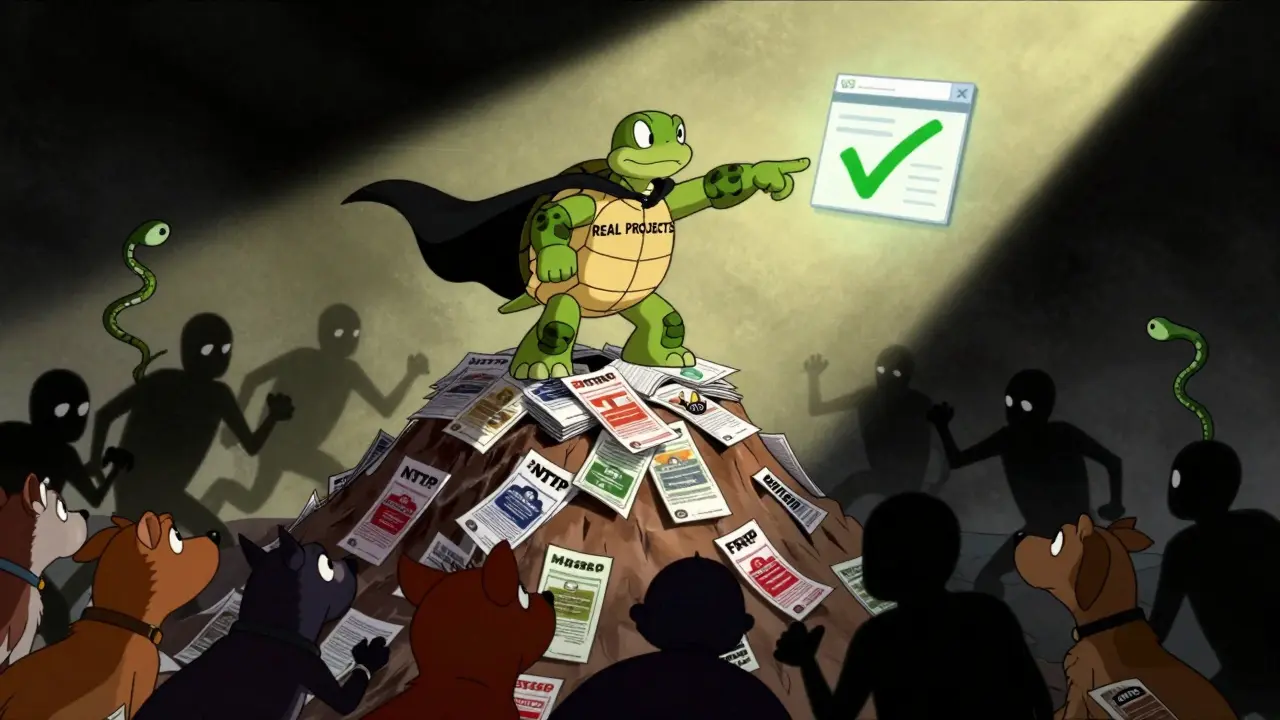
Scammers know what you want: free money. They copy names from real projects, tweak them slightly, and flood crypto spaces with fake links. "NFTP" sounds like "NFT" and "Pilot" - two words people trust. It’s designed to look legitimate.
This isn’t new. In 2021, there was a fake "SOL Airdrop" that stole over $8 million. In 2023, a fake "MATIC airdrop" tricked users into approving malicious contracts. Both used the same playbook: urgency, secrecy, and fake legitimacy.
The only difference now is how many people are falling for it. Crypto’s user base is growing. Newcomers don’t know the signs. And scammers are getting better at mimicking real project layouts.
What’s the Real Risk?
It’s not just losing a few dollars. If you connect your wallet to a fake NFTP site, they can drain every asset in it - ETH, stablecoins, NFTs, even tokens from DeFi protocols you’ve staked. Once they have access, they can transfer everything in minutes.
And once that happens, there’s no way to get it back. Blockchain is irreversible. There’s no customer support. No refund policy. No bank to call.
Final Word: Don’t Chase Ghosts
If NFTP was a real project, it wouldn’t be hiding. It would have a website, a team, and a community. It would be talking to users, not whispering through bots.
Right now, every signal says this is a scam. The lack of information isn’t mysterious - it’s a warning.
Don’t click. Don’t connect. Don’t send. Wait. And if nothing appears in the next 30 days, assume it was never real.
There will always be another airdrop. There will always be another project. But your wallet - and your security - only last once.
Angelica Stovall
March 16, 2026 AT 03:30And don’t even get me started on those Telegram groups. ‘Invite 5 friends to claim’? That’s not airdrop-that’s a pyramid scheme with a blockchain veneer. They’re harvesting seed phrases like candy.
Real projects don’t whisper. They shout. This? This is the sound of a ghost town with a fake logo.
Bryan Roth
March 16, 2026 AT 23:07If you’re new, don’t panic. Don’t chase. Just wait. If it’s real, it’ll still be here next week. If it’s fake? You dodged a bullet. That’s a win.
And seriously-never trust a DM saying you’ve been ‘selected.’ That’s not luck. That’s a trap.
sai nikhil
March 17, 2026 AT 03:52Always verify. Always double-check. Always assume it’s fake until proven real. That’s the only safe way.
Sahithi Reddy
March 18, 2026 AT 14:24George Hutchings
March 19, 2026 AT 19:26My advice? Don’t click. Don’t react. Don’t even scroll past it too hard. Let it die. There’s always another airdrop. Always.
Henrique Lyma
March 21, 2026 AT 03:17And the real tragedy? The legitimate projects are drowning in this noise. People won’t trust real innovation because they got burned by this kind of trash. It’s a self-inflicted wound on the entire ecosystem. We’re not just losing wallets-we’re losing credibility.
Steph Andrews
March 22, 2026 AT 07:24But also dont connect your wallet to random sites because that part is just dangerous
Prakash Patel
March 22, 2026 AT 12:49Just saying. Not everyone needs to shout to be legit.
Elizabeth Kurtz
March 22, 2026 AT 19:34This? It’s not stealth. It’s silence. And silence in crypto is the loudest red flag you’ll ever hear.
john peter
March 24, 2026 AT 09:58It is not merely a scam. It is an epistemological void.
shreya gupta
March 25, 2026 AT 10:45My grandma knows better than this. And she still uses AOL.
Derek Lynch
March 25, 2026 AT 21:33This isn’t about being rich-it’s about being smart. And you can be both. Just don’t rush. Do your homework. Then act.
Sarah Zakareckis
March 26, 2026 AT 19:52Real airdrops have token distribution models that are mathematically sound and publicly verifiable. This? It’s just a .eth domain and a Discord invite. That’s not innovation. That’s a phishing page with a fancy name.
Heather James
March 28, 2026 AT 05:59If it’s real, it’ll show up on CoinGecko. If it’s fake? You’ll be the one cleaning up your drained wallet. Just say no.
Sarah Hammon
March 30, 2026 AT 06:00iam jacob
March 31, 2026 AT 23:27Please. If you’re reading this. Don’t be like me.
Jesse Pals
April 2, 2026 AT 03:31And if you’re curious? Just drop a comment. I’ll help you check it. No scam, no pressure. Just real talk.
Diane Overwise
April 2, 2026 AT 07:02I’d rather wait for the real thing. Or just buy a coffee. Less risky. Tastes better.
Ann Liu
April 3, 2026 AT 14:36Dionne van Diepenbeek
April 4, 2026 AT 05:54Graham Smith
April 4, 2026 AT 12:46Jerry Panson
April 6, 2026 AT 02:16Katrina Smith
April 6, 2026 AT 21:10