Phala Network (PHA) Airdrop Guide: How to Claim and What to Expect in 2026
 Jun, 18 2026
Remember when airdrops were just about clicking a button and waiting for free tokens? Those days are mostly gone. Today’s legitimate crypto distributions demand actual work. The Phala Network is a privacy-preserving blockchain protocol that uses Trusted Execution Environments to secure smart contracts. Also known as PHA, it has shifted its focus from simple social media tasks to requiring participants to run actual miner nodes. If you’re looking into the Phala Network airdrop in 2026, you need to know that this isn’t a get-rich-quick scheme. It’s a technical task with modest rewards, but it offers a window into one of the most interesting infrastructure plays in the privacy sector.
What Is the Phala Network Airdrop?
The core mechanism behind the current Phala distribution is straightforward but technically demanding. To qualify for the reward, you must successfully run a Phala miner node. This isn’t just downloading an app; it involves setting up software that interacts with Trusted Computing hardware. Once your node is running and verified, the network distributes exactly 30 PHA tokens to eligible participants.
Let’s put that number in perspective. With PHA trading around $0.10, those 30 tokens are worth roughly $3.09. You might think that’s low compared to some massive airdrops from the past. But consider the barrier to entry. Most high-value airdrops now require holding specific NFTs or bridging thousands of dollars in assets. Phala asks for your time and technical effort instead. Additionally, there are referral bonuses if you can help others set up their nodes, which can slightly boost your total return.
| Feature | Detail |
|---|---|
| Reward Amount | 30 PHA Tokens |
| Estimated Value | ~$3.09 USD (at $0.1029/token) |
| Requirement | Run a Phala Miner Node |
| Verification Method | Screenshot submission of successful node operation |
| Distribution Trigger | Activation of 'Darth Vader' pre-mainnet version |
| Hardware Need | Trusted Computing capable hardware (TEE) |
How to Participate: Step-by-Step Setup
If you decide to go for it, here is what the process looks like. You’ll need a computer with hardware that supports Trusted Execution Environments (TEE). This usually means modern Intel CPUs with SGX support or AMD equivalents. Older laptops might not cut it.
- Download the Mining Software: Head to the official Phala Network channels to get the latest miner client. Avoid third-party links to prevent phishing attacks.
- Install and Configure: Run the installation files. You’ll likely need to use command-line interfaces. If you’re not comfortable with terminal commands, this step alone might be a dealbreaker.
- Start the Node: Execute the specific commands required to start the mining service. The software will begin validating transactions and securing data within the TEE environment.
- Capture Proof: Take a screenshot showing that your node is online and successfully syncing. This visual proof is critical for verification.
- Submit Verification: Upload your screenshot to the designated platform (such as AirdropBob or Airdrops.io, which have confirmed this structure). Wait for approval.
The whole setup takes between 2 to 4 hours if you know what you’re doing. If you’re new to Linux or command-line tools, expect it to take longer. There’s no customer support hotline for this; you’ll rely on community forums and documentation.
The "Darth Vader" Delay and Distribution Timeline
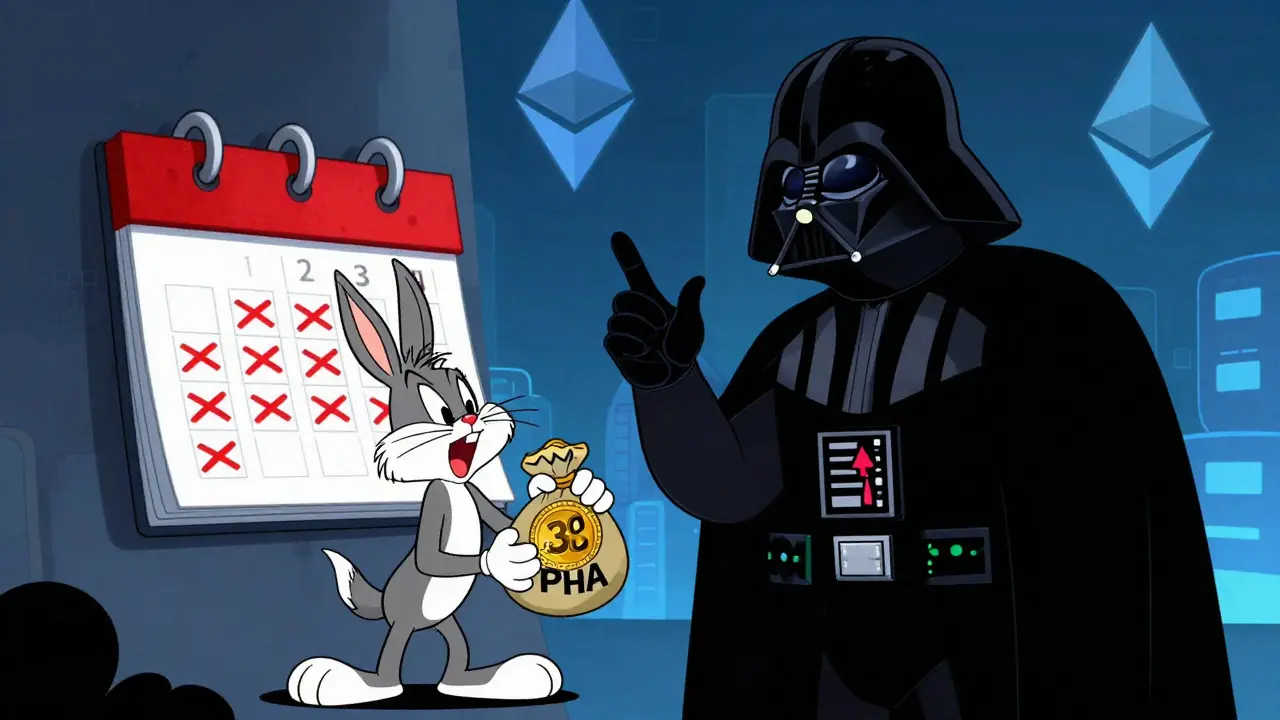
Here’s the catch that frustrates many users: the money doesn’t drop immediately. The distribution of these 30 PHA tokens is tied to the launch of Phala’s pre-mainnet version, codenamed "Darth Vader". As of mid-2026, this launch remains pending without a hard date.
Why the delay? Phala Network is undergoing a massive architectural shift. For years, it operated as a parachain on Polkadot. However, its parachain slot expired on November 20, 2025. Instead of renewing on Polkadot, the team voted to migrate fully to Ethereum Layer 2 infrastructure. They launched a new L2 rollup on Ethereum in January 2025. This transition is complex. It requires rebuilding parts of the network to ensure compatibility with Ethereum while maintaining the privacy features that make Phala unique.
This means your airdrop claim is stuck in limbo until the "Darth Vader" phase is complete. It’s a test of patience. Many similar projects have delayed distributions indefinitely, so keep your expectations realistic. Don’t count on these tokens for rent money next month.
Is Phala Network Worth Your Time?
To answer that, we need to look beyond the $3 airdrop. Phala Network occupies a niche space in the privacy-preserving blockchain sector. Unlike standard blockchains where all transaction data is public, Phala uses Trusted Execution Environments (TEE) to keep data secret even while processing it. This is crucial for enterprise applications that need blockchain transparency but also require data confidentiality.
Comparing Phala to other players helps clarify its position:
- Akash Network (AKT): Focuses on decentralized compute resources. Less focused on privacy, more on raw power.
- Moonbeam (GLMR): An Ethereum-compatible smart contract platform on Polkadot. No native privacy layer like Phala.
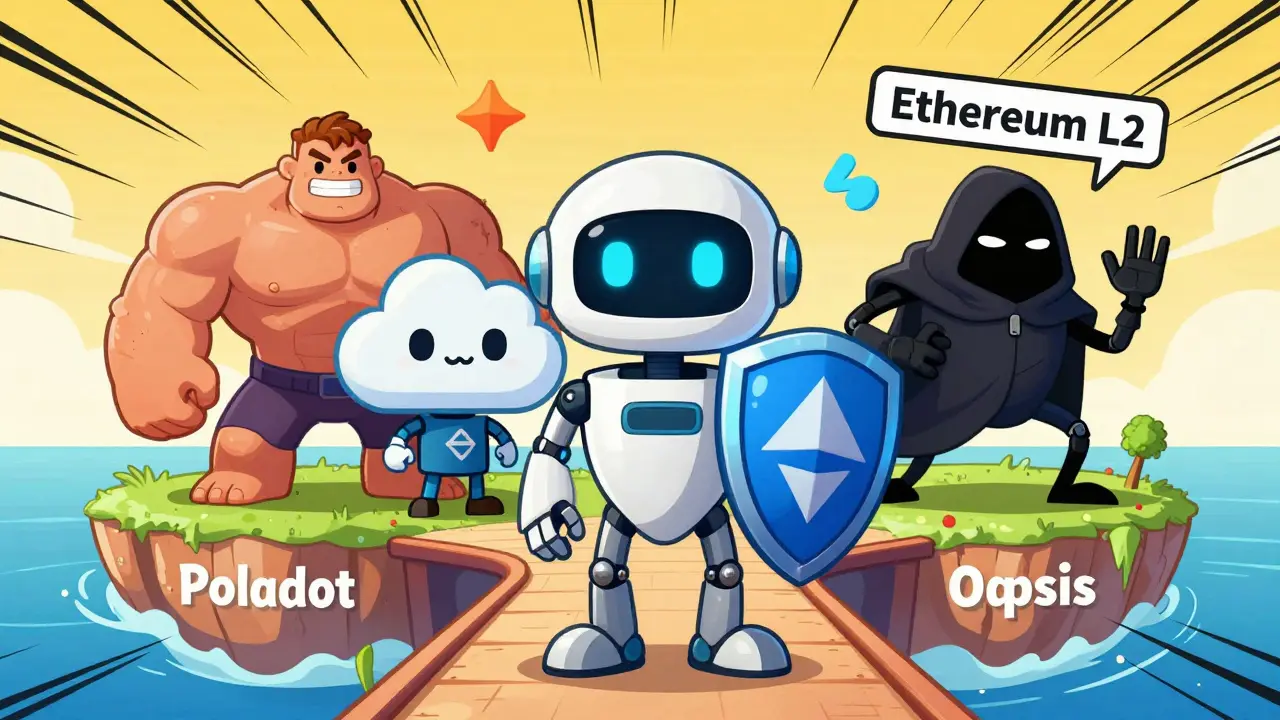
- Oasis Network (ROSE): Direct competitor in the privacy space. Also uses TEE technology but has a different architecture and tokenomics.
- The Graph (GRT): Indexing protocol. Not a direct competitor, but often used alongside privacy networks.
Phala’s move to Ethereum Layer 2 is a strategic gamble. Ethereum has the largest developer ecosystem. By joining it, Phala hopes to attract developers who want privacy features without leaving the Ethereum world. If successful, the utility of the PHA token could increase significantly. If the migration fails or adoption stays low, the token may struggle against established competitors.
Market Context and Price Outlook
As of June 2026, PHA trades at approximately $0.1029 with a market cap of nearly $77 million. Daily trading volume exceeds $16 million, which shows decent liquidity. You won’t have trouble selling your 30 tokens once they arrive, but the price impact will be negligible.
Price predictions vary. Some models suggest a slow climb toward $0.11 by 2030, representing about 5% growth. That’s not exciting for investors, but it reflects the conservative nature of infrastructure projects. They don’t moon overnight; they build slowly. The real value isn’t in the short-term price spike but in whether Phala becomes a standard tool for private smart contracts on Ethereum.
Institutional backing is modest. Phala raised $1.43 million across four rounds. Compare that to billions raised by other Layer 1s, and you see a lean, bootstrapped approach. This can be good (less dilution) or bad (limited marketing budget).
Common Pitfalls to Avoid
Before you spend your evening setting up a node, watch out for these issues:
- Hardware Incompatibility: Not all computers support TEE. Check your CPU specs first. If your laptop is older than five years, it likely won’t work.
- Scam Sites: Only use official links. Fake airdrop pages are rampant. Never connect your main wallet to unverified sites.
- Time Sink: If you’re not tech-savvy, the troubleshooting process can eat up hours. Weigh the $3 reward against your hourly wage.
- Tax Implications: In many jurisdictions, airdropped tokens are taxable income upon receipt. Keep records of the fair market value when you receive them.
Final Thoughts on the Phala Opportunity
The Phala Network airdrop is a micro-reward for macro-effort. It’s not designed to make you rich. It’s designed to bootstrap a network of active miners who understand the technology. If you’re a developer or crypto enthusiast who wants to experiment with TEE-based mining and support a privacy-focused project, it’s a low-risk way to get involved. Just don’t expect instant payouts or life-changing sums. The real story here is Phala’s pivot to Ethereum Layer 2. Watch that migration closely. If it succeeds, the PHA token might find a new home in the heart of the Ethereum ecosystem. If it stumbles, the airdrop becomes a curious footnote in crypto history.
When will I receive my Phala airdrop tokens?
There is no fixed date. Distribution depends on the launch of the "Darth Vader" pre-mainnet version. As of mid-2026, this launch is still pending due to Phala's ongoing migration to Ethereum Layer 2 infrastructure.
Do I need special hardware to participate?
Yes. You need a computer with Trusted Execution Environment (TEE) capabilities, typically found in modern Intel CPUs with SGX support or equivalent AMD processors. Standard cloud servers or older laptops may not work.
How much is the 30 PHA airdrop worth?
At current prices of approximately $0.1029 per PHA, 30 tokens are worth about $3.09. Referral bonuses may add small amounts, but the base reward is modest.
Why is Phala moving from Polkadot to Ethereum?
Phala's Polkadot parachain slot expired in November 2025. The community voted to migrate to Ethereum Layer 2 to access Ethereum's larger developer ecosystem and user base, aiming to integrate privacy features directly into the Ethereum network.
Is the Phala airdrop safe to participate in?
It is relatively safe if you follow official instructions. The risk lies in using unofficial software or connecting wallets to fake sites. Always verify links through Phala's official social media channels. The financial risk is low since the primary cost is your time.
Can I mine PHA continuously for more rewards?
The described airdrop is a one-time distribution of 30 PHA for node setup verification. Continuous mining rewards depend on Phala's broader staking and validation mechanisms, which are separate from this initial airdrop campaign.