QiSwap Crypto Exchange Review: What You Need to Know Before Trading QI
 Mar, 12 2026
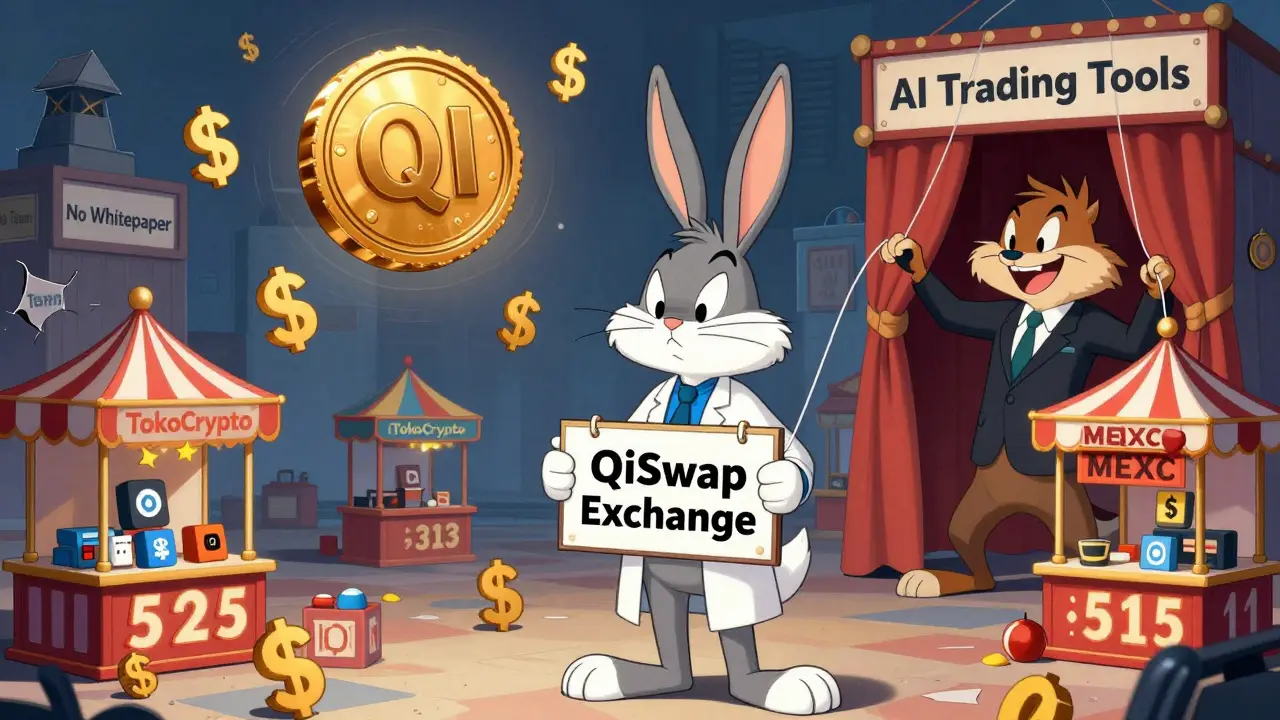
When you hear "QiSwap," you might think it's a crypto exchange like Binance or Coinbase. But that’s not true. QiSwap isn’t a platform where you sign up, deposit funds, and trade. It’s a token - a digital asset with the ticker QI. And right now, trading it is risky, confusing, and far from straightforward.
QiSwap (QI) Is a Token, Not an Exchange
Many people get fooled by the name. "Swap" makes you think of decentralized exchanges like Uniswap or PancakeSwap. But QiSwap doesn’t operate a swap platform. It’s just a cryptocurrency token built on blockchain networks. Its value comes from trading activity, not from any app, website, or service you can use to buy or sell crypto.
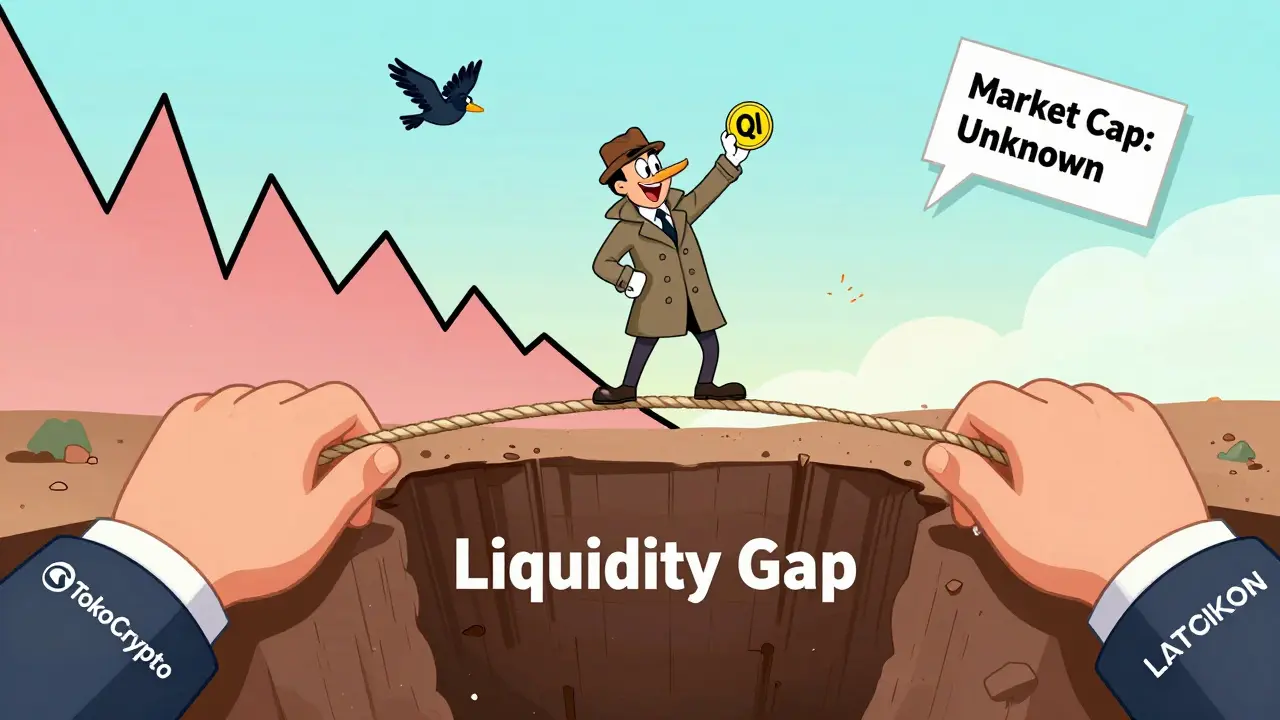
As of March 2026, QI is trading around $0.008, but that number isn’t consistent. On TokoCrypto, it’s at $0.0069. On LATOKEN, it’s at $0.0019. That’s a 360% difference between just two exchanges. If you bought QI on LATOKEN and tried to sell it on TokoCrypto, you’d make a profit - if you could even move the coins between them. But that’s not how real markets work. This kind of price gap isn’t normal. It’s a red flag.
Where Can You Actually Trade QI?
There are only a few places where QI is listed, and none of them are trustworthy in a traditional sense.
- TokoCrypto: This is the most active exchange for QI. Volume here is around $179 in 24 hours - barely enough to keep the market alive. The spread (difference between buy and sell price) is 0.14%, which is normal. But with such low volume, one big trade can swing the price.
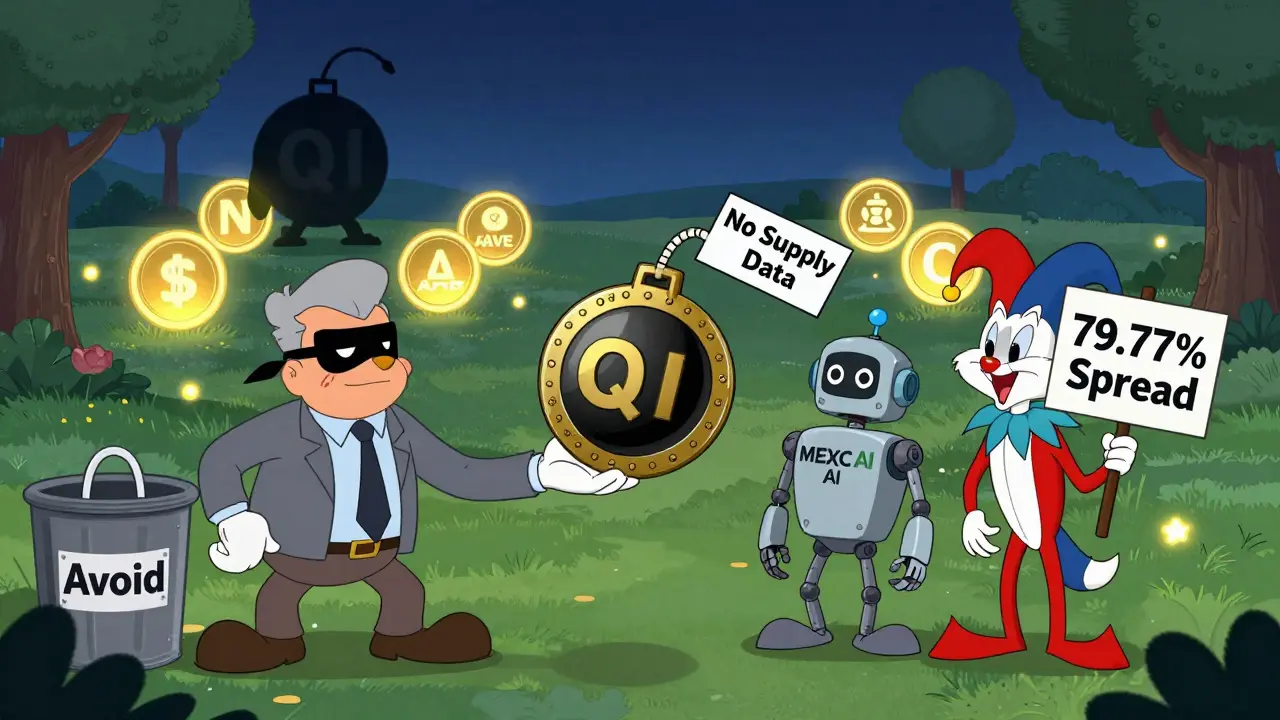
- LATOKEN: This exchange shows $10,045 in volume - over 98% of all QI trading. But here’s the problem: the spread is 79.77%. That means if you try to buy QI at $0.0019, the seller might be asking $0.0034. You could lose over 75% of your investment just from slippage before your order even fills.
- MEXC: MEXC added QI in August 2025 alongside its new AI trading tools. This sounds promising - AI-powered charts, real-time alerts, smart order routing. But if the underlying token has no liquidity, no supply data, and no clear project roadmap, even the best tools won’t help you make money.
That’s it. No Binance. No Coinbase. No Kraken. No major exchange supports QI. And if you’re thinking of using a decentralized wallet like Best Wallet to trade it - don’t. Best Wallet connects to dozens of blockchains, but there’s no official QI liquidity pool. You’d be trading against random users with no guarantees.
Why Is Liquidity So Poor?
Liquidity means how easily you can buy or sell without changing the price. QI has almost none.
Here’s what we know:
- Circulating supply? Unknown.
- Total supply? Not published.
- Market cap? Can’t be calculated.
- 24-hour volume? Between $10,000 and $460 - depending on which source you trust.
This isn’t just low. This is invisible. Real assets like Bitcoin or Ethereum have billions in daily volume. Even small-cap tokens usually have at least $1 million. QI sits at $10,000. That’s the volume of a single weekend trade on a mid-tier DeFi token.
Why? Because no one really believes in it. There’s no whitepaper. No team. No roadmap. No GitHub updates. No community forums with real activity. It’s a token with a name, a chart, and a handful of traders trying to guess where the price will go next.
The AI Trading Hook - Is It Real?
MEXC says it integrated QI alongside its new AI trading tools. That sounds cool. AI helps you spot trends, predict moves, automate orders. But here’s the catch: AI doesn’t create liquidity. It doesn’t fix a broken market. If there are no buyers or sellers, the AI will just show you empty order books.
Think of it like giving a Formula 1 driver a Ferrari… but the track is a dirt road with potholes and no fuel stations. The car is advanced. The road isn’t.
Don’t be fooled by marketing. MEXC didn’t build QI. They just listed it. The token’s success doesn’t depend on their tools - it depends on whether people actually care about QI. And right now, they don’t.
Is QiSwap a Scam?
It’s not labeled as a scam. But it ticks every box for a high-risk, low-transparency asset.
- No team behind it - anonymous developers.
- No project documentation - no website, no blog, no Twitter with updates.
- Extreme price swings - 6.59% up one day, -11.90% down the next.
- Price discrepancies between exchanges - signs of manipulation or lack of market depth.
- No circulating supply - you can’t even calculate how much is out there.
This isn’t a startup with a shaky launch. This is a token that looks like it was created to attract short-term traders looking for a quick pump. If you’re not already deep into crypto gambling, you should avoid it.
Who Should Even Consider Trading QI?
Only two types of people should touch QI:
- Arbitrage hunters - people who move money between exchanges to profit from price differences. But this requires advanced tools, fast execution, and capital to cover fees and slippage. For most, it’s not worth it.
- Speculators with high risk tolerance - if you’re willing to lose everything you put in, and you treat QI like a lottery ticket, then maybe. But even then, you’re betting on a token with no foundation.
If you’re looking to invest, hold long-term, or use crypto as part of a diversified portfolio - walk away. QI doesn’t belong in any serious strategy.
What Should You Do Instead?
There are hundreds of legitimate tokens with real teams, clear use cases, and healthy liquidity. If you want exposure to DeFi or decentralized trading platforms:
- Look at UNI (Uniswap)
- Check out AAVE (lending protocol)
- Explore SNX (synthetic assets)
- Consider COMP (Compound)
These tokens have:
- Public teams with LinkedIn profiles
- Active GitHub repositories
- Weekly updates and community calls
- Millions in daily trading volume
- Transparent supply models
QiSwap has none of that.
Final Verdict: Avoid QiSwap (QI)
QiSwap isn’t a crypto exchange. It’s a low-liquidity, poorly documented token with no clear purpose. The price swings are wild, the exchanges are limited, and the lack of supply data makes it impossible to evaluate.
There’s no reason to trade QI unless you’re gambling. And even then, there are better places to put your money.
If you’re looking for a crypto exchange to use - go with MEXC, Binance, or OKX. But don’t trade QI on them. It’s not worth the risk.
Is QiSwap a real crypto exchange?
No, QiSwap is not an exchange. It’s a cryptocurrency token with the symbol QI. Some exchanges like MEXC and TokoCrypto list QI for trading, but QiSwap itself doesn’t operate a trading platform. You can’t sign up for QiSwap or deposit funds into it.
Why is the price of QI different on different exchanges?
The price difference happens because QI has extremely low liquidity and is only traded on a few obscure exchanges. With little trading volume and no market-making mechanisms, one large buy or sell order can drastically change the price on one exchange while others lag behind. This creates artificial gaps that aren’t sustainable.
Can I use QiSwap with my MetaMask wallet?
You can add the QI token to MetaMask manually by entering its contract address, but that doesn’t mean you can trade it. Without a liquidity pool on a decentralized exchange like Uniswap or PancakeSwap, you won’t be able to swap QI for other tokens directly from MetaMask. You’d need to transfer it to a centralized exchange that lists it - which limits your control and increases risk.
Is QiSwap listed on Binance or Coinbase?
No, QiSwap (QI) is not listed on Binance, Coinbase, Kraken, or any other major exchange. It’s only available on smaller, less-regulated platforms like TokoCrypto, LATOKEN, and MEXC. This lack of listing on top exchanges is a major red flag for legitimacy and long-term viability.
What’s the circulating supply of QI?
The circulating supply of QI is not publicly disclosed. Without this data, you cannot calculate its market capitalization or assess its true value. This lack of transparency is common in low-quality tokens and makes it impossible to do proper investment analysis.
Should I invest in QiSwap because it’s going up?
No. A short-term price increase doesn’t mean a token is a good investment. QI has seen wild swings - up 82% over a week, then down 12% the next day. These movements are typical of low-liquidity tokens manipulated by small groups of traders. Without a solid project behind it, any gains are temporary and likely to reverse.