Crypto Exchange Restrictions: What You Can't Do and Why It Matters
When you hit a wall trying to deposit fiat or withdraw from a crypto exchange, you're not dealing with a glitch—you're facing crypto exchange restrictions, rules imposed by governments or financial institutions that limit how, where, and by whom crypto can be traded. These aren't random shutdowns. They're deliberate actions tied to VASP registration, a global standard requiring crypto platforms to register as financial service providers under anti-money laundering laws, or outright banned crypto exchanges, platforms blocked by regulators for lacking transparency, licensing, or compliance.
These restrictions don’t just affect big platforms. They ripple down to users in countries like Iran, where using a VPN to access Binance can trigger detection systems, or in Taiwan, where banks refuse to process crypto-related payments unless the exchange is officially registered. Even exchanges that seem harmless, like RDAX.io or AIA Exchange, get flagged because they skip basic steps: no regulatory disclosure, no fiat on-ramps, no public team. That’s not just risky—it’s often a red flag that regulators are already watching. Meanwhile, places like India and Brazil have built legal pathways for crypto trading, but only for exchanges that follow local rules, like supporting UPI or Pix payments. The difference between a working exchange and a dead one isn’t luck—it’s compliance.
Some restrictions are technical, like the sudden freeze of Real USD (USDR) because its real estate collateral couldn’t be sold fast enough. Others are political, like Malta’s strict licensing rules that force businesses to prove they’re not just crypto shell companies. Even airdrops like BNC or MMS get caught in the net—when a token has no trading volume or team, regulators treat it as a scam, and exchanges remove it. You don’t need to understand every law to navigate this. But you do need to know: if an exchange won’t tell you where it’s registered, or if it disappears overnight, it wasn’t built to last. The exchanges that survive are the ones that play by the rules, even when they’re frustrating. Below, you’ll find real reviews of platforms that got blocked, those that adapted, and the hidden reasons why some crypto projects never made it off the ground.
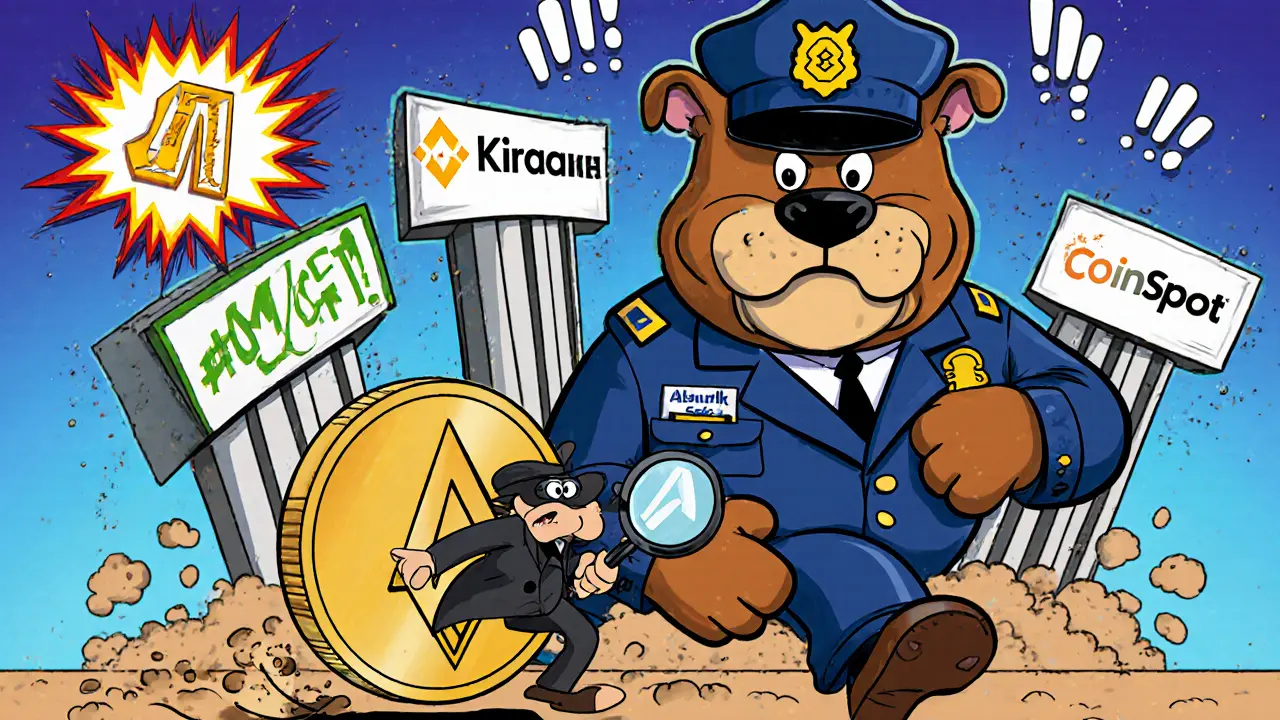
Privacy Coins Ban on Australian Crypto Exchanges: What You Need to Know in 2025
Australia doesn't ban privacy coins outright, but exchanges can't list them due to strict AML rules. Learn how Monero, Zcash, and Dash are affected, what alternatives exist, and what changes are coming in 2026.