P2P Crypto China: How Peer-to-Peer Trading Works in China's Restricted Crypto Market
When you hear P2P crypto China, peer-to-peer cryptocurrency trading that happens directly between individuals without a central exchange. Also known as person-to-person crypto trading, it’s the quiet backbone of crypto access in countries where banks and exchanges are locked down. In China, where the government banned crypto exchanges in 2021 and cracked down on mining, P2P trading didn’t disappear—it adapted. People still buy Bitcoin, USDT, and other coins using WeChat Pay, Alipay, and bank transfers, trading face-to-face or through apps that connect buyers and sellers directly. This isn’t a loophole—it’s necessity. With inflation rising and savings eroding, millions see crypto as the only way to protect their money.
What makes P2P crypto China, peer-to-peer cryptocurrency trading that happens directly between individuals without a central exchange. Also known as person-to-person crypto trading, it’s the quiet backbone of crypto access in countries where banks and exchanges are locked down. work isn’t tech—it’s trust. Sellers post ads with fixed prices in CNY, and buyers pay via local apps. The platform holds the crypto until payment is confirmed. It’s simple, but risky. Scams happen. Some sellers disappear after getting paid. Others get caught by authorities. That’s why most users stick to verified traders with high ratings and long histories. And while the government monitors transactions, it can’t stop everyone. Thousands of trades happen every day, mostly in cities like Shenzhen, Guangzhou, and Chengdu, where people know how to move money quietly.
Related to this are China crypto regulations, strict government rules that ban financial institutions from handling crypto transactions and shut down domestic exchanges, which force users into the shadows. These rules don’t ban holding crypto—they ban banks from touching it. That’s why Bitcoin China, the most widely used cryptocurrency in China for value storage and cross-border transfers remains the top choice. It’s not for speculation—it’s for survival. And while global exchanges like Binance and OKX still operate offshore, they rely on P2P networks to let Chinese users deposit and withdraw funds. This creates a hidden ecosystem that’s more resilient than any official platform.
What you’ll find in these posts aren’t theoretical guides. They’re real stories from people trading crypto under pressure. You’ll see how a woman in Shanghai uses USDT to send money to her family abroad. How a student in Wuhan buys Bitcoin with Alipay to avoid bank fees. How traders avoid detection by switching payment methods daily. These aren’t edge cases—they’re everyday life for millions. There’s no grand revolution here. Just quiet, persistent, human behavior pushing against a wall. And that’s why P2P crypto China still exists—because when people need to move value, they always find a way.
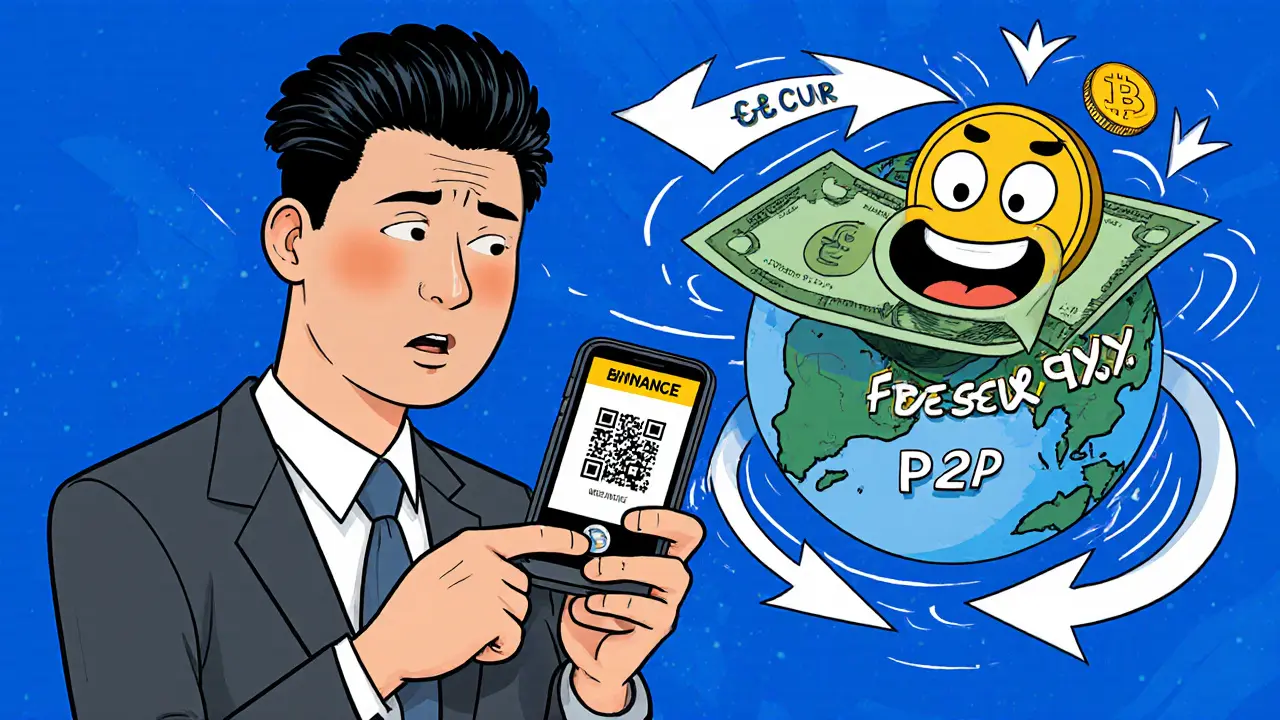
How to Buy Crypto for Fiat in China in 2025: Legal Workarounds and Safe Platforms
Learn how to legally buy cryptocurrency with fiat in China in 2025 using international exchanges, P2P trading, and secure payment methods-despite strict government restrictions.