What is Rentible (RNB)? A Deep Dive into the PropTech Crypto Token
 Apr, 22 2026
Imagine renting an apartment without a middleman taking a cut, or owning a slice of a luxury villa in a virtual world without dealing with a mountain of paperwork. This is the world Rentible is a decentralized application (Dapp) and cryptocurrency project designed to merge real estate with blockchain technology. Also known as RNB, this project attempts to solve the headaches of the traditional rental market using Web3 and DeFi principles. While the idea of a "blockchain for buildings" sounds futuristic, the reality of the token's journey has been a wild ride of extreme highs and sobering lows.
The Core Concept of Rentible
At its heart, Rentible is trying to build a bridge between the physical world of brick-and-mortar properties and the digital realm of the metaverse. It falls into a niche called PropTech (property technology), but with a decentralized twist. Instead of relying on a central company to manage leases, Rentible uses Smart Contracts is self-executing contracts with the terms of the agreement directly written into lines of code to handle the heavy lifting.
The goal is simple: let landlords and tenants swap rental payments using crypto and create a marketplace where people can buy, sell, or rent virtual land. By removing the middleman, the platform claims it can cut costs and stop common scams, like the dreaded "let-and-run" fraud where a tenant disappears without paying. Since the records are stored on a blockchain, they are immutable, meaning once a lease is signed and recorded, nobody can go back and secretly change the terms.
Understanding the RNB Token and Its Utility
To make this ecosystem work, the project launched the RNB Token is the native utility token of the Rentible ecosystem, built on the Ethereum blockchain . But what does holding RNB actually do for you? It isn't just a speculative asset; it has a few specific jobs within the platform.
- Governance: Token holders can vote on how the protocol changes. This keeps the network neutral so one big company can't just take over and dictate the rules.
- Liquidity Rewards: Users can put their RNB into liquidity pools to keep the platform running smoothly and earn rewards in return.
- Fractional Ownership: This is the big one. RNB allows users to engage in tokenized property purchases. Instead of needing $500k for a condo, you could potentially own a small percentage of a property, whether it's a physical apartment or a plot of land in the metaverse.
From a technical side, the RNB token has a very strict supply cap. There are exactly 10,000,000 tokens in existence, and all of them are already in circulation. There are no more "unlocks" or new minting coming, which usually means the price is driven purely by supply and demand.
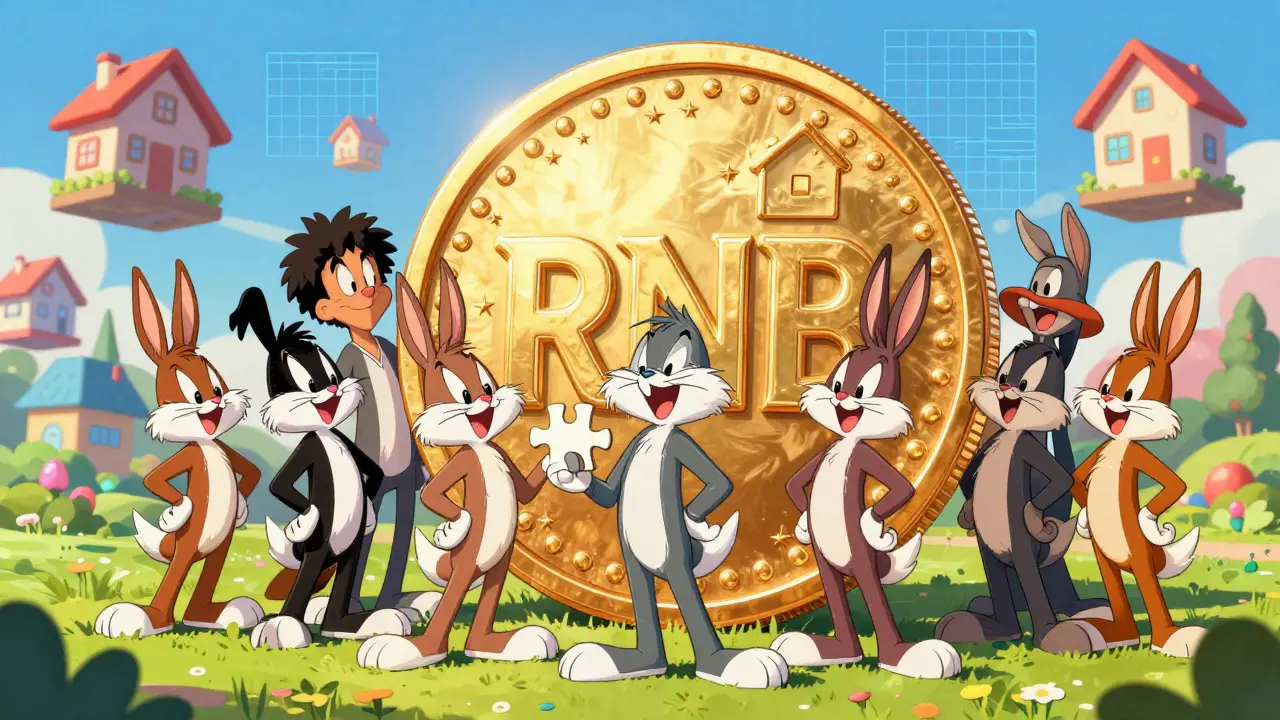
The Hard Numbers: Market Performance and Reality
If you're looking at RNB from an investment perspective, the data tells a cautionary tale. While the vision is ambitious, the market adoption has been struggling. As of early 2026, the token is trading around $0.0331. To put that in perspective, it hit an all-time high of over $5.20 back in 2021. That is a 99% drop from its peak.
The liquidity-which is basically how easy it is to buy or sell the coin without moving the price-is currently very low. Most of the trading happens on Uniswap V2 is a decentralized trading protocol that allows users to swap different cryptocurrency tokens . In some 24-hour windows, the total trading volume has been as low as $27. This means if you try to sell a large amount of RNB, you might experience significant "slippage," where you get a much lower price than what's listed on the screen.
| Attribute | Value |
|---|---|
| Current Price | ~$0.0331 |
| All-Time High | $5.21 - $5.38 |
| Total Supply | 10,000,000 RNB |
| Market Cap | ~$330,000 |
| Primary Exchange | Uniswap V2 |

How Rentible Works: The Technical Plumbing
Rentible doesn't run on its own standalone chain. Instead, it leverages the Ethereum is a decentralized, open-source blockchain with smart contract functionality that powers thousands of Dapps network. By building on Ethereum, Rentible ensures that its transactions are secure and compatible with the most widely used crypto wallets.
The process generally looks like this: a landlord lists a property, and the terms (rent amount, duration, security deposit) are coded into a smart contract. When a tenant agrees and sends the funds, the contract automatically handles the exchange. There's no need for an escrow agent or a property manager to verify the payment; the code does it instantly. This removes the fees usually charged by these intermediaries, making the process cheaper for everyone involved.
The Hurdles to Mainstream Adoption
Why isn't everyone using RNB to rent their homes? There are some massive barriers. First, there's the "tech gap." To use Rentible, you need to know how to manage a crypto wallet and understand how gas fees work on the Ethereum network. Most landlords are perfectly happy with a bank transfer and a PDF lease; asking them to use a DeFi protocol is a big jump.
Second, there's the legal gray area. Real estate laws are incredibly local and strict. A smart contract can move money, but it can't physically evict a tenant or fix a leaky pipe. Until blockchain platforms can integrate with local legal systems and government registries, they remain a tool for the "crypto-native" crowd rather than the general public.
Lastly, the lack of recent momentum is concerning. With very low trading volumes and a lack of major roadmap updates, the project currently feels like it's in a maintenance phase rather than an aggressive growth phase. For a project to succeed in the competitive PropTech space, it needs constant development and a growing community, both of which appear thin for Rentible at the moment.
Is Rentible (RNB) a safe investment?
Investing in RNB carries high risk. The token has experienced a 99% decline from its all-time high and currently suffers from extremely low liquidity and trading volume. While the concept of decentralized real estate is interesting, the project's current market state suggests it is highly speculative.
What is the difference between Rentible and traditional real estate platforms?
Traditional platforms (like Zillow or Airbnb) act as centralized intermediaries that charge fees and control user data. Rentible uses blockchain and smart contracts to allow peer-to-peer transactions, reducing costs and giving users ownership of their data while providing immutable records of lease agreements.
Can I actually buy physical real estate with RNB?
The platform is designed to enable fractional ownership of both virtual metaverse properties and real-world properties. However, this usually means owning a "tokenized stake" in a property rather than a traditional deed, which carries different legal implications depending on your jurisdiction.
Where can I trade RNB tokens?
Currently, RNB is primarily traded on decentralized exchanges (DEX), specifically Uniswap V2, via the RNB/WETH pair. It is not widely available on major centralized exchanges, which contributes to its low liquidity.
How many RNB tokens are there in total?
There is a fixed total supply of 10,000,000 RNB tokens. All of these tokens are currently in circulating supply, meaning there is no further inflation from new tokens being created.
Eric Raines
April 23, 2026 AT 11:14Everyone knows the 99% drop is just a shakeout before the real pump. Most people don't get how these low-cap gems work. You just gotta have diamond hands and ignore the FUD while the whales accumulate.
Larry Yang
April 24, 2026 AT 18:42imagine thinking a 300k market cap is a viable proptech solution lol. it's just another ghost chain project that'll be forgotten by next tuesday
Tara Aman
April 24, 2026 AT 19:30I still think the idea of cutting out the middleman is so inspiring! We just need to find a way to make it easier for the average person to jump in. Let's stay positive!
Miranda Jamieson
April 25, 2026 AT 00:38Absolute garbage. Using Ethereum for real estate transactions when gas fees can cost more than the actual rental agreement is a joke. The developers were clearly out of their minds if they thought this would scale.
Yvette P
April 26, 2026 AT 22:15Oh honey, let me enlighten you on the actual operational inefficiencies here. We are talking about a complete lack of interoperability between the on-chain smart contracts and the legacy jurisdictional legal frameworks, which essentially renders the 'immutable' nature of the lease a total fantasy because a sheriff doesn't care about your ERC-20 token when they're tossing your couch onto the sidewalk. It's just adorable that we're still pretending that 'code is law' in a world where the actual law involves guys with badges and physical keys, but sure, let's keep swapping our RNB on Uniswap V2 and pretending we're disrupting the trillion-dollar real estate industry while our liquidity is basically a rounding error in a Starbucks tip jar. Truly a masterclass in delusional tokenomics.
Kathleen Bergin
April 28, 2026 AT 22:11The 10 million token cap is the only thing that makes sense here. Limited supply is the only way it ever recovers.
Jennifer Taylor
April 29, 2026 AT 23:35This is just a way for the big banks to track where we live. They want us on the blockchain so they can freeze our homes when we stop following their rules. Wake up!
Jason M
May 1, 2026 AT 03:18Hold on everyone! We cannot let the negativity drown out the potential for innovation! Even if the price is low, the dream of fractional ownership is a beacon of hope for those who've been priced out of the market! We can guide the community toward a better future if we just support each other!
Caiaphas Konkol
May 2, 2026 AT 23:52The sheer hubris of thinking a Dapp can replace the complex social contract of land ownership is amusing. It's an elite play for the few who actually understand the shadow economy.
Gary Lingrel
May 4, 2026 AT 11:30typical crypto scam 🙄 who actually believes this stuff anyway... just another way to steal money from boomers lol
Matthew Morse
May 4, 2026 AT 15:07too much reading
Paige Raulerson
May 4, 2026 AT 18:16I find it quaint that people still care about 'virtual land' in 2026. It's so mid-century modern of you to think digital dirt has value.
jill huyo-a
May 5, 2026 AT 04:51I wonder if there are any other tokens trying to do this better? I'd love to see a comparison of how others handle the legal side of things.
praveen subbiah
May 5, 2026 AT 15:12In India we have so much land potential and this tech could be legendary if it ever works properly! Imagine the scale! Absolutely breathtaking possibilities!
Guy Bianco
May 7, 2026 AT 09:26It is important to maintain a professional outlook on these volatile assets. 🛡️ Patience is a virtue in the Web3 space.
Findlay Duncan Lyon
May 9, 2026 AT 03:48Pure speculation. No utility.
Sara Ellis
May 9, 2026 AT 23:34money is just a dream anyway who cares about the price as long as the vibe is right
Sarah Ingrams
May 10, 2026 AT 19:28it's okay to feel bummed about the price drop. lots of people lost money here
Doc Coyle
May 12, 2026 AT 08:44Look, it's simple. If there is no demand, the price goes down. That is basic economics. You don't need a PhD to see this project is dead.
Kyle Bush
May 13, 2026 AT 03:13USA 🇺🇸 will lead the way in PropTech and blow these small projects out of the water! BUY THE DIP!!! 🚀🚀🚀
debashish sahu
May 14, 2026 AT 20:46The concept is quite interesting from a technical perspective though the execution seems to have lagged behind the vision