What is SHRIMP Crypto? Tokenomics, Variants, and Risks Explained
 Jul, 31 2026
Have you ever seen a ticker symbol that makes you smile but also raises a red flag? SHRIMP is exactly that kind of asset. It’s not one single coin; it’s a messy cluster of different tokens sharing the same name across various blockchains like Aptos, Solana, and others. If you are wondering whether this is the next big thing or a total trap, you aren't alone. In the world of meme coins are often built on hype rather than utility., names matter more than technology. But with multiple versions floating around, figuring out which SHRIMP you are looking at-and if any of them are worth your time-is critical before you risk your capital.
The Core Identity: Which SHRIMP Are You Looking At?
First things first: there is no central authority for "SHRIMP." When you search for it, you might find three to four completely different projects. This fragmentation is common in the cryptocurrency market where anyone can deploy a smart contract., but it creates significant confusion for investors. The most notable version is the one built on the Aptos blockchain is known for its high throughput and low latency.. Created by the team behind the popular NFT project Aptomingos, this specific token aims to be more than just a joke. It tries to build an ecosystem within the Aptos network. Then there is the Solana-based variant, which leverages the speed of Solana offers fast transactions but has faced network stability issues in the past.. And finally, there are smaller, less liquid variants listed on exchanges like LBank and Bybit under slightly different names like "THE SHRIMP ARMY" or simply "Shrimp Coin."
Understanding which chain the token lives on is your first step. A token on Aptos behaves differently than one on Solana because the underlying infrastructure, gas fees, and community expectations vary wildly. Mixing them up could lead to buying the wrong asset entirely.
Aptos SHRIMP: The Barbecue Mechanic
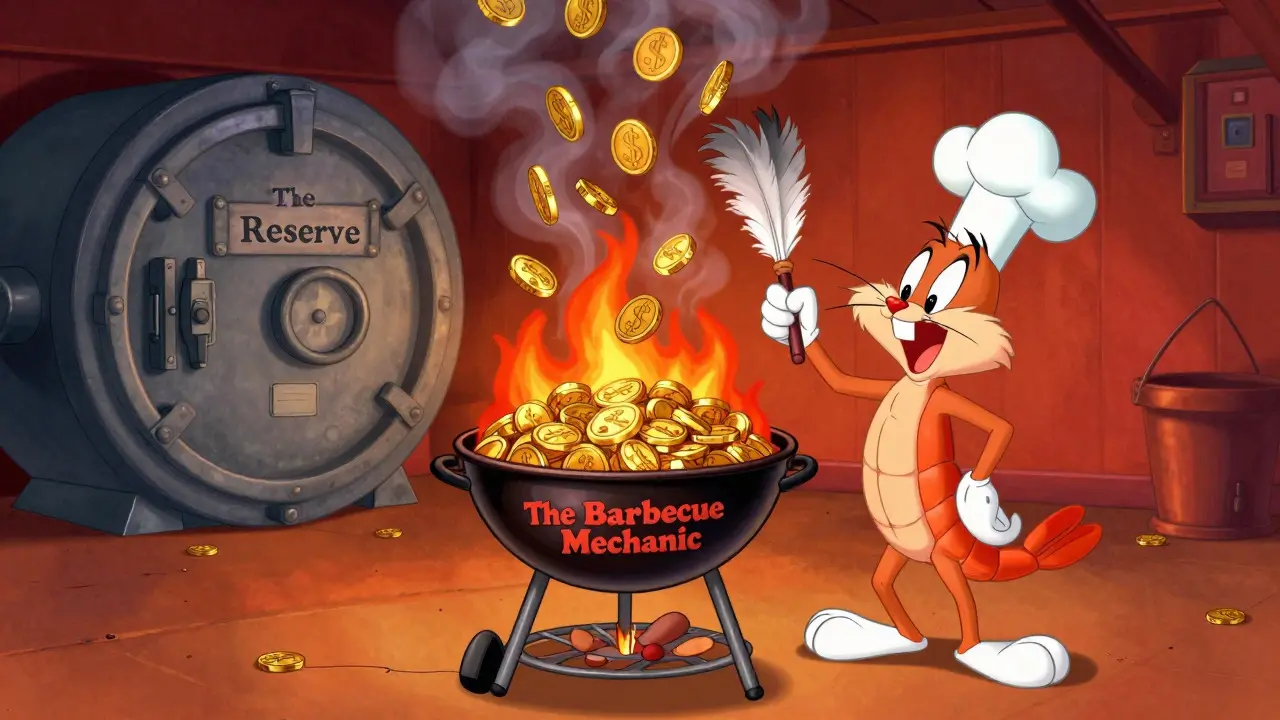
If you are looking at the most established version, the Aptos-based SHRIMP, you need to understand its unique tokenomics. This isn't just a static supply model. It features a fixed maximum supply of 121.21 million tokens. What sets it apart is a mechanism called "The Barbecue." This is a burn mechanic designed to reduce the circulating supply over time. Here is how it works: as users engage with the protocol, a percentage of tokens is burned. This creates a deflationary pressure, theoretically increasing the value of the remaining tokens if demand stays constant.
But there is a catch, or rather, a reward system tied to it called "The Reserve." Once 1% of the entire supply is burned via The Barbecue, the Reserve kicks in. It deploys $2,000 USD worth of tokens to fund community-voted subgoals. This attempts to solve the "dead coin" problem by incentivizing active participation. Instead of just holding and hoping, holders are encouraged to vote and engage to unlock these funds. However, the success of this model depends entirely on user activity. If nobody participates, the burns stop, and the reserve remains locked. As of mid-2026, adoption metrics remain low, with only around 400 recorded holders for some variants, suggesting the community engine hasn't fully caught fire yet.
Solana and Other Variants: Liquidity Warnings
The Solana-based SHRIMP tells a different story. While Solana is praised for its scalability, this specific token has hit a wall. Major platforms like CoinSwitch have restricted buying due to "low liquidity constraints." This means you can sell if you already own it, but getting in is blocked. Why? Because there aren't enough buyers and sellers to support healthy price discovery without causing massive slippage. For a retail investor, this is a major warning sign. Low liquidity means you might not be able to exit your position when you want to, or the price will crash significantly during the sale.
Then there are the variants listed on exchanges like LBank (ticker: SHRIMPS) and Bybit. These tokens have even higher supplies-up to 1 billion tokens-and minuscule market caps, often hovering between $8,000 and $16,000 USD. They rank outside the top 10,000 cryptocurrencies globally. Trading volumes are practically non-existent, with some days seeing less than $10 in total trades. This level of activity suggests these are largely abandoned projects or highly speculative micro-caps with little to no institutional interest.
| Variant | Blockchain | Max Supply | Key Feature / Risk | Market Status (Mid-2026) |
|---|---|---|---|---|
| Aptos SHRIMP | Aptos | 121.21M | "The Barbecue" burn mechanic | Low volume, niche community |
| Solana SHRIMP | Solana | Varies | High-speed network | Buying Restricted (Low Liquidity) |
| THE SHRIMP ARMY (SHRIMPS) | Multiple | 1,000M | Meme-focused branding | Micro-cap, high volatility |
| Shrimp Coin (Bybit) | Unspecified | 1,000M | None identified | Negligible volume ($5/day) |
Price History: The Brutal Reality of Volatility
Let's talk numbers, because they don't lie. If you bought any of these SHRIMP variants at their peak, you are likely down significantly. The Bybit-listed Shrimp Coin hit an all-time high of roughly $0.000637 in January 2026. By March 2026, it had crashed to $0.000008. That is a loss of nearly 99%. Similarly, THE SHRIMP ARMY dropped from $0.000907 to $0.000016, another ~98% decline. Even the CoinGecko-tracked variant fell from $0.000360 in late 2024 to under $0.000030 in 2026.
This extreme volatility is typical for micro-cap cryptocurrencies lack deep order books and are easily manipulated.. Predictive models from exchanges like LBank suggest a marginal increase to $0.000017 by 2027 for SHRIMPS. Marginal increases in absolute terms still represent massive percentage swings. For context, a move from $0.000016 to $0.000017 is a 6.25% gain, which sounds good until you realize the potential downside is equally steep. There is no fundamental anchor keeping these prices stable.
Risks and Red Flags for Investors
Before you connect your wallet, consider these critical risks. First, transparency is lacking. The Aptos SHRIMP team is linked to Aptomingos, but individual developers are rarely named or verified. There are no public GitHub repositories showing active code commits for many of these variants. Without visible development activity, how do you know the project isn't dead?
Second, regulatory status is a blank slate. None of these tokens appear to have pursued formal compliance or registrations in major jurisdictions like the US or EU. This leaves them vulnerable to future regulatory crackdowns. If a regulator decides SHRIMP is an unregistered security, exchanges could delist it overnight, trapping your assets.
Third, the liquidity trap. As mentioned, the Solana variant restricts buying. Imagine trying to sell a house where the realtor says, "You can leave, but no one is allowed to enter." Prices will stagnate or drop because panic sellers outnumber cautious buyers. On Bybit, daily volumes of $5 mean that if you try to sell $100 worth of tokens, you could wipe out the entire day's trading depth, crashing the price instantly.
Is SHRIMP Worth It? A Practical Verdict
So, what should you do? If you are a seasoned degenerate trader who enjoys high-risk, high-reward gambling with money you can afford to lose, SHRIMP might offer fleeting opportunities for quick flips. The Aptos variant's burn mechanic is interesting from a design perspective, offering a glimpse into how communities might self-govern token scarcity. However, for the average investor seeking growth or stability, SHRIMP currently looks like a minefield.
The combination of fragmented identity, severe price declines, and liquidity restrictions makes it a poor candidate for serious portfolio allocation. Most of the value has been extracted by early insiders. Unless there is a sudden surge in adoption or a major partnership announcement, the trajectory points sideways or down. Always check the contract address twice. Ensure you are looking at the right chain. And never invest more than you are willing to see vanish into the digital void.
Which blockchain is the main SHRIMP token on?
The most established SHRIMP token is built on the Aptos blockchain. However, there are other variants on Solana and other networks, so always verify the contract address before trading.
What is "The Barbecue" in SHRIMP tokenomics?
"The Barbecue" is a burn mechanic on the Aptos SHRIMP token. It destroys a portion of the supply based on user participation, aiming to create deflationary pressure and incentivize engagement.
Can I buy SHRIMP on Solana?
As of mid-2026, buying the Solana-based SHRIMP is restricted on major platforms like CoinSwitch due to low liquidity. Selling may still be possible, but entry is blocked to protect new users from illiquid markets.
Is SHRIMP a good investment in 2026?
SHRIMP is considered a high-risk, speculative asset. With price drops of over 90% from all-time highs and minimal trading volume, it lacks the fundamentals for safe investing. Treat it as gambling, not investing.
What is the total supply of SHRIMP?
Supplies vary by variant. The Aptos SHRIMP has a fixed max supply of 121.21 million tokens. Other variants, like those on Bybit or LBank, may have supplies up to 1 billion tokens.
Who created the SHRIMP token?
The primary Aptos SHRIMP was created by the team behind the Aptomingos NFT project. Specific developer identities are not publicly verified, which adds to the anonymity risk.