BQT Crypto Exchange Review: Is It Still Safe to Use in 2026?
 Aug, 13 2026
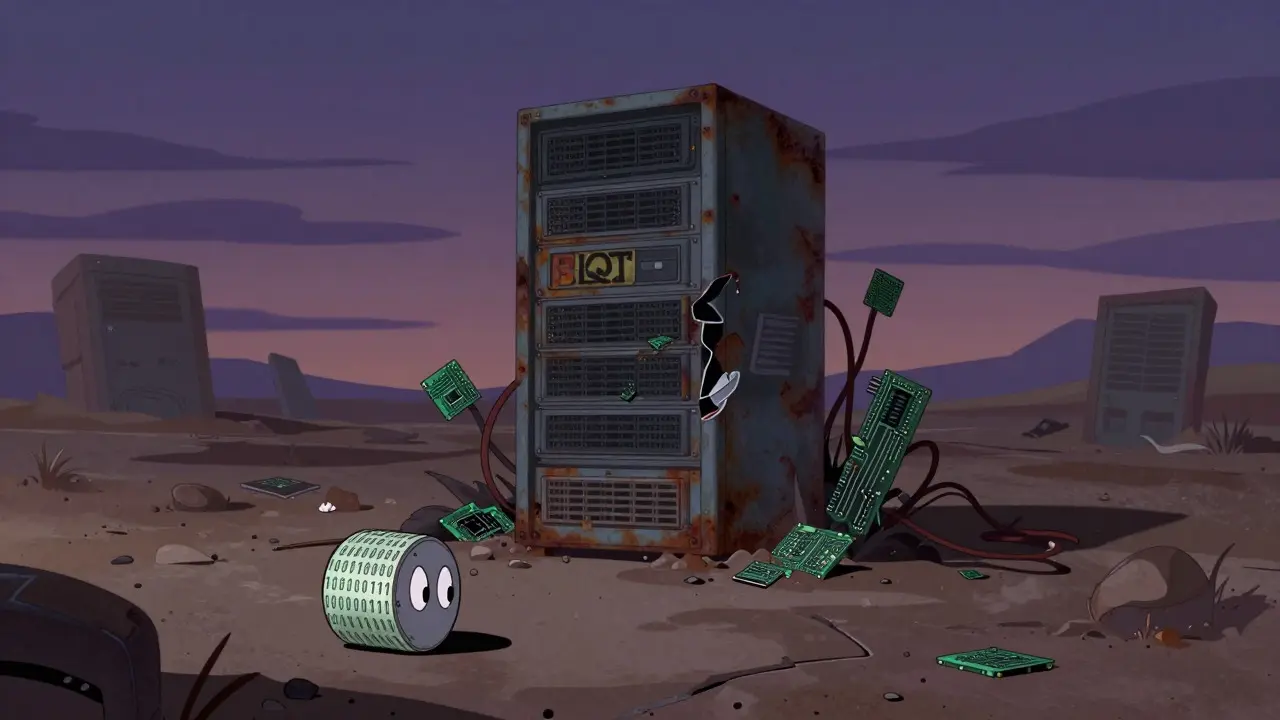
You might have stumbled upon the name BQT is a former peer-to-peer cryptocurrency hedge trading platform that launched around 2022 but has since ceased operations. If you are looking to deposit funds or start trading on it today, stop right there. The short answer is that BQT is no longer active. It belongs to what the industry calls the "Exchange Graveyard."
In this review, we will break down exactly what happened to BQT Technologies, LTD, why its unique model failed, and where you should look instead if you want to trade cryptocurrencies safely in 2026.
The Quick Summary: What You Need to Know
- Status: Defunct. The exchange has been inactive since late 2022.
- Access: The website may still load, but the trading interface is inaccessible.
- Funds: If you had funds on BQT, they are likely unrecoverable.
- Model: It was a niche P2P hedging platform with no fiat on-ramps.
- Verdict: Do not use. Look for established alternatives like Kraken or Binance.
What Was BQT? Understanding the Concept
To understand why BQT disappeared, we first need to look at what it tried to be. Launched by BQT Technologies, LTD is the company behind the now-defunct BQT crypto exchange platform., the platform pitched itself as the "first decentralized P2P Crypto Hedge Trading Platform."
This sounds complex, so let's simplify it. Most exchanges, like Coinbase is a major centralized cryptocurrency exchange known for its user-friendly interface and fiat on-ramps., allow you to buy Bitcoin with US Dollars. BQT did not do this. It had no connection to traditional banking. Instead, it focused purely on swapping one cryptocurrency for another through direct negotiations between users.
The core feature was an escrow system designed for short-term hedging. Imagine you hold Ethereum but think Bitcoin will dip slightly in the next hour. On BQT, you could theoretically lock your Ethereum in escrow and borrow Bitcoin from another trader, agreeing to swap back later. This was aimed at advanced traders who wanted to leverage their existing holdings without touching fiat currency.
While the idea of a self-sustaining internal market sounded innovative, it created a massive barrier to entry. You couldn't just sign up and deposit cash. You already needed to own cryptocurrency elsewhere, transfer it to BQT, and then find a willing counterparty for your specific trade.
Why Did BQT Fail? A Post-Mortem Analysis
The failure of BQT wasn't due to a single event but a combination of structural flaws and bad timing. By December 2022, independent reviewers noted that the platform showed "no sign of life." Here is why it didn't survive:
1. Lack of Liquidity
Crypto exchanges live and die by liquidity-the ability to buy or sell assets quickly without moving the price drastically. Major platforms like Binance is the world's largest cryptocurrency exchange by trading volume, offering extensive pairs and high liquidity. process billions in daily volume. BQT relied on peer-to-peer negotiations. If you wanted to swap a less common altcoin, you had to wait until someone else wanted that exact coin. Without a large user base, trades never happened. This is known as the "chicken and egg" problem in marketplace design.
2. No Fiat On-Ramp
Most new crypto users enter the space using bank cards or wire transfers. BQT required users to already possess crypto. This limited their potential audience to a small slice of "crypto-native" traders who were already satisfied with other platforms. Why would an experienced trader leave the security and tools of Kraken to use a bare-bones P2P site?
3. The 2022 Crypto Winter
BQT launched during a brutal period for the industry. In 2022, the market corrected by roughly 75%. Major players like Celsius and Voyager collapsed. Trust in new, unproven platforms evaporated. Investors and traders flocked to established names with proof of reserves. A niche startup with no regulatory compliance infrastructure simply couldn't compete for trust.
4. Regulatory Pressure
As the SEC and global regulators tightened scrutiny on unregistered exchanges, platforms without robust KYC (Know Your Customer) and AML (Anti-Money Laundering) procedures found themselves squeezed out. BQT's decentralized P2P model lacked the audit trails that institutions demand, making it vulnerable to shutdowns or loss of banking partners (though it had none).

BQT vs. Modern Alternatives: Where Should You Trade?
If you were considering BQT for its P2P features or hedging capabilities, here is how it compares to viable options available in 2026. We have mapped these entities to help you make a safe decision.
| Feature | BQT (Historical) | Kraken | Bybit |
|---|---|---|---|
| Status | Defunct (Since 2022) | Active & Regulated | Active & High Volume |
| Fiat Support | No (Crypto-only) | Yes (USD, EUR, GBP, etc.) | Limited (Varies by region) |
| Trading Model | P2P Negotiation | Centralized Order Book | Centralized Order Book + Derivatives |
| Leverage | N/A (Escrow-based) | Up to 50x (on select pairs) | Up to 200x (Derivatives) |
| Security | Unknown/Inactive | High (Proof of Reserves) | High (Triple Layer Protection) |
| User Base | None | d>Millions globallyMillions globally |
Kraken is a highly secure centralized exchange founded in 2011, known for strong customer support and regulatory compliance. is often recommended for users who value security and fiat integration. It offers advanced charting tools and reliable leverage, addressing the needs BQT tried to fill but with institutional-grade stability.
Bybit is a leading derivatives-focused crypto exchange offering high leverage and advanced trading tools. serves those interested in hedging and leverage. Unlike BQT's manual P2P negotiations, Bybit provides automated margin trading with deep liquidity, ensuring you can enter and exit positions instantly.
Red Flags: How to Spot a Dead Exchange
BQT isn't the only project that has vanished. As you navigate the crypto landscape in 2026, keep an eye out for these warning signs that indicate a platform might be shutting down or is already dead:
- Social Media Silence: Check Twitter (X), Telegram, and Discord. If the last post was months ago, or if replies are generic bots, run. BQT's last activity was in 2022.
- Website Accessibility: Does the homepage load, but the "Trade" button leads to a 404 error or a blank screen? This "ghost site" phenomenon is common when companies abandon their tech stack but keep domain registration active to avoid immediate legal flags.
- Absence from Aggregators: Check sites like CoinGecko or CoinMarketCap. If an exchange isn't listed, or if its volume data is missing, it likely has no real users.
- No Proof of Reserves: Legitimate exchanges publish monthly audits showing they hold user assets. BQT never provided this transparency.
Is There Any Chance BQT Will Return?
It is highly unlikely. In the crypto industry, reviving a dead exchange is nearly impossible. Users have lost trust, and the technology stack is likely outdated. Furthermore, the team behind BQT Technologies, LTD has not issued any roadmaps or announcements since 2022. Industry analysts categorize it firmly in the "Exchange Graveyard," meaning resources have been moved elsewhere or the venture was abandoned entirely.
If you see ads claiming BQT is "back online" or offering "recovery services," treat them with extreme skepticism. These are often scams targeting people hoping to recover lost funds.
Final Thoughts on BQT
BQT was an ambitious attempt to create a decentralized P2P hedging ecosystem. However, its lack of fiat on-ramps, reliance on manual peer negotiation, and poor timing during the 2022 bear market led to its demise. For traders in 2026, the lesson is clear: prioritize liquidity, security, and regulatory compliance over novel but unproven models.
Stick to established platforms like Kraken, Binance, or Bybit. They offer the tools, safety nets, and user bases necessary for sustainable trading. Don't risk your capital on ghost platforms.
Is BQT crypto exchange safe to use in 2026?
No, BQT is not safe because it is defunct. The platform ceased operations in late 2022, and its trading interface is inaccessible. Depositing funds into a non-functional exchange poses a total loss risk.
Where can I recover my funds from BQT?
Recovering funds from BQT is extremely difficult, if not impossible. Since the company has ceased operations and lacks a visible support structure, most users consider these funds lost. Be wary of third-party recovery scams.
What was the main feature of the BQT exchange?
BQT focused on peer-to-peer (P2P) cryptocurrency hedging. It allowed users to swap crypto assets directly using an escrow system without involving fiat currencies like USD or EUR.
Why did BQT fail compared to exchanges like Kraken?
BQT failed due to low liquidity, lack of fiat on-ramps, and poor timing during the 2022 crypto winter. Unlike Kraken, which offers deep liquidity and regulatory compliance, BQT relied on manual peer negotiations that struggled to attract a critical mass of users.
Are there other P2P crypto exchanges that are still active?
Yes, platforms like Bisq, HodlHodl, and LocalBitcoins (now LocalCryptos) offer P2P trading. However, even these platforms face challenges competing with the convenience of centralized exchanges like Binance or Coinbase.
Did BQT have mobile apps?
There is no evidence of a functional mobile app for BQT. The platform operated primarily via web browser, and given its defunct status, any app downloads would likely be outdated or insecure.