How Algerians Access Cryptocurrency Exchanges Amid Strict Legal Ban
 Dec, 3 2025
Algeria Crypto Penalty Calculator
Under Algeria's Law No. 25-10, all cryptocurrency activities are illegal—including holding, trading, and promotion. This tool estimates potential penalties based on your activity type.
Estimated Penalty
Select your activity type to view estimated penalties.
As of July 2025, there is no legal way for Algerians to access cryptocurrency exchanges. Not through apps. Not through websites. Not even through peer-to-peer trades. The Algerian government has outlawed every single form of cryptocurrency activity under Law No. 25-10, making it one of the strictest crypto bans in the world.
What the Law Actually Bans
Law No. 25-10 doesn’t just restrict crypto-it erases it from the legal landscape. The law defines digital currencies as "virtual instruments used as means of exchange via a computer system, without support from a central bank." And under this definition, everything is forbidden: buying, selling, holding, mining, exchanging, promoting, or even talking about crypto as an investment.It doesn’t matter if you’re holding Bitcoin in a wallet, trading Ethereum on Binance, or using Tether to send money abroad. All of it is illegal. Even running a website that explains how crypto works, or offering a service to store digital assets, is now a criminal act. The law covers the entire chain-from the user to the developer to the educator.
Punishments Are Severe and Real
The penalties aren’t warnings or fines-they’re jail time. Individuals caught violating the law face between two months and one year in prison. Fines range from 200,000 to 1,000,000 Algerian dinars ($1,540-$7,700 USD). For repeat offenders or cases tied to organized crime, fines can climb to 2 million dinars ($14,700 USD), and prison terms can be doubled.These aren’t theoretical threats. Since the law took effect, Algerian authorities have ramped up digital surveillance. They monitor online traffic, track suspicious wallet addresses, and investigate peer-to-peer transactions conducted through encrypted apps. There are confirmed cases of arrests linked to crypto activity, and the government has publicly stated it will not tolerate any exceptions.
What Changed in 2025?
Before July 2025, Algeria had a gray zone. A 2018 currency law discouraged crypto but didn’t criminalize it. That allowed a quiet but growing market. Chainalysis ranked Algeria among the top five fastest-growing crypto markets in the Middle East and North Africa just a year before the ban. People were using P2P platforms like LocalBitcoins and Paxful. Developers were building blockchain tools. Students were learning about DeFi.Then, overnight, everything changed. The government didn’t just tighten rules-it wiped the entire ecosystem off the map. The official reason? National security, financial stability, and preventing money laundering. But critics say the real goal is control: keeping all financial activity within state-monitored systems and blocking any alternative to the Algerian dinar.

How People Are Still Trying to Access Crypto (And Why It’s Dangerous)
Despite the ban, some Algerians still try to get around it. The most common methods include:- Using VPNs to access foreign exchanges like Binance, Kraken, or Coinbase
- Trading via Telegram groups or WhatsApp channels for P2P deals
- Using decentralized exchanges (DEXs) like Uniswap through browser wallets
- Buying crypto with gift cards or prepaid cards from friends abroad
These methods work technically-but they’re legally suicidal. Algerian authorities can trace IP addresses, monitor encrypted app usage, and identify wallet transactions linked to local bank accounts. Even if you don’t get caught today, your digital footprint remains. And once flagged, you’re on a watchlist.
There’s also no safe way to cash out. Converting crypto back to dinars means using unregulated exchangers-many of whom are scams or informants. There’s no recourse if you’re robbed. No legal protection. No way to report fraud.
The Brain Drain: Losing a Generation of Tech Talent
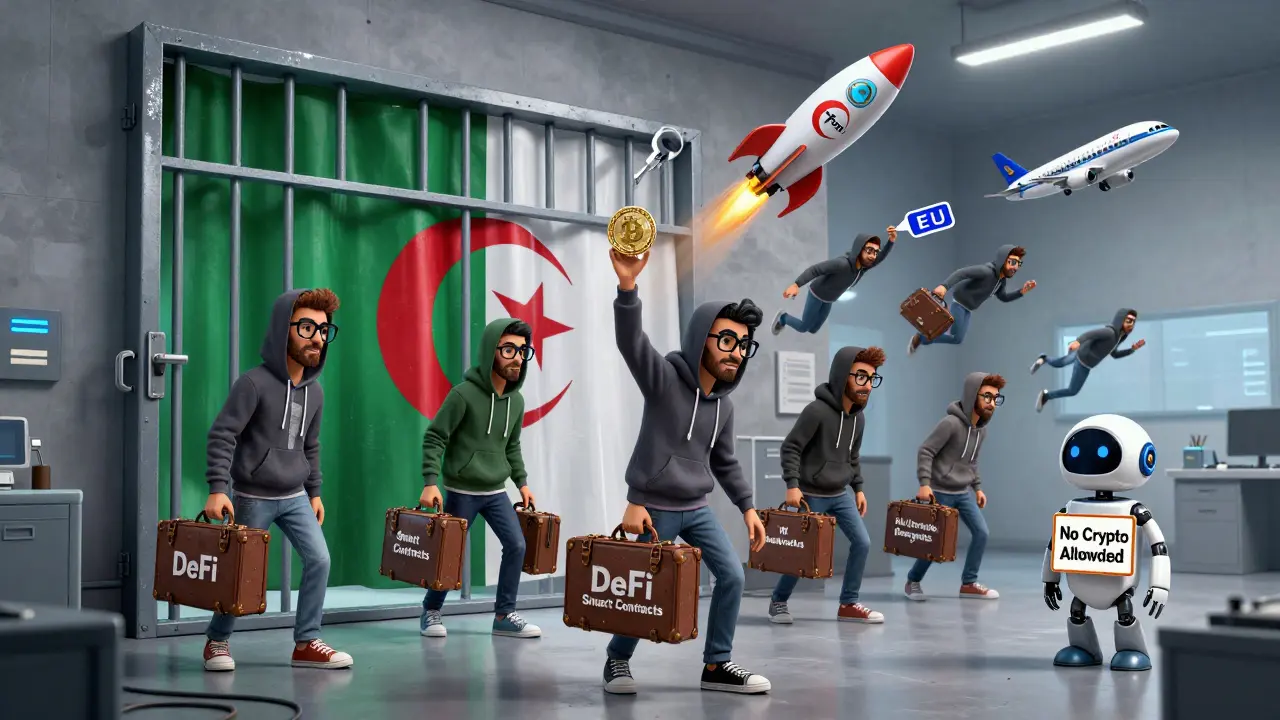
The ban isn’t just hurting traders-it’s killing Algeria’s tech future. Before 2025, the country had a growing community of blockchain developers, smart contract engineers, and crypto analysts. Universities offered courses on distributed ledgers. Startups were testing token-based loyalty programs.Now, those people are leaving. Many have moved to Tunisia, Morocco, or Europe, where crypto is legal and regulated. Others switched careers entirely. The result? A lost generation of digital talent. Companies that might have built Africa’s next fintech unicorn are now just memories.
How Algeria Compares to the Rest of the World
Algeria is one of only nine countries with a total crypto ban. It sits alongside China, Egypt, and a few others that have chosen control over innovation. Meanwhile, most of the world is moving in the opposite direction. The EU passed MiCA, the U.S. is building regulatory sandboxes, and even Nigeria and Kenya are creating legal pathways for crypto use.Algeria’s approach doesn’t stop crypto-it just pushes it underground. And underground markets are harder to regulate, more prone to fraud, and more dangerous for ordinary people. While other countries are trying to protect users with rules, Algeria is leaving them completely exposed.
What Does This Mean for the Future?
The long-term impact is still unfolding. But early signs point to economic isolation. Young Algerians can’t access global DeFi protocols, earn interest on crypto savings, or use stablecoins to protect their savings from inflation. Businesses can’t accept crypto payments. Investors can’t diversify.As the world moves toward digital finance, Algeria is building a wall. And the cost? Not just legal risk-but missed opportunity. The next wave of global finance won’t wait. It’s already here. And Algerians, by law, are locked out.
Is There Any Hope for Change?
Right now, no. The government shows no signs of reversing course. There are no public debates, no legislative reviews, no petitions being considered. The law is absolute. Until it changes, the only "access" Algerians have to cryptocurrency is through illegal means-and the risk of prison.For now, the message is clear: if you want to trade crypto in Algeria, you’re choosing between financial freedom and personal freedom. And the state has already decided which one matters more.
Can I use a VPN to access Binance or Coinbase from Algeria?
Technically yes, but it’s illegal. Using a VPN to access foreign exchanges violates Law No. 25-10. Algerian authorities monitor internet traffic and can identify users accessing crypto platforms, even through encrypted tools. Getting caught means fines up to 1 million dinars and up to one year in prison.
Can I hold Bitcoin in a wallet without getting in trouble?
No. Holding Bitcoin or any other cryptocurrency is explicitly banned under Algerian law. Even if you never trade it, simply owning digital assets in a wallet is considered a violation. Authorities can detect wallet addresses linked to local IP addresses or bank transfers.
Are there legal crypto ATMs or exchanges in Algeria?
No. There are zero legal crypto exchanges, ATMs, or trading platforms in Algeria. Any service claiming to offer crypto trading within the country is either a scam or operating illegally. Using them puts you at direct risk of criminal prosecution.
Can I be punished for talking about crypto online?
Yes. Promoting, educating, or advertising cryptocurrency is criminalized under the law. Posting YouTube videos, writing blog articles, or even discussing crypto investment strategies on social media could be interpreted as "promotion" and lead to fines or imprisonment.
What happens if I inherit Bitcoin from someone abroad?
Inheriting crypto doesn’t make it legal. The law doesn’t distinguish how you acquired the asset-only that you possess it. Holding inherited cryptocurrency is still a violation. You risk legal action if the wallet is traced back to you, even if you didn’t buy it yourself.
Is there any movement to lift the ban?
No public movement exists. The government has not signaled any intention to revise the law. No parliamentary debates, petitions, or protests have led to policy changes. The ban remains total and uncompromising as of December 2025.
Can Algerians use crypto to send money to family abroad?
No. Using crypto for remittances is banned just like any other transaction. The government tightly controls all cross-border payments and views crypto as a threat to currency controls. Using stablecoins like USDT to send money overseas carries the same penalties as trading Bitcoin.
Are blockchain developers still working in Algeria?
Very few. The ban has triggered a mass exodus of tech talent. Developers who specialized in smart contracts, DeFi, or blockchain infrastructure have left the country or switched fields. Local startups in this space have shut down. The ecosystem has been effectively dismantled.
Can I get a job at a crypto company if I live in Algeria?
No. Any company offering crypto services-whether local or remote-is operating illegally in Algeria. Employers who hire crypto professionals risk prosecution. Even remote work for foreign crypto firms can be flagged if your digital activity is monitored.
What should I do if I already own crypto?
There is no legal path to sell or transfer it. Holding it carries risk. The safest option is to avoid further activity and monitor developments closely. Do not attempt to cash out through unofficial channels-this increases your exposure to both fraud and prosecution.
Lawal Ayomide
December 4, 2025 AT 23:22samuel goodge
December 6, 2025 AT 16:58Vidyut Arcot
December 8, 2025 AT 12:13Jay Weldy
December 10, 2025 AT 07:01Melinda Kiss
December 11, 2025 AT 14:46Nancy Sunshine
December 13, 2025 AT 02:15Alan Brandon Rivera León
December 13, 2025 AT 03:56Ankit Varshney
December 13, 2025 AT 20:14Mani Kumar
December 14, 2025 AT 08:15Philip Mirchin
December 14, 2025 AT 21:33alex bolduin
December 15, 2025 AT 01:52Ann Ellsworth
December 16, 2025 AT 03:41Sharmishtha Sohoni
December 17, 2025 AT 04:16Althea Gwen
December 18, 2025 AT 17:20Durgesh Mehta
December 19, 2025 AT 17:41Sarah Roberge
December 21, 2025 AT 15:38Jess Bothun-Berg
December 22, 2025 AT 03:58Steve Savage
December 23, 2025 AT 19:11