Institutional DeFi Participation: How Banks and Asset Managers Are Entering Decentralized Finance
 Dec, 4 2025
Institutional DeFi Yield Calculator
Calculate Your Institutional DeFi Returns
Compare potential returns from institutional DeFi investments to traditional cash and bond yields. Based on industry data showing 5-10% annual returns on stablecoins and tokenized assets.
Results
Institutional DeFi$0 potential return over 0 years at 7.5% annual yield.
This represents a $0 advantage compared to traditional fixed-income investments.
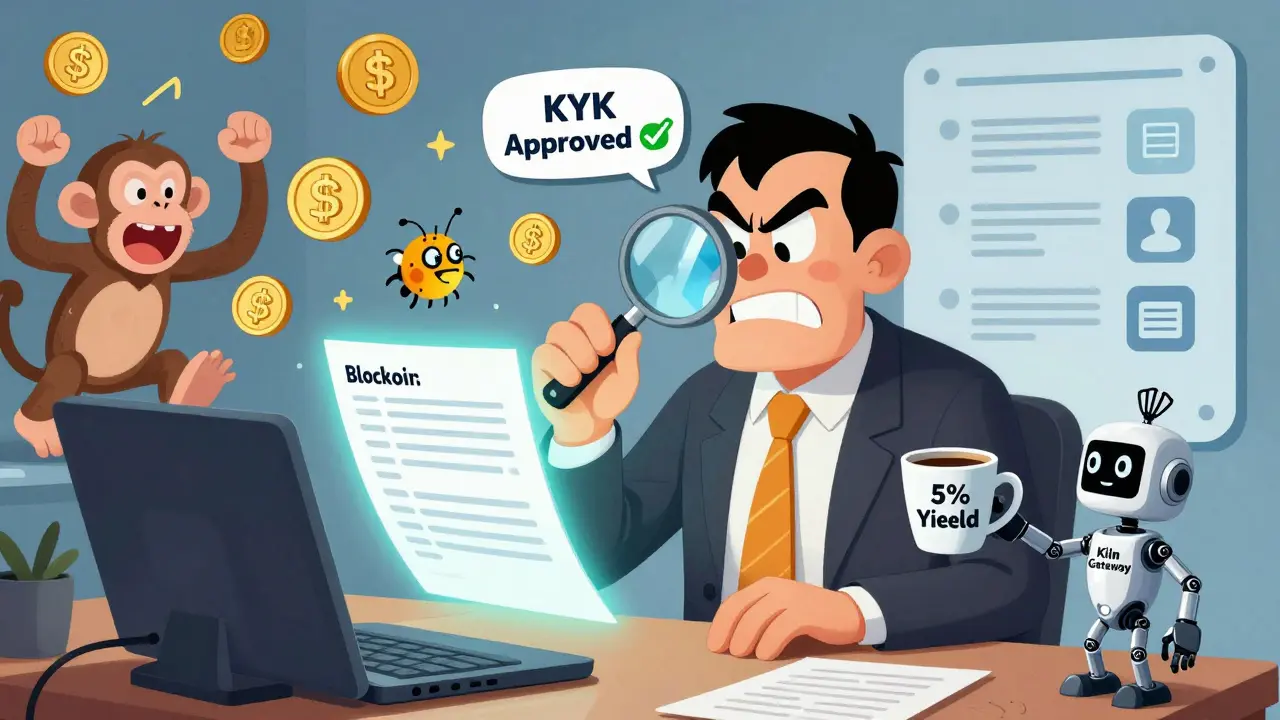
Institutional DeFi isn’t just another buzzword-it’s the quiet revolution reshaping how trillion-dollar institutions interact with blockchain. Forget the wild west of crypto exchanges and meme coins. This is about banks, pension funds, and asset managers quietly integrating DeFi protocols into their operations-without breaking any laws. And they’re not doing it for hype. They’re doing it because the returns, efficiency, and transparency are too compelling to ignore.
What Institutional DeFi Actually Means
Institutional DeFi isn’t hedge funds buying ETH on Coinbase and staking it on Lido. That’s just crypto participation. Real Institutional DeFi means using decentralized protocols-like lending on Aave, swapping on Uniswap, or earning yield on tokenized bonds-but under strict compliance guardrails. The Oliver Wyman Forum defines it clearly: it’s DeFi protocols applied to tokenized real-world assets, wrapped in regulatory safeguards. Think of it as traditional finance wearing blockchain pants.
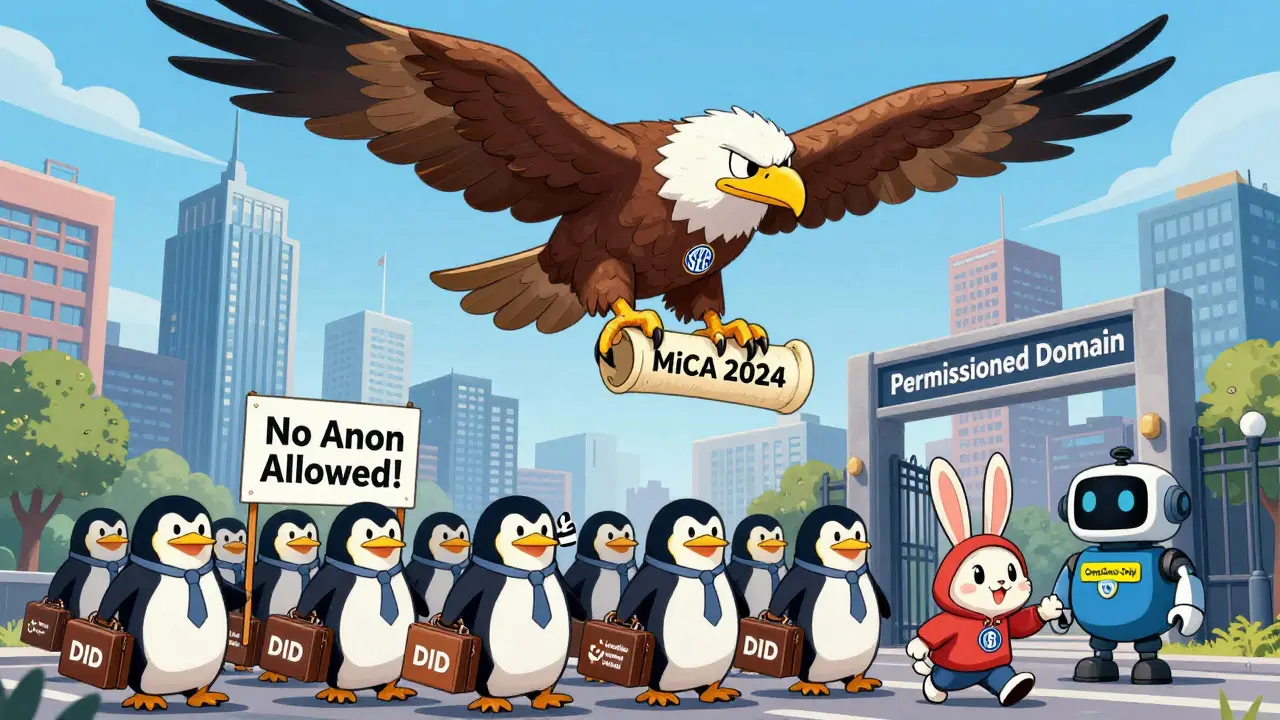
The key difference? Permission. In public DeFi, anyone with a wallet can join. In Institutional DeFi, access is gated. You need verified identity, KYC checks, and regulatory clearance before you can interact. This isn’t a flaw-it’s the design. Institutions can’t risk fines from regulators like the SEC or FinCEN. They need audit trails, reporting, and accountability. That’s why solutions like Kiln’s enterprise gateway and XRPL’s Permissioned Domains are gaining traction. They let institutions access DeFi yields while keeping compliance baked into the system.
Why Institutions Are Jumping In
It’s not about speculation. It’s about yield.
EY’s 2025 Institutional Investor Digital Assets Survey found that 74% of institutions plan to engage with DeFi within two years. Only 24% are active today. That gap tells you everything. These are not early adopters. These are cautious, data-driven players waiting for the right setup. And now it’s here.
Why? Because traditional fixed-income returns are flat. Cash yields are near zero. Bonds are volatile. Meanwhile, DeFi protocols offer 5-10% annual returns on stablecoins like USDC or tokenized Treasuries-with no middlemen. For an asset manager holding $50 billion in cash equivalents, even a 3% boost means $1.5 billion in extra income per year. That’s not noise. That’s material.
Plus, DeFi operates 24/7. No weekend closures. No settlement delays. Liquidity moves faster. Smart contracts execute trades automatically. Compliance rules can be coded directly into the protocol-like auto-freezing assets if a user’s KYC expires. That’s not possible in legacy systems.
How It Works: Permissioned vs. Permissionless
There are two models: permissionless and permissioned.
Permissionless DeFi-like Uniswap or Compound-is open to anyone. No ID needed. No approval. Just connect your wallet and go. It’s pure blockchain ethos. But institutions can’t use it directly. Too risky. Too anonymous. Too untraceable.
Permissioned DeFi flips that. It runs on public blockchains-Ethereum, XRPL, Polygon-but adds layers of control. Here’s how:
- Decentralized Identifiers (DIDs): Your identity is anchored on-chain, not stored by a bank. You control it.
- Verifiable Credentials: A regulator or KYC provider issues a digital badge proving you’re accredited or compliant. No third-party databases.
- Permissioned Domains: Only wallets with the right credentials can interact with a specific protocol. Like a private club, but on blockchain.
XRPL’s September 2025 update made this possible. Now institutions can access DeFi liquidity without exposing themselves to unvetted participants. It’s DeFi with a bouncer.
The Security Bar Is Much Higher
DeFi protocols don’t have CISOs. Institutions do. And they’re not letting their teams near a smart contract without a full security audit.
Halborn’s September 2025 analysis says it plainly: TradFi institutions are held to a far higher security standard than DeFi natives. That means:
- Regular penetration testing of on-chain and off-chain code
- SOC 2 compliance for infrastructure
- Multi-signature wallet controls
- Real-time monitoring of transaction flows
- Audit trails that satisfy Sarbanes-Oxley (SOX)
Kiln’s platform is built for this. It doesn’t just connect to Aave and Compound-it gives institutions a single dashboard with reporting, alerts, and compliance logs. No more juggling 12 different interfaces. One system. One audit. One set of controls.
Regulation Is the Gatekeeper
Without clear rules, institutions won’t move. That’s why MiCA-the EU’s Markets in Crypto-Assets regulation-is the biggest catalyst.
Since MiCA went live in 2024, European institutions have adopted Institutional DeFi at a 63% rate, per EY. North America? 41%. Asia-Pacific? 29%. Why the gap? Because MiCA gave institutions a playbook. It defined what’s legal. It clarified AML/CFT obligations. It set standards for custody and reporting.
In the U.S., it’s messier. The SEC, FinCEN, IRS, and DOJ all claim jurisdiction over DeFi. In November 2025, the SEC said federal authorities “likely have jurisdiction”-a phrase that leaves institutions guessing. No clarity. No confidence. No adoption.
That’s why the International Organization of Securities Commissions (IOSCO) is working on a global Institutional DeFi Compliance Framework, due in Q1 2026. If it lands, it could unify standards across jurisdictions. That’s the real game-changer.
Challenges No One Talks About
It’s not all smooth sailing.
First, integration. Institutions don’t just flip a switch. They need to build new workflows. Wallet infrastructure. Compliance stacks. Staff training. Kiln reports clients take 8-12 weeks to fully onboard. That’s not quick.
Second, skill gaps. Few teams have people who understand both AML regulations and Solidity code. You need auditors who can read smart contracts. Lawyers who know blockchain. Developers who understand capital markets. That’s rare. And expensive.
Third, tax complexity. The CPA Journal warned in September 2025 that U.S. members of DAOs could be taxed on income they didn’t even receive-if they’re seen as acting on behalf of the DAO. One wrong move, and you’re on the IRS radar.
And then there’s the cultural clash. Traditional DeFi users hate Institutional DeFi. Reddit threads like r/defi’s October 2025 post from u/DeFiPurist say it loud: “When institutions add all their compliance layers, it’s not really DeFi anymore-it’s just traditional finance with extra steps.”
They’re not wrong. Institutional DeFi sacrifices some of DeFi’s soul: permissionless access, anonymity, frictionless participation. But institutions aren’t here for philosophy. They’re here for returns, risk control, and compliance. And that’s okay.
Who’s Winning Right Now
Three types of players dominate:
- Traditional institutions building in-house solutions-like JPMorgan’s Onyx network, which tokenizes payments and bonds on private blockchains.
- Blockchain infrastructure providers like Kiln and Chainlink, offering enterprise-grade gateways with compliance baked in.
- Regulatory tech firms that specialize in KYC, AML, and audit tools tailored for DeFi.
Kiln leads in adoption. Their clients report operational efficiency gains: one asset manager said, “Instead of managing separate interfaces for multiple protocols, we now have the same operational workflow whether we’re staking or lending.” That’s the holy grail-consistency.
G2’s October 2025 review data shows enterprise DeFi tools average 3.8/5 stars. Praise for yield. Criticism for complexity. The learning curve is steep. But once teams get past it, the value sticks.

Where This Is Headed
The Oliver Wyman Forum predicts $1.2 trillion in Institutional DeFi assets by 2027. Right now, institutions account for less than 5% of total DeFi volume. By 2027, they could be driving 15-20%.
That’s not a trickle. That’s a flood.
Expect more tokenized assets: real estate, commodities, private equity. More regulated yield pools. More institutional-grade custody solutions. More cross-border coordination.
But it won’t be uniform. Europe will lead. The U.S. will lag until regulators agree on a framework. Asia will move cautiously, balancing innovation with state control.
The future of finance isn’t DeFi vs. TradFi. It’s DeFi powered by TradFi. And the institutions that build the right bridges-secure, compliant, efficient-will capture the next decade of financial growth.
What You Need to Do Now
If you’re an institution:
- Start with a pilot. Pick one use case-maybe staking ETH or lending USDC.
- Choose a provider with SOC 2 compliance and audit trails. Don’t DIY.
- Train your ops and legal teams together. They need to speak the same language.
- Map your jurisdiction’s regulatory stance. MiCA? SEC? MAS? Your strategy changes based on where you operate.
- Don’t wait for perfect clarity. The window is open now. The first movers will own the infrastructure.
If you’re a developer or builder:
- Build for compliance from day one. Don’t bolt it on later.
- Integrate DIDs and verifiable credentials. Make identity portable and secure.
- Document everything. Kiln’s 95% client satisfaction on documentation? That’s not luck. That’s discipline.
- Focus on unified dashboards. Institutions don’t want 10 apps. They want one.
Is Institutional DeFi really DeFi?
It’s DeFi with guardrails. It uses the same protocols-lending, swapping, staking-but adds identity verification, compliance layers, and audit trails. It sacrifices permissionless access for regulatory safety. Some purists say it’s not “real” DeFi. But institutions don’t care about ideology-they care about returns, security, and legal protection. If the protocol works under regulation, it’s still DeFi, just evolved.
Can U.S. institutions use Institutional DeFi today?
Yes, but cautiously. There’s no clear federal framework yet. The SEC, FinCEN, and IRS all claim authority, but haven’t issued unified rules. Many U.S. institutions are testing DeFi through regulated intermediaries or using offshore entities. Others wait for the IOSCO framework in Q1 2026. Until then, adoption is slow and fragmented.
What’s the biggest risk in Institutional DeFi?
Smart contract bugs. Even with audits, code can have hidden flaws. One exploit can wipe out millions. That’s why institutions demand multi-layered security: formal verification, bug bounties, real-time monitoring, and off-chain controls. The risk isn’t just technical-it’s reputational. A single breach could trigger regulatory scrutiny and client attrition.
How does Institutional DeFi handle KYC?
It uses decentralized identifiers (DIDs) and verifiable credentials. Instead of storing your ID with a bank, a trusted third party-like a licensed KYC provider-issues a digital credential that proves your identity. This credential is stored on-chain and can be verified without exposing your personal data. It’s private, secure, and compliant-no central database to hack.
Is Institutional DeFi profitable?
Yes-significantly. Institutions report yields of 5-10% on stablecoins and tokenized assets, far above traditional cash or bond yields. One asset manager using Kiln’s platform earned $42 million in additional income over 12 months on $800 million deployed. The real profit isn’t just in yield-it’s in operational savings: faster settlements, automated compliance, reduced manual work. ROI is clear, but only with the right infrastructure.
What’s the difference between Institutional DeFi and CeFi?
CeFi (Centralized Finance) means using centralized platforms like Coinbase or BlockFi-where the company holds your assets and controls access. Institutional DeFi uses decentralized protocols, but with access controls. You retain custody of your assets. The protocols are open-source and on-chain. The difference is control: CeFi = trust a company. Institutional DeFi = trust code, but only if you’re verified.
Will Institutional DeFi replace traditional banking?
No. It will augment it. Banks won’t disappear. But their back-office functions-clearing, settlement, lending, custody-will increasingly run on DeFi protocols. Think of it as upgrading legacy systems with blockchain. The customer experience stays familiar. The infrastructure becomes faster, cheaper, and more transparent. It’s evolution, not replacement.
Final Thoughts
Institutional DeFi isn’t about replacing Wall Street with blockchain. It’s about making Wall Street better. Faster. More transparent. More efficient. The old system is bloated. The new tools are powerful. The only thing holding it back is regulation-and that’s changing.
The institutions that move now won’t just earn higher yields. They’ll build the infrastructure of the next financial era. The rest will be left wondering why they waited.
Jess Bothun-Berg
December 5, 2025 AT 21:55So let me get this straight: banks are now using blockchain… but only if they can put a lock on it? That’s not DeFi. That’s just Wall Street in a hoodie.
Joe B.
December 7, 2025 AT 01:49Look, I’ve spent 14 years in compliance at a Tier 1 bank, and let me tell you-this whole "permissioned DeFi" thing is the most beautiful contradiction since a vegan ordering a bacon cheeseburger. They want the 8% APY of DeFi but still need 17 layers of SOC 2 audits, KYC verifications, and a signed affidavit from their grandmother that they didn’t touch the private key. It’s not innovation-it’s bureaucratic cosplay. And don’t even get me started on the "DIDs"-it’s just a fancy name for a digital ID card that still gets hacked because someone used "password123" for their wallet. 😅
Rod Filoteo
December 8, 2025 AT 23:20They’re not adopting DeFi-they’re weaponizing it. You think this is about efficiency? Nah. This is the Fed’s backdoor to track every dollar you ever touch. Kiln? Chainlink? Those aren’t companies-they’re NSA fronts with better UIs. And don’t tell me about "verifiable credentials"-that’s just the government saying "we know who you are, and we’re watching." They’re turning the open internet into a gated community for billionaires who still need their CPA to approve their crypto trades. 🕵️♂️
Murray Dejarnette
December 10, 2025 AT 00:47Y’all are missing the point. This isn’t about philosophy-it’s about MONEY. $42 million extra on $800M? That’s not a win-that’s a goddamn revolution. I don’t care if it’s "DeFi with guardrails," if I can get 7% on my stablecoins without waiting three days for a wire transfer, I’m all in. The purists can keep their anonymous wallets and their "no KYC, no rules" nonsense. I’ve got pensions to protect. 😎
Sarah Locke
December 11, 2025 AT 20:59Let me tell you something-this is the most exciting thing to happen to finance since the ATM. Imagine if your grandma could earn 6% on her savings without needing a broker, a form, or a 45-minute call with a customer service rep who doesn’t speak English. This isn’t just for hedge funds-it’s for everyone. The tech is here. The compliance is being built. All we need is for people to stop arguing about "what’s real DeFi" and start asking: "How do I get in?" 🌟
Philip Mirchin
December 12, 2025 AT 09:31As someone who’s helped two mid-sized credit unions onboard DeFi tools, I can say this: the biggest hurdle isn’t tech-it’s culture. The ops team thinks blockchain is a meme. Legal thinks it’s a lawsuit waiting to happen. And the CFO? He just wants to know if it’ll show up on the quarterly report. Once you get them talking to each other-not yelling at each other-that’s when magic happens. One client said, "I didn’t know a smart contract could be so boring." And that’s the goal.
Maggie Harrison
December 13, 2025 AT 12:50It’s funny how we call it "Institutional DeFi" like it’s a new species. But really, it’s just capitalism evolving. The internet didn’t kill newspapers-it made them better. DeFi isn’t dying because institutions are joining-it’s maturing. The soul of DeFi was never about chaos. It was about freedom from middlemen. And now, those middlemen are being replaced by code that’s audited, regulated, and transparent. That’s not betrayal. That’s progress. 🌱
Lawal Ayomide
December 15, 2025 AT 06:18US institutions think they own DeFi now? In Nigeria, we use DeFi because banks shut down for weeks. You don’t "add compliance"-you survive. Your "permissioned DeFi" is our daily life. We don’t need your KYC-we need access.
Darlene Johnson
December 16, 2025 AT 03:06They say "MiCA made it safe"-but what if the regulators are the ones who hacked the system? What if the "compliance layer" is just a backdoor? I’ve seen what happens when governments "regulate" crypto. First they say "we’re protecting you," then they take your money. And now they’re calling it "Enterprise DeFi"? That’s not innovation-that’s a Trojan horse with a corporate logo.
Ivanna Faith
December 16, 2025 AT 21:19Let’s be real-this isn’t DeFi. It’s TradFi with a blockchain sticker. The moment you need a lawyer to approve a transaction, you’ve lost the entire point. The beauty of crypto was that you didn’t need permission. Now you need a board meeting, a compliance officer, and a notary. This isn’t evolution. It’s surrender.
alex bolduin
December 18, 2025 AT 15:49What’s funny is that the people screaming "it’s not real DeFi" are the same ones who couldn’t set up a wallet without a YouTube tutorial. Institutional DeFi isn’t about purity-it’s about scale. If you want to move $50B in yield, you can’t do it with a Metamask wallet and a prayer. You need systems. You need audits. You need accountability. That’s not selling out-that’s growing up.
Althea Gwen
December 19, 2025 AT 16:09So now we’re calling it "DeFi" because it’s on a blockchain? Cool. Next they’ll call a Walmart checkout a decentralized exchange because it has a barcode scanner. 🙄
Steve Savage
December 21, 2025 AT 01:16I’ve been watching this space since 2017. The real story isn’t the yields or the compliance-it’s the quiet shift in mindset. Institutions aren’t adopting blockchain because they love it. They’re adopting it because they’re terrified of being left behind. And honestly? That’s the best kind of adoption. Fear drives innovation. Love drives nostalgia. This? This is the future being built by people who don’t want to lose.
Sarah Roberge
December 21, 2025 AT 13:48Y’all are so obsessed with "permissioned" this and "regulated" that you forgot the whole point of crypto was to be unshackled. Now we have banks saying "you can stake but only if you’re verified, compliant, and have a signed waiver that you won’t cry if you lose money." This isn’t innovation-it’s a corporate spa day for old men in suits. 💅
Bhoomika Agarwal
December 22, 2025 AT 16:32USA thinks it owns the future? In India, we don’t wait for SEC to say "okay"-we build. DeFi isn’t a luxury for rich banks. It’s survival for 800 million unbanked. Your "permissioned DeFi"? It’s a cage. We want the open field. You want a gated community. Which one is really decentralized?
Nelia Mcquiston
December 22, 2025 AT 18:21There’s a beautiful tension here. The original dream of DeFi was freedom. The reality of finance is responsibility. Maybe the answer isn’t choosing one over the other-but finding a way to hold both. Can we have permissionless access AND institutional safety? Maybe not today. But maybe tomorrow. And that’s worth fighting for.
Mark Stoehr
December 24, 2025 AT 03:56They say 74% of institutions plan to use DeFi. That’s a lie. 74% have a PowerPoint slide about it. 12% have a pilot. 3% are live. The rest are waiting for someone else to get sued first. Don’t believe the hype. This is a slow crawl-not a sprint.
Reggie Herbert
December 24, 2025 AT 11:14Let’s cut through the jargon. Institutional DeFi = TradFi with a blockchain wrapper. It’s not DeFi. It’s not even crypto. It’s a regulatory arbitrage play. You’re using open protocols to extract yield while avoiding the legal consequences of being a crypto player. That’s not innovation. That’s exploitation. And the fact that people are calling this "progress" is the real tragedy.
Alan Brandon Rivera León
December 25, 2025 AT 02:27I grew up in a family that lost everything in the 2008 crash. I didn’t trust banks after that. Then I found crypto. It felt like freedom. Now I see institutions coming in with their compliance teams and audit logs… and honestly? I’m not mad. Maybe this is how it’s supposed to end-not with a revolution, but with a quiet, boring, efficient upgrade. The dream didn’t die. It just got a suit.
Ankit Varshney
December 26, 2025 AT 08:32India has over 400 million people without bank accounts. DeFi gave them access. Institutional DeFi? It’s for people who already have everything. This isn’t inclusion. It’s exclusion with a white paper.
Ziv Kruger
December 26, 2025 AT 22:31If the soul of DeFi was permissionless access, then Institutional DeFi is its funeral. But maybe funerals are necessary. Maybe the dream was too pure to survive in the real world. Maybe what we’re seeing isn’t betrayal-it’s evolution. The question isn’t whether it’s still DeFi. It’s whether we still want to be part of it.