Self-Sovereign Identity on Blockchain: Take Control of Your Digital Identity
 Mar, 2 2026
Imagine logging into a bank, signing a contract, or proving your age - without handing over your passport, social security number, or login details. No more passwords. No more third parties holding your data. Just you, in control. That’s the promise of self-sovereign identity on blockchain.
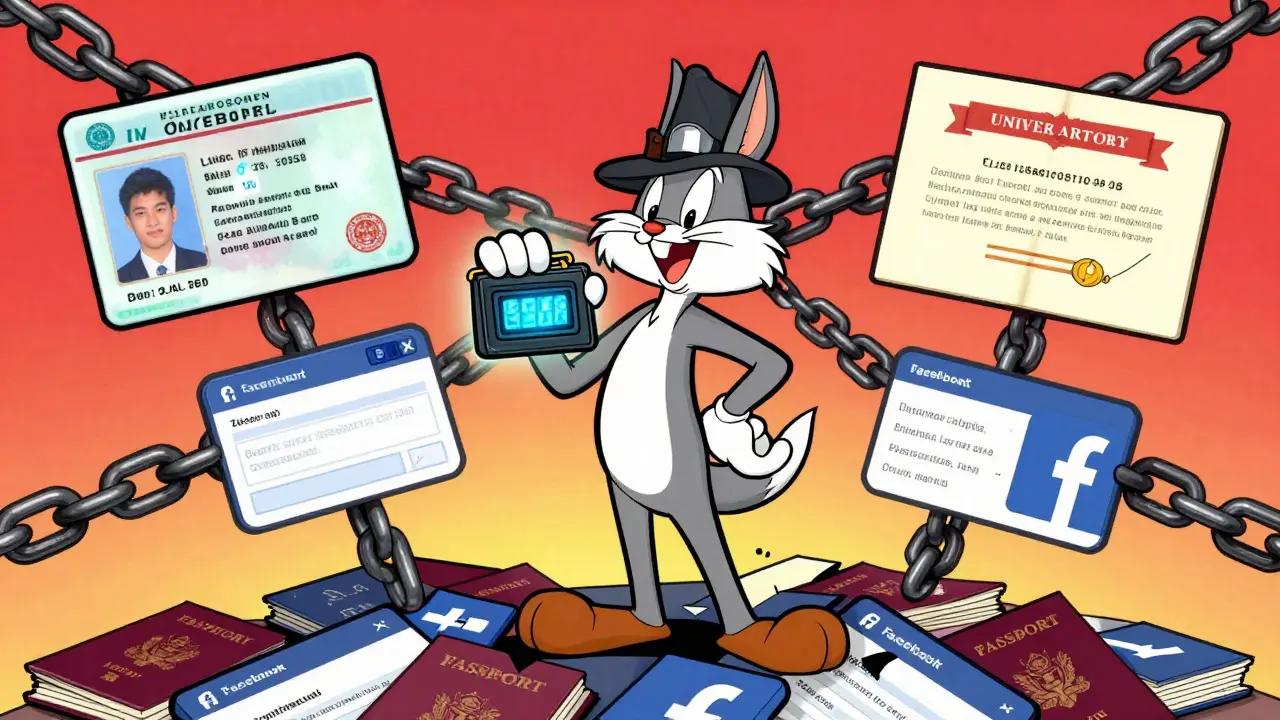
Right now, your digital life is scattered across Google, Facebook, and a dozen other accounts. Each one holds a piece of you - your name, email, birthdate, even your face. If one of those companies gets hacked, your identity gets exposed. And if they decide to change their terms? You lose access. This isn’t just inconvenient. It’s dangerous. Over 400 million Facebook users were affected in a single 2023 data leak. That’s not an anomaly. It’s the system we’re stuck with.
Self-sovereign identity (SSI) flips this model. Instead of trusting companies to manage your identity, you hold it yourself. Think of it like a digital wallet for your personal data - but instead of cash, it holds your credentials. Your driver’s license, university degree, or proof of residency. And because it’s built on blockchain, none of it can be altered, deleted, or stolen by a central server.
How Self-Sovereign Identity Works
SSI isn’t magic. It’s three simple pieces working together: Decentralized Identifiers (DIDs), Verifiable Credentials (VCs), and blockchain.
DIDs are your unique digital ID - but unlike your email or username, they’re not tied to a company. They’re generated by you, stored on your device, and linked to a public blockchain. Think of them like a fingerprint that only you can prove you own. The W3C standardized them in 2022, and now every major SSI system uses them.
Verifiable Credentials are the documents you carry. Not scanned PDFs. Not screenshots. Cryptographically signed digital versions of your credentials. Your university issues a VC for your degree. It’s signed with their private key. You store it in your wallet. When you need to prove it, you share only what’s necessary - say, "I graduated in 2020," without showing your full transcript. The recipient checks the signature against the issuer’s public key. No middleman. No database lookup. Just math proving it’s real.
Blockchain is the backbone. It doesn’t store your data. That stays with you. Instead, it stores the hash - a unique digital fingerprint - of your DID and credentials. This makes verification tamper-proof. If someone tries to fake a credential, the hash won’t match. Ethereum, Sovrin, and ION are the most common blockchains used. Ethereum costs about $0.45 per verification. Sovrin handles 1,000 transactions per second. Both are public, open, and unstoppable.
Why SSI Beats Traditional Systems
Right now, most identity systems are either centralized or federated.
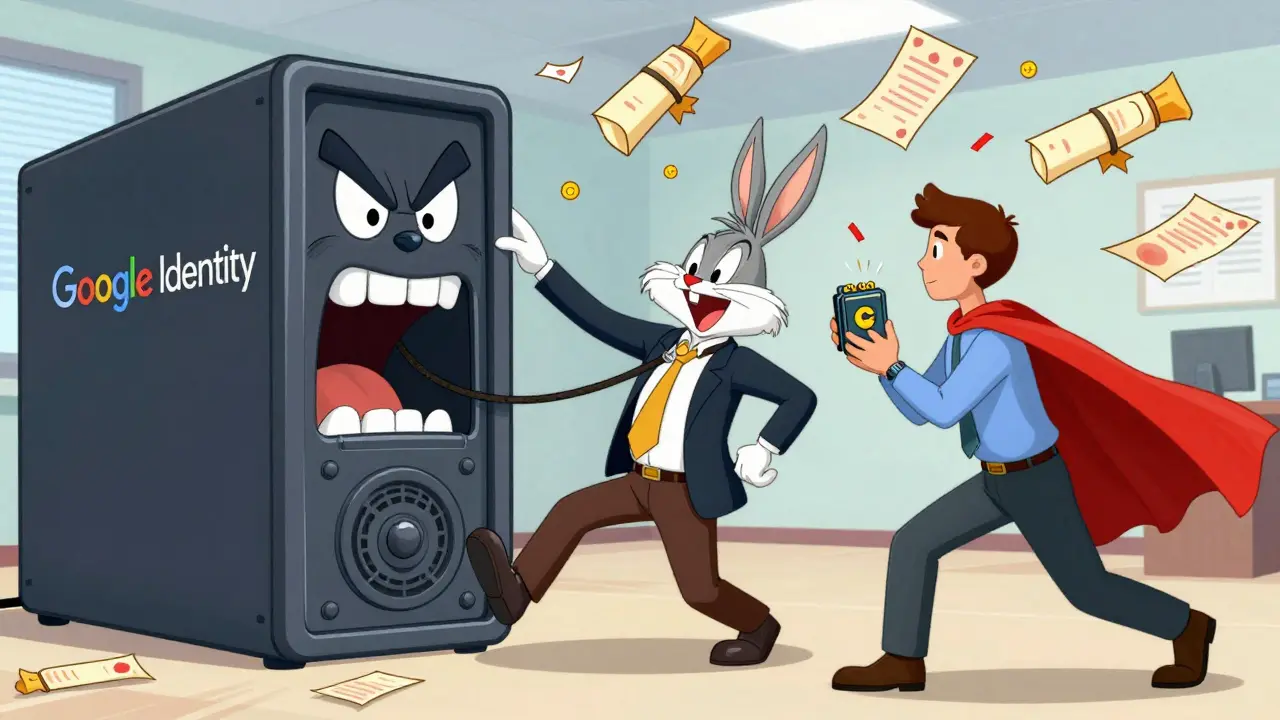
Centralized? That’s Google Sign-In. One company owns all your data. If they get breached, you’re exposed. In 2023, Google processed 3 billion logins a day. That’s a honey pot for hackers.
Federated? That’s SAML, used by banks and enterprises. It’s better - you use your company login to access apps. But you still trust your employer to keep your data safe. And if they get hacked? So do you.
SSI removes both risks. No central server. No single point of failure. You control what to share, when, and with whom. The European Union’s EHN network, serving 450 million citizens, uses SSI to let patients share medical records securely. JPMorgan’s pilot cut KYC verification from 5 days to under 2 hours. That’s not theory. That’s real savings.
And the numbers show it’s growing. In 2023, the global digital identity market hit $24.3 billion. SSI made up $1.38 billion of that. Government use leads the way - 42% of SSI deployments are for national ID systems. Financial services are next at 29%. The EU’s eIDAS 2.0 regulation, effective September 2024, requires all member states to adopt SSI-compatible systems. That’s a massive push.
The Real Problems With SSI
SSI sounds perfect. So why isn’t everyone using it?
Because it’s hard.
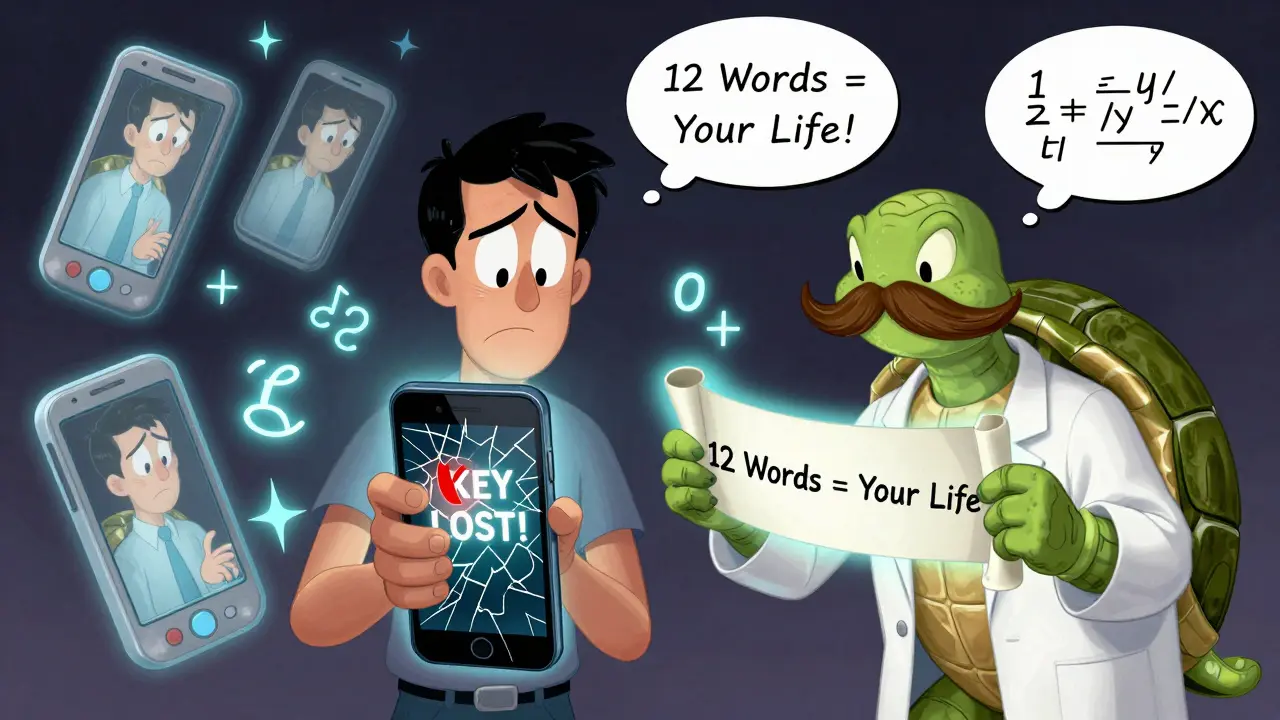
The biggest issue? Key management. Your DID is protected by a private key. Lose it, and you lose your identity. No password reset. No customer service. A 2023 IEEE study found 68% of non-tech users couldn’t manage keys without help. Reddit users report horror stories: "Lost my entire identity after a phone upgrade." Product Hunt reviews show 87% of negative feedback is about recovery.
Then there’s UX. Onboarding is clunky. Civic’s wallet app saw a 72% abandonment rate during sign-up. People quit because the steps felt like setting up a crypto wallet - complicated, intimidating, full of jargon.
And let’s not forget bias. A 2024 Electronic Frontier Foundation audit found facial recognition in some SSI wallets had 34.7% higher error rates for darker-skinned women. That’s not a glitch. It’s a flaw in the data. If your identity system uses biased AI, it doesn’t matter how decentralized it is - it still discriminates.
Even enterprises struggle. Microsoft’s Entra Verified ID is used by 37% of Fortune 500 companies - but only for specific use cases. Pure SSI frameworks? Just 8% adoption. Why? Integration takes 6-9 months. Developers need 8-12 weeks just to learn the basics. Schema standardization alone eats up 3-4 months of project time.
Who’s Leading the Charge?
Not everyone is stuck in the early adopter phase. Some players are making real progress.
Microsoft’s Entra Verified ID lets companies issue digital diplomas, licenses, and employee IDs. It’s not fully decentralized - Microsoft still runs servers - but it’s a step toward SSI.
Sovrin Network, built on Hyperledger Indy, is the gold standard for public SSI. It’s open, permissionless, and handles high volumes. The Sovrin Foundation’s whitepaper from April 2023 shows it can process 1,000 transactions per second - faster than Visa’s network.
Then there’s ION, built on Bitcoin. It’s free to use, scales well, and launched ION 2.0 in September 2024 with 10x faster performance. UNICEF used ION in Indonesia to issue digital birth certificates. Retention? 92%. The old system? 63%.
And don’t overlook the open-source community. Dock.io, Trinsic, and KILT are building developer tools. But documentation varies. Sovrin scores 4.5/5. KILT? 3.1/5. That gap slows adoption.
The Future: What’s Coming Next
SSI isn’t stuck. It’s evolving fast.
The W3C released Verifiable Credentials Data Model 2.0 in June 2024. It added better privacy controls - like zero-knowledge proofs - so you can prove you’re over 18 without showing your birthdate.
The Internet Identity Working Group is building a "Universal Wallet" by Q2 2025. It’ll let you use one wallet across apps - whether it’s a bank, a university, or a crypto exchange. That’s huge.
FIDO Alliance plans to integrate passkeys with SSI by Q4 2025. That means you could log in with your fingerprint or face - and still own your identity. No Google or Apple in the middle.
But here’s the catch: most users will still rely on Apple or Google for wallet services. Dr. Lorrie Cranor’s research at Carnegie Mellon found 83% of people would trust a tech giant with their keys. That’s not decentralization. That’s just a new kind of centralization.
And then there’s regulation. The EU is pushing SSI. China is building its own blockchain ID system - incompatible with Western standards. If the world splits into two identity ecosystems, SSI’s global promise crumbles.
Should You Care?
If you’re a developer, yes. SSI is the future of Web3. DeFi platforms are already using it. By 2027, 85% of major DeFi apps will require SSI for access.
If you’re a business, yes. You can cut verification costs by 47% - like that European bank Accenture helped. You can reduce fraud. You can build trust.
If you’re a regular user? It’s not ready yet. The UX is still too rough. The risk of losing your keys is too high. But in 2028-2030, when wallets become as easy as unlocking your phone - you’ll wonder why you ever gave your data away.
SSI isn’t about replacing passwords. It’s about replacing trust. You don’t need to trust Google. You don’t need to trust Facebook. You don’t even need to trust the bank. You just need to trust math - and your own control.
That’s the revolution. And it’s already started.
What is a Decentralized Identifier (DID)?
A DID is a unique, user-controlled digital identifier that doesn’t rely on any central authority like a company or government. It’s stored on your device and anchored to a blockchain for verification. Unlike an email or username, you own your DID. The W3C standardized it in 2022, and it’s now the foundation of every self-sovereign identity system.
How are Verifiable Credentials different from digital IDs?
Verifiable Credentials (VCs) are cryptographically signed digital documents - like a diploma or driver’s license - issued by trusted entities. They’re not just files you download. Each one has a digital signature that proves it’s real and hasn’t been tampered with. You choose what to share. A VC might prove you’re over 21 without showing your birthdate. Traditional digital IDs are often just scanned documents with no cryptographic proof.
Can I lose my self-sovereign identity?
Yes - if you lose your private key and don’t have a backup. Unlike traditional logins, there’s no "forgot password" button. Your identity is tied to that key. If you lose it, you lose access. That’s why wallet apps now offer recovery phrases and multi-device sync. But 87% of negative user reviews mention key recovery as a major pain point.
Is blockchain necessary for self-sovereign identity?
Technically, no. You could build a system without blockchain. But blockchain provides three critical things: immutability (no one can alter your DID), transparency (anyone can verify its authenticity), and decentralization (no single company controls it). Without it, you’re just moving from one centralized system to another. Most real-world SSI systems use Ethereum, Sovrin, or ION.
Why are governments adopting SSI?
Governments use SSI to reduce fraud, cut costs, and increase trust. The EU’s eIDAS 2.0 regulation requires member states to adopt SSI by 2024. It lets citizens prove their identity across borders - say, opening a bank account in Germany with a digital ID from Spain. British Columbia’s Verified.Me service processed 1.2 million verifications in 2023 with zero breaches. That’s a huge win for public trust.
John Fuller
March 3, 2026 AT 00:41Lucy Simmonds
March 4, 2026 AT 15:23Maggie House
March 5, 2026 AT 08:49Dana Sikand
March 6, 2026 AT 09:39Cameron Pearce Macfarlane
March 7, 2026 AT 03:42Elizabeth Smith
March 8, 2026 AT 15:52Robert Kromberg
March 10, 2026 AT 10:36Daisy Boliaan
March 12, 2026 AT 06:52Nicki Casey
March 12, 2026 AT 14:07Jessica Carvajal montiel
March 13, 2026 AT 22:12maya keta
March 15, 2026 AT 16:19Curtis Dunnett-Jones
March 16, 2026 AT 15:30Sean Logue
March 16, 2026 AT 19:05