Nami Crypto Exchange Review: Is It Safe and Worth It for Vietnamese Traders?
 Jan, 23 2026
When you're trading crypto in Vietnam, you don't want a global exchange that treats you like just another number. You want a platform that speaks your language, understands your market, and moves fast when you need it to. That’s where Nami Exchange comes in. But is it actually safe? Does it deliver what it promises? And should you trust it with your money in 2026?
What Is Nami Exchange?
Nami Exchange is a cryptocurrency trading platform built by the Nami Foundation, a Vietnam-based company focused on digital finance. It launched before 2022 and has grown quickly by targeting one thing: Vietnamese crypto users. Unlike Binance or Coinbase, which try to serve everyone, Nami focuses on the local market. That means support in Vietnamese, local payment methods, and a user experience designed for how people in Vietnam actually trade. It’s not just a trading app. Nami is part of a bigger ecosystem that includes Nami Insurance, showing the team is thinking long-term about risk and protection. The platform offers both Spot and Futures trading with nearly 1,000 trading pairs and leverage up to 125x. That’s more than enough for casual traders and serious speculators alike.How Does Nami Exchange Work?
Using Nami is straightforward if you’re on mobile. You can’t complete full verification on the website - you need the iOS or Android app. Once you download it, you sign up, then jump into the six-step KYC process:- Log in and go to your Account section.
- Select "Unverified" to start.
- Fill in your personal details (name, date of birth, address).
- Add a payment method (bank transfer or local e-wallet).
- Upload a clear photo of your ID card or passport - all four corners must be visible.
- Record a short video of your face - no need to hold up your ID anymore, as of November 2024.
Security: The Big Question
This is where things get messy. On one hand, Nami has invested heavily in compliance. In late 2022, they partnered with Chainalysis - the same company that helps the FBI track crypto crime. That means every transaction on Nami gets monitored for suspicious activity. If someone tries to send stolen funds or launder money, Nami can freeze it, investigate, and block the transfer before it leaves their system. That’s not something most regional exchanges do. But here’s the problem: security isn’t just about compliance. It’s about technical strength. According to cer.live, Nami Exchange has a D rating - just 20% security score. Why? Because they don’t have a public penetration test, no bug bounty program, and no third-party audit reports published. That’s a red flag. Top exchanges like Binance and Coinbase routinely hire ethical hackers to break into their systems and fix holes before criminals can exploit them. Nami doesn’t appear to do that. WalletScrutiny.com also warns that Nami can suspend any account - even if it’s "beneficially owned by related entities." That’s a vague phrase, but it means they can lock you out without much explanation if they think you’re connected to someone they don’t trust. There are user reports of sudden account freezes during high-volume trading or unusual patterns, even if the funds were clean. So, Nami is compliant - but is it secure? The answer isn’t clear-cut. If you’re trading small amounts and value local support, the compliance edge might outweigh the technical risks. If you’re holding large sums or want enterprise-grade security, you might want to look elsewhere.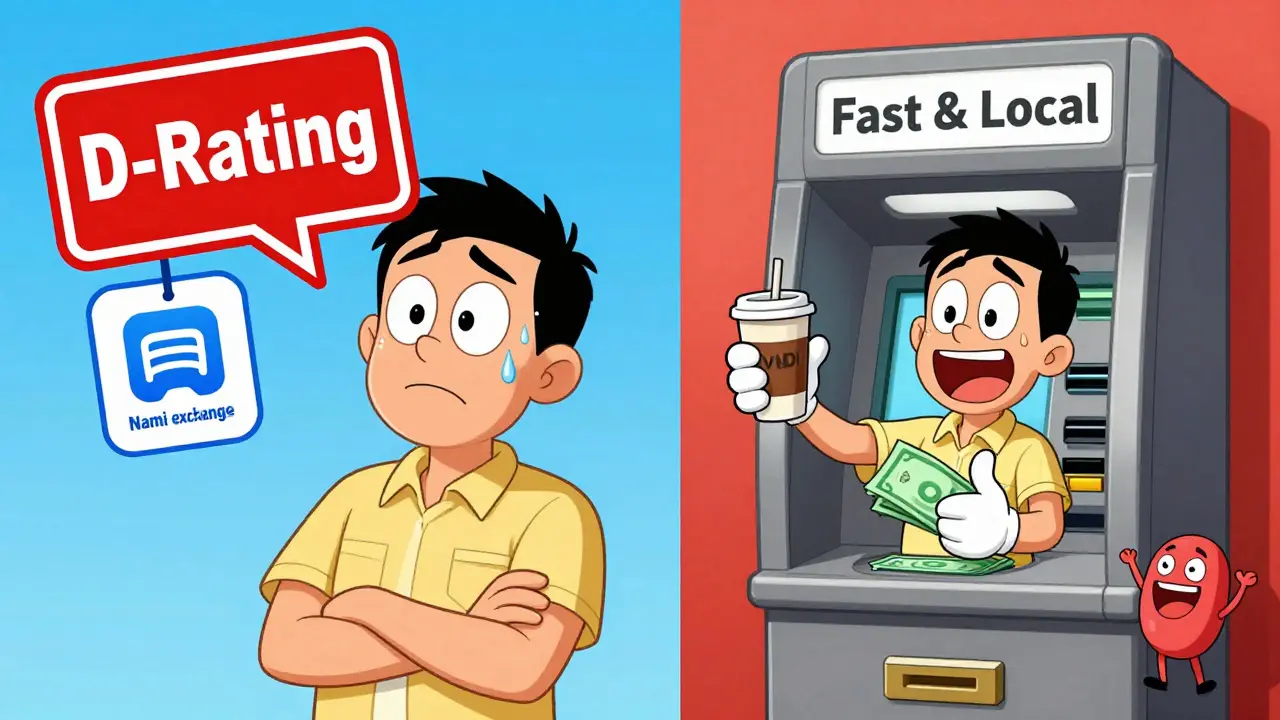
Trading Features and Pairs
Nami offers around 1,000 trading pairs, which puts it ahead of most local exchanges but behind global giants. You’ll find Bitcoin, Ethereum, Solana, BNB, and dozens of Vietnamese-recognized altcoins like VET, DOT, and MATIC. Futures trading is available with up to 125x leverage - risky, but popular among Vietnamese traders who use it for short-term swings. The platform doesn’t have advanced order types like OCO or trailing stops, which might frustrate professional traders. But for most users, market, limit, and stop orders are enough. The execution speed is fast, and spreads are tight on major pairs. Liquidity is solid within the Vietnamese user base, but if you’re trying to trade obscure tokens, you might struggle to find buyers or sellers.User Support and Community
One of Nami’s biggest strengths is support. Live chat is available 24/7 in both Vietnamese and English. That’s rare. Most exchanges offer English-only support, forcing non-English speakers to rely on translation tools or wait days for email replies. Nami’s team responds quickly, often within minutes during peak hours. The community is active, but split. There’s a dedicated Vietnamese Telegram group called "CongdongNamiVietnam" with over 150,000 members. Then there’s "NamiGlobalGroup" for international users. That split tells you something: Nami isn’t trying to go global. They’re doubling down on Vietnam. On Reddit, Twitter, or English forums, you’ll find almost no discussion about Nami. That’s not because it’s bad - it’s because most international users don’t even know it exists. If you’re outside Southeast Asia, you’re unlikely to find help or reviews in your language.
TrustScore and User Reviews
TrustFinance.com gives Nami a 45 out of 100 TrustScore based on 145 reviews. That’s below average. The main complaints? Slow KYC, occasional withdrawal delays, and a limited selection of coins compared to Binance. But users who’ve stayed with Nami for more than six months often praise the customer service and the fact that they can trade in VND without converting to USD first. Some users mention that after their KYC was approved, they had no issues for months. Others say their accounts got frozen after trading large amounts of a low-volume coin - and they never got a clear reason why. That inconsistency is worrying. The platform claims to hold licenses from "respected regional regulators." But no official license number or regulatory body name is publicly listed. That’s a red flag. Legitimate exchanges like Bitkub in Thailand or Tokocrypto in Indonesia clearly display their licenses. Nami doesn’t. That could mean they’re operating under a gray-area regulatory status - common in Vietnam, where crypto laws are still evolving.Who Is Nami Exchange For?
Nami Exchange isn’t for everyone. It’s not the best choice if you:- Live outside Southeast Asia and need English-only support
- Hold large amounts of crypto and need bank-level security
- Want to trade obscure tokens with low liquidity
- Expect detailed API access or advanced trading tools
- Fast, local customer service in your language
- Easy VND deposits and withdrawals
- A platform that understands local trading habits
- Strong compliance to avoid getting flagged by authorities
The Future of Nami Exchange
Vietnam has been the #1 country in the world for crypto adoption since 2021, according to Chainalysis. That’s not a fluke. It’s a cultural and economic shift. Nami is positioned perfectly to ride that wave. Their Chainalysis partnership isn’t just a marketing move - it’s a survival strategy. As Vietnam moves toward formal crypto regulation, exchanges with strong compliance systems will be the only ones allowed to operate legally. If Nami fixes its security gaps - adds penetration testing, launches a bug bounty, and publishes audit reports - it could become the dominant local exchange. If they don’t, they risk losing trust when regulators crack down. Right now, Nami is a high-risk, high-reward platform. It’s not the safest, but it’s one of the most tailored for Vietnamese traders. If you’re local, use it for small to medium trades. Keep your biggest holdings on a hardware wallet. Don’t trust it with everything - but don’t ignore it either.Is Nami Exchange safe to use in 2026?
Nami Exchange has strong compliance features thanks to its partnership with Chainalysis, which helps prevent money laundering and fraud. However, its security rating from cer.live is only D (20%), meaning it lacks penetration testing and a bug bounty program. It’s safer than many unregulated local exchanges, but not as secure as global leaders like Coinbase or Binance. Use it for trading, not long-term storage.
Can I use Nami Exchange outside Vietnam?
Yes, you can sign up and trade from anywhere, but the platform is optimized for Vietnamese users. Support is available in English, but most resources, guides, and community groups are in Vietnamese. Withdrawals in local currencies like VND are fast, but international bank transfers may be slower or restricted. It’s not designed for global traders.
Why does Nami require a facial video for KYC?
Nami uses facial verification to match your identity with your ID document and prevent impersonation. As of November 2024, you no longer need to hold up your ID during the video - just show your face clearly. This change was made to improve user experience while still maintaining identity verification standards.
Does Nami Exchange have a mobile app?
Yes, Nami Exchange only allows full KYC verification and trading through its iOS and Android apps. There is no full-featured web version. You must download the app from the App Store or Google Play to use the platform properly.
How many trading pairs does Nami offer?
Nami Exchange offers nearly 1,000 trading pairs, including major cryptocurrencies like BTC, ETH, and SOL, as well as popular regional tokens. Futures trading is available with up to 125x leverage. While this is fewer than Binance’s 1,500+ pairs, it’s more than most local exchanges in Southeast Asia.
Are there hidden fees on Nami Exchange?
Nami’s fee structure is transparent: 0.1% for spot trades and 0.04% for maker orders. Futures trading fees vary based on leverage and position size. There are no hidden fees, but withdrawal fees for some tokens can be high. Always check the fee schedule before trading. Deposits via local bank transfer are free.
Why do some users report account freezes on Nami?
Nami uses Chainalysis to monitor transactions for suspicious activity. If a deposit or withdrawal triggers a risk flag - even if the funds are clean - the system may freeze the account temporarily for review. This is common on compliant exchanges, but Nami doesn’t always explain why an account was frozen. Users should avoid trading with tokens linked to known scams or darknet markets to reduce the risk.
Does Nami Exchange offer staking or DeFi features?
As of 2026, Nami Exchange does not offer staking, yield farming, or DeFi integrations. It’s focused solely on Spot and Futures trading. If you want to earn interest on your crypto, you’ll need to use a separate platform like Binance or a wallet with built-in staking.
Taylor Mills
January 24, 2026 AT 20:10Arielle Hernandez
January 25, 2026 AT 16:42Mathew Finch
January 26, 2026 AT 13:06Jessica Boling
January 27, 2026 AT 02:18Tammy Goodwin
January 27, 2026 AT 08:20MOHAN KUMAR
January 28, 2026 AT 21:34Jennifer Duke
January 29, 2026 AT 07:42Andy Marsland
January 29, 2026 AT 16:45Jeffrey Dufoe
January 29, 2026 AT 17:58Tselane Sebatane
January 31, 2026 AT 14:37Jen Allanson
February 1, 2026 AT 06:05Harshal Parmar
February 1, 2026 AT 10:56Dave Ellender
February 1, 2026 AT 23:59Adam Fularz
February 2, 2026 AT 09:24Adam Lewkovitz
February 3, 2026 AT 20:37Brenda Platt
February 3, 2026 AT 21:26Mark Estareja
February 4, 2026 AT 10:16David Zinger
February 6, 2026 AT 06:19