Mercenary Capital in Liquidity Mining: Risks, Rewards, and the Shift to Sustainable DeFi
 Jul, 8 2026
You’ve seen it before. A new decentralized finance (DeFi) protocol launches with a promise that sounds too good to be true: deposit your crypto, earn massive rewards, and watch your balance grow overnight. The annual percentage yield (APY) hits 500%, then 1,000%. You jump in. So does everyone else. Then, just as quickly as the hype arrived, the rewards dry up, the token price crashes, and you’re left holding the bag.
This isn’t bad luck. It’s mercenary capital, defined as opportunistic funds that chase high yields across DeFi protocols without long-term loyalty. In the world of liquidity mining, where users provide assets to trading pools in exchange for governance tokens or interest, mercenary capital is both the engine of growth and the source of instability. Understanding how this dynamic works is critical if you want to navigate DeFi safely in 2026.
What Is Mercenary Capital and Why Does It Matter?
Mercenary capital refers to investors who move their funds rapidly between protocols, chasing the highest immediate returns. They don’t care about the project’s long-term vision, its community, or its technology. They care about one thing: the APY.
When a protocol like Compound launched its COMP token distribution in June 2020, it kicked off what became known as “DeFi Summer.” Protocols began offering massive incentives to attract liquidity. Investors flocked to these opportunities, deposited assets, earned tokens, and then sold those tokens on secondary markets. This cycle created a boom-bust pattern that has repeated itself countless times since.
The problem? These investors are fleeting. According to analysis by Variant Fund, the average liquidity miner stays in a protocol for only 14.7 days before moving to the next best offer. When they leave, they take their capital with them, causing total value locked (TVL) to plummet. More importantly, when they sell their reward tokens, they create downward pressure on the token’s price, often wiping out any gains from the yield itself.
How Liquidity Mining Works: The Mechanics Behind the Hype
To understand why mercenary capital is so prevalent, you need to understand the mechanics of liquidity mining. Here’s the basic process:
- Deposit Assets: You provide a pair of tokens (like ETH/USDC) to an automated market maker (AMM) such as Uniswap or Curve.
- Receive LP Tokens: In return, you get liquidity provider (LP) tokens representing your share of the pool.
- Stake for Rewards: You stake those LP tokens in a separate contract to earn additional rewards, usually in the protocol’s native governance token.
- Harvest and Repeat: You claim your rewards, which you can reinvest (compound) or sell for profit.
The allure is the APY. Early in 2020, some protocols offered yields exceeding 1,000%. But there’s a catch. High yields come with high risks, primarily impermanent loss, which occurs when the price of deposited tokens changes relative to each other, resulting in losses compared to simply holding the assets.
If you deposit ETH and USDC, and the price of ETH doubles, the AMM will rebalance the pool, selling some of your ETH for USDC. While you still have value, you would have had more if you’d just held the ETH and USDC separately. During periods of high volatility, impermanent loss can exceed 50%, easily outweighing the rewards you’ve earned.
The Real Cost of Chasing Yields
Mercenary capital creates a vicious cycle for protocols and users alike. Let’s look at the Big Data Protocol incident in September 2021. In just one weekend, the protocol attracted $1.2 billion in TVL-about 10% of the entire DeFi ecosystem at the time. Investors were lured by astronomical APYs. Within days, the scheme collapsed, and activity dropped to near zero. Those who stayed in were left with worthless tokens.
Even successful protocols face this issue. SushiSwap launched in September 2020 with APYs of 100-300%. Its TVL hit $1.8 billion but fell to $300 million within six months as mercenary capital fled for greener pastures. The SUSHI token price followed suit, crashing from its highs.
For individual investors, the costs are tangible. A survey by IntoTheBlock found that 73.2% of liquidity miners experienced reward token price drops of over 30% within 72 hours of earning them. Meanwhile, 58.3% reported suffering from impermanent loss. One Reddit user documented losing $28,000 in impermanent loss on a SushiSwap position despite earning $12,000 in rewards-a net loss of $16,000.
| Feature | Mercenary Capital Model | Sustainable Liquidity Model |
|---|---|---|
| Average Stay Duration | 14.7 days | Months to years |
| Primary Motivation | Short-term APY | Long-term value accrual |
| Impact on Token Price | High selling pressure | Reduced circulating supply |
| Impermanent Loss Risk | High (often ignored) | Mitigated via lockups |
| Example Protocol | Early SushiSwap | Curve Finance (veCRV) |
How Protocols Are Fighting Back: The Rise of DeFi 2.0
The industry knows mercenary capital is unsustainable. Since 2021, we’ve seen the rise of “DeFi 2.0” solutions designed to align incentives and retain liquidity. Two main approaches have emerged:
Protocol-Owned Liquidity (POL)
Pioneered by Olympus DAO in December 2020, POL involves the protocol buying back its own liquidity using discounted token bonds. Instead of relying on external mercenaries, the protocol owns the liquidity directly. As of October 2023, 34 protocols had adopted this model, controlling $482 million in POL. However, the OHM token’s 99% decline from its 2021 peak shows that even innovative models aren’t immune to market cycles.
Vote-Escrowed Tokens (veTokenomics)
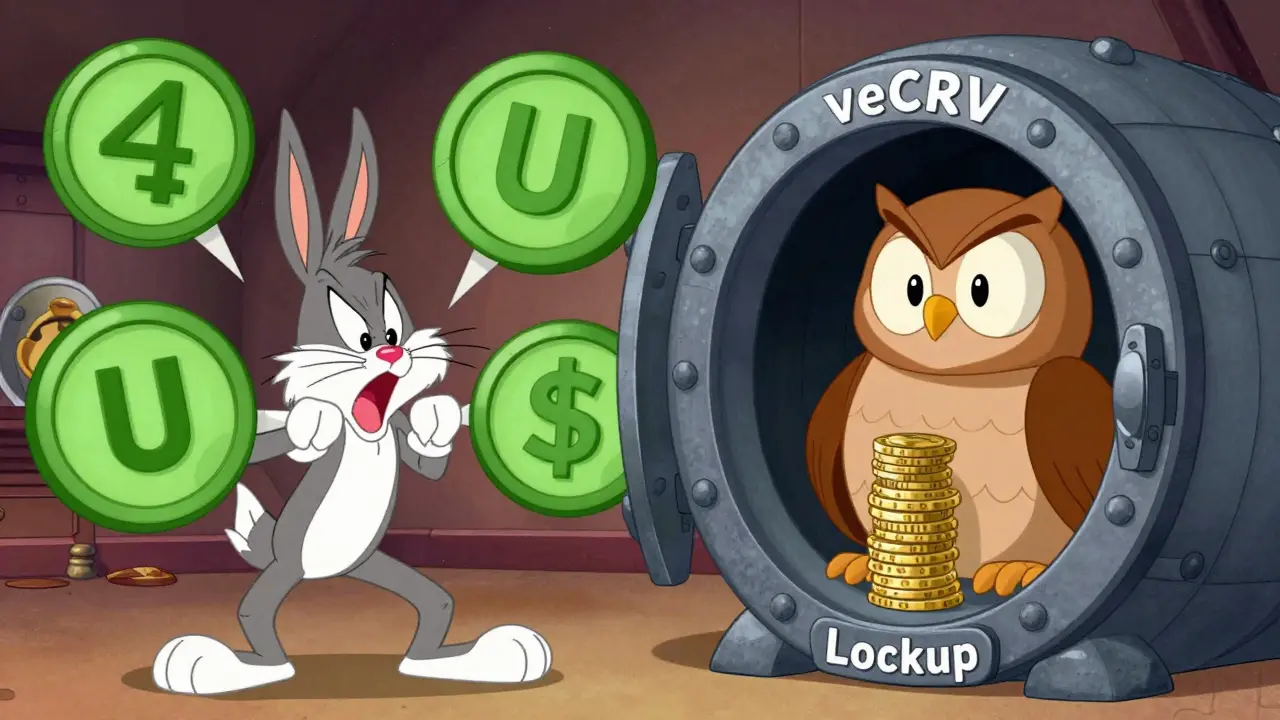
Curve Finance introduced the veCRV model in August 2021. Users must lock CRV tokens for up to four years to maximize rewards. This creates a sticky, loyal base of liquidity providers. By October 2023, 65% of the total CRV supply was locked, significantly reducing mercenary turnover. Curve reported a 37% reduction in mercenary capital movement after implementing this system.
Withdrawal Penalties and Lockups
Bancor implemented anti-withdrawal penalties in May 2021, charging up to 1% for same-day withdrawals. This simple friction reduced mercenary behavior by 47%. Similarly, Aave’s safety module requires users to lock AAVE tokens for 182 days to earn staking rewards, resulting in 22% of the circulating supply being locked as of late 2023.

Navigating Liquidity Mining in 2026: Practical Advice
If you’re considering liquidity mining today, the landscape is different than it was in 2020. The easy money is gone. Here’s how to approach it wisely:
- Do Your Own Research (DYOR): Don’t just look at the APY. Examine the protocol’s tokenomics. Is the reward token inflationary? What is the circulating supply? If a protocol is printing millions of tokens to pay rewards, the value of those rewards will dilute quickly.
- Calculate Impermanent Loss: Use tools like Tokenomik’s IL calculator to estimate potential losses based on historical volatility. If the projected IL exceeds your expected rewards, walk away.
- Prefer Stablecoin Pairs: Providing liquidity for stablecoin pairs (e.g., USDC/DAI) minimizes impermanent loss because the prices remain relatively constant. The yields are lower, but the risk is significantly reduced.
- Look for Lockup Mechanisms: Protocols with veTokenomics or POL models tend to have more sustainable tokenomics. While you may have less flexibility, your capital is safer from sudden dumps.
- Diversify: Don’t put all your eggs in one basket. Spread your capital across multiple protocols and strategies to mitigate idiosyncratic risk.
Remember, liquidity mining is not passive income. It requires active management. You need to monitor gas fees, slippage settings, and market conditions. Beginners typically need 20-30 hours of study to navigate these waters safely, and 67% make critical errors in their first attempts.
The Future of Liquidity: Beyond Mercenaries
The future of DeFi lies in balancing short-term growth incentives with long-term sustainability. We’re seeing a shift toward hybrid models that separate governance, utility, and reward tokens. Liquid staking derivatives (LSDs) like Lido’s stETH are also creating new opportunities for more stable yields, with the LSDfi sector growing to $14.2 billion in TVL by late 2023.
Regulatory scrutiny is increasing, with 17 countries issuing specific guidance on liquidity mining taxation as of late 2023. This means the days of anonymous, unregulated yield farming are numbered. Compliance will become a key factor in choosing protocols.
Ultimately, mercenary capital played a crucial role in bootstrapping DeFi. Without it, protocols like Uniswap wouldn’t have grown from $100 million to $7 billion in TVL in 2020. But as the ecosystem matures, we need more than mercenaries. We need committed participants who believe in the long-term value of the protocols they support.
Is liquidity mining still profitable in 2026?
Profitability depends on your strategy. The era of guaranteed 1,000% APYs is over. Sustainable profits now require careful selection of protocols with strong tokenomics, managing impermanent loss, and understanding tax implications. Many users find stablecoin pairs or protocols with vote-escrowed mechanisms to be more reliable sources of steady, albeit lower, returns.
What is impermanent loss and how can I avoid it?
Impermanent loss occurs when the price ratio of the tokens in your liquidity pool changes, causing you to lose value compared to holding the tokens separately. You can minimize it by providing liquidity for correlated assets (like stablecoins), using concentrated liquidity ranges (as in Uniswap v3), or avoiding volatile token pairs during uncertain market conditions.
How do I identify a protocol with sustainable tokenomics?
Look for protocols that implement mechanisms to reduce selling pressure, such as vote-escrowed tokens (veTokens), protocol-owned liquidity (POL), or buyback-and-burn models. Check the token’s circulating supply versus total supply; a low circulating supply with high emissions suggests future dilution. Also, examine the protocol’s revenue generation capabilities beyond just token emissions.
Are there tax implications for liquidity mining rewards?
Yes, in most jurisdictions, liquidity mining rewards are considered taxable income at the fair market value when received. Selling the rewards later may trigger capital gains taxes. With 17 countries having issued specific guidance as of late 2023, it is essential to consult with a tax professional familiar with cryptocurrency regulations in your region.
What is the difference between APR and APY in liquidity mining?
APR (Annual Percentage Rate) reflects the nominal annualized reward without compounding. APY (Annual Percentage Yield) includes the effect of compounding, assuming you reinvest your rewards continuously. APY is always higher than APR if compounding occurs. Be cautious of platforms advertising extremely high APYs, as they may assume aggressive compounding frequencies that are difficult to achieve manually.