Hard Fork vs Soft Fork: Understanding Blockchain Upgrades
 Jul, 1 2026
Imagine you and your friends are playing a board game. Suddenly, someone suggests changing the rules to make the game faster. If everyone agrees and updates their understanding of the rules, the game continues smoothly. But what if half the group wants to keep the old rules? You end up with two separate games happening at the same table. This is exactly how blockchain forks work in the world of cryptocurrency.
In crypto, these rule changes are called forks. They split into two main types: hard forks and soft forks. One keeps the network united but changes things subtly; the other can split the chain entirely, creating a new coin. Knowing the difference isn't just for developers-it affects your wallet, your investments, and which version of a coin you actually hold.
What Is a Blockchain Fork?
A blockchain is essentially a shared digital ledger that records transactions across many computers. For this system to work, every computer (or node) must agree on the same set of rules. These rules dictate everything from how large a block of transactions can be to how miners are rewarded.
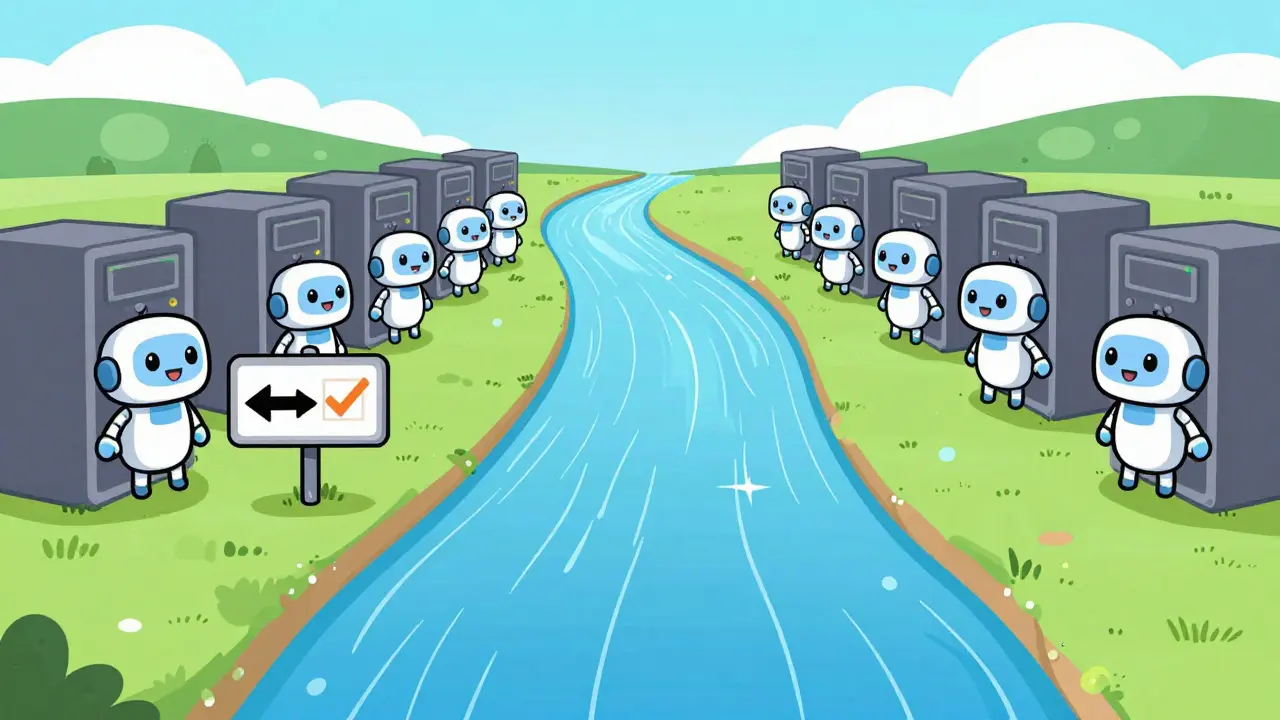
When developers want to update these rules-whether to fix a bug, improve speed, or add new features-they need all nodes to accept the change. A fork occurs when the protocol is updated, causing a divergence in the blockchain's history or future path. Think of it like a river splitting into two streams. The water (data) flows down both paths, but they no longer mix.
The term "fork" comes from software development, where it means copying code and developing it independently. In blockchain, however, the stakes are higher because millions of dollars and user trust are tied to the integrity of the chain.
Soft Forks: The Subtle Upgrade
A soft fork is a backward-compatible upgrade to a blockchain protocol. This means that nodes running the old version of the software can still validate transactions created by nodes running the new version. It’s like updating your phone’s operating system so it supports a new app, but older phones can still receive text messages from the new ones.
How does this work technically? A soft fork typically introduces stricter rules. For example, if the current rule says blocks can contain up to 1 MB of data, a soft fork might change the rule to say blocks can only contain 0.8 MB. Old nodes see the 0.8 MB block and think, "That’s under 1 MB, so it’s valid." New nodes know it’s part of a new feature set. Because the new rules are a subset of the old rules, compatibility remains intact.
- Backward Compatibility: Older nodes can still participate in the network.
- Consensus Requirement: Requires a majority of mining power (hash rate) to adopt the new rules to ensure security.
- Risk Level: Lower risk of network split, but higher technical complexity in design.
- Example: Bitcoin’s Segregated Witness (SegWit) activation in 2017.
The most famous soft fork is Segregated Witness (SegWit), implemented on Bitcoin. SegWit moved signature data out of the main block structure, effectively increasing capacity without changing the block size limit. It also fixed transaction malleability, a vulnerability where transactions could be altered slightly before confirmation. Crucially, the network remained one unified chain.
Hard Forks: The Radical Split
A hard fork is a non-backward-compatible change to the blockchain protocol. This means nodes running the old software will reject blocks created by nodes running the new software. It’s like changing the rules of chess so that pawns can move backward. Players using the old rulebook will call the new moves illegal, while players using the new rulebook will call the old moves obsolete. The result? Two separate games.
Hard forks happen when developers need to make changes that break existing rules. Maybe they want to increase the block size from 1 MB to 2 MB. Old nodes will see a 2 MB block and reject it as invalid. New nodes will accept it. Since neither side accepts the other’s blocks, the chain splits permanently.
- Non-Backward Compatible: Old nodes cannot validate new blocks.
- Consensus Requirement: Requires nearly 100% of network participants to upgrade to avoid permanent splits.
- Risk Level: High risk of community division and network fragmentation.
- Example: The creation of Bitcoin Cash in 2017 and Ethereum Classic in 2016.
The most notable hard fork in history occurred in 2016 with Ethereum. After the DAO hack, where millions of dollars were stolen due to a smart contract loophole, the Ethereum community decided to reverse the transaction. Most users and miners agreed to the hard fork, creating modern Ethereum (ETH). However, a minority believed that code should never be changed, even after a hack. They stayed on the original chain, which became Ethereum Classic (ETC).
Another major example is Bitcoin Cash, created in 2017. Developers argued that Bitcoin’s small block sizes limited its scalability. They implemented a hard fork to increase block size to 8 MB, aiming for faster, cheaper transactions. Those who disagreed stayed on the original Bitcoin chain.
Key Differences Between Hard and Soft Forks
| Feature | Soft Fork | Hard Fork |
|---|---|---|
| Compatibility | Backward compatible | Not backward compatible |
| Rule Change Type | Tightens rules (stricter) | Loosens or changes rules (broader) |
| Network Unity | Remains single chain | Can split into two chains |
| Adoption Threshold | Majority of hash rate | Near-unanimous node upgrade |
| New Coin Creation | No new coin | Often creates a new coin |
| Complexity | Technically complex to design | Easier to implement, harder to manage socially |
Why Do Forks Happen?
Forks aren’t random events; they’re deliberate responses to specific challenges. Here are the most common reasons:
- Scalability Issues: As more people use a blockchain, it can get congested. Transactions become slow and expensive. A hard fork might increase block sizes to handle more transactions per second.
- Security Vulnerabilities: If a critical bug is found, a soft fork can patch it quickly without splitting the network. A hard fork might be needed if the fix requires fundamental architectural changes.
- Governance Disagreements: Communities often disagree on the direction of a project. Some may want privacy features, others may prioritize transparency. When consensus fails, a hard fork allows each group to pursue its vision.
- Feature Addition: New functionalities, like smart contracts or improved privacy tools, may require protocol changes that only a fork can deliver.
Impact on Users and Investors
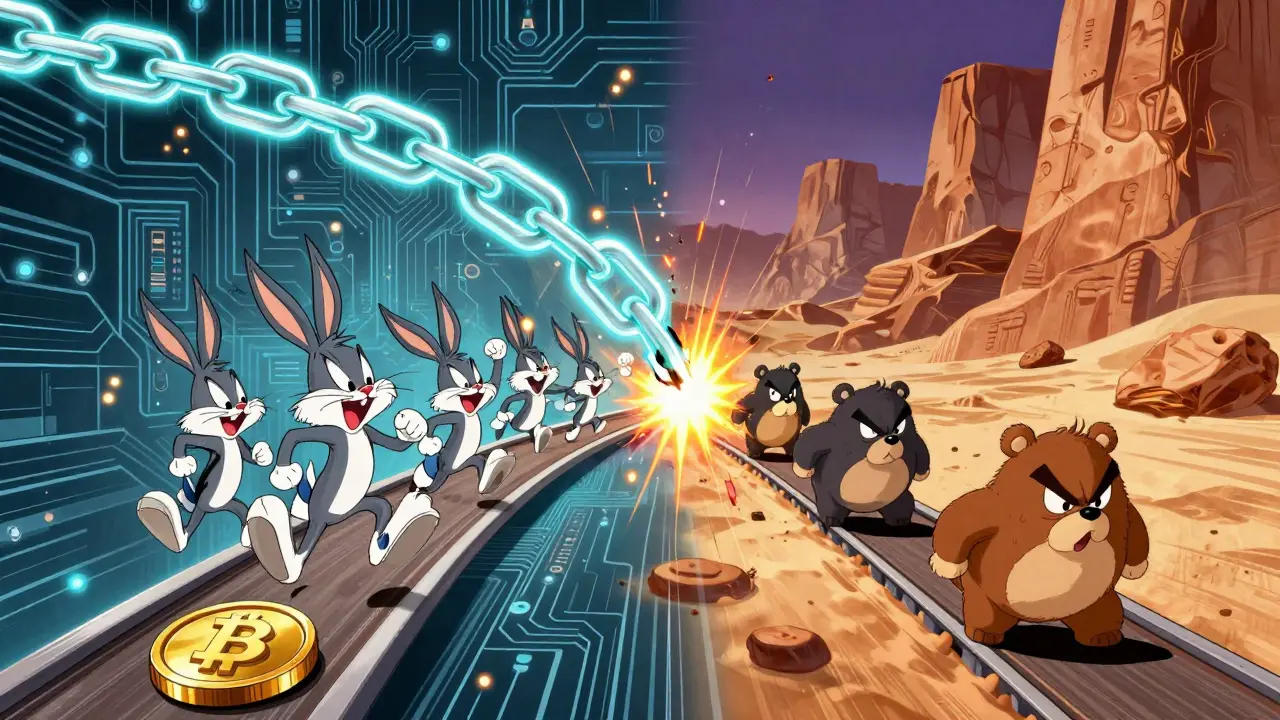
If you hold cryptocurrency, forks matter. During a soft fork, you usually don’t notice anything. Your wallet works the same way, and your coins remain on the same chain. However, during a hard fork, things get interesting.
When a hard fork creates a new coin, holders of the original coin often receive an equal amount of the new coin. For example, if you held 10 BTC before the Bitcoin Cash fork, you received 10 BCH afterward. This is known as an airdrop. But there are risks:
- Replay Attacks: If the new chain doesn’t have protection mechanisms, someone could spend your coins on the new chain after spending them on the old one. Always use wallets that support replay protection.
- Price Volatility: Hard forks often cause price swings. Uncertainty about the future value of both coins can lead to panic selling or speculative buying.
- Wallet Support: Not all wallets support new coins immediately. You might need to migrate your funds to a compatible wallet to access your new assets.
Which Is Better: Hard Fork or Soft Fork?
There’s no universal answer. It depends on the goal.
Soft forks are ideal for incremental improvements. They maintain network stability and avoid community splits. If you want to fix a bug or add a minor feature without disrupting users, a soft fork is the safer choice. However, they are limited in scope. You can’t radically change the network’s architecture with a soft fork.
Hard forks offer freedom. They allow developers to experiment with bold ideas, such as changing consensus mechanisms or significantly altering block sizes. But this freedom comes at a cost: potential fragmentation. A hard fork can divide the community, dilute mining power, and create confusion among users. It’s a high-risk, high-reward strategy.
Most mature blockchains prefer soft forks for routine upgrades. Hard forks are reserved for emergencies or major philosophical shifts. The trend in recent years has been toward Layer 2 solutions (like Lightning Network for Bitcoin) to handle scaling issues without needing disruptive hard forks.
Future of Blockchain Upgrades
As blockchain technology matures, the focus is shifting away from contentious hard forks. Developers are exploring alternative methods for upgrading networks, such as:
- Layer 2 Scaling: Building secondary protocols on top of the main chain to handle transactions off-chain.
- Governance Tokens: Allowing token holders to vote on proposals, reducing the need for forced splits.
- Modular Blockchains: Designing systems where components can be upgraded independently without affecting the entire network.
Despite these innovations, forks will remain a core mechanism for blockchain evolution. They represent the decentralized nature of crypto: no central authority can force changes. Instead, the community must reach consensus, whether through subtle soft forks or dramatic hard forks.
Do I lose my coins if there is a hard fork?
No, you do not lose your original coins. In fact, you often gain additional coins. If you held coins before the fork, you typically receive an equal amount of the new forked coin. However, you must ensure your wallet supports the new coin to access it.
Can a soft fork split the blockchain?
Ideally, no. Soft forks are designed to be backward-compatible, meaning the network remains unified. However, if a significant portion of the network refuses to upgrade and continues producing blocks under the old rules, temporary conflicts can occur, though these are usually resolved quickly.
What is the biggest risk of a hard fork?
The biggest risk is community fragmentation and reduced security. When a chain splits, mining power is divided between the two chains. If one chain has significantly less hashing power, it becomes more vulnerable to attacks, such as double-spending.
Why did Bitcoin choose a soft fork for SegWit instead of a hard fork?
Bitcoin prioritizes stability and decentralization. A hard fork would have required near-unanimous agreement, which was difficult to achieve given community disagreements over scaling. A soft fork allowed for implementation with majority miner support while keeping the network intact.
Are hard forks always controversial?
Not always, but they often are. Controversy arises when there is deep disagreement over the direction of the project. Uncontroversial hard forks can occur if the change is universally accepted, such as fixing a critical security flaw that affects all users equally.