Governance Attacks and Token Voting Vulnerabilities: A Complete Guide to DAO Security
 Aug, 5 2026
Imagine waking up to find that the decentralized protocol you trust with your savings has been emptied by a single person. No code was broken. No private keys were stolen. Instead, someone simply bought enough votes to change the rules in their favor. This is not a sci-fi scenario; it is the reality of Governance Attacks, which are security vulnerabilities in decentralized systems where malicious actors exploit governance tokens to manipulate decision-making processes for personal gain.
In the world of Decentralized Finance (DeFi), we often obsess over smart contract audits and cryptography. But as the industry matured through 2025 and into 2026, a new threat emerged at the top of the food chain. The vulnerability isn't just in the code; it's in the democracy itself. If anyone can buy influence, does true decentralization exist? Let's look at how these attacks work, why they happen, and what protocols are doing to stop them.
The Anatomy of a Governance Attack
To understand the risk, you have to understand the mechanism. Most Decentralized Autonomous Organizations (DAOs) use a "one token, one vote" system. This sounds fair on paper, but it creates a direct link between wealth and power. If a protocol holds millions of dollars in its treasury, that treasury becomes a target. An attacker doesn't need to hack the vault; they just need to convince the voters to open the door.
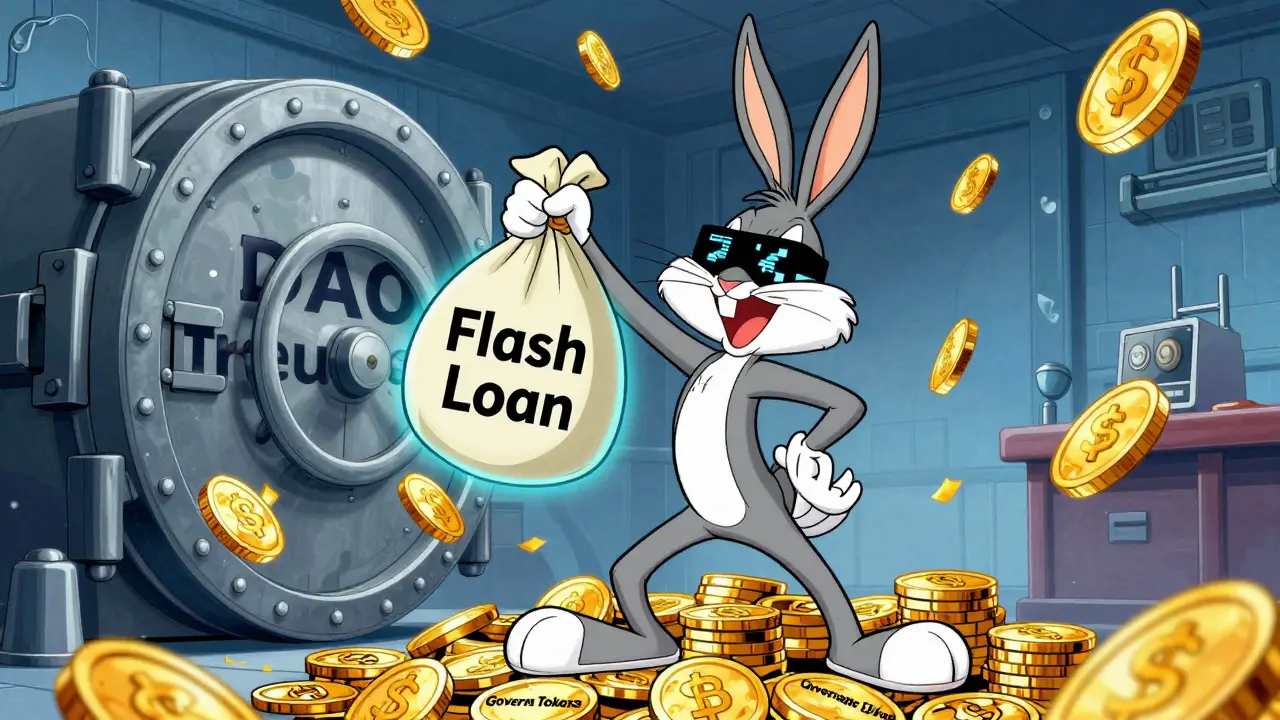
The most common method involves Flash Loans, which are unsecured loans available only if the borrowed amount is returned within the same blockchain transaction block. Here is how it plays out:
- An attacker borrows a massive amount of capital (often hundreds of millions of dollars) using a flash loan.
- They immediately use that capital to buy up the majority of the protocol’s governance tokens.
- With majority control, they submit a proposal to transfer the protocol’s liquidity to their own wallet.
- They vote for the proposal themselves.
- If there is no delay, the proposal executes instantly. The attacker drains the funds, repays the flash loan plus a tiny fee, and keeps the rest.
This sequence happened in April 2022 with Beanstalk DAO. The hacker used a $1 billion flash loan to buy BEAN tokens, approved a malicious proposal, and walked away with $77 million. The critical failure here wasn't the code; it was the lack of a time delay. Because the vote could be executed in the same block it was proposed, the community had zero time to react.
High-Profile Case Studies: What Went Wrong?
Looking at real-world incidents helps us see the patterns. These aren't isolated glitches; they are systemic issues that repeat because the underlying incentives remain flawed.
| Protocol | Date | Attack Vector | Loss Amount | Key Failure |
|---|---|---|---|---|
| Beanstalk DAO | April 2022 | Flash Loan + Immediate Execution | $77 Million | No timelock on emergency proposals |
| Compound Finance | July 2023 | Token Accumulation (Golden Boys) | $24 Million (at risk) | Low voter turnout allowed minority control |
| Tornado Cash | 2022 | Proposal Hijacking | $1 Million (locked tokens) | Malicious proposer deployed different contract |
| Swerve Protocol | March 2023 | Token Purchase & Vote Manipulation | Significant Liquidity Drain | Profitable cost to buy voting power vs. reward |
The Compound case in July 2023 was particularly chilling because it didn't involve a flash loan. A group called the Golden Boys slowly accumulated COMP tokens over time. They pushed Proposal 289, which would have sent $24 million from the treasury to their yield-bearing protocol. It passed because voter turnout was incredibly low. Only a small fraction of token holders participated, meaning the attackers controlled the outcome with a relatively modest investment. This highlights a second major vulnerability: apathy. When most people don't vote, the price of buying control drops significantly.
Why Are DAOs So Vulnerable? The Participation Crisis
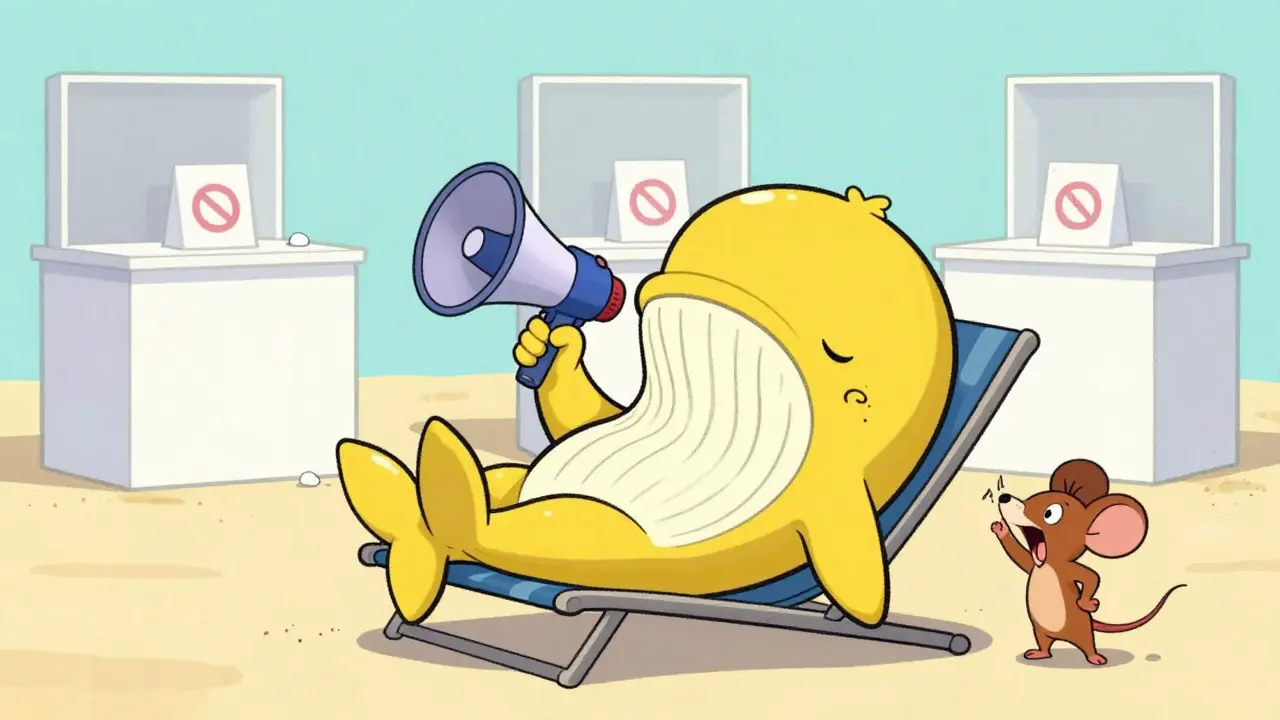
You might think that thousands of members make a DAO secure. The data says otherwise. Research from the University Complutense of Madrid revealed that 50% of DAOs have fewer than ten active voters. Even in larger organizations with 1,000 to 10,000 members, participation rates fall below 30% for most proposals.
Worse still, power is heavily concentrated. More than 50% of voting power in many DAOs sits with less than 1% of the members. This creates a "whale-dominated" environment where large holders dictate outcomes, and smaller holders feel their voice doesn't matter, so they stop voting entirely. This cycle makes it easier for an outsider to swoop in and buy the silence of the whales or outbid them.
There is also the issue of Sybil Attacks, which occur when an attacker creates multiple anonymous accounts to artificially inflate voting power or mimic broad community consensus. In unpermissioned blockchains, creating new wallets is free and instant. If a protocol relies on simple address counts rather than unique human identities, a single person can create 1,000 wallets and pretend to be 1,000 supporters.
Mitigation Strategies: How Protocols Are Fighting Back
Since 2023, the industry has moved from panic to prevention. By early 2026, 68% of the top 50 DeFi protocols had implemented significant changes to their governance structures. Here are the most effective defenses currently in use:
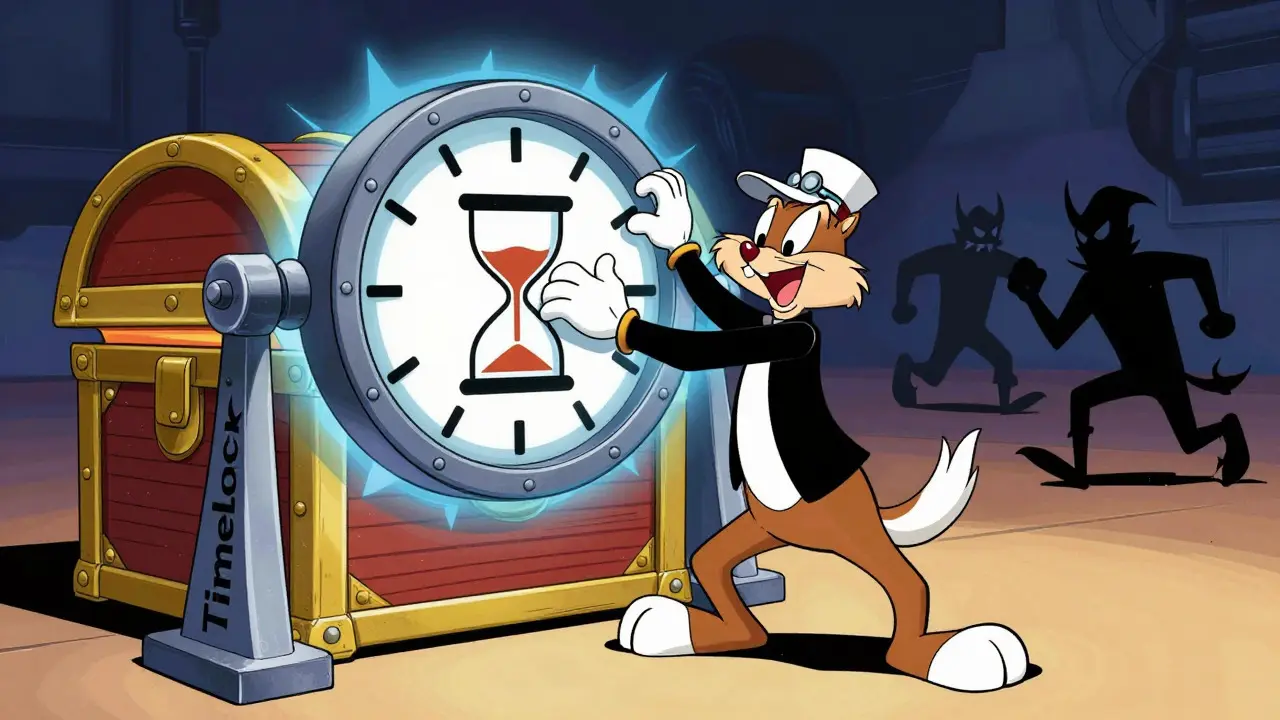
- Timelocks: This is the gold standard. A timelock forces a waiting period-usually 48 hours to two weeks-between a proposal passing and its execution. This gives the community time to wake up, notice the attack, and organize a counter-vote or fork. The ERC-7202 standard, finalized in late 2025, now mandates minimum delays for many new protocols.
- Quadratic Voting: Instead of one token equaling one vote, this system makes the cost of additional votes increase quadratically. It prevents whales from dominating cheaply while allowing smaller holders to have a proportional impact without needing massive capital.
- Delegated Voting: Used effectively by MakerDAO, this allows users to delegate their voting power to trusted experts. While this introduces trust risks, it solves the apathy problem by ensuring professional oversight of proposals.
- Multi-Sig Safeguards: Many protocols retain a centralized multi-signature wallet for emergencies. If a governance attack occurs, the core team can pause the protocol. Critics argue this kills decentralization, but proponents say it’s a necessary circuit breaker.
- Vote Buying Detection: Advanced analytics tools now track unusual token movements. If a wallet suddenly acquires a large percentage of supply via a flash loan or rapid purchases, alerts go out to the community before the vote even begins.
a16z crypto noted that these solutions require "thoughtful mechanism design." You can’t fix governance with cryptography alone; you have to design economic incentives that make attacking more expensive than the potential reward.
The Future of Governance Security in 2026 and Beyond
As we move deeper into 2026, the landscape is shifting. Total Value Locked (TVL) in DeFi has reached $112 billion, making the stakes higher than ever. Regulatory pressure is also increasing. The SEC’s 2024 enforcement action against the Beanstalk hacker set a precedent: manipulating governance tokens can be classified as securities fraud. This adds a legal layer of deterrence beyond just technical fixes.
New challenges are emerging too. Cross-chain governance is becoming common, but it introduces complexity. The Cream Finance incident in January 2026 showed how inconsistent voting rules between Ethereum and BNB Chain can be exploited. Attackers are getting smarter, looking for gaps between chains where security standards differ.
Vitalik Buterin recently argued that reputation-based systems and quadratic voting will eventually solve these issues. However, security firms like OpenZeppelin warn that current models remain fundamentally vulnerable without architectural overhauls. The market for governance security services is projected to hit $2.3 billion by 2027, indicating that protocols are willing to pay for specialized protection.
For users, the lesson is clear: never assume a DAO is safe just because it’s decentralized. Look at the timelock duration. Check the voter turnout history. Understand who holds the majority of tokens. In the wild west of DeFi, awareness is your best defense.
What is a governance attack in DeFi?
A governance attack occurs when a malicious actor gains control of a decentralized protocol's voting system, usually by purchasing a majority of governance tokens or exploiting low voter turnout. Once in control, they pass proposals to drain funds or change parameters to benefit themselves, often using flash loans to minimize upfront capital.
How do flash loans enable governance attacks?
Flash loans allow borrowers to access huge sums of capital without collateral, provided the loan is repaid in the same transaction block. Attackers use this to buy up governance tokens, vote for a malicious proposal, execute the theft, repay the loan, and keep the profits-all in seconds, leaving the community no time to react unless a timelock is in place.
What is the role of timelocks in preventing attacks?
Timelocks introduce a mandatory waiting period between a proposal's approval and its execution. This delay gives the community time to detect malicious activity, organize a counter-proposal, or trigger emergency safeguards. Most major protocols now enforce timelocks of at least 48 hours.
Why is low voter turnout dangerous for DAOs?
Low turnout means that a small number of votes determine the outcome. This drastically reduces the cost for an attacker to buy enough tokens to control the vote. If only 1% of tokens are cast, an attacker needs to buy just over 50% of that 1%, rather than 50% of the total supply.
Can regulatory actions help prevent governance attacks?
Yes. Recent precedents, such as the SEC's action against the Beanstalk hacker, classify governance manipulation as potential securities fraud. This adds legal consequences for attackers, serving as a deterrent alongside technical security measures.