Future of Metaverse Technology: Blockchain, AI, and the Shift to Practical Use
 Sep, 17 2026
Remember when everyone was talking about buying virtual land in 2021? Fast forward to September 2026, and the noise has died down. The hype cycle broke, but something interesting happened in the quiet aftermath: real work got done. We aren't living in a fully immersive Metaverse where you spend eight hours a day in a headset, but we are seeing a shift from flashy demos to solid, business-critical infrastructure. If you're wondering what's actually happening with this tech right now, you need to look past the VR goggles and focus on the plumbing underneath.
The core issue for most people is confusion. Is it just a video game? Is it crypto? Is it dead? The truth is messier and more exciting. The future of metaverse technology isn't about one giant world like Ready Player One. It's about interoperable, persistent digital spaces that talk to each other. And here’s the kicker: none of it works without Blockchain.
Why Blockchain Is the Backbone, Not Just an Add-On
You can't have a true economy if you don't own your stuff. In traditional online games or platforms, you buy a skin or a plot of land, but if the company shuts down or changes the rules, you lose everything. That's not ownership; that's renting. Blockchain technology provides the decentralized ledger necessary for verifiable digital asset ownership, which is why NFTs (non-fungible tokens) remain central to the conversation despite market volatility.
Think about it this way: if you build a business in a virtual mall, you need to know that your lease, your inventory, and your customer data are secure and transferable. Blockchain handles the trust layer. It allows users to move assets between different platforms-imagine taking a sword you earned in one game and selling it in another marketplace. This interoperability is powered by smart contracts, self-executing code stored on the blockchain that removes the middleman.
- Digital Scarcity: Unlike infinite copies of a JPEG, blockchain verifies uniqueness.
- Interoperability: Standards like ERC-721 and ERC-1155 allow assets to function across multiple ecosystems.
- Transparency: Every transaction is public, reducing fraud in virtual commerce.
Without this foundation, the metaverse is just another walled garden controlled by a single corporation. With it, it becomes a shared economy.
The Hardware Evolution: From Headsets to Glasses
Let’s be honest: wearing a brick on your face for six hours sucks. The biggest barrier to mass adoption has always been hardware. Current Virtual Reality (VR) headsets are heavy, expensive, and isolating. You cut yourself off from the room around you. But the industry knows this. The trend line for 2026 and beyond points toward lightweight Augmented Reality (AR) glasses.
We are moving away from full immersion toward mixed reality. Instead of replacing the world, AR overlays digital information onto it. Imagine walking through Wellington and seeing navigation arrows on the pavement, or looking at a building and seeing its historical data pop up. This requires massive processing power, which brings us to the next critical piece: Edge Computing.
Cloud computing is too slow for real-time interaction. If you turn your head and the image lags by even a fraction of a second, you get motion sickness. Edge computing processes data closer to the device, reducing latency. When you combine low-latency edge networks with 5G connectivity, you get the smooth experience required for daily use. Companies are racing to make these devices look like normal eyewear, not sci-fi props. Until they do, widespread consumer adoption will stall.
AI: The Invisible Architect of Virtual Worlds
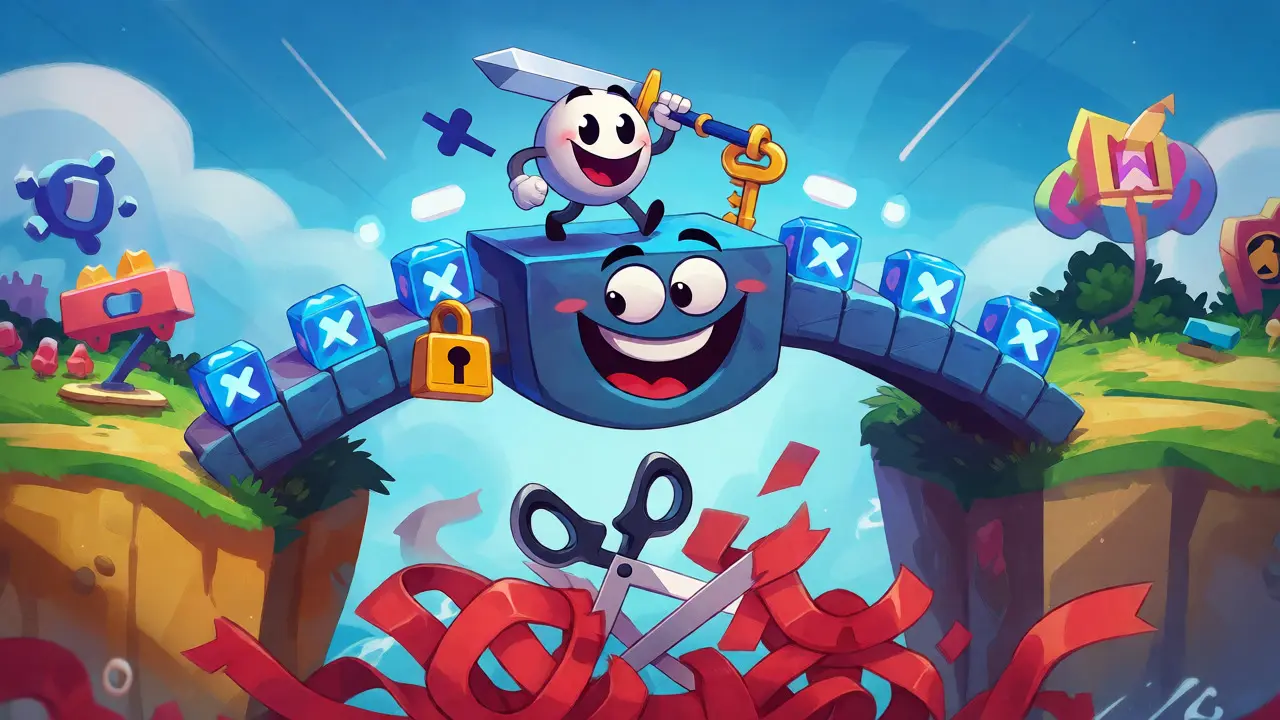
Building 3D worlds used to take armies of artists months of work. Now, Artificial Intelligence is doing the heavy lifting. Generative AI tools can create textures, models, and even entire environments based on text prompts. This democratizes creation. You don't need to be a coder or a 3D modeler to build a virtual space anymore.
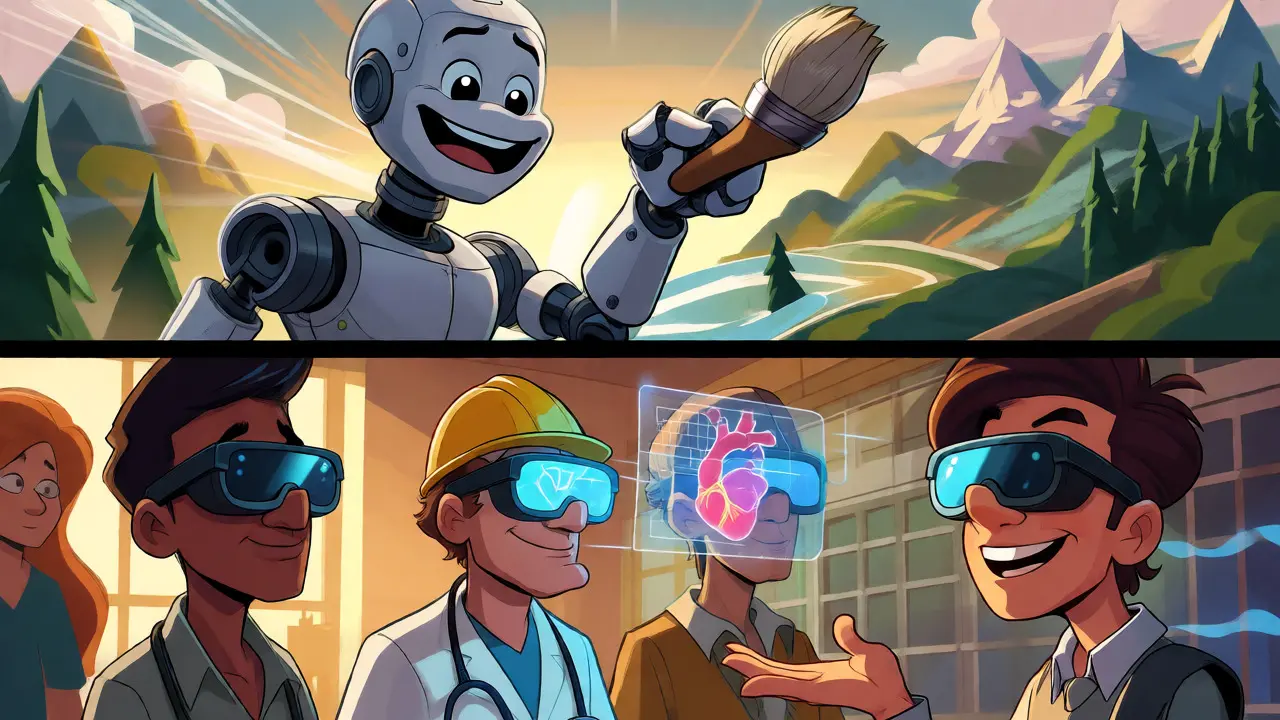
But AI’s role goes deeper than just graphics. It powers the behavior of non-player characters (NPCs). In older games, NPCs followed rigid scripts. In modern metaverse applications, AI-driven avatars can hold natural conversations, recognize emotions, and adapt to user behavior. This makes training simulations in healthcare or corporate onboarding feel incredibly realistic. A medical student practicing surgery in a virtual environment gets feedback from an AI tutor that adjusts to their specific mistakes, not just a generic score.
Furthermore, AI helps manage the sheer volume of data generated by IoT (Internet of Things) devices connected to the metaverse. As physical sensors feed data into virtual twins-digital replicas of physical systems-machine learning algorithms predict outcomes and optimize operations in real-time.
Who Is Actually Using This Tech?
If you think only gamers care about the metaverse, you're missing the bigger picture. The real growth is in B2B sectors. Retailers are using virtual showrooms to let customers visualize furniture in their homes before buying. Fashion brands host digital-only collections where users dress their avatars, creating new revenue streams without manufacturing physical goods.
| Sector | Primary Use Case | Key Benefit | Technology Reliance |
|---|---|---|---|
| Retail & E-commerce | Virtual try-ons and showrooms | Reduced return rates, higher engagement | AR, 3D Modeling, AI |
| Education & Training | Immersive simulations (medical, industrial) | Safe practice environments, cost efficiency | VR, Haptics, AI |
| Real Estate | Virtual tours and property visualization | Remote viewing, faster sales cycles | 3D Reconstruction, Cloud Rendering |
| Gaming & Entertainment | Play-to-Earn economies, social hubs | User-generated content, community building | Blockchain, NFTs, Social Networks |
Corporate training is another huge area. Companies save money on travel and facilities by holding meetings in persistent virtual spaces. These aren't just Zoom calls with avatars; they are spatial audio environments where you can walk up to a colleague and talk, just like in a real office. For global teams, this breaks down geographical barriers and fosters a sense of presence that flat video calls lack.
The Challenges Standing in the Way
It’s not all sunshine and digital rainbows. There are serious hurdles. First, there’s the fragmentation problem. Right now, if you buy an item in Decentraland, you probably can’t use it in Roblox. True interoperability is still largely theoretical because companies want to keep users locked in their ecosystems. Without universal standards, the "meta" part of metaverse-meaning beyond or transcending individual universes-doesn't really exist yet.
Then there’s regulation. Who owns the data collected by your headset? How do governments tax transactions in virtual worlds? Are NFTs securities or commodities? Legal frameworks are playing catch-up. In New Zealand and elsewhere, privacy laws are tightening, forcing developers to rethink how they handle biometric data captured by eye-tracking and motion sensors.
Finally, accessibility remains a concern. High-end hardware costs thousands of dollars. While prices are dropping, they are still out of reach for many. Plus, the energy consumption of running complex 3D worlds and validating blockchain transactions raises environmental questions. Developers are working on proof-of-stake mechanisms and optimized rendering techniques to lower the carbon footprint, but it’s an ongoing battle.
What Does Success Look Like in 2030?
By 2030, we likely won't call it the "metaverse." We'll just call it "the internet," but a version that is spatial, persistent, and owned by users. The distinction between online and offline will blur. Your digital identity will be portable across services, protected by cryptographic keys rather than passwords.
Success depends on solving the user experience gap. Interfaces need to become intuitive. Voice commands, hand gestures, and eye tracking must replace clunky controllers. If you have to read a manual to navigate a virtual store, it fails. The goal is frictionless interaction.
For businesses, the opportunity lies in early adoption of niche applications. Don't try to build a general-purpose platform. Build a specialized tool for dentists, architects, or musicians. The winners will be those who provide clear value over existing solutions, not just novelty.
Is the metaverse dead?
No, the hype is dead, but the technology is maturing. Investment has shifted from speculative virtual land purchases to practical applications in enterprise, education, and retail. It is transitioning from a buzzword to a utility.
Do I need a VR headset to use the metaverse?
Not necessarily. Many current implementations work on smartphones, tablets, and desktop computers via browsers. While VR offers full immersion, Augmented Reality (AR) and standard 3D web experiences are more accessible entry points for most users.
How does blockchain help the metaverse?
Blockchain provides a secure, decentralized record of ownership. It enables true digital scarcity and allows users to own, trade, and move assets across different platforms without relying on a central authority, fostering a genuine digital economy.
What are the main risks of adopting metaverse technology?
Key risks include high initial hardware costs, data privacy concerns regarding biometric tracking, regulatory uncertainty, and the potential for vendor lock-in if platforms lack interoperability standards.
Will the metaverse replace the traditional internet?
Unlikely to replace it entirely, but it will augment it. The 2D web will remain dominant for quick information retrieval, while spatial computing will take over for collaborative, experiential, and immersive tasks.