What is HODL (HODL) Crypto Coin? A Guide to the BSC Reward Token
 Sep, 1 2026
You’ve probably seen the term "HODL" all over Twitter and Reddit. It started as a typo for "hold," but it’s also the name of actual cryptocurrencies. If you’re looking up What is HODL (HODL) crypto coin, you need to know that you are likely dealing with one of two very different assets. Most current discussions refer to a community-driven reward token on the Binance Smart Chain (BSC), while an older, separate asset called HODL Coin exists with a fixed supply and no complex mechanics. Confusing them can lead to bad investment decisions.
| Feature | BSC HODL (Reward Token) | Legacy HODL Coin |
|---|---|---|
| Blockchain | Binance Smart Chain (BEP-20) | Various (Legacy Altcoin) |
| Core Mechanism | Passive BNB rewards via transaction tax | Fixed supply, simple transfer |
| Supply Cap | 10 Billion Tokens | ~1 Billion Coins |
| Utility | NFTs, Gaming, Passive Income | Speculative Store of Value |
The Rise of the HODL Meme into a Token
The concept behind the BSC-based HODL token is straightforward: it gamifies holding. Launched in May 2021, this project aims to be the "No. 1 reward token" in decentralized finance (DeFi). Unlike traditional stocks where dividends come from company profits, HODL generates value through its own ecosystem. Every time someone buys, sells, or transfers the token, a 5% tax is applied. This tax isn’t just burned; it’s converted into Binance Coin (BNB) and redistributed to holders. The idea is to incentivize long-term commitment by paying you simply for keeping your tokens in your wallet.
This design targets retail investors who want passive income without actively farming yields or locking funds in complex smart contracts. You don’t need to stake your tokens or provide liquidity to earn these rewards. The protocol handles the distribution automatically, though you usually have to claim the accumulated BNB every few days through their dApp interface. It’s a low-effort strategy for those who believe in the power of holding through market volatility.
How the Tokenomics Work
Understanding the math behind HODL is crucial because high taxes eat into your profits if you trade frequently. The standard slippage tolerance required for transactions is around 6%. This accounts for the 5% tax plus a small buffer for network fluctuations. If you try to swap HODL for BNB on PancakeSwap without adjusting your slippage settings, your transaction will likely fail. This friction is intentional. It discourages day traders and encourages the "diamond hands" mentality that the meme originated from.
The total supply is capped at 10 billion tokens. As of mid-2026, approximately 9 billion are in circulation. The remaining portion has been burned or locked, contributing to what some trackers call a "hyper-deflationary" model. However, don’t let the label fool you. With only about 10% of the supply removed so far, the deflationary effect is moderate. The real draw isn’t scarcity alone, but the yield. Because rewards are paid in BNB, the value of your passive income depends on both the price of HODL and the price of BNB. If BNB rises, your effective yield increases, even if HODL’s price stays flat.
Revenue Streams Beyond Trading Taxes
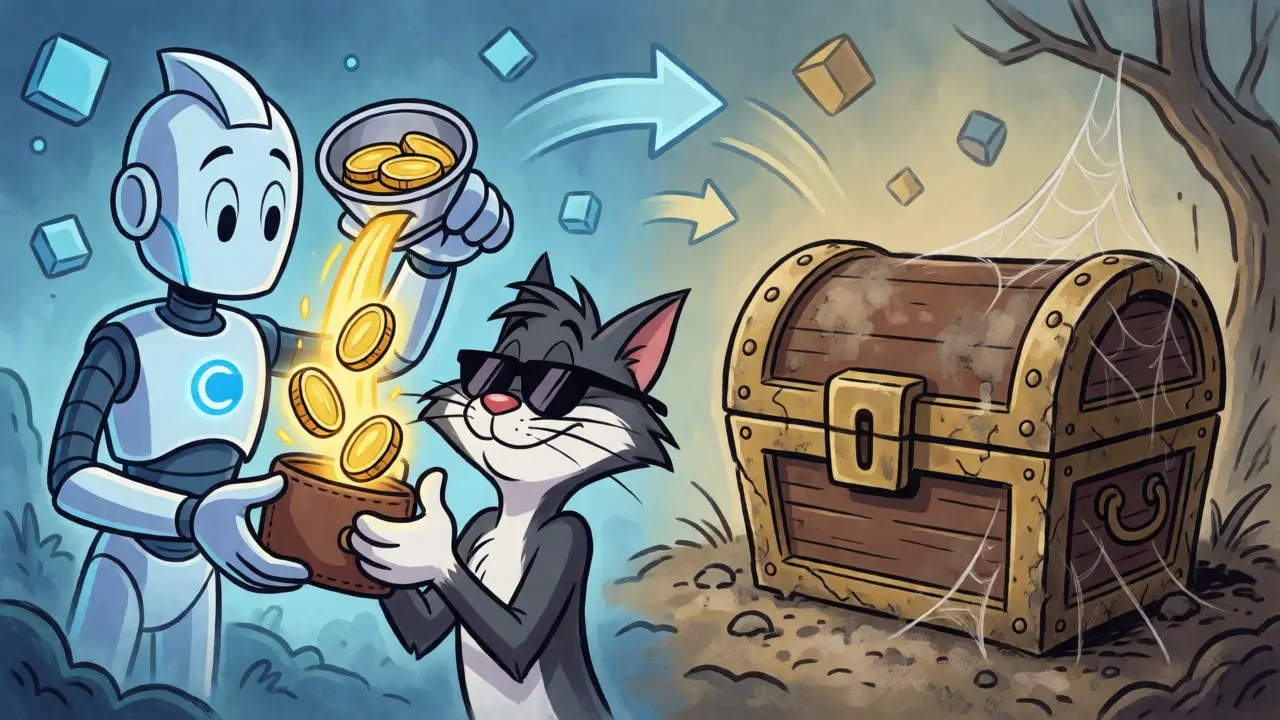
A common criticism of reflection tokens is that they rely entirely on new buyers entering the market. If trading volume dries up, the reward pool empties. To combat this, the HODL ecosystem integrates NFT sales and play-to-earn gaming components. These auxiliary revenue streams feed into the same reward pool that pays out BNB to holders. This diversification helps sustain payouts during bear markets when trading activity slows down.
For example, if the project launches a successful NFT collection, the proceeds go toward buying back HODL or directly funding the BNB reward contract. Similarly, in-game purchases within their play-to-earn titles contribute to the ecosystem’s treasury. While these features add complexity, they aim to create a self-sustaining economy rather than a pure Ponzi-like structure dependent solely on fresh capital inflows.
Where to Buy and Trade HODL
HODL is not listed on major centralized exchanges like Coinbase or Kraken for direct fiat trading. Instead, it lives primarily on decentralized exchanges (DEXs) on the Binance Smart Chain. PancakeSwap is the most active venue, specifically the v2 router. You’ll need a Web3 wallet like MetaMask or Trust Wallet configured for the BSC network. To buy, you typically swap BNB for HODL. Remember to set your slippage to at least 6% to ensure the transaction goes through.
Liquidity can be thin compared to top-tier coins. Daily trading volumes often hover in the thousands of dollars rather than millions. This means large buy or sell orders might experience significant price impact. Always check the current liquidity depth on PancakeSwap before executing large trades. Also, be wary of fake tokens. Several contracts share the name "HODL" on BscScan. Verify the contract address against official sources to avoid buying a clone or an obsolete deployment.
Risks and Realities of Small-Cap DeFi
Investing in HODL carries substantial risk. It is a micro-cap asset with a market capitalization under $1 million in many recent snapshots. This places it deep in the long tail of cryptocurrencies. Such assets are highly volatile and susceptible to manipulation. There is no formal audit by major security firms like CertiK widely publicized for the current main contract, which means users must rely on community vetting and code transparency.
Furthermore, the regulatory environment for reward tokens is evolving. Tax-funded models sometimes face scrutiny regarding whether they constitute securities. Since there is no central entity backing HODL, recourse in case of smart contract failure or rug pulls is limited. Treat any money put into HODL as speculative capital that you can afford to lose entirely.
Frequently Asked Questions
Is HODL a good investment?
It depends on your risk tolerance. HODL offers passive income in BNB, which appeals to holders. However, it is a small-cap, highly speculative asset with low liquidity and significant smart contract risks. It is not suitable for conservative investors.
How do I receive rewards from HODL?
You hold HODL in a compatible BSC wallet. Rewards accumulate automatically based on your balance relative to the total supply. You must manually claim these rewards, usually every 7 days, via the project's dApp interface.
What is the difference between HODL and HODL Coin?
HODL (on BSC) is a reward token with transaction taxes and passive income features. HODL Coin is a legacy altcoin with a fixed supply and no complex reward mechanics. They are distinct projects with different tokenomics and use cases.
Why is my HODL transaction failing?
The most common reason is incorrect slippage settings. HODL has a 5% tax, so you need to set slippage to at least 6% in your DEX settings to allow the transaction to complete successfully.
Can I stake HODL?
While the core promise is passive rewards without staking, some versions of the ecosystem offer optional staking or farming pools on their DEX. However, the primary mechanism is holding for reflections and BNB distributions.
adam veikkanen
September 2, 2026 AT 04:19It is a reflection token with high friction.