OpenSea vs Blur: NFT Marketplace Comparison for 2026
 Sep, 25 2026
Remember when OpenSea was the only game in town? For years, it held a near-monopoly on how we bought and sold digital assets. But the landscape has shifted dramatically. By early 2026, Blur didn't just catch up; it overtook OpenSea in raw trading volume, capturing roughly 71.5% of the market share according to DappRadar data from January 2026. This isn't just a battle of interfaces; it's a clash of philosophies between casual collecting and professional-grade speculation.
If you are trying to decide where to park your capital or sell your latest drop, the choice depends entirely on who you are. Are you an artist looking for fair royalties, or a whale sweeping floors for profit? This guide breaks down the real differences between these two giants, moving beyond the hype to look at fees, features, and actual user experience.
The Core Difference: Who Are These Platforms For?
OpenSea is a general-purpose NFT marketplace founded in 2017 that supports multi-chain trading for beginners and collectors. It’s the "Amazon" of NFTs-broad, accessible, and designed for everyone from first-time buyers to established artists. Its strength lies in diversity. You can find anything here, from obscure generative art to major brand collaborations, across 19 different blockchains including Ethereum, Polygon, and Solana.
In contrast, Blur, launched in late 2022, operates as an aggregator specifically for professional traders. Think of it as a high-frequency trading terminal rather than a gallery. It doesn't host listings in the same way; instead, it aggregates orders from various sources to offer speed and efficiency. The target audience is distinct: while OpenSea serves 193,000 unique wallets monthly, Blur caters to a smaller, more intense group of about 54,000 active users who prioritize speed over discovery.
This divergence explains why Blur dominates volume metrics despite having fewer users. Professional traders execute large batches of transactions quickly, inflating volume numbers. Casual collectors browse slowly, generating less volume but often contributing to long-term price stability through genuine interest rather than arbitrage.
Fees and Royalties: Where Your Money Goes
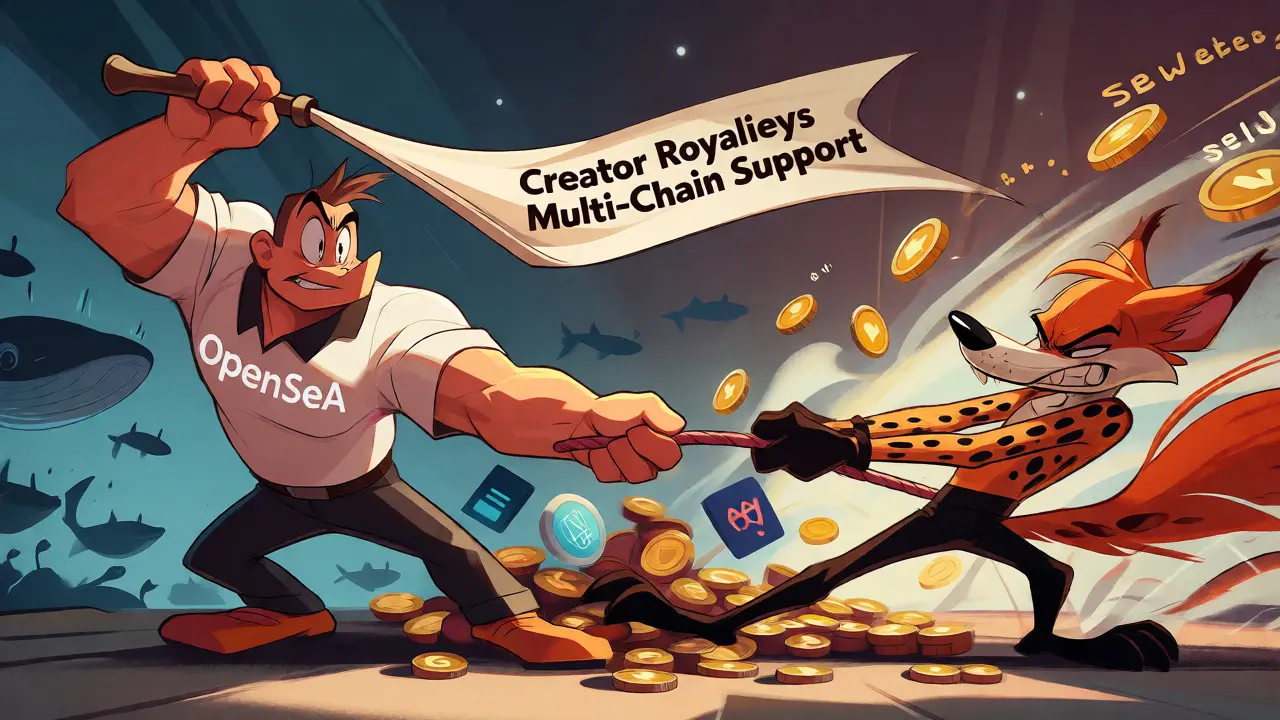
Fees are usually the first thing people check, and this is where the platforms diverge sharply. OpenSea maintains a standard 2.5% seller fee. There are no buyer fees, which simplifies things for newcomers. More importantly, OpenSea enforces creator royalties, typically ranging from 5-10%. This ensures artists get paid every time their work changes hands, a model that Sarah Zucker, founder of Olga's World, argues is crucial for sustainable digital art careers.
Blur flipped the script by introducing a zero-trading-fee model. Sellers pay a variable fee of 0.5-2%, and buyers pay nothing. The controversial part? Blur initially eliminated royalty enforcement. This allowed traders to buy collections without paying the original creators, sparking fierce debate. While recent updates have reintroduced some royalty mechanisms, the platform remains much friendlier to traders' margins than OpenSea. If you are flipping NFTs daily, those saved percentages add up fast. One Reddit user reported saving $1,850 in a single month using Blur’s batch tools.
| Feature | OpenSea | Blur |
|---|---|---|
| Seller Fee | 2.5% | 0.5% - 2% |
| Buyer Fee | 0% | 0% |
| Royalty Enforcement | Mandatory (5-10%) | Optional/Variable |
| Supported Chains | 19+ (Eth, Poly, Sol, etc.) | Ethereum & Solana |
User Experience and Learning Curve
Let’s be honest: OpenSea is easier to use. If you’ve never bought an NFT before, OpenSea’s interface guides you step-by-step. You connect your wallet, browse categories, and click "Buy." Tutorials show beginners completing their first transaction in under 15 minutes. The platform feels like a shopping mall-organized, searchable, and forgiving.
Blur, however, assumes you know what you’re doing. The interface is dense with charts, order books, and analytics. Terms like "floor sweeping," "bid sniping," and "batch processing" aren’t explained in tooltips; they’re expected knowledge. Experienced users report investing 8-12 hours just to master Blur’s dashboard. For professionals, this complexity is a feature, not a bug. They want granular control over every aspect of their trade. For beginners, it’s overwhelming. Trustpilot reviews reflect this split: OpenSea holds a 4.1/5 rating for ease of use, while Blur sits at 3.7/5, with complaints centered on its steep learning curve.
Performance and Technical Capabilities
Speed matters in trading, and Blur wins here. According to Bitquery benchmarks from January 2026, Blur processes transactions 37% faster than OpenSea. This advantage comes from its aggregator architecture, which optimizes gas usage and execution paths. Blur also offers advanced tools like bulk listing and automated bidding strategies that OpenSea lacks natively.
OpenSea responded with its OS2 upgrade in Q3 2025, reducing gas fees by 42% and improving smart contract efficiency. While it narrowed the gap, it didn’t close it. OpenSea focuses more on breadth-supporting more chains and asset types-while Blur doubles down on depth within Ethereum and Solana. If you need to trade Bitcoin Ordinals or Cosmos-based NFTs, OpenSea is your only option among these two. Blur sticks to the big two chains to maintain its speed advantage.
Community Sentiment and Market Share Trends
The community divide is palpable. On r/NFT, beginners praise OpenSea’s intuitive design and customer support, which offers 24/7 live chat. Blur, conversely, relies mostly on email support with a 72-hour response time-a dealbreaker for novices encountering issues during volatile markets.
However, sentiment shifts when you look at trader forums. Professional traders favor Blur’s efficiency and token incentives. Blur’s successful BLUR token airdrop in 2023 created strong network effects, rewarding loyal users with governance power and potential value appreciation. OpenSea countered with its upcoming SEA token airdrop planned for Q2 2026, aiming to re-engage its massive user base. Currently, Nansen analytics show OpenSea still leads in unique daily users by 16,000, suggesting it retains broader appeal even if Blur dominates volume.
There’s also the issue of wash trading. Forensic analysis by The Block suggests 38% of Blur’s transactions show suspicious patterns, hinting that some volume might be inflated by self-trading to farm rewards. OpenSea’s higher barriers to entry naturally filter out some of this noise, offering a clearer picture of organic demand.
Which Platform Should You Choose?
Your decision should hinge on your role in the ecosystem:
- Choose OpenSea if: You are a beginner, an artist seeking guaranteed royalties, or someone who trades across multiple blockchains. Its user-friendly interface and broad asset selection make it the safest starting point.
- Choose Blur if: You are an experienced trader focused on Ethereum or Solana, prioritize low fees and fast execution, and don’t mind navigating a complex interface. It’s built for speed and profit maximization.
Neither platform is objectively "better." They serve different jobs-to-be-done. As the NFT market matures into 2026, expect further specialization. OpenSea is evolving into a creator-first ecosystem with enhanced royalty tools, while Blur integrates DeFi lending features to let traders borrow against NFT collateral. Understanding these trajectories helps you align your strategy with the platform’s future direction.
Is Blur safer than OpenSea for new investors?
For new investors, OpenSea is generally considered safer due to its simpler interface and established reputation. Blur’s advanced features can lead to costly mistakes if you misunderstand terms like floor prices or bid expiration. However, both platforms use secure smart contracts; the risk lies more in user error than technical vulnerability.
Do I lose money on royalties if I sell on Blur?
Not necessarily. While Blur historically relaxed royalty enforcement, many collections now enforce optional royalties. Traders may choose to pay them to maintain good standing or access certain liquidity pools. However, unlike OpenSea, these payments are not always mandatory, potentially reducing earnings for creators unless they incentivize compliance through other means.
Can I use both OpenSea and Blur simultaneously?
Yes, many sophisticated traders use both. They might list assets on OpenSea to reach a wider audience while monitoring market trends and executing quick flips on Blur. Since Blur aggregates listings, you can often see OpenSea inventory there, though direct interaction happens via Blur’s interface. Using both allows you to balance accessibility with efficiency.
Which platform supports more blockchains?
OpenSea supports significantly more blockchains, including Ethereum, Polygon, Solana, Klaytn, and others-totaling around 19 networks. Blur currently focuses exclusively on Ethereum and Solana to optimize performance and reduce complexity. If you hold assets on lesser-known chains, OpenSea is likely your only option between the two.
What is the impact of the SEA and BLUR tokens?
Both tokens aim to decentralize governance and reward users. BLUR has been live since 2023, providing voting rights and potential revenue sharing. The SEA token, launching in Q2 2026, will similarly empower OpenSea users. Holding these tokens may offer perks like reduced fees or early access to features, making them relevant considerations for long-term holders beyond just trading utility.