What is BLANC DAO (BLC) Crypto? A Reality Check
 Sep, 10 2026
You might have seen BLANC DAO pop up on a price tracker or an exchange listing and wondered what it actually does. The name sounds promising-decentralized, community-driven, transparent. But here’s the kicker: as of late 2025 and early 2026, BLANC DAO looks less like a functioning project and more like a ghost in the machine. If you are trying to figure out if this coin is worth your time or money, you need to look past the marketing buzzwords and check the hard data.
The core problem with BLANC DAO isn’t just that it’s new; it’s that its fundamental metrics don’t add up. We’re talking about zero circulating supply but active price quotes, and a market cap of $0 despite trading volume claims. This article breaks down exactly what BLANC DAO claims to be, where it fails, and why you should be extremely cautious before interacting with it.
Key Takeaways
- Data Contradictions: BLANC DAO reports a total supply of 71,712 tokens but shows 0 circulating supply across major platforms like Coinbase and WEEX.
- Price Inconsistencies: Price quotes vary wildly from $1.75 to $60.84 depending on the source, with no verifiable liquidity to support these numbers.
- Lack of Activity: There is virtually no organic community engagement on Reddit, Twitter, or Discord, contradicting its "community-driven" mission.
- Verification Issues: Blockchain explorers show minimal to no transaction activity for the contract address, making the project difficult to validate.
- Risk Factor: The profile matches patterns often associated with "ghost listings" or low-cap speculative assets rather than established DeFi protocols.
What Does BLANC DAO Claim to Be?
On paper, BLANC DAO is described as a decentralized autonomous organization focused on creating a transparent, community-driven ecosystem within the digital landscape. It launched around 2025 and operates on the Polygon blockchain platform, which is known for lower gas fees compared to Ethereum. The project positions itself as a movement aimed at empowering participants through sustainable tokenomics and governance access.
The pitch includes features that sound standard for any decent Web3 project: locked liquidity to prevent rug-pulls, a public treasury for transparency, and staking programs offering annual percentage yields (APY). They claim to use smart contracts to ensure an immutable governance model where proposals are recorded on-chain. Basically, they promise security, sustainability, and community control.
However, claiming these features is easy. Proving them requires on-chain evidence. When we dig into the technical specifications, the gap between the marketing copy and the reality becomes glaringly obvious.
The Mathematical Impossibility of BLC Metrics
If you look at the data provided by exchanges like Coinbase, WEEX, and Crypto.com, you will notice a strange anomaly. The total token supply is consistently listed as 71,712 BLC tokens. That’s a small number, likely intended to create scarcity. But here is the red flag: the circulating supply is universally reported as 0 tokens.
How can a coin have a price if nobody holds it? Market capitalization is calculated as Price × Circulating Supply. If the circulating supply is zero, the market cap must be zero. Yet, some platforms list a non-zero price while simultaneously showing a $0 market cap. This is mathematically impossible for a functioning asset. It suggests that the price data might be synthetic, derived from tiny, isolated trades or even manipulated feeds, rather than reflecting genuine market demand.
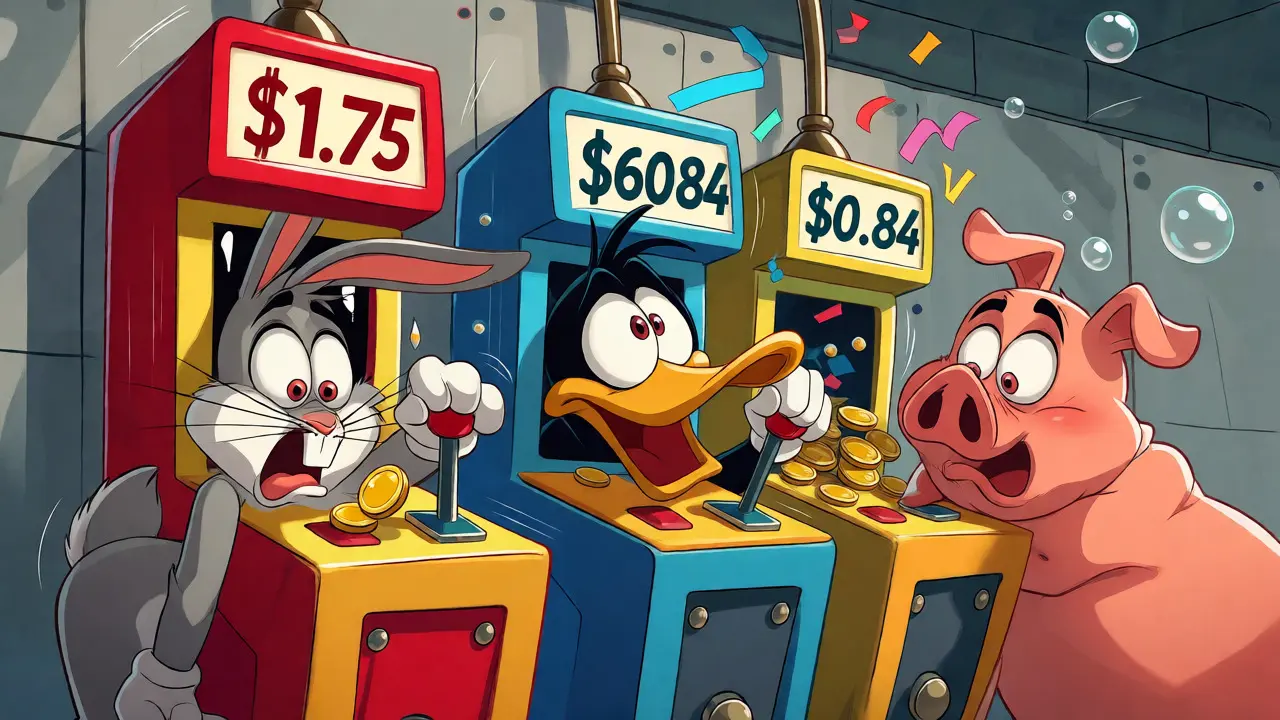
Let’s look at the price discrepancies. On November 5, 2025, WEEX reported a price of $1.75 USD. Around the same time, Crypto.com listed it at $1.80 USD with a trading volume of just $643. Meanwhile, Binance displayed a price of $60.84 USD with a higher volume of $207,662.52. Wait-Binance? Yes, but with a disclaimer stating the coin is not listed for trade and service. These wild swings in price and volume across different sources indicate a lack of market efficiency and depth. In a healthy market, arbitrage bots would smooth out such differences quickly. Here, the fragmentation persists, signaling thin liquidity.
Verifying the On-Chain Reality
To understand if a crypto project is real, you check the blockchain. For BLANC DAO, the contract address is documented as 0xe133686eb11fbc8bcf76688e07186a73f9145acf. When analysts checked Etherscan and other Polygon explorers, they found little to no transaction activity. This is critical because a "DAO" implies active governance votes, treasury movements, and user interactions. If there are no transactions, there is no DAO.
Furthermore, the claim of "locked liquidity forever" cannot be verified through standard tracking services like UniCrypt or Team Finance. Without verifiable locks, the risk of sudden liquidity removal remains high. The absence of functional smart contract activity means that features like staking and governance are currently theoretical. You cannot stake what doesn’t exist, and you cannot vote on proposals if the proposal engine isn’t running.
Community Engagement: Where Are the People?
A true DAO thrives on community. So, where are the users of BLANC DAO? A search on Reddit’s r/CryptoCurrency and r/ethfinance subreddits reveals zero posts discussing the project. On Twitter/X, there are only about 12 mentions in a 30-day period, and most of those come from automated listing bots, not humans discussing strategy or development updates.
| Metric | BLANC DAO (BLC) | MakerDAO (MKR) | Aave (AAVE) |
|---|---|---|---|
| Market Cap | $0 (Reported) | ~$1.2 Billion | ~$750 Million |
| Circulating Supply | 0 | Active | Active |
| Community Presence | Negligible / Bot-heavy | High (Forum/Discord) | High (Global Adoption) |
| Total Value Locked (TVL) | Unverifiable | Billions | Billions |
| Exchange Listings | Informational Only | Major Global Exchanges | Major Global Exchanges |
The Telegram and Discord channels linked in promotional materials often return 404 errors or show inactive members. Trustpilot reviews are nonexistent. Even Binance’s sentiment poll, asking "How do you feel about BLANC DAO today?", has zero votes. This silence is deafening. It contradicts the narrative of a "robust movement." Instead, it points to a project that exists primarily on paper and in database entries, lacking the human element essential for decentralized organizations.

Is It a Scam or Just Ghost Listing?
Industry experts have weighed in on similar anomalies. Nic Carter of Castle Island Ventures noted that projects claiming zero circulating supply with active price listings are often testnet placeholders or potential scams. While he didn’t name BLANC DAO specifically, his analysis applies directly here. The SEC’s October 2025 report on "Crypto Asset Listing Practices" highlighted cases where fake price data lures investors into non-existent assets. BLANC DAO fits this pattern.
This doesn’t necessarily mean the developers stole money immediately. It could be a case of poor execution or a project that failed to launch properly. However, for an investor, the distinction matters little. If you buy BLC now, you are buying into a system with no proven utility, no active community, and no verifiable liquidity. The risk of losing your capital is exceptionally high because there is no underlying value supporting the token price.
Practical Implications for Investors
If you are considering adding BLC to your portfolio, ask yourself these questions:
- Can I withdraw my funds? With no clear exchange support for actual trading, exiting a position might be impossible.
- Where is the roadmap? The official website references vague "long-term utility," but lacks specific milestones or dates.
- Who is behind it? There is no prominent team announcement or verified developer activity on GitHub.
Currently, no legitimate wallets support BLC integration natively, and documentation quality is poor. The learning curve is undefined because there are no functional applications to interact with. You aren’t investing in technology; you are speculating on data entries.
Is BLANC DAO (BLC) a good investment right now?
Based on current data, it carries extreme risk. With a reported circulating supply of zero, inconsistent pricing across platforms, and a lack of verifiable on-chain activity, it lacks the fundamentals required for a stable investment. Most analysts would classify it as speculative at best and potentially fraudulent at worst.
Why does BLANC DAO have a price if the circulating supply is zero?
This is a common anomaly in low-cap or newly listed tokens. The price may be derived from very small, isolated trades or algorithmic pricing models used by aggregators that haven't yet reconciled the data. It does not reflect a robust market equilibrium.
Where can I buy BLC tokens?
While listed on informational pages of exchanges like Coinbase and Binance, actual trading availability is limited or non-existent. Some smaller exchanges like WEEX may show quotes, but liquidity is extremely thin ($643 - $2,000 range), making large purchases difficult without slippage.
Is BLANC DAO built on Ethereum?
No, BLANC DAO operates on the Polygon blockchain. This allows for cheaper transaction fees compared to Ethereum mainnet, but the lack of activity on Polygon makes the choice of chain largely irrelevant at this stage.
Does BLANC DAO have a working staking program?
The project claims to offer staking with APYs, but due to the zero circulating supply and lack of verified smart contract interactions, there is no evidence that a functional staking mechanism is live for users.
Next Steps for the Curious Investor
If you still want to track BLANC DAO, keep an eye on the contract address on PolygonScan. Look for an increase in unique holders and daily transactions. Until then, treat any price quote with skepticism. Compare it against established DAOs like MakerDAO or Aave, which have billions in Total Value Locked (TVL) and active communities. The contrast highlights how far BLANC DAO has to go to prove its legitimacy. For now, it remains a curiosity-a coin with a name, a logo, and a lot of questions, but very few answers.