SEC Nigeria Crypto Guidelines: What Financial Institutions Must Know in 2026
 Mar, 23 2026
The Nigerian Securities and Exchange Commission (SEC) has completely rewritten the rules for cryptocurrency in the country. On March 31, 2025, President Bola Ahmed Tinubu signed the Investment and Securities Act (ISA) 2025 into law, and everything changed. For the first time, digital assets like Bitcoin and Ethereum are officially recognized as securities under Nigerian law. This means the SEC now has full authority to license, monitor, and punish crypto businesses - not just as a side note, but as core financial regulators.
What the ISA 2025 Actually Changes
Before 2025, crypto operated in a legal gray zone. The Central Bank of Nigeria (CBN) banned banks from handling crypto transactions in 2021, which pushed users toward peer-to-peer (P2P) trading. But the ISA 2025 doesn’t just lift that ban - it rebuilds the entire system. Digital assets are now legally classified as investment contracts, which puts them under the same rules as stocks and bonds. This isn’t a tweak. It’s a full integration into the national capital market.Under the new law, any company offering crypto trading, custody, or staking services must get a license from the SEC. Unlicensed platforms are illegal. That’s why exchanges like Quidax and Busha - both Nigerian-founded - are now operating openly. They got their licenses in 2024, before the law even passed, because they knew the change was coming. If you’re running a crypto business in Nigeria and you don’t have that license, you’re already breaking the law.
How Financial Institutions Fit In
Banks and other financial institutions used to be cut off from crypto. The CBN’s 2021 ban meant no bank accounts for crypto firms. But in 2023, that changed. The CBN updated its policy to allow banks to serve licensed Virtual Asset Service Providers (VASPs). Now, if your crypto company is SEC-licensed, you can open a corporate bank account, process payouts, and even receive deposits through traditional banking channels.This is huge. It means financial institutions aren’t just allowed to work with crypto firms - they’re expected to. But here’s the catch: banks now have legal responsibility to verify that the crypto businesses they serve are licensed. If a bank opens an account for an unlicensed VASP, it can face penalties from both the CBN and the SEC. So banks are now doing due diligence like they would for any high-risk client. They’re asking for license numbers, audit reports, and AML compliance records.
The Three Regulators You Can’t Ignore
You can’t just deal with one agency. In Nigeria, crypto regulation is a three-way system:- SEC Nigeria: Licenses and supervises VASPs. They enforce investor protection rules and shut down unlicensed or fraudulent platforms.
- Central Bank of Nigeria (CBN): Controls banking access. They decide which financial institutions can serve crypto firms and set rules for transaction monitoring.
- Nigerian Financial Intelligence Unit (NFIU): Watches for money laundering and terrorist financing. Every crypto transaction over ₦5 million must be reported to them.
If you’re a financial institution, you have to satisfy all three. One failure - say, missing an NFIU report - can trigger a full audit from the SEC and freeze your ability to serve crypto clients. There’s no room for half-measures.
Taxes Are Now Enforced - And They’re Strict
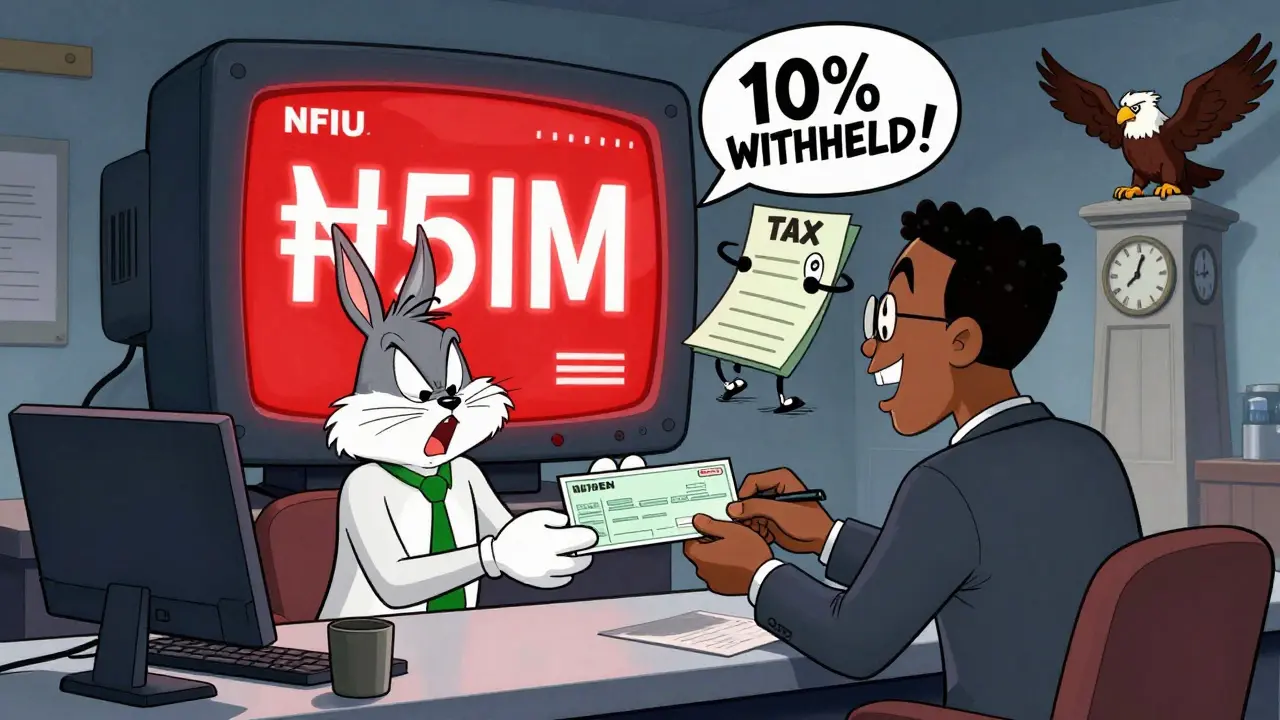
The Nigeria Tax Administration Act (NTAA) 2025, effective January 1, 2026, added another layer. VASPs must now file quarterly tax returns and pay corporate income tax on profits. They’re also required to withhold 10% tax on user withdrawals and remit it to the Federal Inland Revenue Service (FIRS).Penalties for non-compliance are severe. The first month of missed reporting costs ₦10 million ($6,693). Every month after that? Another ₦1 million ($669). That adds up fast. In 2025, the SEC shut down three crypto firms for failing to file taxes. One of them had over ₦2 billion in monthly volume. They didn’t get a warning. They got suspended overnight.
Even more telling: the SEC now requires licensed VASPs to connect their transaction systems directly to the FIRS for real-time tax monitoring. It’s not optional. It’s built into the licensing agreement.
What This Means for Nigerian Users
Nigeria still leads the world in P2P crypto trading. In 2025 alone, over $92 billion in crypto moved through Nigerian wallets. That’s nearly double South Africa’s volume. But now, the market is shifting. More users are moving from P2P to licensed exchanges because they’re safer, faster, and legally protected.By 2026, Nigeria is expected to have 28.69 million crypto users - up from 19 million in 2024. The number of licensed VASPs has jumped from 5 in 2023 to 27 in early 2026. That’s not just growth. That’s institutionalization.
For everyday users, this means real protections. If a licensed exchange gets hacked, the SEC requires them to have insurance. If they freeze your funds without cause, you can file a complaint and get it reviewed. Before 2025, there was no recourse. Now, there’s a legal path.

What Happens If You Don’t Comply?
The SEC doesn’t just issue warnings. They shut down operations - permanently. In November 2025, they revoked the license of a popular crypto lending platform after discovering it was operating as a Ponzi scheme. The founders were arrested. Their assets were seized. Their bank accounts were frozen. And the CBN blocked all future banking access for any entity linked to them.Unlicensed operators are now treated like criminals. The ISA 2025 gives the SEC power to prosecute under criminal law. Fines can reach up to ₦100 million ($66,930), and individuals can face jail time. This isn’t a regulatory notice. It’s a criminal indictment.
What Financial Institutions Should Do Now
If you’re a bank, payment processor, or fintech firm operating in Nigeria, here’s what you need to do:- Verify every crypto client’s SEC license - ask for the license number and check it on the SEC’s official registry.
- Implement real-time AML screening - use systems that flag transactions over ₦5 million and auto-report to NFIU.
- Train your compliance team - the ISA 2025 and NTAA 2025 are not optional reading. They’re mandatory training material.
- Partner only with licensed VASPs - don’t assume a company is legit because it’s popular. Check the SEC’s public database.
- Set up tax withholding systems - if you’re processing crypto payouts, you’re legally required to withhold 10% and file quarterly.
There’s no grace period. Enforcement started January 1, 2026. If you’re not ready, you’re already at risk.
The Bigger Picture
Nigeria’s approach isn’t about stopping crypto. It’s about controlling it. By bringing crypto under the same rules as stocks and bonds, the government is turning a chaotic, underground market into a regulated, transparent one. That’s good for investors. It’s good for businesses. And it’s good for Nigeria’s place in the global fintech economy.Other African countries are watching closely. Kenya and South Africa tax crypto, but they don’t have licensing frameworks like Nigeria’s. Nigeria now has the most detailed, enforceable crypto regulatory system on the continent. And with over $92 billion in annual volume, it’s not just a local story - it’s a regional model.
The message is clear: if you want to operate in Nigeria’s crypto space, you play by the SEC’s rules - or you don’t play at all.
Are cryptocurrency transactions legal in Nigeria?
Yes, but only through SEC-licensed platforms. While cryptocurrency isn’t legal tender and can’t replace the naira for official payments, trading, holding, and transferring crypto is legal if done through a licensed Virtual Asset Service Provider (VASP). Unlicensed exchanges and peer-to-peer platforms still operate, but they have no legal protection, and users have no recourse if something goes wrong.
Can Nigerian banks now work with crypto companies?
Yes - but only if the crypto company is licensed by the SEC. The Central Bank of Nigeria lifted its 2021 ban on banking services for crypto firms in 2023. However, banks are now legally required to verify the SEC license of any crypto business before opening an account. Unlicensed VASPs cannot access banking services, and banks that serve them risk penalties.
What happens if a crypto firm doesn’t pay taxes in Nigeria?
The penalty starts at ₦10 million ($6,693) for the first month of non-compliance under the Nigeria Tax Administration Act (NTAA) 2025. Each additional month adds ₦1 million ($669). The SEC can suspend or revoke the firm’s license, and the FIRS can freeze assets. In 2025, three crypto firms were shut down for tax evasion - their owners were also investigated for fraud.
How do I check if a crypto exchange is SEC-licensed in Nigeria?
Visit the official SEC Nigeria website and use their public VASP registry. All licensed platforms are listed with their license number, date of issuance, and status. If a company claims to be licensed but isn’t on the list, it’s not. Never rely on a company’s own claims - always verify through the SEC’s official database.
Do I need to report crypto transactions to the government?
Yes - if you’re a VASP, you must report all transactions over ₦5 million to the Nigerian Financial Intelligence Unit (NFIU). If you’re a financial institution serving a VASP, you must verify that they’re doing this. Individuals are not required to report personal crypto holdings, but if you earn income from crypto (like staking or trading profits), you must declare it on your annual tax return under the NTAA 2025.
Can I still use P2P crypto platforms in Nigeria?
Technically, yes - but you’re taking serious risk. P2P platforms aren’t licensed by the SEC, so they operate outside the law. If you get scammed, lose funds, or face a frozen wallet, there’s no regulator to turn to. The SEC encourages users to move to licensed exchanges because they offer insurance, dispute resolution, and legal accountability. P2P trading is still common, but it’s no longer the safe or recommended option.
Jackie Crusenberry
March 24, 2026 AT 23:00also why does everyone act like this is a revolution? it's just another bureaucracy with a blockchain sticker on it.
namrata singh
March 25, 2026 AT 07:21Abhishek Thakur
March 26, 2026 AT 11:26No wonder only 27 platforms made it. Most startups would’ve bled out before even launching.
YANG YUE
March 26, 2026 AT 20:26Instead of fighting the tide, Nigeria built a dam. Now the money flows through regulated channels. The government gets taxes. Users get protection. Banks get revenue.
It’s not perfect. But it’s the first time a developing nation didn’t just copy-paste EU or US rules - they built something that fits their own chaos.
Anna Lee
March 27, 2026 AT 09:50Finally someone’s making crypto safe for normal people! No more sketchy P2P scams!
I’m so proud of Nigeria for leading the way!!
Alice Clancy
March 27, 2026 AT 16:24Congrats, Nigeria. You just turned Bitcoin into a welfare program for bureaucrats.
#BigGovCrypto
Shana Brown
March 29, 2026 AT 09:12No one’s talking about it, but this is the quiet revolution.
Nigeria didn’t just regulate crypto - they made it respectable. And that’s more powerful than any ban ever was.
Marie Mapilar
March 31, 2026 AT 04:29Seriously. Train your people. It's not optional.
Also, check the SEC registry. Always. Even if the CEO is your cousin.
Dominic Taylor
March 31, 2026 AT 06:40Most jurisdictions treat these as siloed entities - Nigeria has engineered a feedback loop.
Real-time tax reporting + banking access + AML triggers = systemic integrity.
This isn’t regulation. It’s architectural design.
Shelley Dunbrook
April 2, 2026 AT 05:18I’m not sure whether to applaud or cry.
Aman Kulshreshtha
April 3, 2026 AT 14:16But here? Nigeria didn’t ban it. They didn’t ignore it. They took it by the collar and said, ‘You’re part of the system now.’
Respect.
Leona Fowler
April 5, 2026 AT 05:14The paperwork is heavier than the code.
But honestly? It’s worth it. Licensed platforms have lower fraud rates. Users trust them. And banks actually fund them.
It’s not sexy. But it’s sustainable.
Neil MacLeod
April 6, 2026 AT 23:51Took a wild, feral, P2P beast and put it on a leash with a tax ID.
Now it’s a polite, suit-wearing, quarterly-report-filing financial institution.
Cute. Sad. Effective.
Misty Williams
April 8, 2026 AT 00:32If you want to trade crypto, you shouldn’t need 5 licenses, 3 audits, and a notarized letter from your grandmother.
This isn’t progress - it’s control dressed up as innovation.
Anand Makawana
April 9, 2026 AT 22:32The FIRS linkage isn’t a feature - it’s a constitutional obligation under the new fiscal governance paradigm.
Any entity failing to implement API-level tax hooks is not merely non-compliant - it is institutionally negligent.
Mohammed Tahseen Shaikh
April 10, 2026 AT 01:45I used to trade on Binance P2P. Now I use Quidax.
Why? Because last year my friend lost $12k to a fake seller. No recourse. No trace.
Now? If my funds get frozen, I file a ticket with SEC. They reply in 48 hours.
That’s not control. That’s justice.
aravindsai pandla
April 10, 2026 AT 23:35When you create clear rules, capital follows.
This isn’t about crypto. It’s about trust. And Nigeria just rebuilt it.
Zion Banks
April 12, 2026 AT 21:36Real-time tax feeds. Bank account monitoring. SEC license checks.
This isn’t regulation - it’s the first step to a national blockchain ID system.
Wake up. They’re building the surveillance state.
#CryptoIsTheNewSurveillance
Annette Gilbert
April 13, 2026 AT 02:57Congrats. You’ve created 27 new bureaucratic roles and called it ‘innovation.’
I’m sure the SEC interns are thrilled.
John Alde
April 13, 2026 AT 14:42This isn’t just about crypto. It’s about financial dignity.
And that’s worth every line of regulation.
manoj kumar
April 15, 2026 AT 08:31Wow.
I guess that’s what happens when you think crypto is tax-free.
But honestly? If you’re running a $2B/month operation and you don’t file taxes... you’re not a disruptor.
You’re a thief.