Ancient Kingdom Airdrop: What It Is, Why It Matters, and What to Watch For
When you hear about an Ancient Kingdom airdrop, a rumored cryptocurrency giveaway tied to a mysterious project with no public team, whitepaper, or blockchain presence, you’re likely seeing a red flag wrapped in hype. Real airdrops don’t vanish after a Twitter post. They’re tied to active teams, clear tokenomics, and verifiable smart contracts. The Ancient Kingdom airdrop, a name floating around forums and Telegram groups with no official website or roadmap, fits the profile of a ghost project—designed to collect wallets, not distribute value.
Scammers love using ancient themes—kingdoms, empires, relics—to make fake drops sound epic and timeless. But behind the myth, there’s no infrastructure. No token contract. No exchange listings. No team bio. Compare that to real airdrops like the OwlDAO x CoinMarketCap airdrop, a legitimate campaign with clear steps, token distribution on a live blockchain, and a trackable smart contract, or the BNC airdrop by Bifrost, a well-documented distribution tied to a functioning DeFi protocol and listed on major exchanges. Those projects give you proof. The Ancient Kingdom gives you a dream.
Why do these scams keep working? Because they tap into FOMO and the belief that crypto rewards are free money. But real airdrops require effort: holding a token, completing tasks, verifying your identity. They don’t ask for your private key. They don’t send you a link to claim from a random site. They don’t promise riches in exchange for sharing your wallet address on a Discord server. The tokenomics, the economic design behind a cryptocurrency’s supply, distribution, and utility of a real project is public, auditable, and logical. The Ancient Kingdom’s tokenomics? Nonexistent. No supply cap. No use case. No roadmap. Just noise.
Look at the patterns in the posts below. You’ll see real airdrops like OwlDAO and BNC that have clear rules, deadlines, and outcomes. You’ll also see fake ones—like the Position Exchange billboard scam or the WELL token myth—that vanish after the hype dies. The same rules apply here. If a project sounds too grand to be real, it probably is. If no one can tell you who’s behind it, walk away. If your wallet feels like a target, it is.
There’s no shortage of legit opportunities if you know where to look. The next time you see an Ancient Kingdom airdrop pop up, pause. Ask: Who’s behind this? Where’s the contract? What’s the token for? If you can’t answer those, you’re not getting free crypto—you’re giving away your security. The posts below will show you how to spot the difference, avoid the traps, and find real value in a sea of noise.
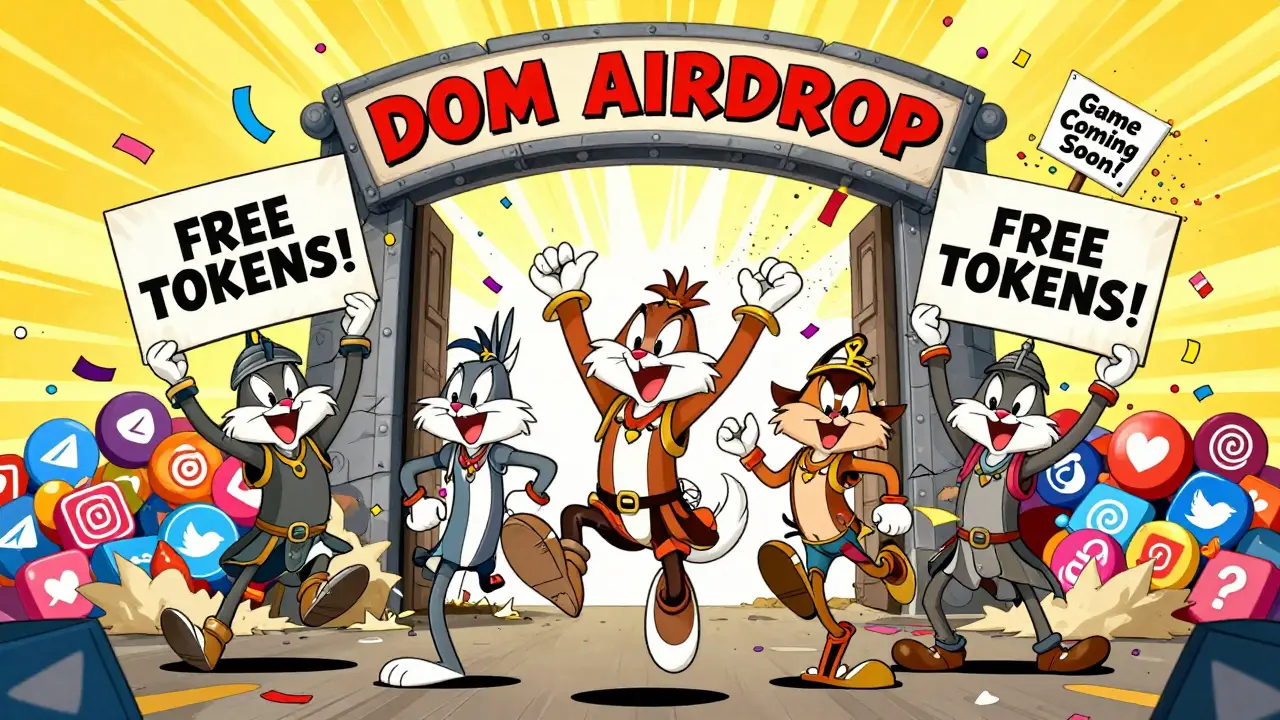
Ancient Kingdom (DOM) Airdrop: What Happened and Why It’s Not Active in 2025
The Ancient Kingdom (DOM) airdrop ended in 2021 with no working game. Today, DOM tokens are worth almost nothing. Learn what happened, why it failed, and how to avoid similar scams in 2025.