Bitcoin Economy: How Bitcoin Shapes Markets, Regulation, and Digital Finance
When we talk about the Bitcoin economy, a decentralized financial system built on peer-to-peer transactions and a fixed supply of 21 million coins. It's not a stock market, not a bank, and not a government program—it's a new kind of economic layer that operates outside traditional systems. This system started as a digital experiment, but today it moves billions daily, influences central bank policies, and forces governments to rewrite financial rules.
The Bitcoin regulation, the legal frameworks countries create to control or accept Bitcoin usage. Also known as crypto regulation, it varies wildly—from El Salvador making it legal tender, to Australia blocking privacy coins, to Taiwan restricting banking access. These rules don’t just affect traders—they shape whether businesses can accept Bitcoin, whether exchanges can operate, and even how people store their savings. Meanwhile, the cryptocurrency markets, the global network of exchanges, wallets, and trading platforms where Bitcoin and other digital assets are bought and sold. Also known as crypto trading ecosystems, they’re where the real-time pulse of the Bitcoin economy is felt: liquidity, volatility, and investor sentiment all play out here. You see it in posts about Bitget’s copy trading, RDAX.io’s suspiciously low fees, or why Braziliex vanished overnight. These aren’t random stories—they’re symptoms of a market still finding its footing.
The digital finance, the shift from traditional banking to decentralized, software-driven financial services. Also known as DeFi, it’s built on the same blockchain tech that powers Bitcoin, even if it often runs on Ethereum or sidechains. But Bitcoin’s role? It’s the anchor. Its scarcity, security, and global reach make it the most trusted asset in this new space. That’s why DeFiChain’s airdrops, Real USD’s collapse, and SynFutures’ derivatives all tie back to Bitcoin’s influence—even if they don’t use it directly. People don’t just hold Bitcoin because it’s popular. They hold it because it’s the only digital asset that has survived crashes, bans, scams, and hype cycles for over a decade.
What you’ll find below isn’t a list of random crypto articles. It’s a map of the Bitcoin economy in action: the exchanges people trust (or avoid), the tokens that promise too much and deliver nothing, the airdrops that don’t exist, and the wallets that keep people safe. These posts don’t just report—they explain how Bitcoin’s rules ripple through every corner of crypto, whether you’re trading on UPI in India, using a VPN in Iran, or trying to understand why a stablecoin crashed to $0.51. This is the real economy. Not the hype. Not the memes. The actual system that’s changing how money works.
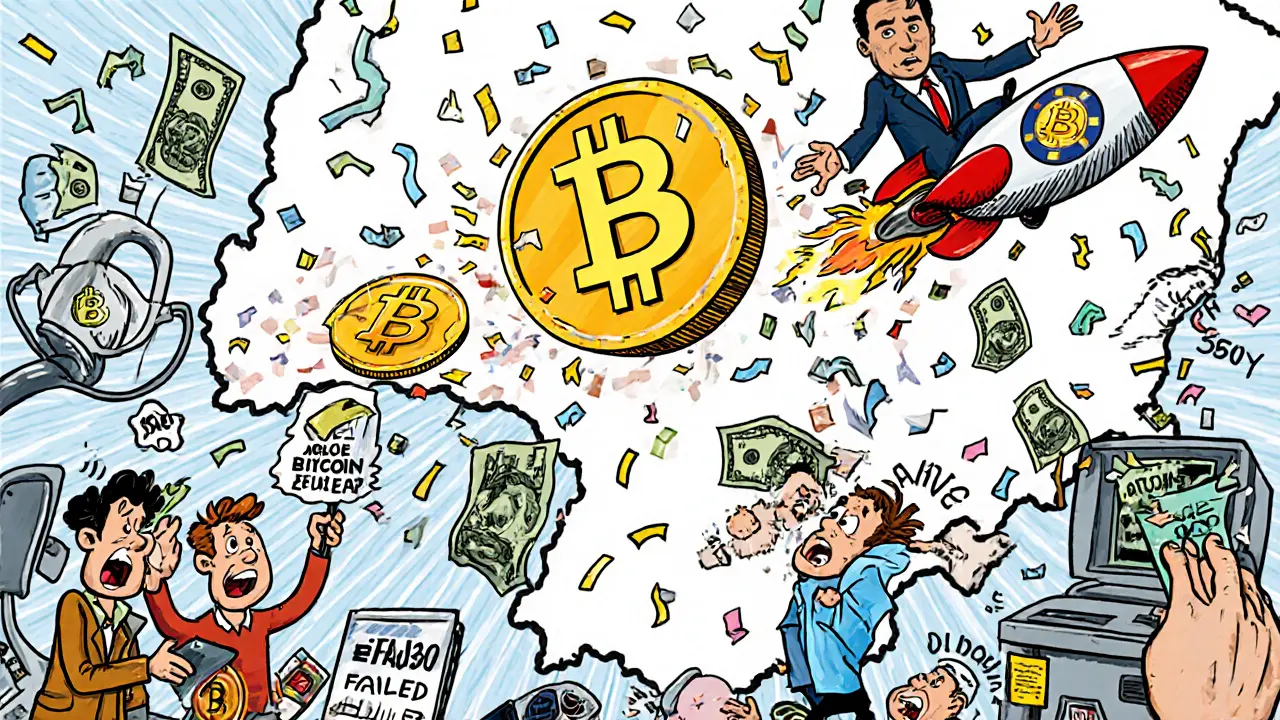
How El Salvador Uses Bitcoin for Its National Economy - And Why It’s Struggling
El Salvador made Bitcoin legal tender in 2021 to boost remittances and financial inclusion. Three years later, most citizens don’t use it. The experiment failed to transform the economy, faced IMF pressure, and left behind a costly lesson in crypto ambition.