Gas Sponsorship in Crypto: Who Pays for Transactions and Why It Matters
When you send crypto, someone has to pay for the gas sponsorship, a system where a third party covers the transaction fees on a blockchain so users don’t have to. Also known as fee abstraction, it’s what lets you claim an airdrop or swap tokens without holding any native coin like ETH or MATIC to cover the cost. Without gas sponsorship, most new users would be locked out — you can’t interact with a smart contract if you don’t have gas, and many people don’t buy ETH just to try a new app.
Gas sponsorship isn’t magic. It’s a business decision. Projects like Bifrost, Bifrost Finance, and even some DeFi exchanges use it to lower the barrier to entry. If you’re running a token airdrop, you want thousands to claim — not just the 5% who already hold ETH. So you pay for their gas. That’s why you see campaigns like the BNC airdrop, a token distribution by Bifrost that offered free claims with sponsored gas on LBank and KuCoin — users didn’t need to buy ETH to participate. Same with OwlDAO’s CoinMarketCap airdrop. The project absorbed the cost to drive sign-ups. It’s not charity. It’s acquisition.
But gas sponsorship isn’t just for airdrops. Wallets like Rabby and Zerion use it to let you interact with dApps without holding gas. Some exchanges, like CEX.IO and Bitget, offer gas credits for new users. Even in places where crypto is banned — like Algeria or China — gas sponsorship becomes a workaround. If you can’t buy ETH locally, but a dApp sponsors your gas, you can still access DeFi. It’s a quiet revolution in access.
Not all gas sponsorship is honest, though. Some scams pretend to sponsor gas to steal your wallet. A fake billboard airdrop or a Telegram bot claiming to cover your fees? That’s not sponsorship — that’s a trap. Real gas sponsorship doesn’t ask for your private key. It doesn’t ask you to send crypto first. It just lets you click and go. Look for it on official project sites, verified airdrop pages, or trusted wallets — not random links.
Gas sponsorship also reveals something deeper: blockchain fees are broken for everyday use. Ethereum’s gas prices made simple swaps unaffordable for millions. Layer-2s like Base and Solana helped, but they still need gas. Sponsorship is the bridge — a temporary fix that’s becoming standard. In 2025, if a project doesn’t offer gas sponsorship, it’s ignoring real users. The ones who don’t hold crypto yet. The ones who just want to try something new.
Below, you’ll find real cases where gas sponsorship made the difference — from failed airdrops that didn’t cover fees, to smart projects that used it to grow. You’ll see how Kazakhstan’s power restrictions, Singapore’s crypto rules, and even Algeria’s ban all connect to the same problem: access. And how gas sponsorship, when done right, answers that problem — one transaction at a time.
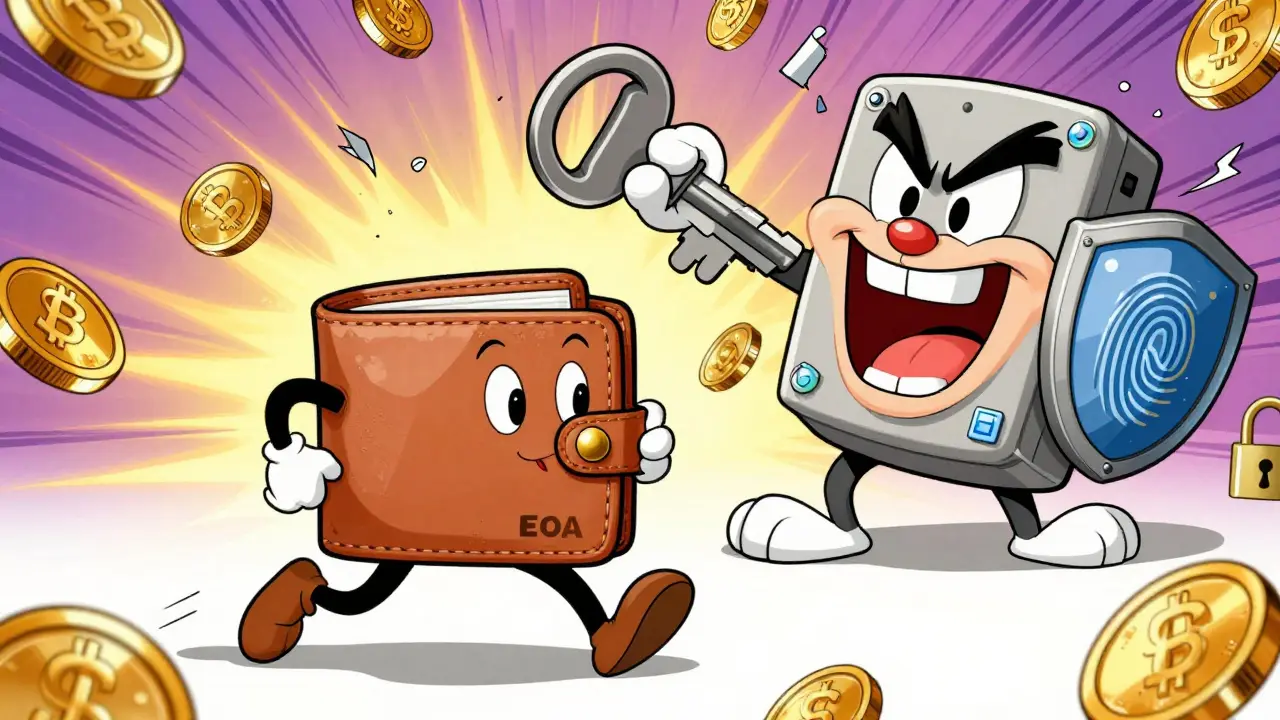
Benefits of Account Abstraction for Smarter, Safer Crypto Wallets
Account abstraction makes crypto wallets smarter, safer, and easier to use by replacing fragile private keys with programmable smart contracts. Learn how it enables social recovery, gas sponsorship, and cross-chain control - and why it’s the key to mass adoption.