Monero Ban: Why Privacy Coins Face Global Crackdowns
When people talk about the Monero ban, a growing global effort to restrict the use of Monero (XMR), a cryptocurrency designed for complete financial privacy. Also known as XMR, it’s the most widely used coin that hides sender, receiver, and transaction amount by default—making it a target for regulators who see anonymity as a risk to financial oversight. Unlike Bitcoin, where every transaction is public, Monero uses ring signatures, stealth addresses, and confidential transactions to ensure no one can trace where money goes. That’s not a flaw—it’s the whole point. And that’s exactly why governments and financial institutions are pushing to ban or restrict it.
The privacy coin regulation, a policy trend where authorities demand transparency in cryptocurrency transactions, often forcing exchanges to delist coins that can’t comply. Also known as anonymity-focused crypto bans, this movement gained steam after FATF guidelines in 2019 pushed countries to require exchanges to collect and share user data. Countries like Japan, South Korea, and the Netherlands have already forced exchanges to remove Monero. The U.S. Treasury has flagged it as a high-risk asset. Even major platforms like Coinbase and Binance stopped supporting it—not because it’s illegal, but because compliance with KYC rules is impossible without breaking Monero’s core design.
This isn’t just about Monero. The same pressure is hitting Zcash, another privacy coin that offers optional shielded transactions, but still struggles under regulatory scrutiny. Also known as ZEC, it’s caught in the same crosshairs because its technology allows users to opt out of transparency. Even newer coins built on privacy-first principles are being blocked before they launch. The real question isn’t whether privacy coins are used for crime—most are not—but whether society is willing to accept financial privacy as a right, or if every transaction must be visible to authorities.
What you’ll find in the posts below aren’t opinions. They’re facts. Real cases of exchanges removing Monero. Government statements. User experiences from countries where it’s still accessible. And clear breakdowns of how Monero’s tech works—so you understand why it’s banned, not just that it is. No hype. No fearmongering. Just what’s happening, why, and what it means for your crypto choices.
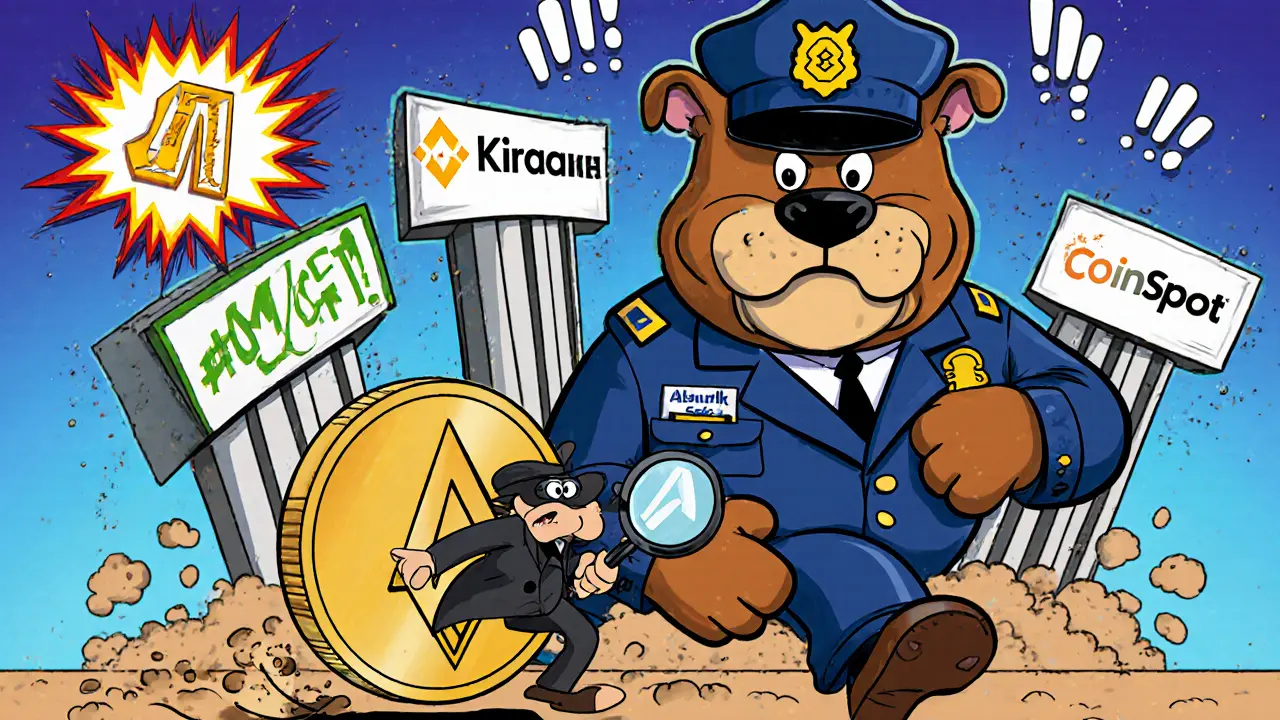
Privacy Coins Ban on Australian Crypto Exchanges: What You Need to Know in 2025
Australia doesn't ban privacy coins outright, but exchanges can't list them due to strict AML rules. Learn how Monero, Zcash, and Dash are affected, what alternatives exist, and what changes are coming in 2026.