Zcash Australia: Privacy Coins, Trading, and What’s Really Happening
When you think about Zcash, a privacy-focused cryptocurrency that hides transaction amounts and sender/receiver details using zero-knowledge proofs. Also known as ZEC, it was built to fix Bitcoin’s lack of financial privacy—but in Australia, using it isn’t as simple as buying it. Unlike Bitcoin, where every transaction is public, Zcash lets you choose between transparent and shielded addresses. That’s why it’s attracted users in countries with strict financial oversight, like Australia, where tax reporting and bank monitoring are common.
But here’s the catch: Australian crypto exchanges, platforms that let users buy, sell, and trade digital assets under local financial laws. Also known as crypto trading platforms, it have been slow to list Zcash. Most major exchanges like CoinSpot and Independent Reserve don’t support ZEC. Why? Because Australian regulators treat privacy coins with suspicion. The Australian Transaction Reports and Analysis Centre (AUSTRAC) flagged shielded transactions as high-risk for money laundering, and many exchanges chose to avoid the legal gray area entirely. So if you’re looking to buy Zcash in Australia, you’re likely stuck using overseas platforms—some of which, like RDAX.io or AIA Exchange, lack transparency and regulatory backing. That’s not a risk most users should take.
Then there’s the crypto wallet, a digital tool to store, send, and receive cryptocurrency securely. Also known as digital wallet, it question. Even if you get ZEC, storing it safely means using a wallet that supports shielded addresses—like the official Zcash wallet or ZecWallet. But most Australian users don’t know how to set one up. They try to store ZEC on exchanges that don’t support it, or worse, they use wallets designed only for Bitcoin or Ethereum. That’s how people lose coins. And unlike Bitcoin, where you can trace a lost transaction, Zcash’s privacy features make recovery impossible if you lose your keys.
There’s also the issue of tax compliance, the legal requirement to report crypto gains and losses to tax authorities. Also known as crypto tax reporting, it . The Australian Taxation Office (ATO) treats Zcash like any other asset. Every time you trade ZEC for AUD, BTC, or even another privacy coin, you trigger a taxable event. But because Zcash hides transaction details, it’s harder for users to track their cost basis. That’s why many Australians using Zcash end up underreporting or overpaying taxes—neither of which is smart.
So what’s actually happening with Zcash in Australia? Not much. It’s not dead, but it’s not thriving either. A few dedicated users trade it on decentralized exchanges or peer-to-peer platforms. Some miners still run nodes. But there’s no real ecosystem—no local Zcash-focused apps, no merchant adoption, no community events. The excitement around privacy coins in Australia faded after 2021, when regulators started cracking down. Today, most people who want privacy in crypto look at Monero instead—or just use Bitcoin with mixers, even though those are legally risky.
What you’ll find below isn’t a list of places to buy Zcash in Australia—because there aren’t many good ones. Instead, you’ll see real reviews of exchanges that handle privacy coins, deep dives into how shielded addresses actually work, and warnings about fake Zcash airdrops that are popping up. We’ve got guides on setting up secure wallets, how to track your ZEC taxes without exposing your transactions, and why most "Zcash Australia" YouTube videos are just scams. This isn’t hype. It’s what’s left after the noise cleared out.
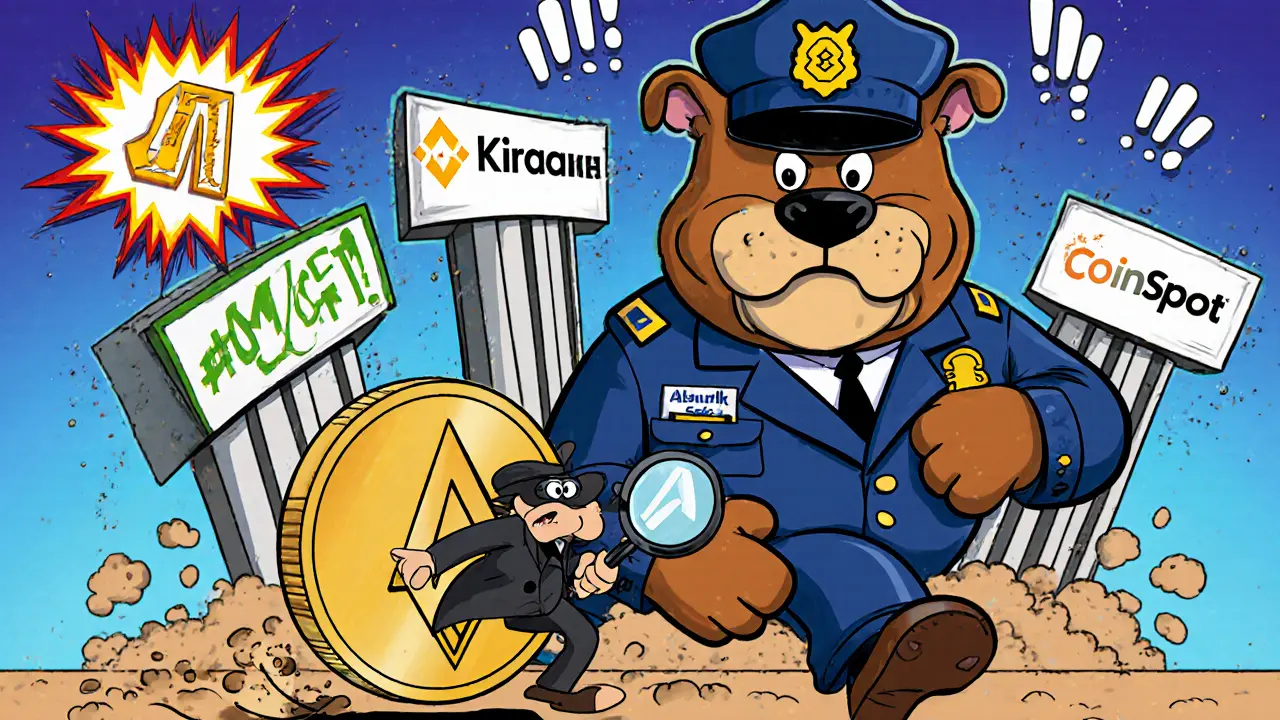
Privacy Coins Ban on Australian Crypto Exchanges: What You Need to Know in 2025
Australia doesn't ban privacy coins outright, but exchanges can't list them due to strict AML rules. Learn how Monero, Zcash, and Dash are affected, what alternatives exist, and what changes are coming in 2026.