Tegro Crypto Exchange Review: What You Need to Know Before Using It
 Mar, 17 2026
When you hear "crypto exchange," you probably think of Binance, Kraken, or Coinbase - platforms where you buy, sell, and store digital assets. But Tegro isn’t one of those. It doesn’t just let you trade. It tries to be everything at once: a decentralized exchange, a gaming marketplace, a payment processor, and a Web3 infrastructure hub. That’s ambitious. And that’s exactly why you need to know what’s real - and what’s just hype.
What Is Tegro, Really?
Tegro calls itself a cross-chain DeFi platform. That sounds technical, but here’s what it means in plain terms: it lets you trade crypto between two blockchains - The Open Network (TON) and Binance Smart Chain (BSC) - without needing to use a bridge or third-party service. You send your ETH from BSC, and it shows up as TON-compatible tokens on the other side. Sounds smooth? Maybe. But there’s no public data showing how often this actually works, or how fast. Unlike Uniswap or PancakeSwap, which use automated market makers (AMMs), Tegro uses a traditional orderbook system. That means you see real bids and asks, like on a stock exchange. This is better for large trades because it reduces slippage. But here’s the catch: most DEXs don’t use orderbooks because they’re harder to build and maintain. Tegro claims it offers "gasless quotes" - meaning you can view prices without paying gas fees just to look. But no one explains how. Is it a trick? A caching layer? A centralized proxy? The docs don’t say.The Trading Experience: Fast? Safe? Transparent?
Tegro says it protects against MEV (Maximum Extractable Value) attacks - those sneaky bot trades that snatch profits from users by front-running their orders. That’s a big deal. MEV has cost traders millions across DeFi. But Tegro doesn’t say how it stops it. No mention of Flashbots, private mempools, or any specific tech. Just a claim. Without audit reports or code examples, you’re trusting them on faith. The platform is non-custodial. That’s good. It means your wallet stays in control. No one holds your keys. No "exchange wallet" where your coins vanish if they get hacked. But here’s the problem: if you’re trading on a DEX with an orderbook, and you’re not using a custodial service, how do they match buyers and sellers? The answer is buried. No transparency. No on-chain proof of matching logic. And what about fees? Tegro doesn’t publish them. No maker/taker rates. No withdrawal costs. No discounts for holding TGR, the native token. You’re expected to just sign in and trade. That’s not how legitimate platforms operate. Even decentralized ones like dYdX or Uniswap list their fees clearly. Tegro leaves you guessing.The TGR Token: What’s It Actually For?
Tegro has its own token: TGR. It’s supposed to be the glue holding everything together. Pay for trades. Buy in-game items. Use Tegro Money to pay for Uber-like rides. All with TGR. Sounds convenient. But again - where’s the data? - Total supply? Unknown. - Circulating supply? Not listed anywhere. - Where can you buy it? No exchange listings shown. - What’s the liquidity? Zero public pool data. - Is it even tradable outside their own platform? Blockspot.io has a placeholder page for TGR. The price? "Processing." The market cap? "Unavailable." That’s not a bug - that’s a red flag. If a token can’t even show basic stats, it’s not ready for serious use.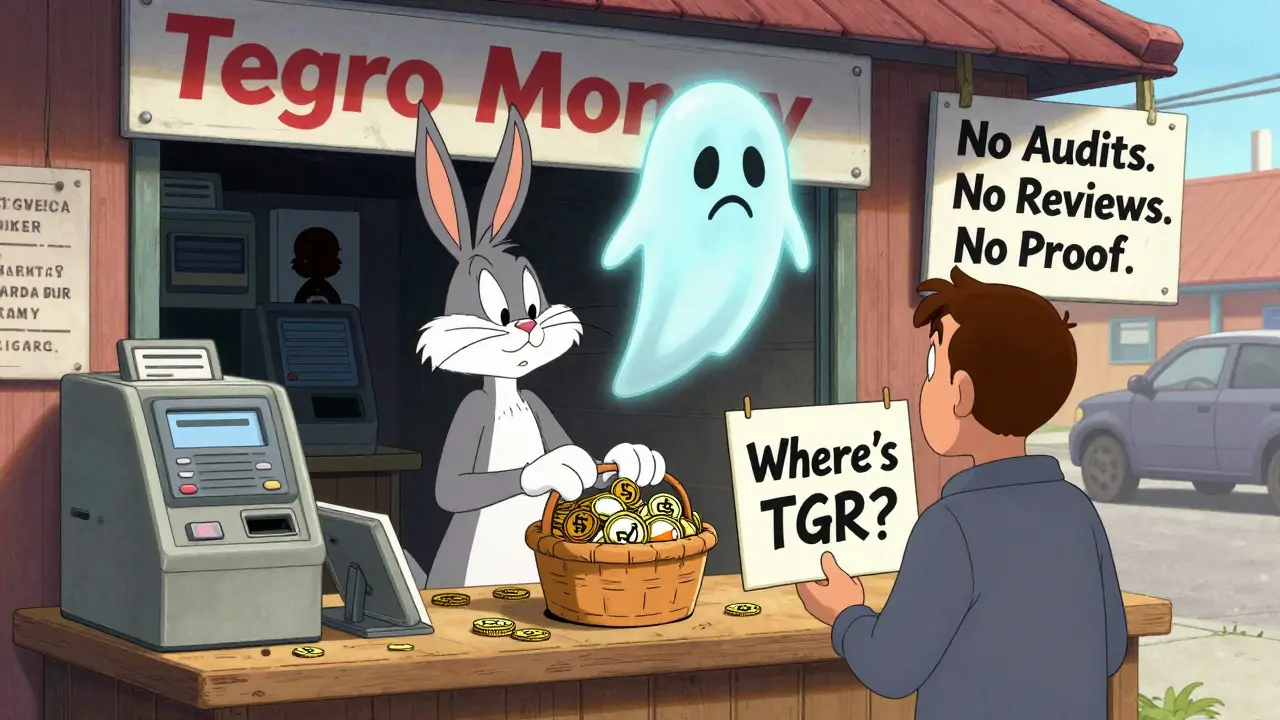
Gaming and the Trillion Claim
Tegro’s biggest bet is on gaming. They say they’re unlocking a $2 trillion market. That number comes out of nowhere. No source. No study. Just a bold statement. They’ve built a marketplace for NFTs from games like Axie Infinity. You can buy skins, weapons, characters. Fair enough. But so can ImmutableX, OpenSea, and Enjin. What makes Tegro better? They claim a "bounty system" - where gamers complete tasks (like leveling up) and get paid in crypto. It’s like Fiverr for crypto players. Interesting? Maybe. But again, no examples. No screenshots. No user testimonials. Just a concept. The interface for this part? Neon space theme, floating astronauts, animated progress bars. It looks like a VR game. But aesthetics don’t equal function. If your NFT doesn’t sell, or your bounty doesn’t pay out, pretty graphics won’t fix that.Tegro Money: Payments for Merchants
This is where Tegro tries to act like Stripe - but for crypto. They offer payment processing for businesses. You can accept payments via mobile wallets, bank cards without 3D-Secure (which reduces friction for ride-hailing apps), recurring subscriptions, and even AFT (Card2Account) for fast loan repayments. They even have API docs in PHP. That’s real. That’s something you can test. But here’s the twist: Tegro Money doesn’t require users to hold TGR. You can pay with USDT, USDC, or even fiat. So why does the whole ecosystem need TGR? The logic is messy. If payments work without the token, why is TGR so central? Also, are businesses actually using this? No case studies. No logos of companies on their site. No testimonials. Just code samples.Security: The Elephant in the Room
No audits. No public smart contract reports. No bug bounty program details. No insurance fund. No cold storage info. That’s not normal. Even small DeFi projects get audited by CertiK or Hacken. Tegro? Silence. Their GitHub has 40 followers. That’s not a community. That’s a ghost town. No recent commits. No open issues. No contributors. If you’re building a cross-chain DeFi platform, you need a team of 20+ devs. Where are they? The platform says it’s based in the UAE. That’s not a guarantee of safety. The UAE has crypto-friendly regulations, but Tegro isn’t licensed. No mention of SCA (Securities and Commodities Authority) registration. No KYC/AML procedures outlined. You’re trading on a platform that doesn’t tell you who’s behind it.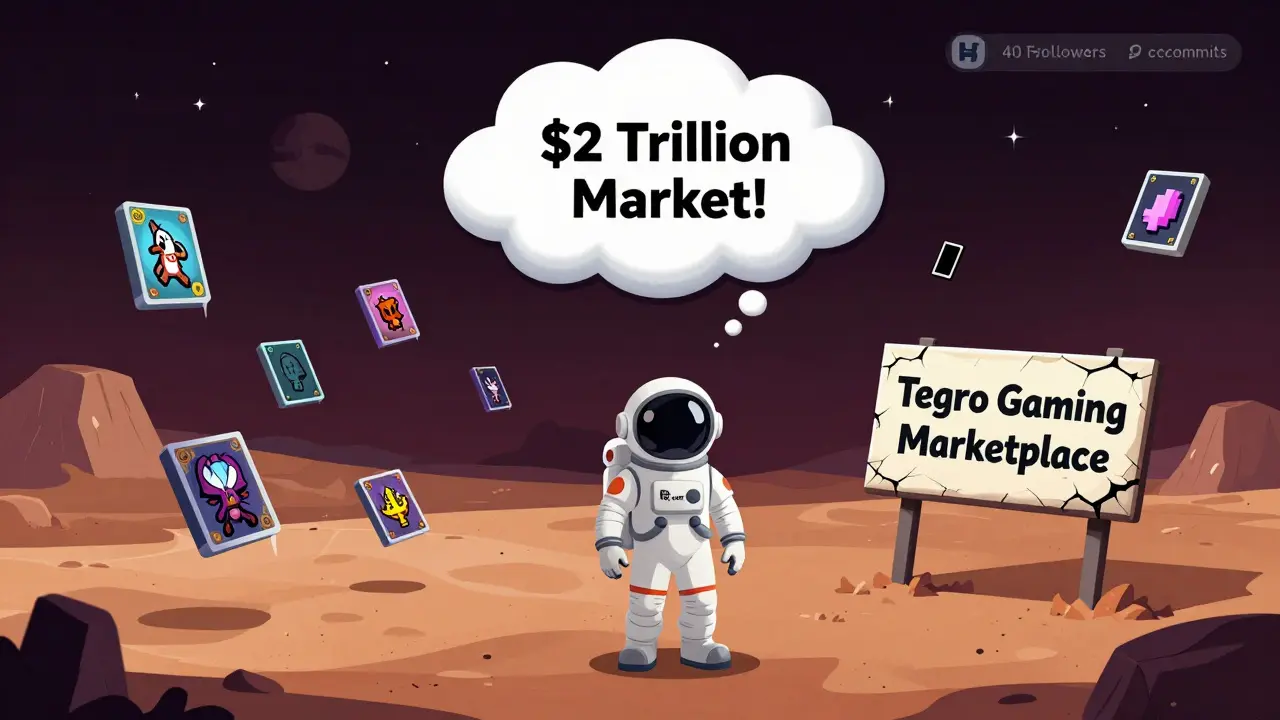
Who Is This For?
Tegro feels like a prototype that got launched too early. It’s not for beginners. You need to understand orderbooks, MEV, cross-chain bridges, and tokenomics just to get started. And even then, you’re flying blind. It’s not for traders looking for liquidity. There’s no volume data. No depth charts. No trading pairs listed on CoinGecko or CoinMarketCap. It’s not for gamers who want to cash out. No proven marketplace. No buyer activity. No sales history. It’s not for merchants. No case studies. No partner logos. No proof it’s live in production. The only people who might benefit are crypto researchers who want to dig into its code - if they can find it.The Verdict: Too Many Gaps
Tegro has interesting ideas. A cross-chain orderbook DEX? Yes. A gaming bounty system? Interesting. Merchant payments? Useful. But none of that matters if you can’t trust it. You can’t verify its security. You can’t measure its performance. You can’t check its liquidity. You can’t find users who’ve used it. You can’t confirm its token has value. This isn’t a review that says "don’t use it." It’s a review that says: you don’t have enough information to use it safely. If you’re curious, try it with $10. Not $1,000. Not your life savings. Just enough to see if the interface works. If you can’t find a single review, video, or forum post from someone who’s actually traded on it - walk away. The crypto space is full of projects that look cool on paper. Tegro is one of them. But without proof, it’s just a beautiful website with empty promises.What Should You Do Next?
If you still want to explore Tegro:- Check their GitHub - look for recent commits, open issues, or PRs.
- Search Reddit and Twitter for "Tegro review" - if you find zero real user posts, that’s a warning.
- Try connecting your wallet - does it work? Do trades go through? Is there any delay?
- Look for audit reports. If none exist, assume the code is untested.
- Never invest more than you’re willing to lose.
There are hundreds of legitimate DEXs with proven track records. Uniswap, SushiSwap, Curve, dYdX - they all publish their data. Tegro doesn’t. That’s not a feature. That’s a flaw.
Wait until they show you the numbers. Until then, treat Tegro like a beta app - not a financial tool.
Is Tegro a centralized or decentralized exchange?
Tegro claims to be a decentralized exchange (DEX) with a non-custodial orderbook system, meaning users retain control of their funds. However, it lacks public audits, transparent smart contracts, and verifiable on-chain matching logic. Without these, its decentralization cannot be confirmed.
Can I trade TGR token on major exchanges?
No. TGR is not listed on CoinGecko, CoinMarketCap, or any major exchange. The only place it appears to be traded is within Tegro’s own platform, with no public liquidity pool data or trading volume. This makes it extremely difficult to buy, sell, or assess its real market value.
Has Tegro been audited for security?
There is no public record of any smart contract audit for Tegro’s trading, gaming, or payment systems. No audit firm names, dates, or reports are available. This is a major red flag, as even small DeFi projects routinely publish audits from firms like CertiK or SlowMist.
What blockchains does Tegro support?
Tegro currently supports cross-chain trading between The Open Network (TON) and Binance Smart Chain (BSC). However, there is no public data showing how often cross-chain transfers succeed, their average speed, or whether there are any known issues with bridge failures.
Is Tegro regulated or licensed?
Tegro operates from the United Arab Emirates but has not disclosed any regulatory licenses, KYC/AML procedures, or compliance with financial authorities. Without this information, users have no legal recourse if funds are lost or services are disrupted.
Does Tegro have a working community or user base?
There is no verifiable evidence of an active user base. Social media accounts exist, but follower counts are low, and engagement is unmeasurable. No reviews exist on Trustpilot, Reddit, or Bitcointalk. The GitHub repository has only 40 followers with no recent activity, suggesting minimal developer or user adoption.
Brenda White
March 18, 2026 AT 17:44Angelica Stovall
March 20, 2026 AT 13:07Carol Lueneburg
March 22, 2026 AT 08:44Zachary N
March 23, 2026 AT 10:16Konakuze Christopher
March 23, 2026 AT 20:26Henrique Lyma
March 25, 2026 AT 05:22Ernestine La Baronne Orange
March 26, 2026 AT 21:49Tobias Wriedt
March 27, 2026 AT 22:04Taylor Holloman.
March 29, 2026 AT 07:44Bryan Roth
March 30, 2026 AT 09:35Manali Sovani
April 1, 2026 AT 04:02john peter
April 1, 2026 AT 11:22Marc Morgan
April 2, 2026 AT 01:21Kira Dreamland
April 3, 2026 AT 20:34sai nikhil
April 3, 2026 AT 22:00Sahithi Reddy
April 5, 2026 AT 09:12George Hutchings
April 6, 2026 AT 16:43Steph Andrews
April 8, 2026 AT 01:10Derek Lynch
April 8, 2026 AT 17:22Shreya Baid
April 10, 2026 AT 11:25Anastasia Thyroff
April 11, 2026 AT 09:08shreya gupta
April 12, 2026 AT 12:38Prakash Patel
April 14, 2026 AT 05:17Carol Lueneburg
April 14, 2026 AT 23:35