Understanding Merkle Root: The Backbone of Blockchain Security
 Jun, 12 2026
Imagine you are trying to verify that a specific page exists in a 500-page book. You don't have the whole library, and you certainly don't want to read every single word just to check one fact. Now imagine doing this for millions of transactions on a decentralized network where no single person owns the "master copy." This is the exact problem the Merkle root solves.
The Merkle root is not just a technical term thrown around by crypto enthusiasts; it is the cryptographic anchor that keeps blockchains like Bitcoin and Ethereum honest. It allows your phone to verify a transaction without downloading the entire history of the network. Without it, blockchain technology as we know it would be too heavy, too slow, and too insecure to function.
What Exactly Is a Merkle Root?
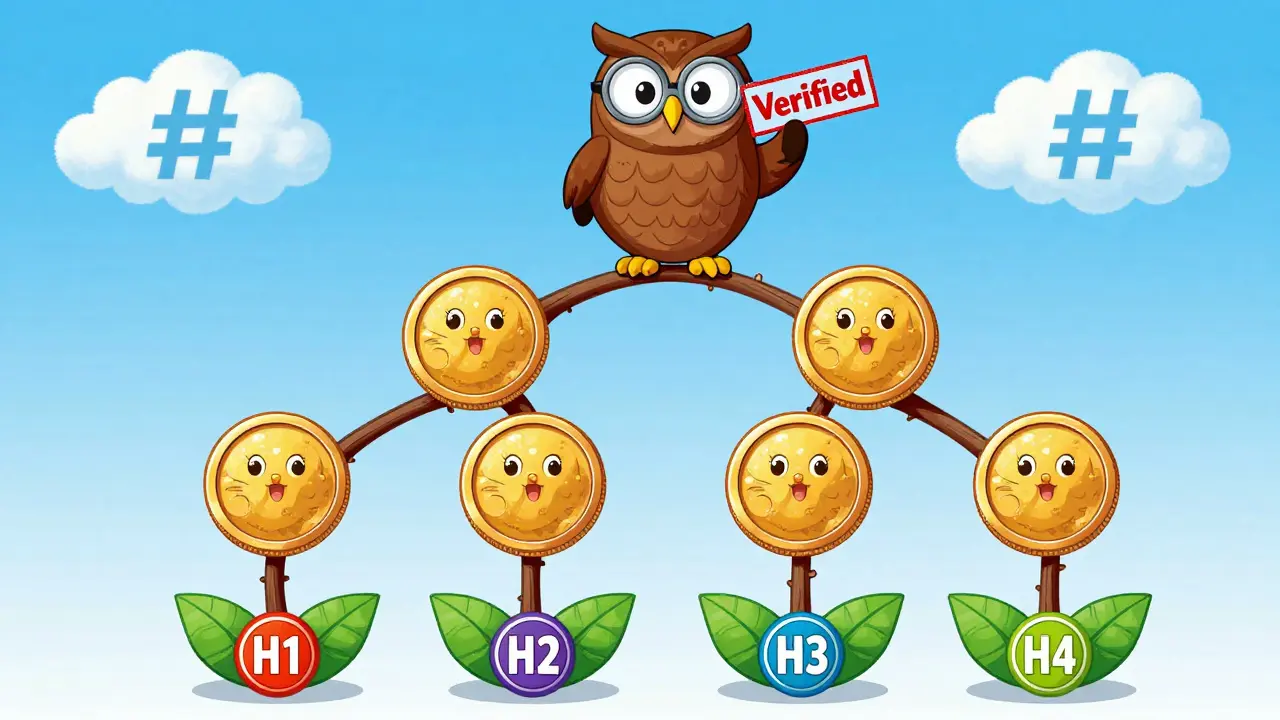
To understand the root, you first need to understand the tree. A Merkle tree, also known as a hash tree, is a hierarchical data structure invented by computer scientist Ralph Merkle in 1979. Think of it as an upside-down family tree. At the bottom, you have the leaves-these are individual pieces of data, like transaction records. Above them are branches, which are hashes (digital fingerprints) of the data below them. At the very top sits a single node: the Merkle root.
This root is a single string of characters that represents the entire dataset. If even one bit of data changes at the bottom-a penny moved from one wallet to another-the hash of that leaf changes. That change ripples up through the branches, completely altering the final Merkle root. This makes it computationally impossible to tamper with data without everyone noticing immediately.
How Merkle Trees Work in Practice
The magic happens through hashing. In Bitcoin, the system uses the SHA-256 algorithm. Here is how the construction process works step-by-step:
- Leaf Nodes: Every transaction in a block gets hashed individually. Let's say we have four transactions: H1, H2, H3, and H4.
- Pairing: The system pairs these hashes together. H1 combines with H2, and H3 combines with H4.
- Hashing Upwards: These pairs are concatenated and hashed again. So, Hash AB = SHA-256(H1 + H2). Similarly, Hash CD = SHA-256(H3 + H4).
- The Root: Finally, Hash AB and Hash CD are combined and hashed one last time to create the Merkle root.
If you have an odd number of transactions, the system duplicates the last transaction hash to ensure everything pairs up evenly. This structure creates a logarithmic verification path. Instead of checking thousands of transactions linearly, you only need to check a tiny fraction of the tree to prove a transaction is included.
Why Efficiency Matters: O(log n) vs O(n)
You might wonder why we bother with trees instead of just hashing all transactions into one big blob. The answer is efficiency. Traditional methods require linear time complexity, denoted as O(n). If a block has 1,000 transactions, you need to process all 1,000 to verify integrity.
Merkle trees reduce this to logarithmic time complexity, or O(log n). For a block with 1,000 transactions, you only need about 10 hash operations to verify inclusion. For a block with 1 million transactions, it’s still under 20 operations. This difference is massive. It means lightweight devices, like smartphones, can verify transactions quickly without storing gigabytes of data.
| Feature | Linear Hash Chain | Merkle Tree |
|---|---|---|
| Verification Speed | Slow (O(n)) | Fast (O(log n)) |
| Data Required | Full dataset | Only proof path |
| Tamper Evidence | High | Extremely High |
| Storage for Light Clients | Not feasible | Minimal (KBs) |
The Role of Merkle Roots in Bitcoin
In Bitcoin, the Merkle root is stored directly in the block header. This header is only 80 bytes long but contains critical information: the version number, the previous block’s hash, the timestamp, the difficulty target, the nonce, and the Merkle root. By including the root here, Satoshi Nakamoto ensured that every block cryptographically commits to every transaction within it.
This design enables Simplified Payment Verification (SPV). When you use a mobile wallet, your device doesn’t download the full blockchain. Instead, it downloads only the block headers. When you receive a payment, the network sends you a "Merkle proof"-a small set of hashes that connects your transaction to the Merkle root in the header. Your wallet checks if the math adds up. If it does, you know the transaction is valid and included in a confirmed block, all while using minimal battery and storage.
Ethereum and the Merkle Patricia Trie
While Bitcoin uses a strict binary Merkle tree for transactions, Ethereum takes a slightly different approach. Ethereum uses a Merkle Patricia Trie. This structure is more complex because it needs to handle account states, balances, and smart contract code, not just transactions.
In Ethereum, there are actually three roots in each block header:
- State Root: Represents the state of all accounts (balances, nonces).
- Transaction Root: Similar to Bitcoin, summarizes all transactions in the block.
- Receipt Root: Summarizes the logs and outcomes of those transactions.

Real-World Applications Beyond Crypto
Merkle roots aren't just for cryptocurrency. Their ability to provide efficient, trust-minimized verification has spread to other industries.
Proof of Reserves
After the collapse of FTX in 2022, centralized exchanges like Coinbase and Binance began publishing quarterly Proof of Reserves reports. They use Merkle trees to prove they hold customer assets without revealing sensitive private data. The exchange publishes a Merkle root of all user balances. Users can then generate their own proof to check if their balance is included in that root. If the math matches, the user knows their funds are accounted for in the exchange’s ledger.
Supply Chain Transparency
IBM Food Trust uses Merkle trees to track food products from farm to table. With over 200 global suppliers, verifying provenance manually is impossible. By anchoring supply chain data to a Merkle root on a blockchain, companies can instantly verify product authenticity and origin without sharing proprietary business details with competitors.
Limitations and Future Evolution
No technology is perfect. Merkle trees have limitations. One major issue is that they only prove inclusion, not exclusion. A malicious node could theoretically claim a transaction exists when it doesn’t, though this is mitigated by consensus mechanisms. Another limitation is proof size. As blockchains grow, the proofs required to verify state can become large.
This is driving the next generation of cryptography. Ethereum is currently transitioning toward Verkle Trees. Verkle trees combine features of Merkle trees and vector commitment schemes. They promise to reduce proof sizes by up to 90%, enabling truly "stateless" clients who don’t need to store any historical state data at all. Similarly, Polygon’s Miden zkVM uses advanced Merkle-based commitments to achieve sub-second verification times for thousands of account states.
Conclusion
The Merkle root is unsung hero of digital trust. It turns massive, unwieldy datasets into compact, verifiable commitments. Whether you are sending Bitcoin from your phone, checking if an exchange holds your money, or tracking a shipment of organic coffee, Merkle trees are working behind the scenes to ensure the data you see is real. As blockchain technology evolves, the core principle remains unchanged: compress complexity into a single, unforgeable truth.
What is the difference between a Merkle tree and a Merkle root?
A Merkle tree is the entire hierarchical data structure consisting of leaf nodes, branch nodes, and the root. The Merkle root is specifically the single top-level hash that represents the entire tree. Think of the tree as the family genealogy and the root as the common ancestor.
Why do blockchains use Merkle roots instead of simple hashes?
Simple hashes require you to download and process the entire dataset to verify integrity (linear time). Merkle roots allow for logarithmic verification, meaning you can prove a specific piece of data is included in the set with minimal computation and bandwidth. This is essential for lightweight clients like mobile wallets.
Can a Merkle root be forged?
Practically speaking, no. Merkle roots rely on cryptographic hash functions like SHA-256, which are collision-resistant. To forge a root, an attacker would need to find two different datasets that produce the same hash, which requires computational power far beyond current capabilities (approximately 2^128 operations).
How does Ethereum's Merkle Patricia Trie differ from Bitcoin's?
Bitcoin uses a strict binary Merkle tree for transactions. Ethereum uses a Merkle Patricia Trie, which is a hybrid of a Merkle tree and a radix tree. This allows Ethereum to efficiently store and retrieve key-value pairs, such as account balances and smart contract code, rather than just ordered transactions.
What is a Merkle proof?
A Merkle proof is a subset of hashes from the Merkle tree that allows a verifier to confirm that a specific leaf node (transaction) is included in the tree without needing the entire tree. It consists of the sibling hashes along the path from the leaf to the root.