What is Hydra (HYDRA) Crypto Coin? A Realistic Look at the Blockchain
 Jun, 1 2026
You’ve probably seen the ticker HYDRA pop up on a chart or heard it mentioned in passing. It sounds powerful-like the mythical beast with multiple heads-but what is it actually doing in the crypto world? If you are wondering whether this is the next big thing or just another forgotten project from the 2020 bull run, you are asking the right questions. The short answer is that Hydra is a niche Layer 1 blockchain built for specific business needs, not mass adoption. It is quiet, specialized, and carries significant risks if you aren’t paying attention to the details.
Let’s cut through the noise. We will look at who built it, how the technology works, why it struggles to compete with giants like Ethereum and Solana, and what that means for your wallet if you decide to hold the token.
The Origin Story: Born from Travel Tech
Hydra isn’t some random idea cooked up in a garage. It was created by the team behind LockTrip, a decentralized travel booking platform. They started developing the underlying tech in 2018 because existing blockchains were too slow and expensive for their use case. By 2020, they launched the Hydra network as a standalone solution.
This context matters. Most blockchains try to be everything to everyone. Hydra was built to solve one problem: making transactions fast and cheap enough for everyday consumer apps like hotel bookings. That focus shapes its entire design philosophy. It prioritizes low fees and speed over complex financial instruments or massive developer ecosystems.
How Does the Technology Work?
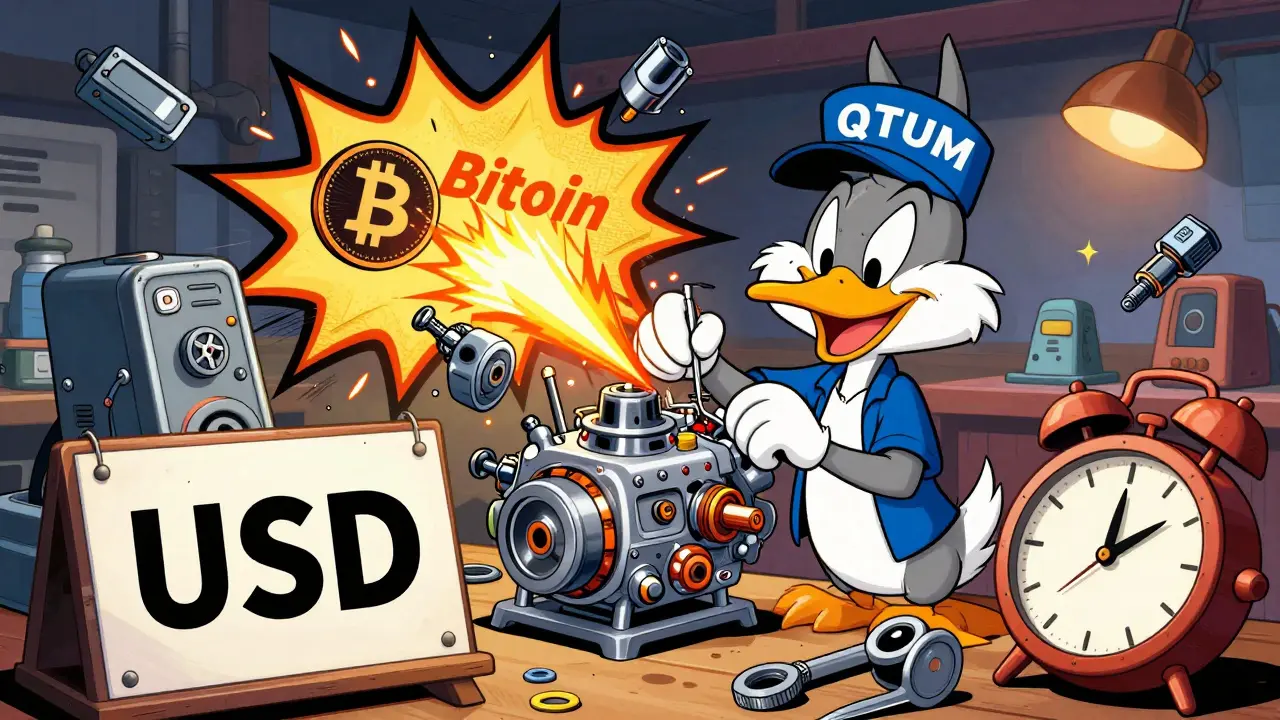
At its core, Hydra uses a Proof-of-Stake consensus mechanism. This means validators secure the network by locking up tokens rather than burning electricity on mining rigs. But Hydra borrows heavily from other successful projects. Its architecture integrates elements from QTUM, Bitcoin, Ethereum, and BlackCoin’s PoV v3 protocol. Think of it as a Frankenstein monster, but in a good way-it takes the best parts of proven systems and stitches them together.
Here is where it gets interesting for users. Hydra claims sub-second finality, meaning transactions confirm in about 0.5 seconds. For comparison, Ethereum can take anywhere from 12 seconds to several minutes depending on congestion. Solana is faster, often under a second, but Hydra sits comfortably in the 'fast' category for most practical purposes.
The real kicker is the fee structure. Unlike Bitcoin or Ethereum, where fees fluctuate wildly based on network demand, Hydra charges fixed transaction fees denominated in USD. The system calculates the equivalent amount of HYDRA tokens dynamically based on the current market price. This predictability is huge for businesses. If you are building an app that processes thousands of micro-transactions, you need to know exactly what each one costs. You don’t want to wake up to find your gas fees have tripled overnight.
| Feature | Hydra (HYDRA) | Ethereum | Solana |
|---|---|---|---|
| Consensus | Proof-of-Stake | Proof-of-Stake | Proof-of-History/PoS |
| Transaction Finality | ~0.5 seconds | 12-60+ seconds | ~0.4 seconds |
| Fee Structure | Fixed USD value | Variable Gas (ETH) | Variable (SOL) |
| Market Cap (Approx.) | $3.8 Million | $68 Billion+ | $7 Billion+ |
| Developer Activity | Low (Niche) | Very High | High |
The Unique Selling Point: Gas Royalties
If you are a developer, there is one feature on Hydra that might make you stop scrolling. It’s called the Gas Royalty System. On most blockchains, when people interact with your smart contract, the fees go to the network validators. On Hydra, 20% of those transaction fees are sent directly to you, the creator.
This changes the economics of building decentralized applications. Instead of relying solely on token sales or venture capital, developers can earn passive income from the usage of their code. It incentivizes quality. If your app is popular, you get paid more. It’s a clever twist on the traditional model, though it remains to be seen if it’s enough to attract major talent away from better-funded ecosystems.
Staking and LYDRA: Earning Without Risk?
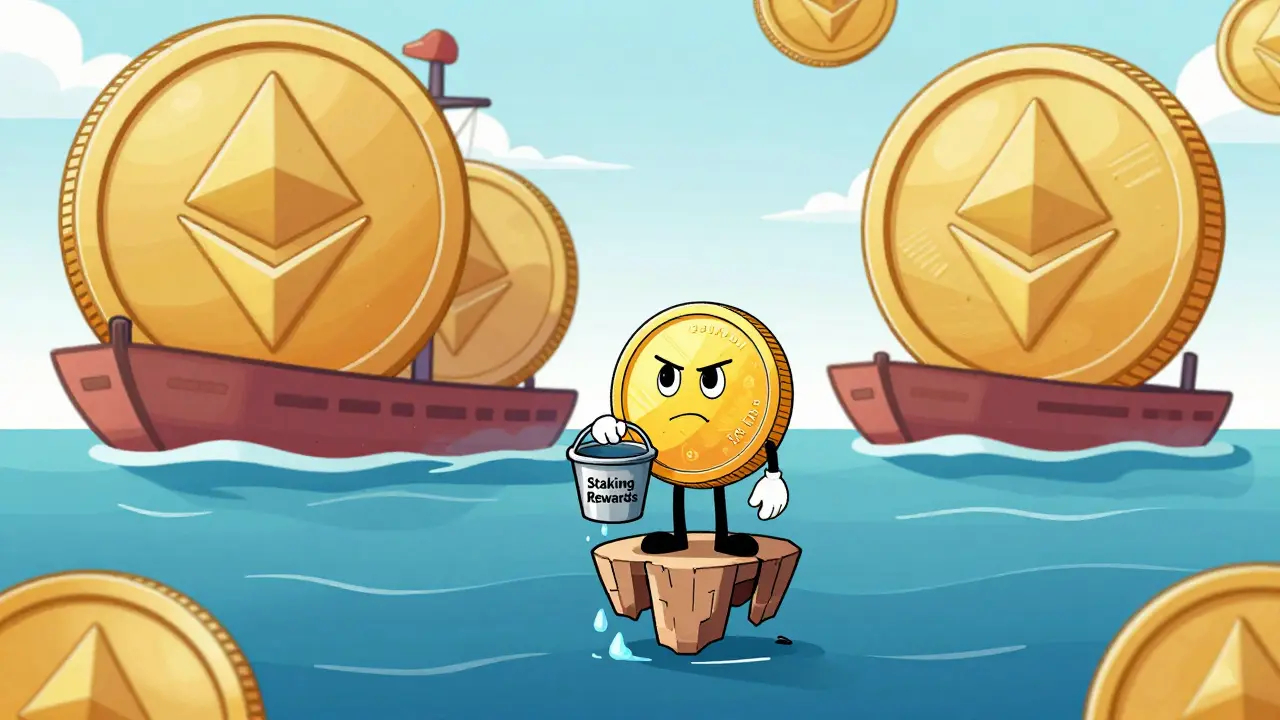
Like many Proof-of-Stake chains, Hydra encourages users to lock up their tokens to help secure the network. In return, you earn rewards. Recent data suggests annual yields around 14%, which is decent compared to traditional savings accounts, though typical for crypto staking.
But Hydra introduced something called LYDRA. This is a liquid staking derivative. Usually, when you stake, your tokens are locked, and you can’t use them elsewhere. With LYDRA, you get a receipt token representing your stake. You can trade LYDRA, use it in other DeFi protocols, or lend it out, all while still earning your staking rewards. The key selling point here is safety: LYDRA is fully collateralized by the actual HYDRA tokens in the protocol. There is no counterparty risk from a third-party company going bankrupt. You own the asset; the protocol just issues the receipt.
The Hard Truths: Liquidity and Adoption
We need to talk about the elephant in the room. Hydra is small. Really small. As of late 2023, its market cap hovered around $3.8 million. To put that in perspective, Ethereum’s market cap is over $68 billion. Hydra is roughly 18,000 times smaller.
Why does size matter? Because liquidity follows size. Low liquidity means two things:
- Slippage: If you try to sell a large amount of HYDRA, you might crash the price because there aren’t enough buyers waiting in the order book.
- Volatile Pricing: Small trades can cause disproportionate price swings.
User sentiment reflects this struggle. On Reddit and other forums, complaints about "extremely low liquidity" are common. Many users report difficulty executing trades without losing money to slippage. Additionally, there is confusion in the market. Some users accidentally buy a different token with the same ticker symbol on the Solana network, leading to frustration and lost funds. Always double-check the contract address before buying.
Adoption is also limited. While Ethereum has tens of thousands of active dApps, Hydra has only about a dozen. The most prominent is LockTrip itself. Without a vibrant ecosystem of games, finance tools, or social apps, the demand for the native token remains constrained to staking and speculative trading.
Is Hydra a Good Investment?
I’m not a financial advisor, so I can’t tell you to buy or sell. But I can give you the framework to decide for yourself.
If you believe in the long-term vision of a blockchain optimized for enterprise and consumer travel apps, and you think the gas royalty model will eventually attract developers, HYDRA could be a high-risk, high-reward bet. The potential upside is significant because the starting valuation is so low. If it gains even modest traction, the percentage gains could be massive.
However, the risks are equally stark. The project has faced delays in its roadmap, specifically the "Prometheus" upgrade aimed at improving scalability. Developer activity is minimal, with very few commits to their GitHub repository in recent months. Analysts have pointed out that Hydra is "a solution seeking a problem" in an overcrowded market. If Ethereum Layer 2 solutions like Arbitrum or Optimism continue to lower fees and increase speed, Hydra’s unique value proposition diminishes.
Ask yourself these questions:
- Are you comfortable holding a token with less than $1 million in daily trading volume?
- Do you understand the difference between the native HYDRA chain and meme tokens using the same name?
- Are you betting on the technology, or just hoping for a quick pump?
- Can you afford to lose the entire investment if the project stalls?
If you answered yes to the first three and no to the last, you might be taking on too much risk. Diversification is your friend. Never put all your eggs in one basket, especially not in a micro-cap coin.
What Comes Next?
The Hydra team is focused on the Prometheus upgrade, which aims to introduce horizontal sharding. Sharding splits the blockchain into smaller pieces to process transactions in parallel, theoretically increasing throughput. They also plan to implement sentinel nodes for better security. However, timelines have slipped. What was promised for late 2023 is now targeted for 2024 and beyond.
In the crypto world, execution is everything. Ideas are cheap. Code that works and users who stay are rare. Keep an eye on their GitHub activity and Discord engagement. If those numbers remain flat, the project may struggle to survive the next bear market cycle.
Where can I buy HYDRA tokens?
HYDRA is listed on a few exchanges, including Coinbase and KuCoin. However, due to low liquidity, spreads can be wide. Always verify the contract address to ensure you are buying the correct token on the Hydra network, not a copycat on Solana or BSC.
Is Hydra safe to stake?
Staking on the native Hydra protocol is generally considered safer than third-party platforms because it doesn't involve counterparty risk. Your tokens remain in the protocol. However, the value of the token itself can drop significantly, which is a market risk, not a technical one.
What is the maximum supply of HYDRA?
There is some discrepancy in reported figures. Investing.com lists a maximum supply of 51.05 million tokens, while Coinbase reports a total supply closer to 33.4 million. Currently, about 29.1 million tokens are in circulation. Check the official documentation for the most accurate, up-to-date numbers.
How do Hydra transaction fees work?
Fees are fixed in USD terms. If the price of HYDRA drops, the number of tokens required to pay the fee increases, keeping the dollar value constant. This protects users from volatile gas prices during network congestion.
Who created Hydra?
Hydra was developed by the team behind LockTrip, a decentralized travel agency. They built the blockchain to support their own application's need for fast, cheap transactions.
Barclay Chantel
June 1, 2026 AT 22:53Oh, please. Another 'Frankenstein' blockchain trying to solve a problem that doesn't exist because Ethereum L2s are already cheaper and faster for most use cases. The gas royalty idea is cute, but it's just a tax on developers disguised as an incentive. I've seen this movie before with QTUM forks. It’s pretentious to think a niche travel app needs its own Layer 1 when you can just build on Polygon or Arbitrum. Save your time.
Bill Gunn
June 3, 2026 AT 16:22Hey there! 👋 I actually dug into the codebase a bit last year. While Barclay has a point about L2s, the fixed USD fee structure is genuinely clever for specific enterprise contracts where budget predictability is king 🧐. If you're running a hotel chain, you don't want your API costs fluctuating with ETH gas spikes. It’s not for everyone, but for that specific vertical, it makes sense. Plus, the LYDRA liquid staking mechanism is surprisingly robust compared to some other small caps I’ve seen. Just don’t expect moonshots overnight 🚀💸
Joshua Alcover
June 5, 2026 AT 05:32The fundamentalist approach to decentralized travel booking is inherently flawed without state-level endorsement. One must consider the geopolitical implications of bypassing traditional financial rails for tourism. Hydra’s architecture, while technically proficient in its PoS implementation, lacks the sovereign backing required for true global adoption. It is merely a digital abstraction layer over a service that requires physical verification. Until the protocol integrates KYC/AML at the consensus level, it remains a toy for speculators rather than a viable economic infrastructure. The Prometheus upgrade is likely to fail due to these inherent regulatory contradictions.
mark valmart
June 7, 2026 AT 03:41i mean... if you can buy it on coinbase thats something right? i always get confused with all these tickers though. like how do you know which hydra is the real one? i almost bought the solana one once lol. thanks for the warning about checking contract addresses. seems like a hassle but better safe than sorry i guess.
Diana Morris
June 7, 2026 AT 10:38stop overthinking it bro just look at the chart volume its basically dead 💀 why are we even talking about this garbage coin when solana is printing money every second?? the liquidity is non-existent you will get wrecked if you try to sell more than $50 trust me i tried it once and lost my shirt slippage was insane dont be that guy who holds a bag of nothing because some tech bro said it had 'sub-second finality' nobody cares about finality if there are no users
Hadleigh Edwards
June 8, 2026 AT 16:14I have to say, reading through the details of the Gas Royalty System really got me thinking about the long-term sustainability of developer incentives in the crypto space. It is fascinating to see a project attempt to decouple developer revenue from pure speculation and venture capital funding by tying it directly to network usage metrics. While the current market cap is admittedly quite small and the liquidity issues are a significant hurdle that cannot be ignored, the theoretical framework suggests a potential path toward organic growth if they can attract even a modest number of active dApps. The comparison to Ethereum and Solana is valid, but those networks are also dealing with their own scaling pains and high fees during peak times, so there is arguably still room for a specialized, low-cost alternative like Hydra to carve out a niche, especially in the travel sector where transaction sizes are often small and frequency is high. We should keep an eye on the Prometheus upgrade timeline because if they can deliver on the sharding promises, it might change the narrative entirely.
Crystal Davis
June 9, 2026 AT 12:05Let's be realistic here. The GitHub activity is flatlining. That is the single most important metric for any L1 blockchain, and Hydra is failing it. You can have all the 'fixed fees' and 'royalties' you want, but if no one is writing code, you are just a ghost town. The team is clearly dragging their feet on the Prometheus upgrade. This is classic vaporware behavior wrapped in a decent whitepaper. Do not fall for the 'niche market' excuse; niches die when liquidity evaporates. Run.
saradee dee
June 10, 2026 AT 14:16Oh my goodness, this is such a dramatic situation! 😱 I feel so much tension just reading about the liquidity issues. It is heartbreaking to think people lose money because of slippage, that is truly terrible! But maybe, just maybe, the community can come together and support this little project? It sounds like it has a heart, born from travel tech! Let us be kind and collaborative instead of tearing it down. Everyone deserves a chance to shine, even if they are small! ✨
Craig Swanson
June 11, 2026 AT 07:01You need to wake up and smell the coffee! This is not a charity case. The market does not care about your feelings or the 'heart' of the project. If you are holding HYDRA, you are making a mistake based on emotion rather than data. Look at the numbers: $3.8M market cap vs $68B for Ethereum. That is not a competition; that is extinction. Stop enabling bad projects with your naive optimism. Get educated on basic tokenomics and stop throwing good money after bad. It is aggressive to watch people get rekt repeatedly on these micro-caps.
Dana Rapoport
June 11, 2026 AT 12:05I appreciate the detailed breakdown. The concept of liquid staking derivatives like LYDRA is interesting from a philosophical standpoint regarding asset utility. However, the lack of broader ecosystem development raises questions about the long-term viability. It is worth monitoring the developer engagement closely.
Christina Pearce
June 12, 2026 AT 01:35Can someone clarify the difference between the native HYDRA chain and the meme tokens? I am worried about accidentally buying the wrong thing. Also, is the staking yield of 14% consistent or does it drop as more people stake? Just trying to understand the risks before doing anything.
Bill Gunn
June 12, 2026 AT 19:51@Christina Pearce Good question! The native chain is the one built by LockTrip. The meme tokens are usually on Solana or BSC and have zero value. Always check the contract address on CoinGecko or the official Hydra website. As for the yield, it typically drops as more people stake because the reward pool is fixed or grows slower than the staked amount. So early birds get higher APY. Keep that in mind! 📉📈
Miss Masquer
June 13, 2026 AT 16:27As someone who travels frequently across borders, the idea of a blockchain optimized for travel bookings is intriguing, especially given the friction in current cross-border payment systems. However, the lack of major partnerships with airlines or hotel chains is concerning. Without institutional adoption, the utility remains theoretical. I would love to see a deeper analysis of how Hydra plans to onboard these large enterprises, as regulatory compliance is a massive barrier in the travel industry. The cultural shift towards decentralized travel is slow, and Hydra needs to prove it can handle the scale and security requirements of global corporations.
Dianne Wright
June 15, 2026 AT 06:49i honestly cant believe anyone is still talking about this coin like it matters the devs are ghosts and the discord is full of bots pretending to be excited about 'prometheus' meanwhile eth l2s are eating their lunch and nobody notices because they are too busy chasing the next pump i feel so drained just looking at the charts it is like watching a car crash in slow motion and everyone is cheering why do we keep giving these projects attention they deserve to fade into obscurity
trisya hazriyana
June 16, 2026 AT 09:43oh wow another 'specialized' l1 because building on existing infrastructure is for quants who obviously doesnt understand the nuance of gas royalties (which is just a fee hike lol) the jargon is thick but the substance is thin let us pretend this is innovative when it is just qtum with a new skin and less users sarcasm aside the tech stack is outdated and the roadmap is a joke
Debbie Lewis
June 17, 2026 AT 13:41Just observing from the sidelines. Seems like a lot of noise for a very quiet chain. I'll stick to my ETH staking.
Eric Grosso
June 18, 2026 AT 12:47im curious bout the locktrip integration tho like do they actually use it for bookings or is it just a demo? cause if its just a demo then the whole premise falls apart right? seems like a lot of talk and no action tbh
Edith Mair
June 19, 2026 AT 15:20The article states that Hydra charges fixed transaction fees in USD. How exactly does the dynamic conversion work in practice? Does this create arbitrage opportunities for traders, or is the conversion rate locked per block? I need more technical specifics on this mechanism.
Sam Dashti
June 19, 2026 AT 23:58I find the whole 'Frankenstein' analogy quite colorful and apt. Stitching together QTUM and BlackCoin elements is a bold move, akin to mixing oil and water in a cocktail shaker. Will it blend, or will it separate into a messy, untradeable sludge? Only time will tell, but I’m betting on the latter given the lack of fresh commits. It’s a passive observation, but the silence from the dev team is deafening.