What is KEVIN (KEVIN) Crypto? A Deep Dive into the Memecoin
 Jul, 26 2026
Have you ever scrolled through a list of cryptocurrencies and seen a name that made you pause? Maybe it was funny, maybe it was confusing, but it definitely wasn't Bitcoin or Ethereum. That’s exactly what happens when you come across KEVIN, a community-driven memecoin launched in 2023 with the mission to resist the flooding of low-quality tokens in the crypto space. It sounds simple enough, right? But dig a little deeper, and things get weird. We’re talking about conflicting blockchain data, massive price discrepancies between exchanges, and a project that claims to be “fair” while operating in one of the most chaotic corners of finance.
If you are wondering whether KEVIN is a hidden gem or just another digital joke coin destined for zero, you aren’t alone. The crypto world is flooded with thousands of new tokens every month, most of which vanish without a trace. KEVIN tries to stand out by promising transparency and community ownership, but does it actually deliver? Let’s break down what this token really is, how it works, and why you should probably keep your eyes wide open before buying any.
The Origin Story: Why Another Memecoin?
To understand KEVIN, you have to look at the state of the cryptocurrency market in 2023. By then, the initial hype around Bitcoin had matured, and Ethereum had established itself as the backbone of smart contracts. But the real explosion happened in the memecoin sector. Coins like Dogecoin and Shiba Inu showed people that you didn’t need complex technology to make money; you just needed attention. Unfortunately, this led to a flood of copycat projects, many of which were scams or poorly designed tokens that left investors holding worthless bags.
KEVIN entered the scene with a specific mission statement: "resist the flooding of Memecoin." It’s an ironic goal for a memecoin, isn’t it? The creators wanted to build a decentralized cryptocurrency that operated without central authority control. Their pitch was built on principles of fair distribution. Unlike many other projects that give huge chunks of tokens to early investors or developers (often called pre-mining), KEVIN claimed to have no pre-mining, no initial coin offerings (ICOs), and no private sales. The idea was that everyone starts on equal footing, distributed through transparent mechanisms.
This approach appeals to people tired of feeling scammed by venture capitalists who dump their tokens on retail buyers. However, in the crypto world, saying something is “fair” doesn’t automatically make it successful. The execution matters more than the intent. And here is where KEVIN starts to show its cracks.
Technical Confusion: Ethereum, Solana, or Both?
One of the first red flags you’ll notice if you try to research KEVIN is the technical inconsistency. When you buy a cryptocurrency, you need to know which blockchain it lives on. This determines which wallet you use and how much gas fee you pay for transactions. For KEVIN, the answer isn’t clear.
Platform
Reported Blockchain
Total Supply
Contract Address
Coinbase
Ethereum
690 Billion
0x3155...2F2C
CoinGecko
Unclear (Data mismatch)
1 Billion
N/A
CoinSwitch
Solana
Not Specified
N/A
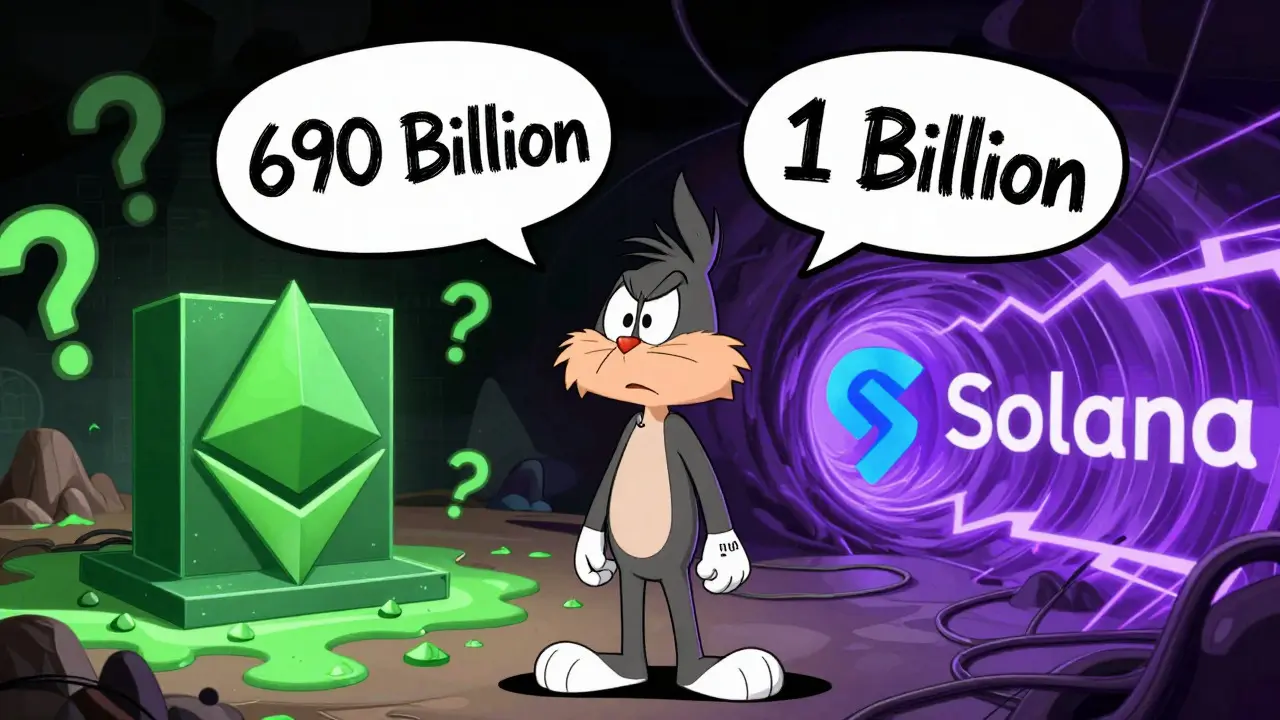
Look at that table. Coinbase lists KEVIN as an ERC-20 token on the Ethereum network with a total supply of 690 billion tokens. CoinGecko, another major tracker, lists a total supply of only 1 billion. That is a difference of nearly 700 times! Then there is CoinSwitch, which mentions KEVIN being built on the Solana blockchain. How can one token be on two completely different blockchains with vastly different supplies?
There are two likely explanations. First, there might be multiple different tokens using the same name “KEVIN,” causing data aggregation errors on tracking sites. Second, the project itself might have migrated or forked, leaving old data behind. Either way, this creates significant uncertainty for users. If you send ETH to buy KEVIN, are you getting the right token? What if you accidentally buy the wrong version? These are critical questions that remain unanswered in official documentation.
Tokenomics and Smart Contract Features
Let’s assume we are looking at the primary version listed on Ethereum. The smart contract features of KEVIN are designed to reassure holders that the developers won’t rug pull them. A rug pull happens when creators abandon a project and take all the liquidity, leaving the token value at zero. To prevent this, KEVIN’s contract includes several safety measures:
- Zero Transaction Fees: There is a 0% tax on buys and sells. This means when you trade, you don’t lose a percentage to marketing wallets or development funds. All the money goes directly to the buyer or seller.
- Burned Liquidity Pools: Liquidity is locked permanently and burned. This makes it very difficult for anyone to withdraw the underlying assets backing the token’s price.
- Renounced Contract: The ownership of the smart contract has been renounced. This means no single entity can modify the code, change the tax rate, or blacklist addresses later on. It is truly decentralized.
These features are standard for serious memecoins today. They provide a baseline level of trust. However, they don’t guarantee value. They just mean that if the price drops, it’s because of market forces, not because the developer hacked the code to steal your money.
Market Performance and Volatility
So, how is KEVIN doing financially? The short answer is: it depends on who you ask. Price data for small-cap memecoins is notoriously unreliable due to low liquidity and fragmented trading pairs.
According to recent data, CoinGecko reports a price around $0.00006971, showing a slight increase of 2.92% in the last 24 hours. Meanwhile, Crypto.com lists the price significantly lower at $0.0000001556, with a decline of 0.40%. Coinbase shows historical highs reaching $0.00000109, indicating that current prices are down roughly 18.7% from peak values. These discrepancies highlight a major issue: slippage and lack of unified pricing.
The market capitalization is also tiny, hovering between $105,000 and $131,000 depending on the source. This classifies KEVIN as a micro-cap asset. With only about 1,360 holders reported by CoinMarketCap, the community is small but dedicated. Trading volume is equally inconsistent, with some platforms reporting over $28,000 in daily volume while others show zero. This suggests that most trading happens on decentralized exchanges (DEXs) rather than centralized ones, making it harder to track accurate activity.
Is KEVIN a Good Investment?
Here is the hard truth: KEVIN is not an investment in the traditional sense. It is a speculative asset with high risk and limited utility. Unlike Bitcoin, which serves as digital gold, or Ethereum, which powers decentralized applications, KEVIN’s primary value proposition is community sentiment. Its mission to “resist memecoin flooding” is noble, but it lacks concrete mechanisms to enforce this beyond its own existence.
Expert analysis from major firms like Messari or CoinDesk is non-existent for KEVIN. You won’t find institutional research papers covering it. This absence of professional scrutiny means you are largely on your own. The decision to buy rests entirely on your belief in the community and your tolerance for extreme volatility.
If you decide to participate, treat it like entertainment spending, not portfolio allocation. Never invest money you can’t afford to lose. Given the confusion over blockchain networks and supply figures, thorough verification of the contract address before any transaction is essential. One wrong click could mean sending funds to the wrong chain forever.
Future Prospects and Community Role
The future of KEVIN hinges on community growth. Without a clear roadmap for technological development or partnerships, the token relies on viral adoption. In the saturated memecoin market, standing out requires more than just a fair launch. It needs memes, influencers, and cultural relevance. Currently, social media sentiment is neutral to positive among its small holder base, but it lacks the momentum seen in larger competitors.
For now, KEVIN remains a niche experiment in decentralized fairness. It proves that you can launch a token without VC involvement, but it also highlights the challenges of maintaining clarity and liquidity in a fragmented ecosystem. As you navigate the crypto space, let KEVIN be a lesson in due diligence. Always check the contract, verify the blockchain, and question the narrative.
What blockchain is KEVIN token on?
There is conflicting information regarding the blockchain for KEVIN. Coinbase lists it on Ethereum, while CoinSwitch references Solana. This discrepancy suggests either multiple tokens with the same name or data errors. Always verify the specific contract address provided by the exchange you are using.
Is KEVIN a scam?
KEVIN has implemented anti-rug pull measures such as renounced contracts and burned liquidity. However, the lack of expert analysis, low liquidity, and confusing data make it a high-risk speculative asset. It is not necessarily a scam, but it carries significant financial risk.
How many KEVIN tokens are in circulation?
Reports vary widely. Coinbase states a total supply of 690 billion tokens, while CoinGecko lists 1 billion. This massive difference indicates potential data inconsistencies or the existence of different token versions. Check the specific platform you are trading on for accurate supply details.
Where can I buy KEVIN?
KEVIN is primarily traded on decentralized exchanges (DEXs) connected to the Ethereum or Solana networks, depending on the version. Centralized exchanges like Crypto.com currently do not support direct trading of KEVIN, limiting accessibility.
What is the purpose of KEVIN?
KEVIN was launched as a community-driven memecoin with the stated mission to "resist the flooding of Memecoin" by promoting fair distribution and transparency. It aims to offer a decentralized alternative to VC-backed tokens, though it lacks additional utility beyond speculation.