Cirus Foundation (CIRUS) Explained: Token, Hardware & Data Monetization
 Aug, 19 2026
Imagine getting paid just for using your WiFi. That is the core promise of Cirus Foundation, a project that blends physical hardware with blockchain technology to let users earn from their digital footprints. Launched in August 2021, this ecosystem operates on the Ethereum and Polygon networks, aiming to solve a major problem in the internet age: who actually owns your personal data? While most tech giants sell your browsing habits to advertisers, Cirus flips the script by giving you the keys to your own information.
If you are looking at the CIRUS token right now, you might be confused by the conflicting price data or its low market cap compared to its 2021 peak. This guide breaks down what the project actually does, how the hardware works, and whether it makes sense for your portfolio in 2026. We will look past the hype to see if the underlying technology delivers on its mission of true data ownership.
The Core Mission: Owning Your Digital Identity
At its heart, Cirus Foundation is a Web3 solution designed to empower individuals to control their digital assets. The concept is simple but radical: your data is valuable, and you should be compensated for sharing it. Instead of handing over free access to companies like Google or Facebook, users connect to the Cirus network and sell their data directly to buyers through a decentralized marketplace.
This isn't just about privacy; it's about creating a passive income stream. The platform combines three main elements:
- Hardware: A proprietary WiFi router that captures usage data securely.
- Software: A decentralized app (dApp) where users manage their data assets.
- Token: The CIRUS coin, which acts as the currency for payments and rewards.
The goal is to build a trustless environment where no middleman takes a cut of your earnings. By using smart contracts, the system ensures that when a data buyer purchases a dataset, the payment goes straight to the user's wallet in CIRUS tokens.
How the Cirus Hardware Works
You can't fully understand Cirus without talking about its unique selling point: the hardware. Unlike pure software projects, Cirus requires you to buy a specific WiFi router. This device serves as the bridge between your home internet and the blockchain.
Here is how the process flows:
- Connection: You install the Cirus router in your home or office.
- Capture: The router collects anonymized data points related to your internet usage patterns.
- Authorization: You decide what data to share via the Cirus app. You remain in full control.
- Monetization: When a data miner or company buys this data, you receive CIRUS tokens.
This approach addresses a common skepticism in crypto: "What is the real-world utility?" Here, the utility is tangible. You are literally earning money for an asset you already generate daily. However, it also introduces a barrier to entry. You need to purchase the hardware to start earning, which differs from standard DeFi yield farming where you only need capital.
Understanding the CIRUS Token Economics
The CIRUS token is an ERC-20 standard cryptocurrency, meaning it runs on the Ethereum blockchain but also has deployments on Polygon and BNB Chain to reduce transaction fees. It was launched on August 17, 2021, following a strategic funding round that closed in July 2021.
The total supply is fixed at 250 million coins. Here is how that supply is distributed:
| Category | Allocation (Millions) | Percentage |
|---|---|---|
| Ecosystem Development | 125 | 50% |
| Advisors, Operations & Team | 61 | 24.4% |
| Token Sale | 37 | 14.8% |
| Reserve/Liquidity | 27 | 10.8% |
As of mid-2026, the circulating supply sits around 62.5 million to 213 million tokens depending on the source's definition of "circulating" versus "unlocked." This discrepancy often confuses new investors. Generally, the lower figure refers to tokens actively traded in the open market, while the higher figure includes recently unlocked vesting periods. The fully diluted valuation (FDV), which accounts for all 250 million tokens, remains relatively low, hovering in the hundreds of thousands of dollars range.
The token has three primary functions:
- Payment: Users get paid in CIRUS for shared data.
- Utility: Used to pay for services within the Cirus ecosystem.
- Gaming/Meta: Earning more CIRUS increases your "Cirus Score," unlocking exclusive apps in the Web3 Labs section.

Market Performance and Current Status
Let’s talk numbers, because they tell a story of high hopes and significant correction. Cirus hit its all-time high of $1.10 per token on September 15, 2021. That was during the peak of the previous bull run. Since then, the price has dropped significantly. As of recent data in 2026, the price fluctuates between $0.00005 and $0.0009, with a market cap ranging from $10K to $60K in some metrics, though other sources cite slightly higher figures due to liquidity pools.
This drastic drop means that early buyers are likely underwater. However, for new entrants, the low entry price offers different risk-reward dynamics. The project is currently ranked in the lower tiers of global cryptocurrencies (around #7000+), indicating low trading volume. If you are considering buying, keep in mind that low liquidity can make it hard to exit large positions quickly without moving the price against yourself.
The founders include Daniel Bland, Michael Luckhoo, and Samartha Raghava Nagabhushanam. Their backgrounds in tech leadership and public company management add a layer of credibility, especially given the institutional support from firms like JUN Capital and MANTRA DAO during the initial launch.
Is Cirus Profitable for Users?
Many people ask: "Can I actually make money with this?" The honest answer is: it depends on your scale and expectations.
For the average individual user, the earnings from a single WiFi router are modest. You are not going to replace your salary. However, if you view it as a micro-investment in the future of data ownership, it could be interesting. The profitability hinges on two factors:
- Data Demand: Are enough companies willing to buy the data generated by Cirus users?
- Token Value: Does the CIRUS token hold value long-term?
Currently, mining or earning Cirus is not considered highly profitable due to the low token price. However, proponents argue that as Web3 adoption grows, the demand for clean, user-owned data will increase, potentially driving up both the utility and price of the token. Think of it as planting a tree; it takes time to grow.
Technical Architecture and Security
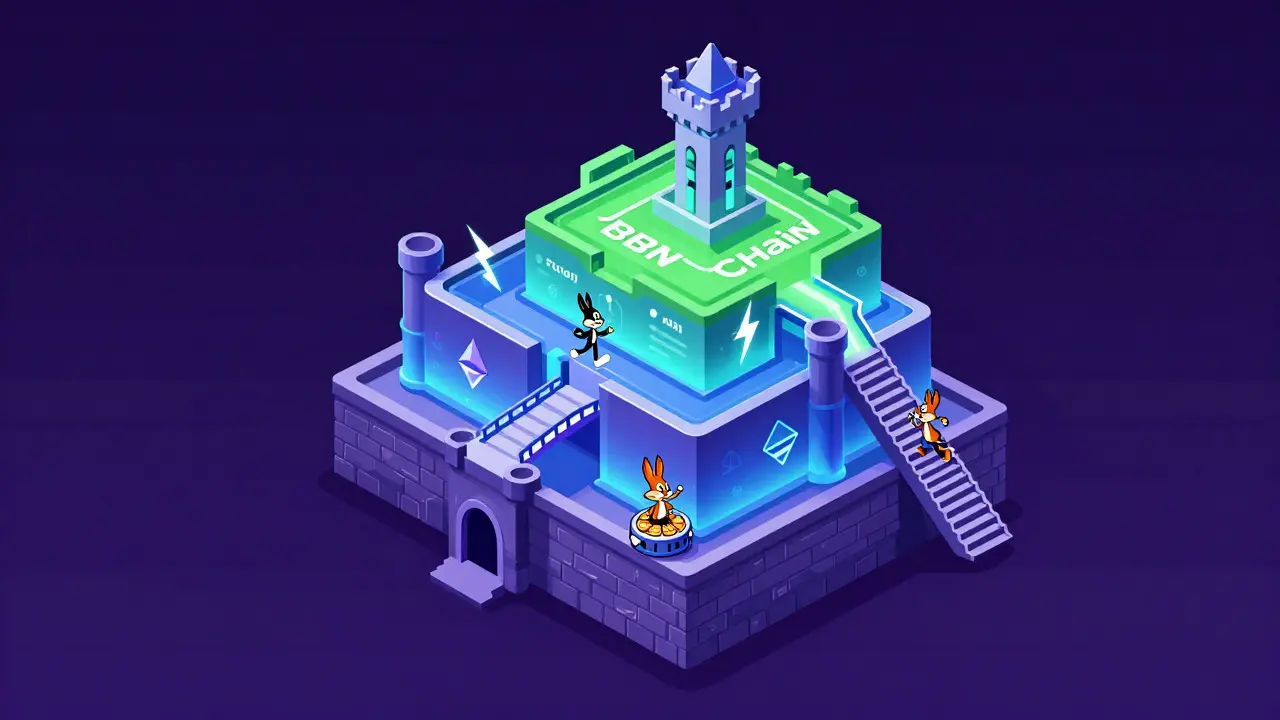
Cirus operates on a multi-chain infrastructure. While primarily built on Ethereum, it uses Polygon for faster transactions and lower gas fees. This is crucial for a project that aims to handle frequent, small-value data transactions. If every data sale required paying high Ethereum gas fees, the model would collapse. Polygon solves this.
Security is handled through several layers:
- Smart Contracts: Audited code that governs token transfers and data sales.
- Wallet Integration: Users hold their own keys, meaning no central server can freeze your funds.
- DeFi Connectivity: The platform integrates with decentralized finance protocols, allowing users to stake or lend their CIRUS tokens for additional yield.
The cross-chain bridges allow you to move your assets between Ethereum, Polygon, and BNB Chain seamlessly. This flexibility is a plus for users who prefer one chain over another for cost or speed reasons.
Frequently Asked Questions
Do I need to buy hardware to use Cirus?
Yes, to earn passive income from data sharing, you need the proprietary Cirus WiFi router. However, you can still hold the CIRUS token and participate in DeFi aspects without the hardware, though you won't earn data rewards.
Which blockchains does CIRUS operate on?
The CIRUS token is an ERC-20 token that operates natively on Ethereum but is also deployed on Polygon and BNB Chain to offer lower transaction costs and faster processing speeds.
Who founded Cirus Foundation?
The project was co-founded by Daniel Bland, Michael Luckhoo, and Samartha Raghava Nagabhushanam in February 2021. They brought experience from Cubera International and various public company leadership roles.
What is the current market cap of CIRUS?
As of 2026, the market cap is quite low, typically ranging between $10,000 and $60,000 depending on the exchange and liquidity pool. The fully diluted valuation is approximately $240,000.
Is Cirus a good investment in 2026?
It is a high-risk, speculative asset. The technology is innovative, but the low trading volume and distance from its all-time high suggest caution. It may appeal to those bullish on data ownership trends, but it lacks the liquidity of major blue-chip cryptos.
Jade Brown
August 20, 2026 AT 09:53Let's cut the fluff and look at the P&L here, shall we? The core value proposition is essentially a hardware-gated data pipeline with a tokenized revenue share that currently trades like it’s a memecoin from 2019. We are looking at a market cap in the tens of thousands, which implies the liquidity depth is so thin that moving even a mid-size position would require a slippage tolerance that makes your entry price irrelevant. The 'anonymized' data capture via a proprietary router is a massive attack surface for privacy breaches, yet the security model relies on smart contracts that haven't been audited by the big four firms. If you're betting on this, you're not investing in technology; you're gambling on a narrative that hasn't proven product-market fit. The FDV is low, sure, but that's because the demand curve is flatlined.
Claudio Perrone
August 20, 2026 AT 17:53this is basically the end of history as we know it... or maybe just the beginning of our own demise lol. i think its deep down in our souls that we want to be paid for everything we do, even breathing air. its very philisophical how they turn your wifi into money. kinda scary how much control they have over our digital selves though. dont trust the machine
Aaron Morrissey
August 21, 2026 AT 16:40One must consider the broader sociological implications of decentralizing data ownership, a concept that, while theoretically noble, faces significant practical hurdles in execution. The reliance on proprietary hardware introduces a centralization vector that contradicts the ethos of Web3, creating a paradox where users must surrender physical autonomy to achieve digital sovereignty. Furthermore, the economic model assumes a steady stream of high-value data buyers, a premise that remains unverified in the current macroeconomic climate. It is imperative to view this not merely as a financial instrument, but as a societal experiment in trustless exchange. The potential for disruption is undeniable, yet the path forward is fraught with regulatory ambiguity and technological fragility. We stand at the precipice of a new era, one where the lines between consumer and producer blur irrevocably. Let us proceed with cautious optimism, for the future of data is indeed ours to claim.
Patrick Quairoli
August 21, 2026 AT 17:52they are definitely tracking you through the router its obvious. why else would they need a special device? its all part of the global surveillance state plan. the token is just a distraction to keep you busy. wake up people. the elites are selling your data back to you at a premium profit margin. classic move. check the source code if you dare, but i bet its obfuscated. they want you to think its about freedom but its really about control. the polygon chain is just another layer of obscurity. stay safe out there folks.
Phelan Deihl
August 22, 2026 AT 19:55I’ve been following the data monetization space for a few years now, and honestly, most projects fail because they overpromise on yield. This one feels more grounded because the utility is tied to actual usage rather than just staking mechanics. I’m curious to see how the dApp handles user consent granularity, as that has been a pain point for other platforms. Just hoping the team stays transparent about the data buyers involved.
Ami Elizabeth
August 24, 2026 AT 02:06cool project man. i dont really get the whole blockchain thing but if it pays me to use wifi thats a win in my book. hope the router doesnt break tho. im cheap so i cant afford to replace it if it dies lol. good luck to everyone buying in. seems risky but hey life is short right?
Walker Perry
August 25, 2026 AT 12:30America needs to lead this charge. Why are we letting foreign tech companies hoard our data when we can build our own sovereign infrastructure? This Cirus thing is a start but we need more domestic production of these routers. Stop importing Chinese chips and start building in Texas. The only way to secure our digital borders is to own the hardware. No more outsourcing our digital identity to Silicon Valley giants who care nothing for the American worker. Make Data Great Again.
Susan Kiley
August 26, 2026 AT 09:11Oh, darling, how *quaint* of them to think the average person will actually read the whitepaper before dropping their savings on a glorified modem. :D It’s adorable how they frame 'data ownership' as a luxury good for the tech-savvy elite. Most people don’t even know what a gas fee is, let alone how to manage a private key. This isn’t innovation; it’s a niche toy for those who enjoy the aesthetic of decentralization without the hassle. One wonders if the founders have ever tried to sell a complex technical product to the general public before. Probably not, given the jargon density. But then again, who am I to judge the avant-garde of crypto? :P
Gary Straiton
August 28, 2026 AT 04:18This is exactly the kind of speculative nonsense that plagues the industry. While some of you play with toys, real investors are watching the fundamentals. The US market is the only place with enough capital to sustain this, and frankly, we deserve better than a $10k market cap project. If you aren't American, you shouldn't even be touching this asset class. It's too volatile for the rest of the world. Keep your hands off our next bull run, folks. America First, Crypto Second.
alex fordy
August 29, 2026 AT 13:14I think there’s something genuinely beautiful about the idea of reclaiming agency over our digital footprints 🌱. It reminds me of the early days of the open-source movement, where community effort drove progress rather than corporate greed. Of course, the execution is tricky, but the intent is pure 💖. I’m cautiously optimistic that if the community supports it, this could become a standard for how we interact with the web. What do you all think about the long-term sustainability of the tokenomics? 😊
Nia Franklin
August 31, 2026 AT 07:42It’s so exciting to see projects like this bridging the gap between physical tech and web3!! I love how they’re trying to make data ownership accessible to everyday people. The color palette of the app is also super soothing, which is a nice touch for daily use. I’ve been sharing this with my friends in the design community because they’re always talking about user experience. It’s rare to find a project that gets both the tech and the vibe right. Here’s to more inclusive tech!!! 🎨✨
Daniel Brown
September 1, 2026 AT 18:25You need to check the vesting schedule immediately. 24.4% allocated to advisors and team is a red flag for any serious investor. That means nearly a quarter of the supply is held by insiders who can dump on retail at any moment. Don't ignore the insider risk. Read the token distribution table again. It’s right there in plain sight. You’re ignoring the biggest risk factor in this entire project. Wake up. The insiders are watching you buy in. They’ll sell when you least expect it. Stay vigilant.
Darren Moon
September 2, 2026 AT 19:55In terms of net present value calculations, the discount rate applied to future cash flows from data sales appears arbitrarily high, rendering the projected ROI negligible under conservative assumptions. The hardware depreciation curve further erodes the marginal benefit of participation. One might argue that the intangible benefits of 'digital sovereignty' carry an implicit utility value, but quantifying such subjective metrics remains academically contentious. Therefore, from a purely rationalist perspective, the expected utility of entering this ecosystem is negative. However, I suppose for the sake of social cohesion, we must acknowledge the emotional appeal of the narrative. Do try to maintain your composure when analyzing the charts.
Quang Thai Tran
September 4, 2026 AT 02:06It is my professional opinion that this project lacks the rigorous due diligence required for institutional investment. The lack of clear revenue streams beyond speculative token appreciation suggests a high degree of volatility. Investors should exercise extreme caution and perhaps diversify their portfolios away from such micro-cap assets. The governance structure also appears opaque, which is unacceptable for a project claiming transparency. Proceed with caution, or better yet, wait for clearer signals from the market. Do not follow the herd blindly.
Dianne Ritter
September 4, 2026 AT 09:04I think it’s important to balance the skepticism with hope. There are valid concerns about the hardware cost and the token price, but the underlying idea of owning your data is powerful. Maybe it’s too early to tell if it will work perfectly, but it’s a step in the right direction. Let’s support innovation while keeping our eyes open for risks. A balanced view is usually the best approach in crypto.