North Korea Crypto Ban and State-Sponsored Hacking Operations in 2025
 Feb, 14 2026
North Korea doesn’t just ignore crypto bans-it weaponizes them. While the world talks about regulating digital assets, Pyongyang has turned cryptocurrency theft into a high-stakes national strategy. In 2025, North Korean hackers stole over $2.17 billion from crypto exchanges and DeFi platforms, making it the most devastating year for digital asset theft in history. That’s more than the entire total of 2024, and it’s all part of a coordinated, state-backed effort to bypass international sanctions and fund nuclear weapons programs.
The ByBit Hack: A Turning Point
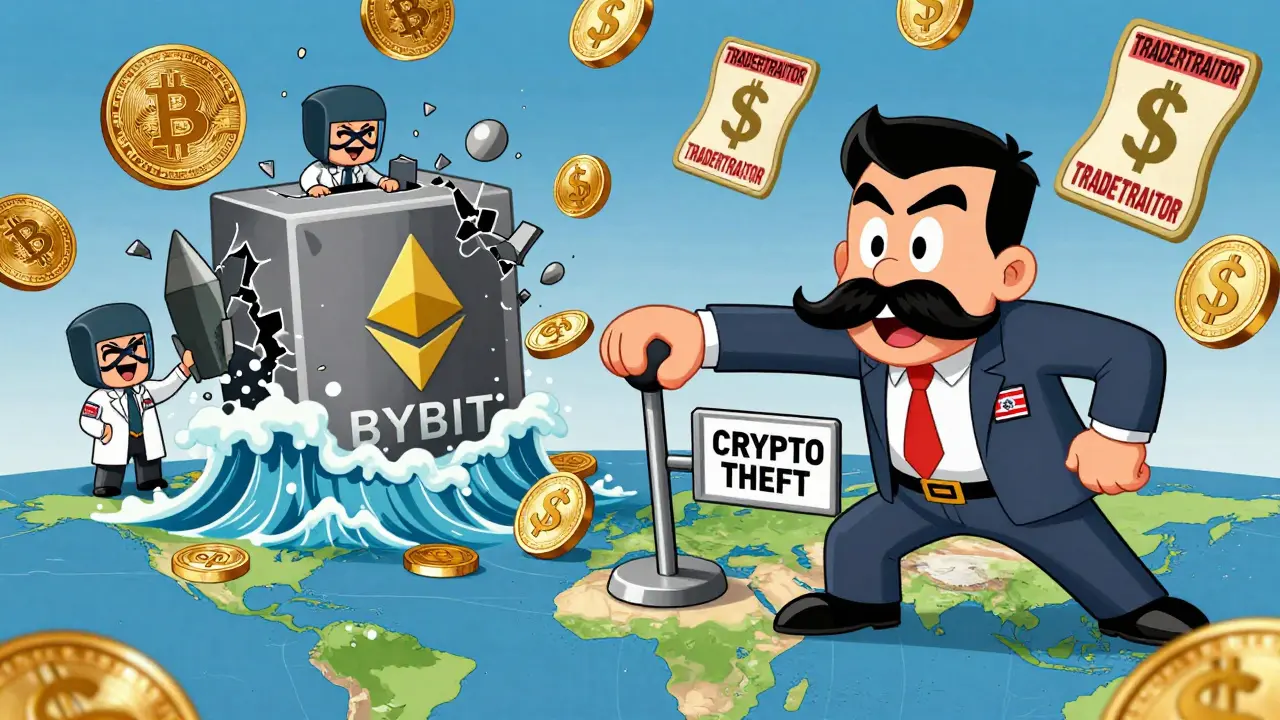
The biggest shock came on February 21, 2025, when the ByBit exchange was breached in an attack called "TraderTraitor" by the FBI. Around $1.5 billion in crypto was stolen in a single operation. What made this different wasn’t just the size-it was how they did it. ByBit stored most of its assets in "cold wallets," hardware devices kept offline to avoid hacking. These were supposed to be untouchable. Yet North Korean operatives found a way in. They didn’t brute-force the system. They didn’t exploit a software bug. They went after the people. Using social engineering, they infiltrated the exchange’s IT team. Some employees were tricked into installing malware. Others were recruited through fake job offers. The FBI later confirmed that North Korean workers, posing as remote developers from Southeast Asia or Eastern Europe, had been hired by Western tech firms-including some linked to crypto infrastructure. These insiders had direct access to security systems, and they used it. After the theft, the stolen funds were quickly converted into Bitcoin, Ethereum, and stablecoins, then scattered across thousands of wallet addresses. The goal? To make tracking impossible. And it worked-for a while.How North Korea Turns Crypto Into Weapons
North Korea’s crypto strategy isn’t random. It’s a three-part system designed to launder money, hide identities, and fund weapons programs. First, they target exchanges. Binance, KuCoin, Gate.io, and others have all been hit in past years. But ByBit was the crown jewel. The hackers didn’t just steal-they studied how these platforms operate, what security layers they use, and how long it takes to freeze funds. They timed their attack perfectly. Second, they use third-country laundering hubs. Cambodia became a key node. The U.S. Treasury’s FinCEN identified the Huione Group as a major player. Huione Crypto issues untraceable stablecoins. Huione Guarantee provides the tech tools for scams. Between 2021 and 2025, over $37.6 million in North Korean-linked crypto flowed through them. And that’s just what we know. Third, they deploy thousands of IT workers abroad. The UN estimates these workers generate up to $600 million a year for the regime. They work remotely for companies in the U.S., Canada, Germany, and Australia. They use fake IDs, fake resumes, and fake Zoom backgrounds to appear as local freelancers. They get paid in crypto. No bank account. No paper trail. Just digital cash flowing straight to Pyongyang.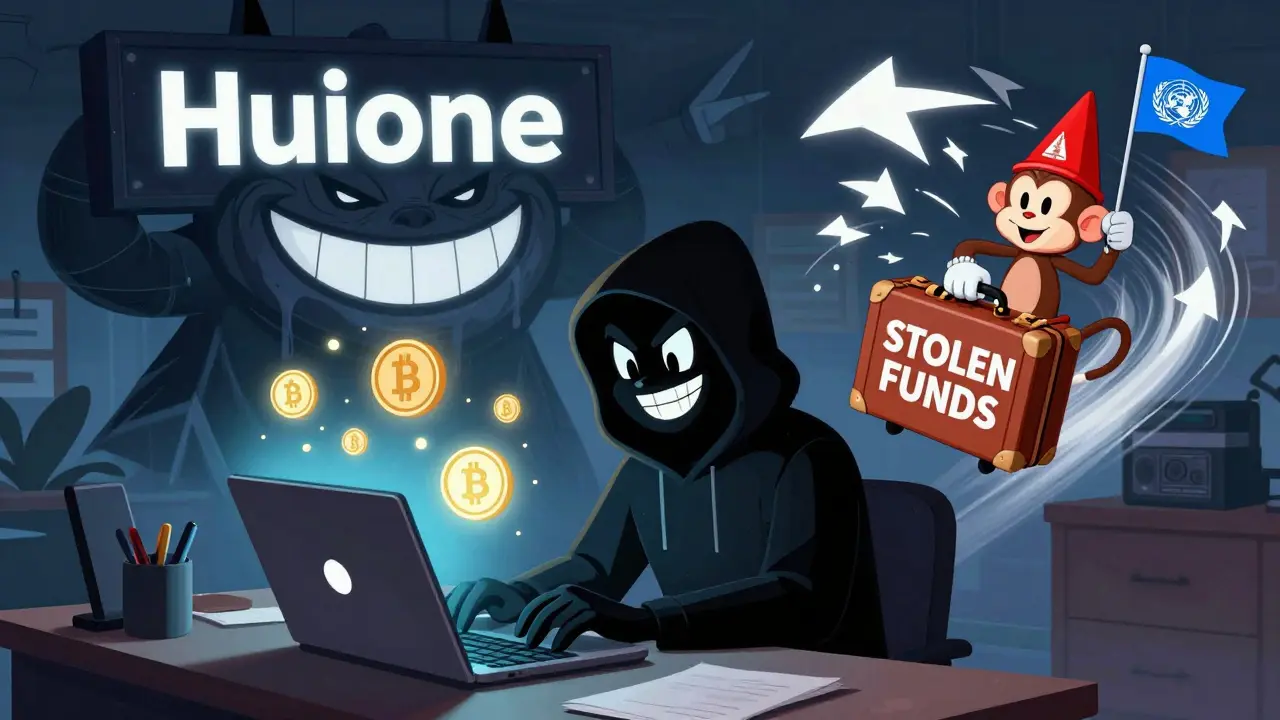
Who’s Trying to Stop Them?
The U.S. government didn’t sit back. On the same day as the ByBit hack, the Treasury’s OFAC sanctioned the Korea Sobaeksu Trading Company and three individuals tied to the operation. Kim Se Un and Jo Kyong Hun were named as key players in managing the cybercrime pipeline. Myong Chol Min was linked to crypto laundering networks. The Department of Justice unsealed indictments against seven North Korean nationals for violating sanctions through fake cigarette smuggling and crypto theft. The State Department offered rewards up to $7 million for information leading to arrests. The FBI didn’t stop at legal actions. They reached out to crypto companies directly. They shared lists of blockchain addresses tied to the TraderTraitor operation. Exchanges, bridges, and DeFi protocols were told: block these wallets. Don’t process transactions from them. Don’t even route traffic through them. Senators Elizabeth Warren and Jack Reed demanded answers. In a letter to Treasury and Justice, they asked: What are you doing to stop this? What’s holding you back? Their deadline: June 2, 2025. The message was clear-this isn’t just a crime problem. It’s a national security emergency.Why Traditional Crypto Bans Don’t Work
Many countries have banned cryptocurrency trading to stop money laundering. But North Korea doesn’t trade crypto. They steal it. And they don’t need to use local banks or exchanges to move it. Their entire system is built on anonymity. They don’t need to buy Bitcoin-they take it. They don’t need to convert it-they use stablecoins that can’t be frozen. They don’t need to hide their identity-they’re already hidden, working remotely from halfway across the world. A ban on crypto trading in South Korea or Japan won’t stop a hacker in Pyongyang from stealing funds from a U.S.-based exchange. A ban on mining in Russia won’t stop a North Korean worker in Vietnam from receiving payments in crypto for writing code. The real problem? The global system still treats crypto like a financial product. But for North Korea, it’s a weapon-and they’ve built a whole supply chain around it.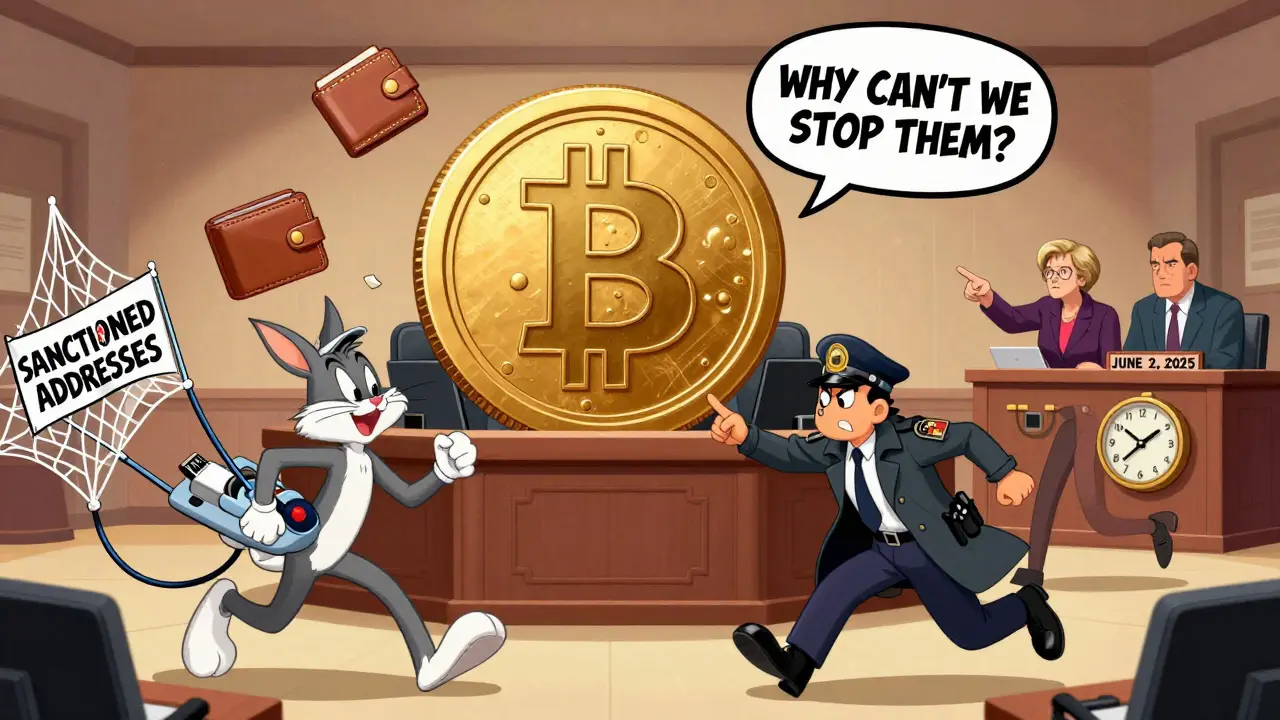
What’s Next?
Experts warn that 2026 will be worse. North Korea is learning. They’re building custom tools to bypass blockchain analytics. They’re hiring more hackers. They’re partnering with criminal gangs in China, Myanmar, and Africa to move funds faster. Crypto exchanges are now spending 30% more on cybersecurity. Some have started requiring biometric verification for all employees with access to hot wallets. Others are using AI to detect unusual transaction patterns in real time. But that’s reactive. What’s needed is global coordination. Right now, each country acts alone. The U.S. sanctions. South Korea monitors. Japan audits. But North Korea moves across borders, through networks, and across time zones with ease. Until there’s a unified international response-shared threat intelligence, joint blockchain tracing teams, real-time freezing of suspect wallets-these attacks will keep growing.What This Means for Regular Crypto Users
You might think this doesn’t affect you. But it does. If a major exchange gets hacked, prices crash. Trust erodes. Smaller platforms shut down. Insurance funds get drained. Your portfolio loses value-even if you never touched a North Korean wallet. And if crypto becomes too risky, regulators will crack down harder. More KYC. More limits. More surveillance. The freedom that made crypto appealing in the first place could vanish-not because of bad actors like you, but because of bad actors like Pyongyang. The truth is simple: North Korea isn’t trying to use crypto. They’re trying to break it. And if we don’t fix the holes, they’ll keep winning.Has North Korea ever been caught stealing crypto?
Yes. The FBI and U.S. Treasury have publicly attributed multiple major hacks to North Korea, including the 2022 Harmony Bridge breach ($100 million), the 2023 Axie Infinity attack ($625 million), and the 2025 ByBit hack ($1.5 billion). In each case, investigators traced stolen funds to blockchain addresses linked to known DPRK-operated wallets. The U.S. has issued sanctions against individuals and companies tied to these operations, and the Department of Justice has unsealed indictments against North Korean nationals.
Why can’t blockchain technology stop North Korea from stealing crypto?
Blockchain is transparent, but not foolproof. While every transaction is recorded, it doesn’t reveal who owns the wallet. North Korea uses thousands of addresses, mixes funds across chains, and converts assets into privacy coins or stablecoins to obscure origins. They also rely on human errors-phishing, fake jobs, insider access-to bypass security, not technical exploits. No blockchain can prevent a hacker hired as a remote developer from stealing access codes.
How do North Korean hackers get paid in crypto without being traced?
They don’t need to cash out. Many work as freelance developers for foreign companies, receiving payments directly in Bitcoin or USDT. They use decentralized wallets, avoid exchanges, and rely on peer-to-peer trading platforms. Some use crypto-to-crypto bridges to move funds between blockchains, making tracking harder. Others launder funds through third-party services in Cambodia or Laos, where regulations are weak or nonexistent.
Can cryptocurrency exchanges protect themselves from North Korean attacks?
Yes, but it requires more than software. Exchanges must implement strict employee vetting, require multi-factor authentication for all internal systems, monitor for unusual login patterns, and use AI to detect behavioral anomalies. Cold wallet access should be restricted to physically secure locations with biometric controls. Many exchanges still rely on outdated security models designed for retail fraud-not state-sponsored cyberwarfare.
What role does China play in North Korea’s crypto theft?
China doesn’t officially support North Korea’s crypto operations, but its border regions-especially near Dandong-serve as key transit points for laundering. Chinese underground exchanges, unregulated P2P platforms, and cash-based crypto dealers help convert stolen digital assets into fiat currency. While Chinese authorities have cracked down on some operations, enforcement remains inconsistent, and corruption in local financial networks allows these flows to continue.
Andrew Edmark
February 15, 2026 AT 07:16Man, this is wild. I work with a bunch of devs who do remote gigs, and now I’m second-guessing every freelancer I’ve ever hired. 😔 What if one of them is secretly funneling cash to Pyongyang? I just want to build stuff, not enable nuclear weapons.
Maybe we need a global background check for crypto devs? Not just for jobs, but for access to infrastructure. Like, if you’re working on a wallet system, you should have to pass a vetting that goes beyond a LinkedIn profile.
Dominica Anderson
February 15, 2026 AT 15:44North Korea isn’t hacking crypto. It’s exposing the rot. The West built a financial system on trust, not code. And now it’s collapsing under its own naivety. Pathetic.
sruthi magesh
February 17, 2026 AT 08:17Ofc the US is blaming NK. Meanwhile, their own agencies are mining crypto on the side. 🤡 Who do you think really owns those "stolen" wallets? The real heist was making you believe this was about sanctions.
Lisa Parker
February 18, 2026 AT 11:24i just cried reading this. like, why does everything have to be so dark?? i just wanted to buy some eth and chill 😭
Nova Meristiana
February 20, 2026 AT 07:42Oh wow, another "crypto is the new oil" narrative. How original. 🙄
Let me guess - next you’ll say Bitcoin is the solution to world hunger? Please. This is just fearmongering dressed up as journalism. The real threat? Centralized exchanges. Not North Korea.
Aileen Rothstein
February 22, 2026 AT 05:47What if we flipped the script? Instead of chasing hackers, what if we funded open-source security tools built by global volunteers? Think of it like Wikipedia for blockchain forensics.
Imagine a decentralized threat intel network - devs from India, Ukraine, Canada, Brazil all contributing anonymized data. No government control. Just collaboration.
It’s not perfect, but it’s better than waiting for sanctions that take 18 months to issue. We can build this. We just need to start.
JJ White
February 24, 2026 AT 02:33THIS ISN’T JUST A HACK. THIS IS A WAR. A COLD WAR WITH DIGITAL BAYONETS.
They’re not stealing money. They’re stealing our future. Our trust. Our sense of security. And for what? So Kim Jong-un can buy another missile? No. So he can laugh while the West burns itself down from the inside.
They don’t need nukes anymore. They have code. And code doesn’t need visas.
Someone’s got to say it: we’re already losing.
Nicole Stewart
February 24, 2026 AT 12:54Stop the panic. It’s just crypto. People lose money every day. This is noise.
Alan Enfield
February 25, 2026 AT 12:26Interesting. The real vulnerability isn’t the blockchain - it’s the human layer. We automate everything except hiring. That’s the flaw.
Maybe we need a global crypto worker registry? Verified identities, skill certs, blockchain-based reputation. Not perfect, but a start.
Jennifer Riddalls
February 27, 2026 AT 08:31you know what i think? we’re all just trying to do our thing. devs, users, exchanges - we’re not the enemy. the system is. maybe we need to stop blaming countries and start fixing how we onboard people.
it’s not about NK. it’s about trust
Kyle Tully
February 27, 2026 AT 18:17you think this is bad wait till you find out the FBI had a backdoor in the ByBit audit tool
they knew about the breach 3 weeks before it happened
they let it happen to get intel
and now they’re selling it to private firms
you’re all just pawns in a game you don’t even know you’re playing
seriously
who do you think really owns those wallets
kieron reid
February 28, 2026 AT 03:31So let me get this straight. A state actor steals $1.5B, and the response is to ask exchanges to "do better"? That’s it? No real penalties. No global coordination. Just more KYC forms for regular users.
Classic. We punish the small fry so the big ones can keep dancing.
Ian Plunkett
March 1, 2026 AT 15:36They didn’t hack the system. They hacked the *idea* of trust. That’s the real win.
Imagine if every remote dev had to be vetted by a global blockchain consortium. Not by governments. By code. By consensus.
That’s the future. Not sanctions. Not blame. A decentralized identity layer.
Or we keep playing whack-a-mole until the whole house burns down.
Avantika Mann
March 1, 2026 AT 23:17Hey, I’m from India and I work remotely for a US crypto firm. I just want to say - most of us are legit. We’re not spies. We’re students, single moms, people trying to make rent.
But yeah, the system is broken. If we can’t trust who’s coding our wallets, then maybe we need open-source audits. Community-run. Transparent. No secrets.
We can fix this. Together.
yogesh negi
March 3, 2026 AT 14:38Wow, this is such an important topic, and I really appreciate how deeply you’ve laid it out - thank you for the courage to speak truth!
Let me add: the real power isn’t in the blockchain, it’s in the *community*. We need to build local crypto literacy hubs - in every country, in every language - where people learn not just how to trade, but how to protect themselves.
Imagine a global network of volunteers teaching elders how to spot phishing emails, how to verify wallet addresses, how to use hardware wallets safely.
This isn’t about tech. It’s about care. And care can’t be hacked.
Nikki Howard
March 5, 2026 AT 00:50While the narrative is compelling, it lacks empirical grounding. The $2.17B figure is extrapolated from unverified chain analysis. No independent audit has confirmed the attribution. Furthermore, the U.S. government has a vested interest in amplifying external threats to justify domestic surveillance expansion.
Correlation does not equal causation. Please cite primary sources before making such sweeping claims.
Tarun Krishnakumar
March 5, 2026 AT 14:47Let’s be real - this whole "North Korean hackers" story is a psyop. The real thieves? The same people who created the whole crypto system in the first place. The VCs. The hedge funds. The Silicon Valley elites who turned blockchain into a casino.
They needed a scapegoat. So they invented a ghost army of hackers in Pyongyang. Why? Because if you blame a foreign dictator, you don’t have to fix your own corrupt exchanges.
Remember Mt. Gox? Silk Road? FTX? All built by Americans. All stolen by insiders. But no one talks about that.
They want you to fear North Korea. So you’ll stop asking questions about who really controls the keys.
Wake up. The enemy isn’t in Pyongyang. It’s in Palo Alto.
Chris Thomas
March 7, 2026 AT 11:01Oh wow, so the solution is to globalize identity verification? Please. You’re treating blockchain like a corporate HR portal.
The whole point of crypto was to remove intermediaries. Now you want to create a global blockchain police force? That’s not security - that’s surveillance capitalism with a new coat of paint.
And you call yourself an expert? You’re not solving the problem. You’re just rebranding the prison.
James Breithaupt
March 8, 2026 AT 17:34From Jakarta to Lagos, I’ve seen devs working from coffee shops with 2FA on their phones and hardware wallets in their backpacks.
The real story? People are building decentralized trust on their own terms - no government, no bank, no corporate oversight.
Maybe the answer isn’t more rules. Maybe it’s more grassroots. More local. More human.
North Korea didn’t break crypto. We did - by trying to control it.