Nigeria's Crypto Banking Ban Reversal: A Complete Timeline from 2021 to 2025
 Feb, 6 2026
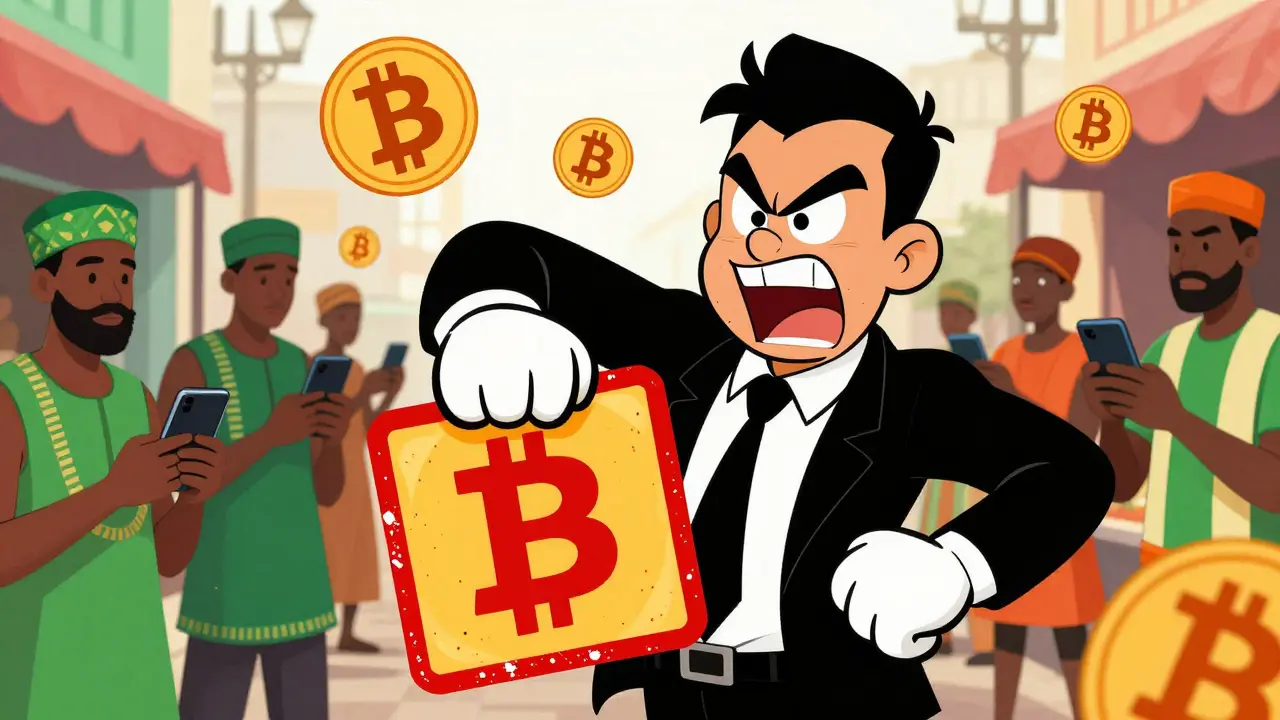
The story of Nigeria's crypto ban reversal is a rollercoaster of policy shifts. In just four years, Nigeria went from banning crypto banking to creating a full regulatory framework. This isn't just about rules-it's about how a country adapts to technology it can't stop. Let's walk through exactly what happened.
2021: The Bitcoin Ban That Never Stuck
On February 5, 2021, the Central Bank of Nigeria (CBN) dropped a bombshell. They banned all commercial banks from handling cryptocurrency transactions. Governor Godwin Emefiele told Nigeria's Senate that crypto activities "significantly threaten the safety and soundness of our financial system." Banks were ordered to close accounts linked to crypto exchanges. But here's the thing: Nigerians kept trading. The ban pushed crypto into peer-to-peer channels where people traded directly, skipping banks entirely.
Underground Crypto Boom: How Nigerians Kept Trading
Despite the ban, Nigeria became the world's second-largest peer-to-peer crypto market by 2022. People used apps like Paxful and Binance P2P to buy Bitcoin with cash or mobile money. Why? Because Nigerians needed crypto for three reasons: sending money abroad cheaply, protecting savings from naira inflation, and accessing global services. A 2022 Chainalysis report showed Nigerian P2P volume hit $10.6 billion yearly. Banks couldn't stop it-they just watched as the underground market grew.
2022: The First Crack in the Ban
By late 2022, the CBN quietly started softening. Banks were allowed to work with crypto firms under secret conditions. Why? Nigeria was drowning in foreign exchange shortages. The naira had lost 30% of its value against the dollar. Crypto offered a lifeline: people could use Bitcoin to send dollars home without formal banking channels. The CBN realized banning crypto was hurting the economy more than helping. They didn't announce it publicly, but whispers spread that banks could now open accounts for crypto companies if they followed "prudent" rules.

December 2023: The Official Reversal
On December 19, 2023, the CBN made it official. They lifted the 2021 ban completely. Banks could now legally support crypto firms-Securities and Exchange Commission (SEC) licensed ones. The new rules required banks to set transaction limits and block cash withdrawals from crypto accounts. The move came after global regulators like the Financial Action Task Force pressured Nigeria to regulate crypto properly instead of banning it. The CBN also published Virtual Asset Service Providers (VASP) Guidelines, creating a clear path for crypto businesses to operate legally.
2025: The Law That Changed Everything
The Investments and Securities Act (ISA) 2025 was the final piece. It gave crypto legal status as securities under SEC oversight. Before this, owning crypto wasn't illegal, but banks wouldn't touch it. Now, the SEC could license exchanges, enforce rules, and protect investors. The law required all crypto firms to register as VASPs. It also forced banks to verify crypto transactions for anti-money laundering checks. This wasn't just about crypto-it was about Nigeria's fight to get off the FATF's Gray List, which had blocked international loans and investment.

Current Challenges: Binance Detentions and Security Fears
The new rules didn't fix everything. In March 2024, Nigerian authorities detained two Binance executives over alleged untraceable fund transfers. By May 2024, the national security advisor was considering declaring crypto trading a national security threat. Why? Because peer-to-peer trading remains the main way Nigerians access crypto, and it's hard to track. Regulators admit they're still playing catch-up. A crypto executive told Semafor Africa: "There aren't going to be as many licenses as you think. They're being very selective."
How Nigeria's Regulators Work Together Today
Today, the SEC and CBN share duties. The SEC handles licensing for crypto exchanges and enforces investor protection rules. The CBN manages banking relationships, transaction limits, and anti-money laundering checks. This dual system tries to balance innovation and stability. For example, a crypto exchange needs SEC approval to operate, but banks can only work with them if the CBN approves the transaction limits. It's messy, but it's progress. Nigeria's goal is clear: get off the FATF Gray List by 2025 to unlock $10 billion in development loans.
What's Next for Nigeria's Crypto Future
Two things will decide Nigeria's crypto future. First, how fast the SEC issues licenses. Yellow Card is already applying to operate in Nigeria and help Coinbase expand across Africa. Second, whether Nigeria can solve the peer-to-peer problem. Right now, 80% of Nigerian crypto trades happen outside banking channels. If regulators crack down on P2P, it could cripple access for ordinary Nigerians. But if they don't, the FATF might keep Nigeria on its watch list. One thing is certain: Nigeria's experiment is being watched across Africa. Countries like Kenya and South Africa are watching closely to see if this regulatory model works.
When did Nigeria officially lift its crypto banking ban?
The Central Bank of Nigeria lifted the ban on December 19, 2023. This allowed banks to work with crypto firms licensed by the Securities and Exchange Commission. Before this, the ban had been in place since February 2021.
What role does the SEC play in Nigeria's crypto regulation now?
The Securities and Exchange Commission now licenses all crypto exchanges as Virtual Asset Service Providers (VASPs). They set rules for investor protection, transaction reporting, and anti-fraud measures. Any crypto business operating legally in Nigeria must have SEC approval. The SEC also enforces the Investments and Securities Act 2025, which defines crypto as a security.
Can Nigerian banks handle crypto transactions today?
Yes, but only for SEC-licensed crypto firms. Banks must follow strict rules: they can't process cash withdrawals from crypto accounts, must set transaction limits, and verify all transactions for anti-money laundering checks. Unlicensed exchanges still can't use banks at all.
Why did Nigeria reverse its crypto ban after banning it in 2021?
Nigeria's economy was struggling. The naira had lost 30% of its value against the dollar, and foreign exchange shortages hurt imports. Crypto was already being used widely for remittances and savings, so banning it hurt more than helped. The Financial Action Task Force also pressured Nigeria to regulate crypto properly instead of banning it. By 2023, regulators realized a controlled system was better than a black market.
What's the biggest risk for crypto users in Nigeria today?
The biggest risk is uncertainty around licensing. The SEC hasn't finalized how many licenses it will issue or how strict the rules will be. Some exchanges might shut down if they can't get approved. Also, peer-to-peer trading remains the main way Nigerians access crypto, but regulators are still trying to figure out how to monitor it. This creates a "gray zone" where users might lose access to services suddenly.
Alex Garnett
February 7, 2026 AT 14:38It's fascinating how Nigeria's regulatory approach mirrors the typical overreach of emerging economies. The central bank's initial ban was a predictable misstep, but the subsequent reversal highlights the inevitable march of technological progress. However, the lack of clear international coordination remains a critical flaw. This is why we need a global framework for digital assets-otherwise, we're just creating regulatory arbitrage opportunities. Frankly, it's amateurish.
Michelle Anderson
February 8, 2026 AT 12:18Nigeria's crypto policy is a joke. They ban, then reverse, then panic. Total chaos. The SEC and CBN are playing catch-up with a blindfold on. Pathetic.
Nathaniel Okubule
February 9, 2026 AT 22:05It's important to understand the complexities here. The CBN's initial ban was well-intentioned but poorly executed. The current regulatory framework is a step in the right direction, though more clarity is needed for businesses. Let's hope this leads to sustainable growth.
Shruti Sharma
February 11, 2026 AT 19:56Nigeria's crypto saga is wild! They banned then unban then ban again? lol. Like what's even happening? P2P is still the main way, and regulators can't keep up. So many mistakes. But hey, it's progress right?
Brendan Conway
February 13, 2026 AT 08:51so nigeria's crypto situation is kinda messy but makes sense. they banned it but people still used it, so they had to make rules. seems like they're trying to balance things now. hope it works out.
Matt Smith
February 14, 2026 AT 23:04NIGERIA'S CRYPTO BAN IS A DISASTER! 💀 They banned it, then unban, now they're detaining Binance execs? This is pure chaos. I can't believe how they handle this. It's like watching a train wreck in slow motion. 😭
orville matibag
February 16, 2026 AT 22:00It's interesting how Nigeria's approach to crypto reflects broader African challenges with technology regulation. The balance between innovation and control is tricky, but the move towards regulation shows adaptability. Hopefully, this sets a precedent for other nations.
Jesse Pasichnyk
February 18, 2026 AT 19:54The US should take note of Nigeria's mistakes. We need strict crypto regulations to protect our economy. But Nigeria's reversal was necessary. They had to adapt. Still, they need to be tougher on scams. This is why we need a strong federal stance.
perry jody
February 20, 2026 AT 07:45This is awesome news for crypto in Africa! 🚀 Nigeria's regulatory steps are a huge step forward. The SEC and CBN working together is a positive sign. Let's keep pushing for innovation while staying safe. So proud of how they're handling this! 🌍
Paul Jardetzky
February 22, 2026 AT 05:35Great to see Nigeria moving forward with crypto regulation! 💪 The SEC licensing and CBN oversight is the right approach. This will help businesses thrive while keeping things secure. Keep up the good work! 💼
Paul Gariepy
February 23, 2026 AT 17:47This is a crucial development! The Nigerian government's approach to cryptocurrency regulation is a model for others. The SEC's licensing framework is essential for investor protection. However, there are still challenges with P2P trading; regulators need to address this carefully. It's a complex issue, but progress is being made!
Udit Pandey
February 24, 2026 AT 21:01It is imperative that Nigeria's regulatory framework for cryptocurrency is stringent. The initial ban was justified, and the subsequent reversal is a testament to the country's adaptability. However, the current system must be rigorously enforced to prevent financial instability. This is a matter of national security.
Sharon Lois
February 26, 2026 AT 19:17US is behind this.
mahikshith reddy
February 28, 2026 AT 03:42Nigeria's crypto journey is a classic case of 'two steps forward, one step back.' The regulatory chaos reflects deeper institutional weaknesses. True progress requires systemic overhaul, not piecemeal fixes. This is just the beginning of the struggle.
Josh Flohre
March 1, 2026 AT 01:50The Nigerian central bank's handling of cryptocurrency has been consistently incompetent. The ban was ill-conceived, and the reversal lacks coherence. Regulatory uncertainty is the only certainty here. This is a disaster for financial stability.
James Harris
March 2, 2026 AT 17:49I really admire how Nigeria is navigating this crypto landscape. It's not easy, but they're making strides. The SEC and CBN working together is a positive sign. Hopefully, this helps more people access financial tools safely. Great progress!
Kieren Hagan
March 3, 2026 AT 11:48The regulatory framework established by Nigeria's SEC and CBN represents a balanced approach to cryptocurrency. While challenges remain, particularly with peer-to-peer transactions, this structured oversight is essential for sustainable growth. It's a commendable effort.
sachin bunny
March 3, 2026 AT 14:04Crypto in Nigeria is a double-edged sword. On one hand, it empowers people; on the other, it's a playground for criminals. 🤔 The government's flip-flopping shows they don't know what they're doing. It's all about control, not progress. 😒
Kyle Pearce-O'Brien
March 3, 2026 AT 20:11The Nigerian crypto saga is a textbook case of regulatory dissonance. The CBN's initial prohibition was a knee-jerk reaction, but the subsequent VASP framework demonstrates a nuanced understanding of digital asset economics. However, the lack of harmonized global standards remains a critical impediment. This is why we need a unified approach-otherwise, we're just playing whack-a-mole with financial systems. 🌐
Robin Ødis
March 5, 2026 AT 17:22Well, it's quite clear that Nigeria's approach to cryptocurrency regulation is fundamentally flawed. The initial ban was necessary to protect the national currency from speculative attacks, but the reversal has created more problems than it solved. The SEC and CBN are not working in concert, and the P2P market remains a black hole for regulatory oversight. This is a disaster waiting to happen, and they're just pretending it's under control. It's all about the money, really. The government is just trying to control the flow of capital for their own gain. This is why we need stricter regulations, not this half-baked system. I've been saying this for years, and now it's happening. They're just going to keep making mistakes until they realize the truth. It's a mess, and it's all because they don't understand the technology. They should have just banned it entirely and focused on traditional finance. But no, they had to go and make it worse. It's all so frustrating. The lack of transparency in their regulatory decisions is alarming. Every time they try to fix something, it just creates another problem. This is why we need a complete overhaul of the entire system, not piecemeal changes. It's clear that they're out of their depth, and the consequences could be catastrophic for Nigeria's economy.