150-200 Million VND Fines for Crypto Payments in Vietnam: What You Need to Know
 Feb, 3 2026
Using Bitcoin or Ethereum to pay for goods in Vietnam? You could be fined up to 200 million VND.
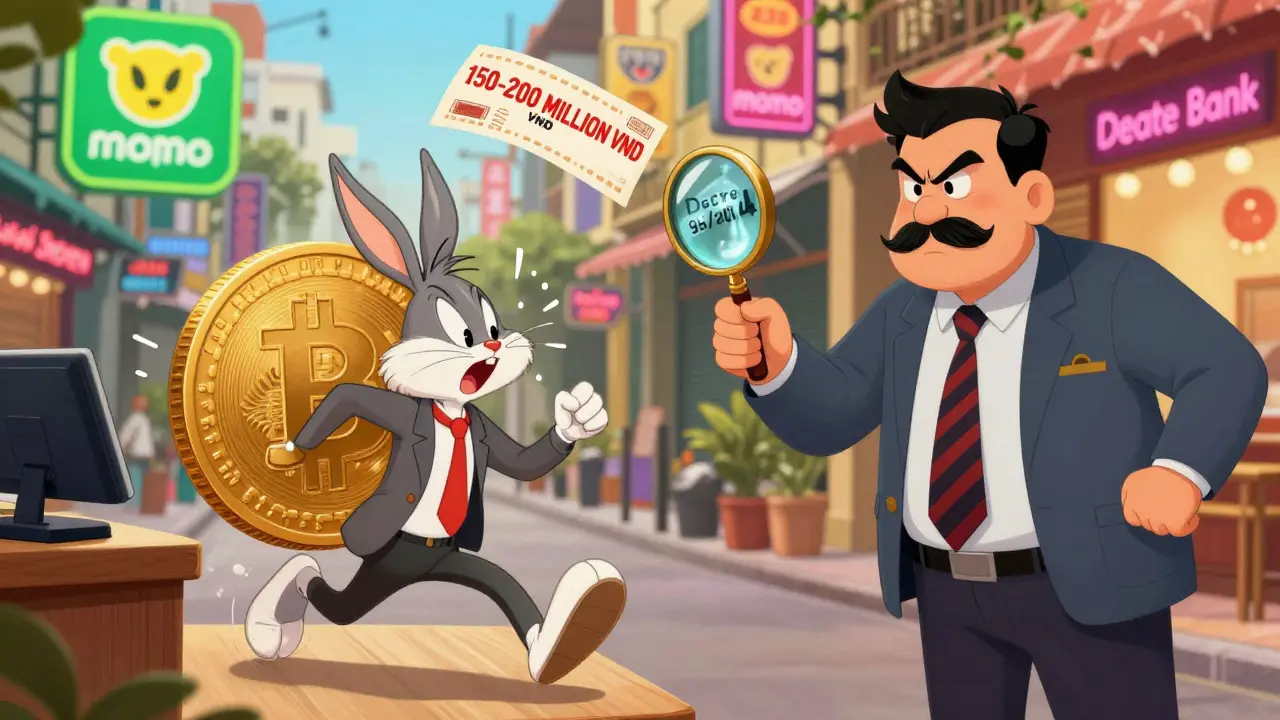
If you’re in Vietnam and you’ve ever used Bitcoin to buy coffee, paid for a service with Ethereum, or accepted crypto as payment for your business, you’re breaking the law. Not because it’s dangerous, not because it’s unproven - but because the government says so. The penalty? Between 150 million and 200 million Vietnamese Dong - roughly $6,500 to $8,900 USD. That’s not a warning. That’s a fine. And it’s been active since January 1, 2018.
It’s not that Vietnam hates crypto. In fact, the country ranks 8th in the world for crypto adoption, according to Chainalysis. Millions of Vietnamese people trade, hold, and even mine cryptocurrency. But using it to pay for things? That’s where the line is drawn. The State Bank of Vietnam (SBV) doesn’t want you using Bitcoin as money. Not because it’s unstable - though it is - but because it’s uncontrollable.
Why does Vietnam ban crypto payments but not crypto ownership?
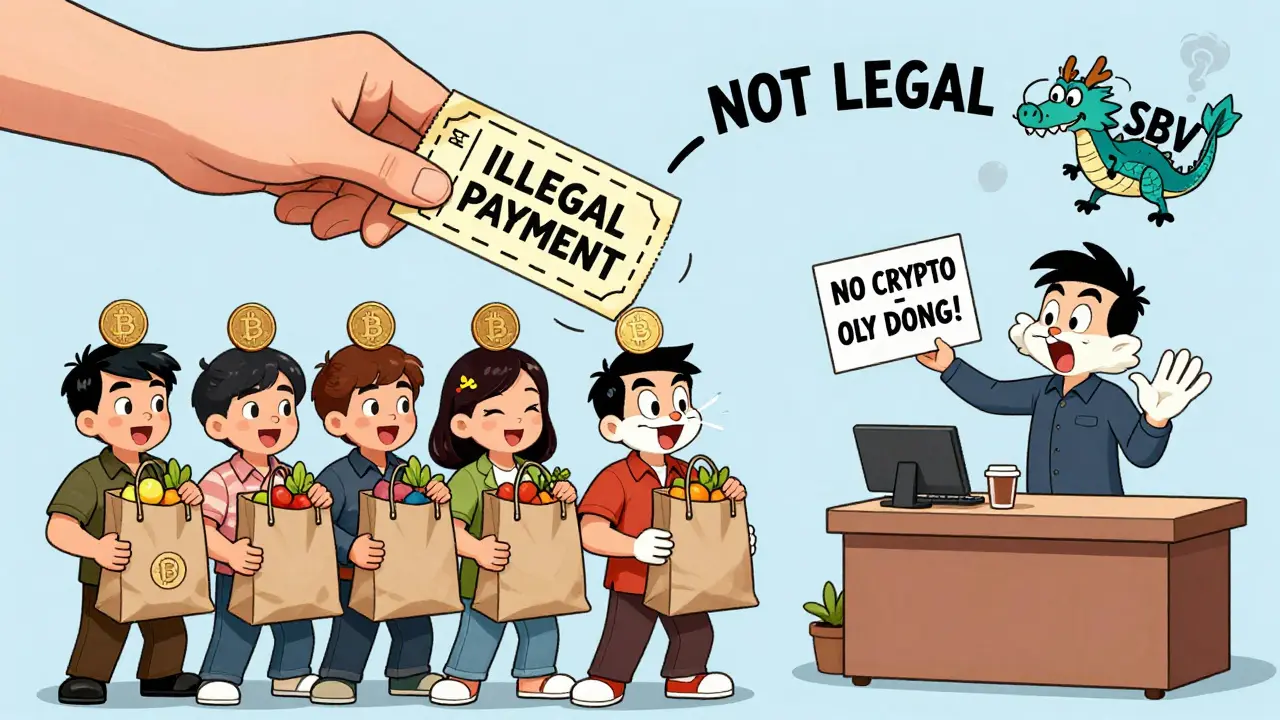
The law doesn’t say you can’t own Bitcoin. You can buy it, hold it, sell it - even trade it peer-to-peer. But if you use it to pay for your phone bill, your rent, or your child’s tuition, you’re violating Decree No. 96/2014/ND-CP. Specifically, Clause 6, Article 27. That’s the legal hammer. It says: “The issuance, supply, and use of bitcoin and other similar virtual currencies as a means of payment is a prohibited activity.”
This distinction is critical. Vietnam treats crypto like a commodity, not currency. You can trade it like gold. But you can’t use it like cash. The SBV wants to control the money supply. They want to know where every dong flows. Bitcoin doesn’t give them that. No central ledger. No transaction records they can audit. No way to tax it easily. No control over inflation or capital flight.
Le Truong Tung, president of FTP University, explained it simply: “Accepting bitcoin as payment will make the economy quite complex and difficult to control.” He pointed to tax evasion and illegal transfers as real risks. And he’s not wrong. Bitcoin’s pseudonymity makes it attractive for underground transactions. But that doesn’t mean every person using it to buy a meal is a criminal. Most are just trying to find a better way to pay.
How does this compare to other countries?
Thailand lets crypto exchanges operate under license. Singapore created a full regulatory sandbox for digital payment tokens. Even Indonesia, which has similar concerns, allows crypto trading as an asset class - and quietly tolerates its use in peer-to-peer commerce.
Vietnam took a different path. One of the strictest in Southeast Asia. No licenses. No gray areas. Just a hard ban on payments. Dr. Nguyen Xuan Thanh from Harvard’s Kennedy School called it a “missed opportunity.” He said Vietnam saw crypto only as a threat to monetary sovereignty - not as a tool for financial inclusion.
That’s ironic. Vietnam has one of the fastest-growing digital payment markets in Asia. Over 43% of adults used digital payments in 2020, according to the World Bank. Mobile wallets like Momo and ZaloPay are everywhere. But the SBV only supports their systems. If you’re using a government-approved app, you’re fine. If you’re using a blockchain wallet? You’re risking a fine.
Has anyone actually been fined?
Officially, enforcement has been rare. The SBV doesn’t publish numbers. But there are documented cases.
In 2017, a university in Hanoi planned to accept Bitcoin for tuition. The SBV stepped in within days. The plan was scrapped. No fine was issued - but the message was clear: don’t even try.
By 2019, the SBV said it had “coordinated additional penal sanctions” for crypto payment violations. Still, no public cases. No headlines. No arrests. Why? Because catching someone using Bitcoin to pay for a haircut is nearly impossible. Most transactions happen off-chain, in private chats, through peer-to-peer platforms. The SBV can’t monitor every Telegram group or Zalo message.
That’s the gap between law and reality. The fine exists on paper. But in practice, it’s mostly a deterrent - not a tool. Unless you’re a merchant advertising crypto payments on your website or accepting it in-store, you’re unlikely to get caught.
What happens if you’re caught?
Let’s say you run a small café in Da Nang and you start accepting Dogecoin. A customer pays you 0.5 BTC for a coffee. You convert it to VND the next day. A neighbor reports you. The SBV investigates. They find your transaction history. You’re summoned.
You’ll be fined between 150 and 200 million VND. That’s not a warning. That’s a penalty. You can appeal. But the law doesn’t care if you didn’t know it was illegal. Ignorance isn’t a defense. You’ll also have to stop accepting crypto - permanently.
There’s no jail time. No criminal record. Just a fine. But for a small business, 200 million VND is serious. That’s more than most Vietnamese earn in six months.
Why is the ban still in place in 2026?
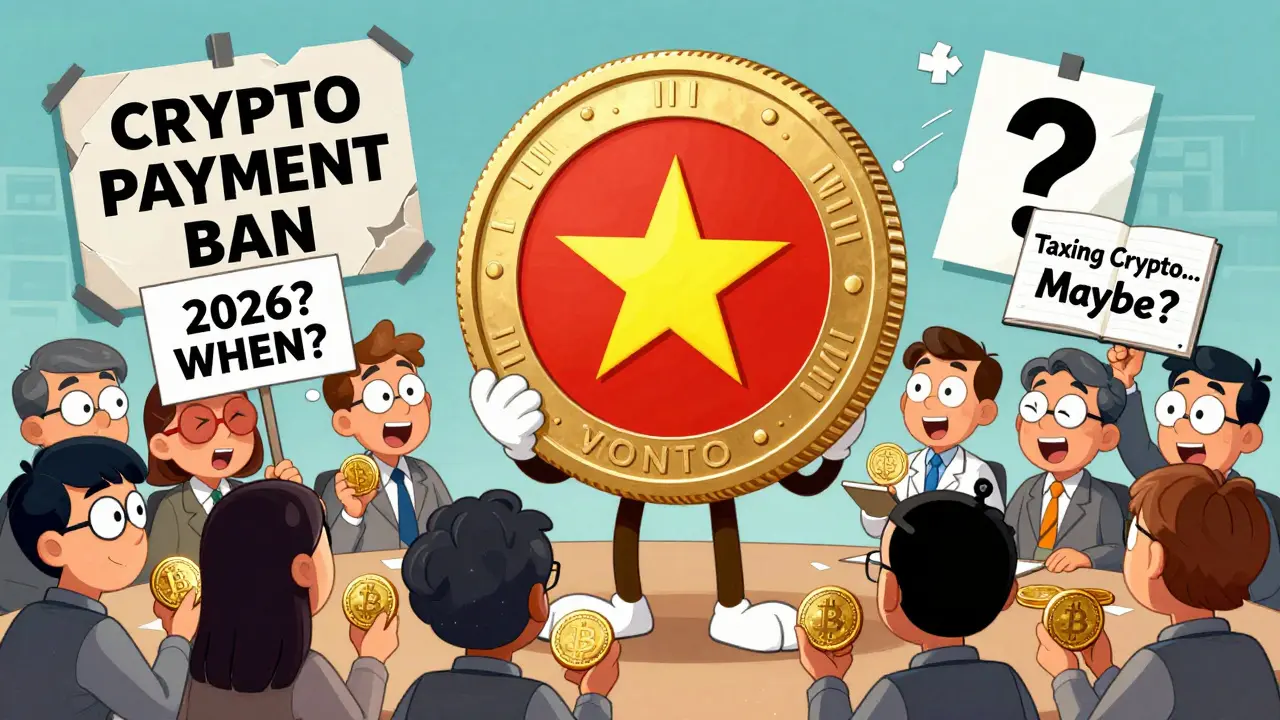
Even though Vietnam is one of the most crypto-active countries in the world, the government hasn’t changed its stance. The 2021 Draft Decree on Virtual Assets kept the payment ban. The 2022 Monetary Policy Report reaffirmed it. The SBV still says: “Cryptocurrencies are not recognized as legal tender.”
But something’s shifting. The Ministry of Finance is now drafting rules to tax crypto transactions. That’s huge. If they’re going to tax it, they’re acknowledging it exists. And if they’re taxing it, they’re treating it like an asset - not just a threat.
Dr. Tran Ngoc Ca from Vietnam’s Academy of Finance said in 2023: “The 150-200 million VND fine remains technically enforceable but has become increasingly difficult to implement as cryptocurrency usage grows.”
That’s the real story. The law hasn’t changed. But the world has. Millions of people are using crypto. The government can’t stop it. So they’re trying to control it - not by banning it, but by eventually bringing it into the system.
What should you do if you’re in Vietnam?
If you’re a consumer: You’re probably fine. Using crypto to pay for a meal once won’t get you fined. But if you’re advertising it on your social media or running a business that accepts it - you’re playing with fire.
If you’re a business owner: Don’t accept crypto as payment. Not even “for fun.” The risk isn’t just the fine. It’s the legal chaos that follows. Your bank account could be frozen. Your business license could be revoked. Your reputation could be damaged.
If you’re holding crypto: You’re okay. The ban is only on payments. You can still trade, store, and sell. Just don’t use it to buy anything.
And if you’re thinking of starting a crypto payment startup? Don’t. Not yet. The law hasn’t caught up with the market - but it’s watching. And when it moves, it moves fast.
What’s next for crypto in Vietnam?
The writing is on the wall. Vietnam won’t ban crypto forever. It can’t. The demand is too high. The technology is too embedded. The real question isn’t whether the ban will be lifted - it’s when, and how.
Look at China. They banned crypto payments too. Then they launched their own digital yuan. Now, they’re building a state-controlled blockchain ecosystem. Vietnam might be heading the same way.
For now, the 150-200 million VND fine is a warning sign. It’s not a death sentence. But it’s a clear message: crypto as payment is not allowed. And until the government says otherwise, that’s the law.
Is it illegal to own Bitcoin in Vietnam?
No, owning Bitcoin or other cryptocurrencies is not illegal in Vietnam. The ban only applies to using them as a means of payment. You can buy, hold, sell, and trade crypto without breaking the law - as long as you don’t use it to pay for goods or services.
Can I be arrested for using crypto to pay for something in Vietnam?
No, you won’t be arrested. The penalty is an administrative fine - not a criminal offense. You could be fined between 150 million and 200 million VND, but there’s no jail time or criminal record attached. Enforcement is rare, and mostly targets businesses, not individuals.
Why does Vietnam allow crypto trading but not payments?
The State Bank of Vietnam wants control over the financial system. Trading crypto as an asset doesn’t interfere with monetary policy. But using it to pay for things bypasses banks, makes taxes harder to collect, and removes oversight. By allowing trading but banning payments, they’re trying to contain the risk while still letting people participate in the market.
Has anyone ever been fined the full 200 million VND?
There are no publicly confirmed cases of someone being fined the full amount. The SBV doesn’t release enforcement data. The most known case was a university that dropped its Bitcoin tuition plan in 2017 after being warned. Fines are likely applied quietly, mostly to businesses that openly advertise crypto payments.
Will Vietnam ever legalize crypto payments?
It’s likely, but not soon. The government is moving toward regulating crypto as an asset - and possibly taxing it. That suggests they’re preparing to bring it into the formal system. But full legalization as payment would mean giving up control over the money supply. That’s a big step. It may happen when Vietnam launches its own digital currency, similar to China’s digital yuan.
Can I use crypto to send money to family in Vietnam?
Technically, yes - if you’re sending it as a gift or personal transfer, not as payment for goods. But if the recipient converts it to VND through a local exchange, they’re not breaking the law. The ban is on using crypto to pay for services or products, not on personal transfers between individuals.
Ajay Singh
February 4, 2026 AT 11:54Michelle Anderson
February 4, 2026 AT 15:14Brittany Novak
February 4, 2026 AT 18:23Mrs. Miller
February 5, 2026 AT 23:07Paul Jardetzky
February 7, 2026 AT 20:30laura mundy
February 9, 2026 AT 02:52Katie Haywood
February 10, 2026 AT 15:59Kieren Hagan
February 12, 2026 AT 04:48Oliver James Scarth
February 12, 2026 AT 14:53Brittany Coleman
February 13, 2026 AT 10:54Matt Smith
February 13, 2026 AT 23:06perry jody
February 15, 2026 AT 21:10Olivette Petersen
February 16, 2026 AT 10:54Joshua Herder
February 18, 2026 AT 10:08Jim Laurie
February 19, 2026 AT 18:03Ryan Chandler
February 19, 2026 AT 21:03Jacque Istok
February 20, 2026 AT 16:36Taybah Jacobs
February 21, 2026 AT 07:12Danica Cheney
February 21, 2026 AT 13:02Alex Garnett
February 23, 2026 AT 00:13Brendan Conway
February 23, 2026 AT 21:27Mendy H
February 25, 2026 AT 17:04Freddie Palmer
February 26, 2026 AT 22:18sachin bunny
February 28, 2026 AT 14:52Kyle Pearce-O'Brien
March 1, 2026 AT 14:53