Blockchain Gaming Airdrop: How to Spot Real Rewards and Avoid Scams
When you hear blockchain gaming airdrop, a free token distribution tied to a play-to-earn game or Web3 platform. Also known as game token airdrop, it’s meant to reward early players and grow a community—but too often, it’s just a trap. Real ones come from games with actual players, working mechanics, and public team identities. Fake ones? They show up on Twitter threads, Telegram groups, or fake billboards claiming you’ve won something you never signed up for.
Most Web3 games, blockchain-based games that reward players with tokens or NFTs. Also known as play-to-earn games, they rely on token incentives to keep users engaged launch airdrops to build buzz before their game even goes live. But if the game has no demo, no roadmap, or zero social media activity beyond paid ads, skip it. Look for games that already have active Discord servers, YouTube gameplay videos, or real user reviews—not just influencers posting screenshots. Projects like TOPGOAL's Footballcraft, a Web3 sports game that ran a 2024 airdrop with nearly 200,000 participants. It required a complex 9-step process and only 10,000 users actually won NFTs proved that even big campaigns can fail if the game doesn’t deliver.
Don’t confuse NFT airdrop, a free non-fungible token given to users for completing tasks like joining a community or playing a beta. Often used as a loyalty reward in blockchain games with gaming tokens, fungible crypto tokens used inside games for purchases, upgrades, or rewards. Also known as in-game currency, they’re the lifeblood of play-to-earn economies. NFTs are collectibles—your digital jersey or rare weapon. Gaming tokens are the cash you spend on them. Both can be part of an airdrop, but only one gives you real value if the game survives. Many airdrops hand out tokens that never list on exchanges or lose 95% of their value within weeks. The OwlDAO x CoinMarketCap airdrop worked because it had clear steps, real utility, and a team with a track record. The Position Exchange billboard scam? It didn’t even have a website.
Here’s what you need to check before claiming anything: Does the project have a live game or at least a playable demo? Is the team publicly identified? Are the airdrop rules simple and transparent? Are you being asked to connect your wallet or send crypto to "claim" your reward? If yes to the last one, close the tab. Real airdrops never ask for your private key or gas fees upfront. They also don’t promise instant riches. The best ones reward participation, not hype.
Below, you’ll find real reviews of past blockchain gaming airdrops—what worked, what crashed, and what you can still do today to find the ones worth your time. No fluff. No promises. Just facts from people who’ve been there.
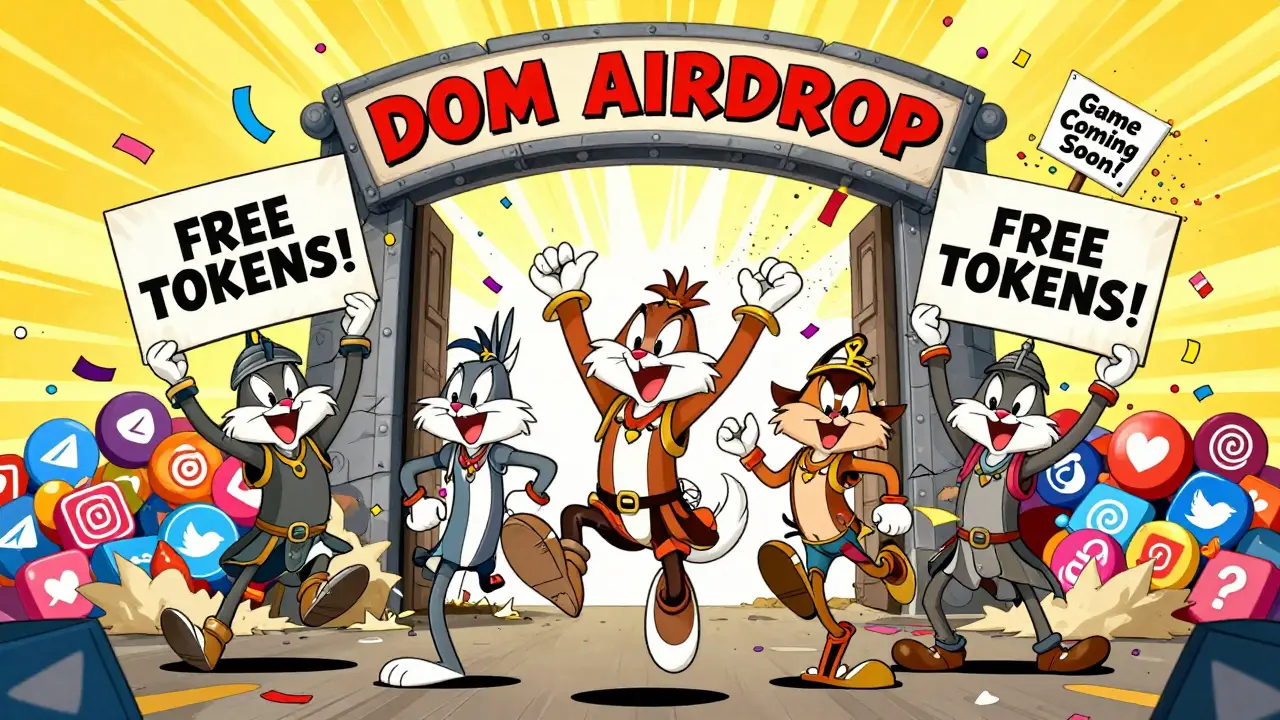
Ancient Kingdom (DOM) Airdrop: What Happened and Why It’s Not Active in 2025
The Ancient Kingdom (DOM) airdrop ended in 2021 with no working game. Today, DOM tokens are worth almost nothing. Learn what happened, why it failed, and how to avoid similar scams in 2025.