Gravity Finance Crypto Exchange Review: A Niche DEX with Limited Liquidity
 Jan, 2 2026
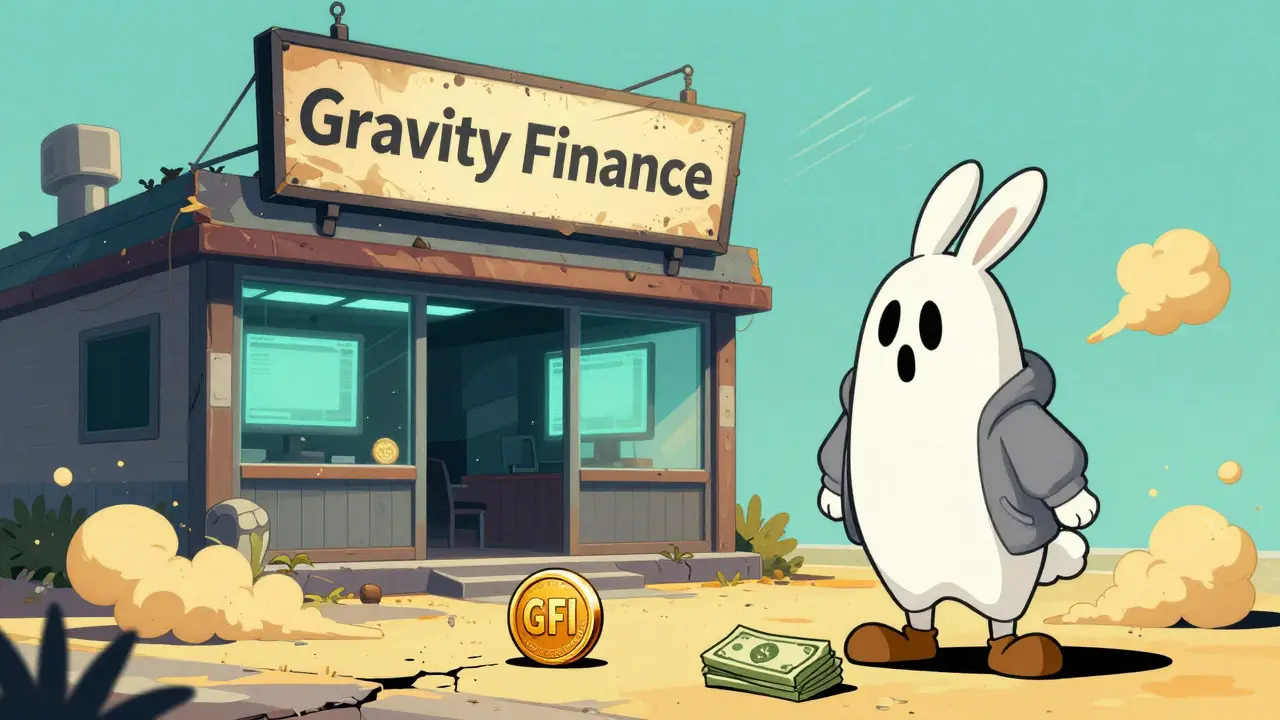
When you're looking for a new crypto exchange, you want volume, liquidity, and security. Gravity Finance doesn't deliver on any of those in a meaningful way. Launched in 2021, it’s a tiny decentralized exchange (DEX) operating on the Sonic network through Equalizer, with just 7 coins and 8 trading pairs. Most of its daily trading volume adds up to less than $150 across all pairs. That’s not a mistake - it’s the reality.
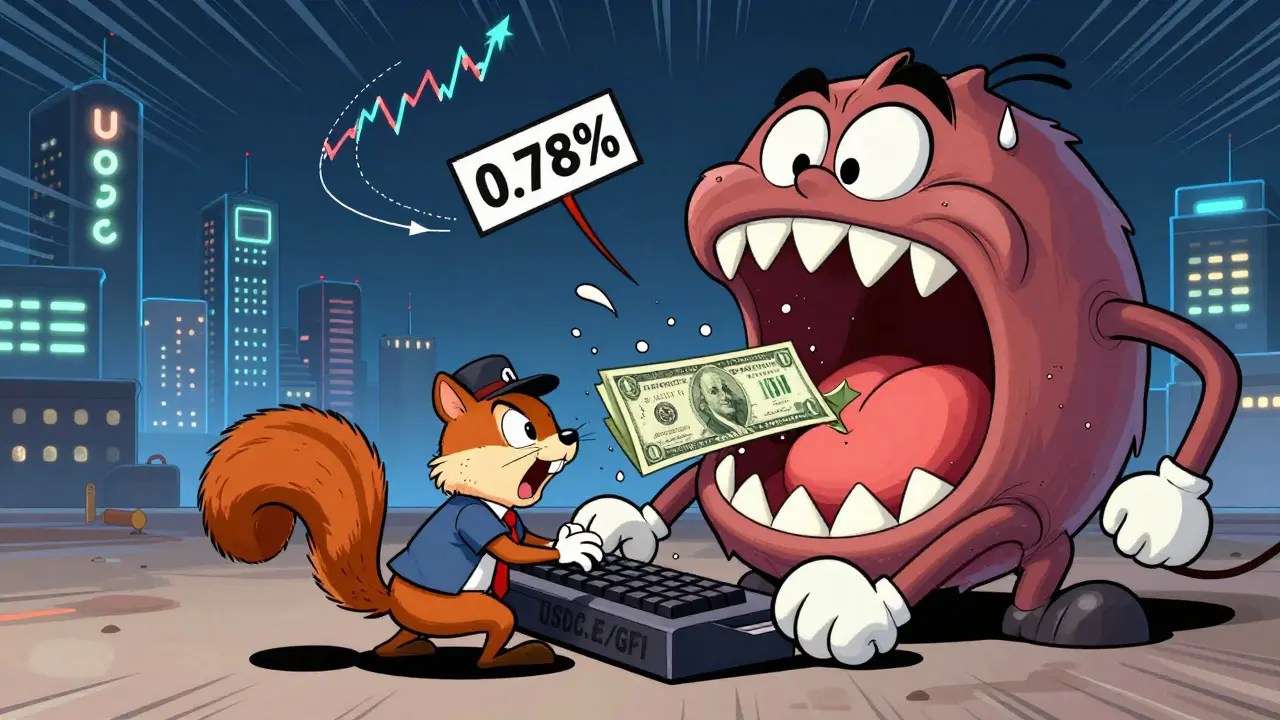
If you’re used to trading on Uniswap or PancakeSwap, where millions flow daily, Gravity Finance feels like a ghost town. The biggest pair, USDC.E/GFI, trades around $20 a day. The smallest? Sometimes under $10. For context, even the tiniest pair on Uniswap does more in five minutes than Gravity Finance does in a full day.
Price spreads are wide - between 0.69% and 0.78% on most pairs. That means if you buy GFI at $0.02, you might need to sell at $0.0201 just to break even after fees. Slippage is high because liquidity pools are shallow. For a $100 trade, you could lose $0.50 or more just from price movement before your order fills. That’s not trading - it’s gambling with extra steps.
The native token, GFI, is the only asset that matters here. It’s listed on a few small DeFi platforms, but outside of Gravity Finance, it’s nearly invisible. Market data is messy. Some sites list GFI with a $2 million market cap. Others show nothing. CoinCodex calls sentiment neutral, but that’s only because there’s not enough data to call it anything else. No major wallet supports it. No aggregator routes trades through it. No analytics tool tracks it meaningfully.
Why Gravity Finance Exists - And Why It Might Not Last
There’s no public roadmap. No team bios. No audit reports. No blog. No Twitter updates. No Discord community with more than a few dozen active members. It’s not that the project is secretive - it’s that it’s abandoned. Most DeFi projects that survive beyond two years have clear goals: new features, partnerships, tokenomics upgrades, governance votes. Gravity Finance has none of that.
It’s possible this was an experimental project from a small team that lost momentum. Or maybe it was meant to serve a niche on the Sonic network that never materialized. Either way, it’s not growing. It’s not improving. It’s just sitting there, barely trading.
Compare that to SushiSwap, which launched around the same time. SushiSwap has hundreds of trading pairs, millions in daily volume, and an active governance system where users vote on upgrades. Gravity Finance? No governance. No votes. No upgrades. Just a smart contract running on autopilot with almost no users.
Security and Transparency: A Black Box
You can’t assess security if you don’t know what you’re using. Gravity Finance doesn’t publish smart contract audits. No CertiK, no Hacken, no PeckShield reports. No GitHub activity. No release notes. If something goes wrong - a bug, a hack, a drained pool - there’s no public record of how it was handled, or even if it was handled at all.
That’s a red flag. Even the smallest DeFi projects usually get audited before launch. Gravity Finance didn’t. That means you’re trusting code no one has verified. That’s risky, especially when you’re dealing with tokens that have no real market value.
There’s also no information about team members. No LinkedIn profiles. No interviews. No past projects. In DeFi, anonymity isn’t always bad - but silence is. When a project refuses to answer basic questions about its team or tech, it’s not privacy - it’s avoidance.
Tax Implications: You Still Owe the IRS
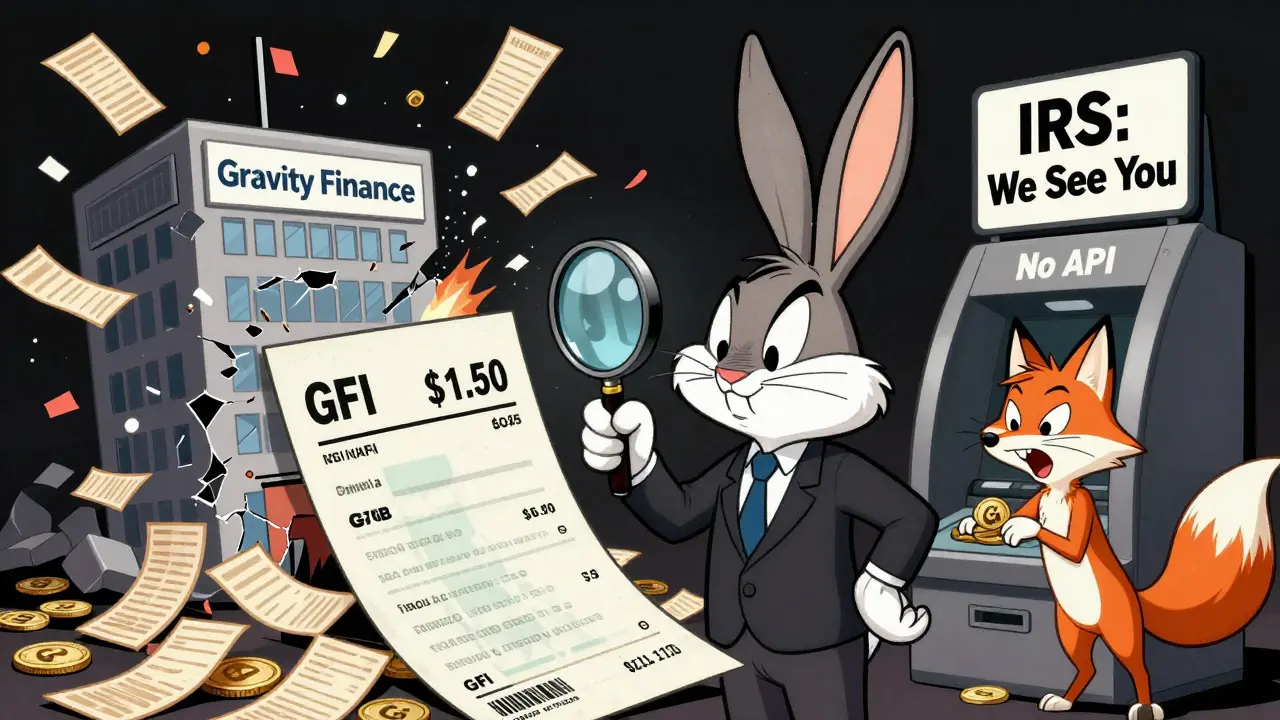
Even if Gravity Finance is dead, your trades there aren’t. CryptoTaxCalculator explicitly lists Gravity Finance as a platform that generates taxable events. That means every swap, every liquidity deposit, every withdrawal counts. You need to track every transaction - even if it’s just $1.50 worth of GFI traded for WS.
Most users don’t realize this. They think if the exchange is small, the IRS won’t care. That’s wrong. The IRS doesn’t care how big the exchange is - they care about your gains. If you made $500 in profit trading GFI on Gravity Finance, you owe taxes on it. No exception.
There’s no API. No CSV export. No built-in tax reporting. You’ll need to manually log every trade or use a third-party tool that supports obscure DEXes. That’s a pain - and if you’re not careful, you’ll end up underreporting and risking penalties.
Who Should Even Use This Exchange?
Realistically? No one. Not unless you’re doing one of two things:
- You’re a researcher studying micro-cap DeFi projects and want to observe how low liquidity affects trading behavior.
- You’re speculating on GFI with money you’re willing to lose entirely - and you understand the risks.
If you’re looking to trade crypto efficiently, save on fees, or earn yield, Gravity Finance is the wrong place. You’ll pay more in slippage than you’d save on gas. You’ll wait hours for a trade to fill. You’ll have no customer support if something breaks.
There are better alternatives. If you’re on Sonic, try Equalizer directly - it has more volume and better documentation. If you want a general-purpose DEX, use Uniswap or PancakeSwap. They’re safer, faster, and have 100x the liquidity.
What’s Missing: The Big Picture
Gravity Finance doesn’t just lack features - it lacks purpose. Most successful DEXes solve a problem: Uniswap made automated market making simple. SushiSwap added yield farming. Curve focused on stablecoins. Gravity Finance? It doesn’t solve anything. It just exists.
There’s no unique value. No innovation. No reason to choose it over another platform. Even its integration with Equalizer isn’t special - Equalizer itself is a minor aggregator on Sonic. Gravity Finance doesn’t enhance it. It just sits on top of it, barely noticeable.
And in DeFi, visibility equals survival. If no one knows you exist, no one will use you. If no one uses you, liquidity dies. If liquidity dies, the exchange dies. Gravity Finance is already on that path.
Final Verdict: Don’t Risk It
Gravity Finance is a ghost exchange. It’s not scammy - it’s just dead. No updates. No community. No volume. No security transparency. No future.
There’s no reason to deposit funds here. No reason to trade here. No reason to hold GFI unless you’re betting on a miracle revival - and even then, the odds are near zero.
If you’re curious about DeFi, explore projects with real traction. If you’re looking to trade, use platforms with volume. If you’re trying to stay compliant, avoid exchanges that make tracking impossible.
Gravity Finance isn’t the future of crypto. It’s a footnote.
Is Gravity Finance a scam?
No, Gravity Finance isn’t a scam in the traditional sense - there’s no evidence of a rug pull or stolen funds. But it’s effectively abandoned. No team updates, no audits, no liquidity growth, and no user base. It’s not malicious - it’s just inactive. That makes it just as dangerous for users who expect reliability.
Can I earn yield on Gravity Finance?
There’s no evidence of yield farming, staking, or liquidity mining on Gravity Finance. The platform appears to be a basic spot exchange only. Even if you add liquidity to a trading pair, there’s no reward system documented. Don’t expect passive income - you’ll just lock up your assets with no return and high risk of impermanent loss.
What wallets work with Gravity Finance?
Gravity Finance runs on the Sonic network, so you’ll need a wallet that supports Sonic, like Sonic Wallet or MetaMask with Sonic RPC added. However, even with the right wallet, you’ll struggle to find GFI or other tokens listed. Most wallets don’t even show GFI as a supported asset. You’ll need to manually add token contracts, which increases risk.
Is GFI worth buying as an investment?
Almost certainly not. GFI has no utility beyond trading on Gravity Finance, which has almost no volume. Its market cap is unclear, and there’s no roadmap for growth. Even if the price spikes briefly due to speculation, it will likely crash back to near zero. Treat GFI like a lottery ticket - not an investment.
Why does CryptoTaxCalculator list Gravity Finance?
Because users have made trades there, and those trades are taxable. The IRS and other tax agencies don’t care if an exchange is small - they care if you made a profit. Gravity Finance generates transaction records, even if they’re hard to export. That’s why tax tools include it: to help users report accurately, not to endorse the platform.
Are there better alternatives to Gravity Finance?
Yes. On the Sonic network, try Equalizer directly - it has more liquidity and better documentation. For broader DeFi access, use Uniswap (Ethereum), PancakeSwap (BSC), or SushiSwap (multi-chain). These platforms have millions in daily volume, active communities, regular audits, and clear tax reporting tools.
Jack and Christine Smith
January 2, 2026 AT 10:27Ugh this is why I quit trading on niche DEXes. I lost $40 on GFI trying to flip it and the slippage ate half my profit before the trade even confirmed. Wasted my whole afternoon. Never again.
Jackson Storm
January 3, 2026 AT 03:12Yea I checked this out last month thinking it was a hidden gem. Turned out it was a digital ghost town. Even my wallet couldn’t auto-detect GFI. Had to manually paste the contract and still got a warning from MetaMask. Not worth the headache.
Raja Oleholeh
January 4, 2026 AT 08:42Prateek Chitransh
January 5, 2026 AT 14:42Oh wow, so Gravity Finance is the crypto equivalent of that one diner on the highway that’s been closed since 2018 but still has a flickering neon sign? Cute. I love how people still wander in hoping the coffee’s hot.
Michelle Slayden
January 6, 2026 AT 11:05It is, indeed, a profound illustration of market failure in decentralized finance: the absence of network effects, coupled with a complete lack of governance infrastructure, renders the platform functionally inert. One cannot optimize for liquidity where no participants remain.
christopher charles
January 6, 2026 AT 15:39Bro, I tried to swap 5 bucks of USDC for GFI and it took 12 minutes to confirm. 12 minutes. And I lost $0.80 in slippage. I could’ve bought a coffee and still had change left. This isn’t DeFi-it’s DeFi-slow.
Vernon Hughes
January 8, 2026 AT 12:02Amy Garrett
January 9, 2026 AT 06:44I thought I found a diamond in the rough!! Turns out it was just a dusty rock someone left in the desert. GFI is a vibe not a coin 😭
Haritha Kusal
January 10, 2026 AT 10:45its sad but true... i still hold some gfi just in case it wakes up one day 🤞 maybe its just sleeping?
dayna prest
January 10, 2026 AT 11:38Calling this a ghost exchange is generous. It’s more like a crypto graveyard with a sign that says ‘Free Tokens! (Terms and Conditions: Your Assets Are Now Property of the Void)’.
Brooklyn Servin
January 11, 2026 AT 00:48I actually did a deep dive on this after reading the post. Checked the blockchain. Every single liquidity pool has been inactive for over 11 months. Even the gas fees paid to initiate trades are higher than the value of the tokens being swapped. This isn’t broken-it’s been decommissioned. And yes, the tax implications are real. I filed my 2023 return with 37 GFI trades. All under $5. All taxable. All a nightmare to log.
Phil McGinnis
January 12, 2026 AT 20:31Western crypto enthusiasts suffer from a pathological need to ‘innovate’-but innovation without execution is just noise. Gravity Finance is not a failure of technology. It is a failure of ambition. And ambition, in this context, is a moral failing.
Ian Koerich Maciel
January 12, 2026 AT 22:07Man... I remember when I first saw this thing. Thought it was a new Sonic experiment. Checked it again last week. Still the same. Still zero updates. Still no one in the Discord. It’s like watching a plant die in slow motion. You just... don’t water it anymore.
Andy Reynolds
January 13, 2026 AT 03:31Honestly? If you’re into micro-DEXes for research, this is a goldmine. You can literally watch liquidity evaporate in real time. It’s like a live economics experiment. But for trading? Nah. I’d rather use a toaster to swap tokens.
Rick Hengehold
January 13, 2026 AT 10:52Brandon Woodard
January 15, 2026 AT 04:37Let me be clear: Gravity Finance isn’t dead. It’s in a coma. And the doctors? They’ve all quit. The machines are still beeping. But no one’s coming back to turn them off.
Antonio Snoddy
January 16, 2026 AT 22:02You know what’s tragic? Not that Gravity Finance exists... but that someone, somewhere, still believes it might matter. We’re all just atoms in a cosmic simulation, right? And here we are, arguing over a smart contract that’s been abandoned by its creators, by its users, by time itself. Is this the future of finance? Or just the echo of a dream that never had legs to begin with?
Ryan Husain
January 18, 2026 AT 04:02Thank you for this thorough breakdown. I’ve been hesitant to comment on this because I didn’t want to sound alarmist. But you’ve articulated exactly what I’ve seen: a project that lost momentum, and the market responded by ignoring it. That’s not a scam. It’s a lesson.
Rajappa Manohar
January 19, 2026 AT 07:37