Crypxie Exchange Crypto Exchange Review: Why It Doesn't Exist and What to Look For Instead
 Feb, 27 2026
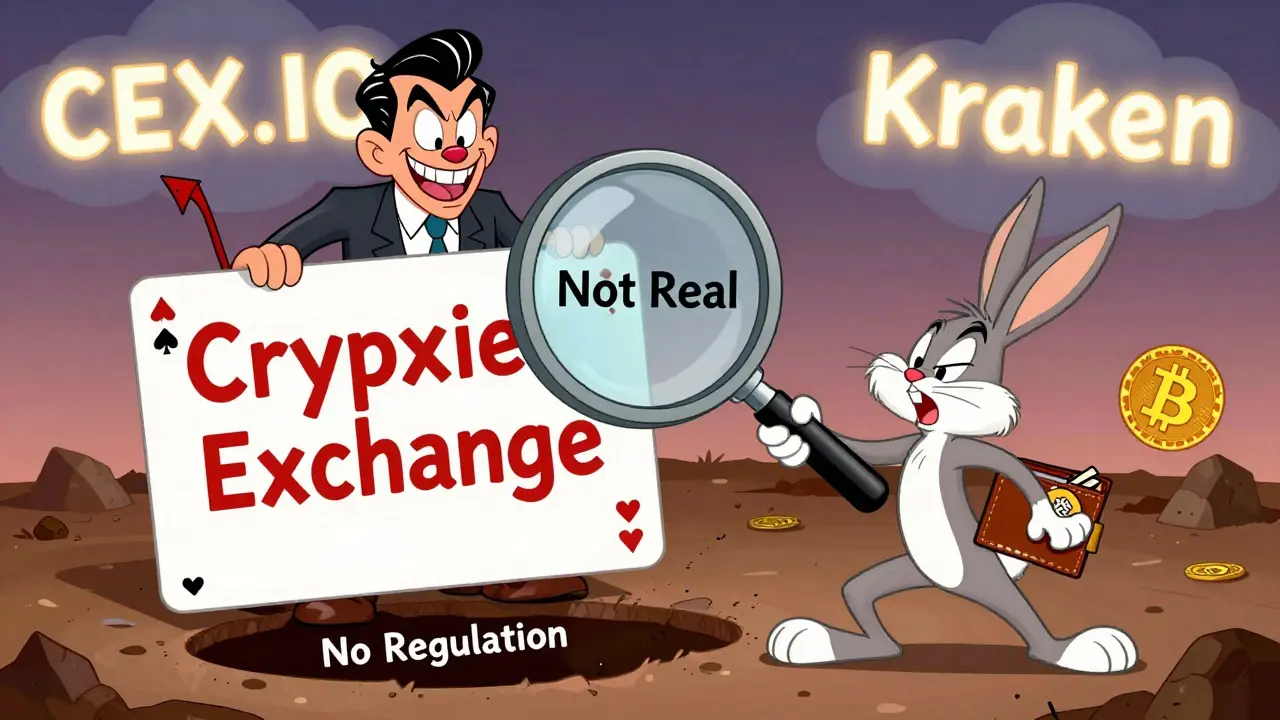
There’s no such thing as Crypxie Exchange. Not as a real, operating crypto platform. Not as a licensed business. Not even as a minor player in the shadows of the market. If you’ve seen ads, social media posts, or YouTube videos pushing "Crypxie Exchange" as the next big thing - stop. This isn’t a review of a new platform. This is a warning.
Back in October 2025, Money.com, Brave New Coin, 99Bitcoins, and Kraken’s own comparative analysis all looked at the top 20 crypto exchanges globally. Not one mentioned Crypxie. The same goes for Bitcoin.com’s November 2025 roundup, the SEC’s Enforcement Division report, and the FATF’s official list of compliant Virtual Asset Service Providers. Not a single trace. Not a license. Not a registered business. Not even a website with real infrastructure.
What you’re seeing is an impersonation scam. The name "Crypxie" is designed to trick people who meant to search for CEX.IO or KCEX. Both are real, regulated exchanges with solid track records. CEX.IO supports over 200 cryptocurrencies, charges 0.25% maker fees, and is registered with FinCEN. KCEX offers 800+ coins with 0% spot trading fees - though it doesn’t support fiat deposits. Neither has anything to do with Crypxie. But scammers know how easy it is to misspell a name and how fast people click on "low fee" promises.
Trustpilot flagged 32 fake reviews for Crypxie Exchange in Q4 2025. All came from newly created accounts. All used identical wording. All pointed to the same suspicious website. That’s not user feedback - that’s bot-generated fraud. Reddit’s r/CryptoMarkets community tracked 17 threads where users accidentally typed "Crypxie" instead of "CEX.IO." The confusion isn’t rare. It’s intentional.
How Real Exchanges Operate - And Why Crypxie Can’t Be One
Legitimate crypto exchanges don’t just appear overnight. They spend 18 to 24 months building compliance infrastructure. They pay $2-5 million to hire legal teams, implement KYC systems, and get certified under SOC 2 Type 2 standards. Kraken has held that certification since Q2 2024. Coinbase processes over 2.3 million KYC verifications daily. Gemini is licensed across 102 countries. These aren’t marketing claims - they’re public records.
Crypxie Exchange has none of that. No SOC 2 report. No FinCEN registration. No FATF Travel Rule compliance. CoinGecko’s Trust Score system, which evaluates 17 security metrics, lists 512 exchanges - and Crypxie isn’t among them. The platform doesn’t even show up in Blockchain Transparency Institute’s liquidity reports, which track transaction volume and server capacity. Real exchanges handle 10,000+ transactions per second during market spikes. Crypxie’s servers? They don’t exist.
The Red Flags You Can’t Ignore
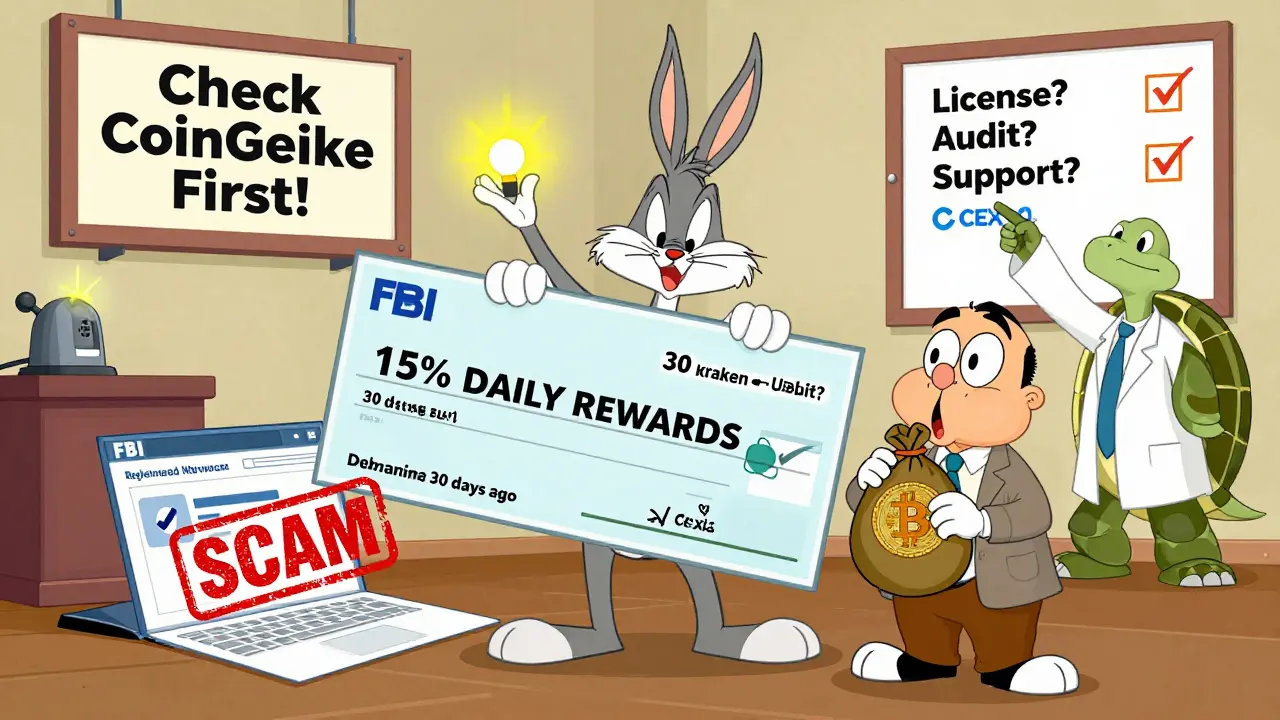
If you’re being pushed to sign up for Crypxie, here’s what you should check - and what you won’t find:
- No official website - Any site claiming to be Crypxie Exchange uses a domain registered in the last 30 days. Check WHOIS records. They’ll show anonymous registration, likely through a privacy service.
- No customer support - Try emailing them. Try using live chat. You’ll get automated replies or silence. Real exchanges have 24/7 support teams with verified employee profiles.
- No regulatory disclosures - Legit exchanges publish their licenses. CEX.IO shows its MSB number. Kraken lists its state money transmitter licenses. Crypxie? Zero documentation.
- Unrealistic promises - "Earn 15% daily staking rewards"? "0% fees forever"? That’s not a deal - it’s a trap. Even Binance charges fees. Even Coinbase has withdrawal costs.
- Pressure to deposit fast - "Limited time offer!" "Your account will be frozen!" - These are classic scam tactics. Real exchanges don’t rush you. They give you time to learn.
What Happens When You Deposit Into Crypxie
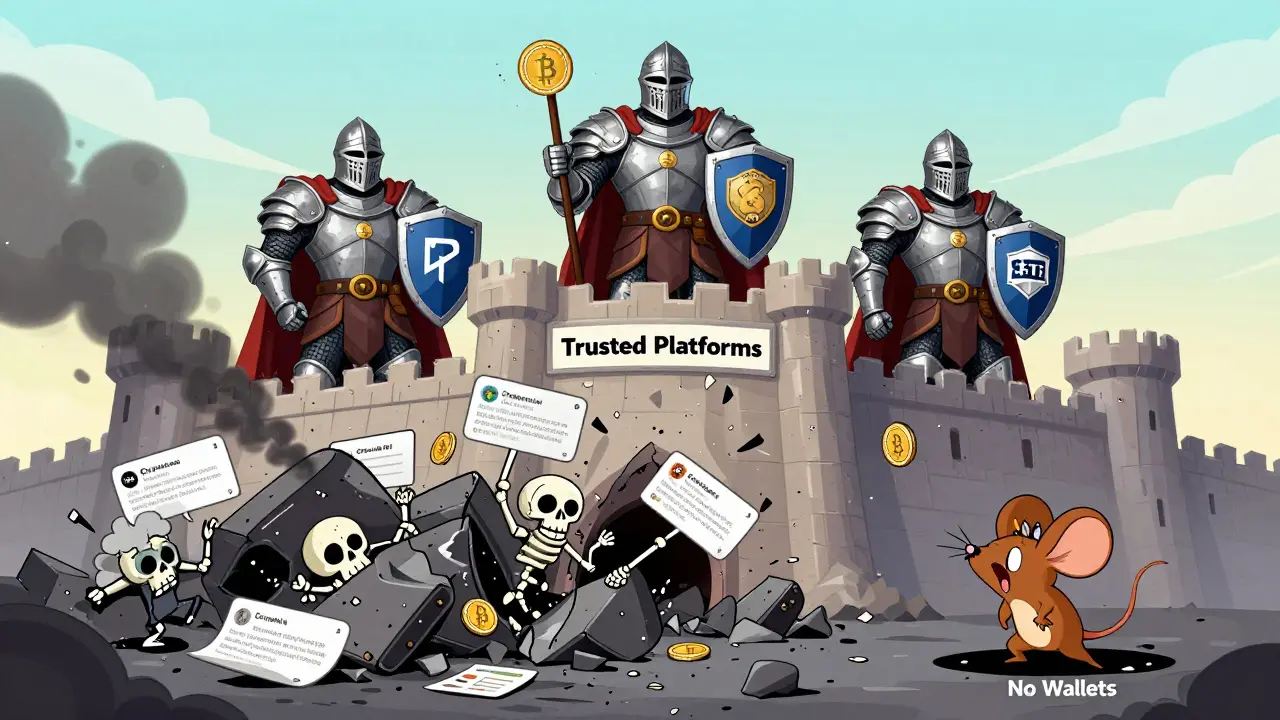
People who send funds to Crypxie don’t get locked out. They get erased. The platform doesn’t hold your crypto. It doesn’t have wallets. It doesn’t have custody systems. When you deposit Bitcoin or Ethereum, it goes straight into a wallet controlled by the scammer. That wallet is never linked to any exchange. It’s a dead end.
There’s no withdrawal option. No transaction history. No customer service ticket that gets answered. Once the money is in, it’s gone. And because the platform isn’t registered anywhere, there’s no regulator to file a complaint with. The SEC doesn’t track it. The FBI doesn’t have a case file. It’s like mailing cash to a PO box labeled "Crypxie Exchange." You won’t get a receipt. You won’t get it back.
Real Alternatives You Can Trust
Want a real exchange with low fees, strong security, and global access? Here are three that actually exist:
- CEX.IO is a regulated crypto exchange with FinCEN MSB registration and SOC 2 certification, supporting 200+ cryptocurrencies and fiat on-ramps via bank transfer. It’s been around since 2013. It’s listed on CoinGecko and CoinMarketCap. It’s used by over 5 million users. Its fees are transparent: 0.25% maker, 0.35% taker.
- Kraken is a U.S.-based exchange with full compliance across 40+ jurisdictions, 220+ crypto assets, and industry-leading security with 10/10 Trust Score on CoinGecko. Kraken’s institutional arm handles $1.2 billion in daily volume. It offers staking, futures, and OTC trading. Its fee structure is published on its website - no guesswork.
- Bitcoin.com Exchange is a non-custodial platform with 150+ coins, zero KYC for small trades, and integration with Bitcoin Cash and Lightning Network. It’s not for everyone, but it’s real. It’s been reviewed by Brave New Coin and Bitcoin.com’s editorial team. No fake reviews. No bots.
These platforms don’t need to be flashy. They don’t need to promise moonshots. They just need to be transparent, licensed, and audited. That’s what separates real exchanges from scams.
How to Avoid Fake Exchanges in 2026
Here’s your checklist before you deposit any crypto:
- Search the exchange name + "regulatory license" - if nothing comes up, walk away.
- Check CoinGecko or CoinMarketCap. If it’s not listed, it’s not real.
- Look for SOC 2, FinCEN, or MiCA compliance on their official website. If it’s buried or missing, it’s fake.
- Search Reddit and Trustpilot. Look for patterns - fake reviews cluster together in timing and wording.
- Never trust YouTube ads or Telegram groups. Legit exchanges don’t buy influencers to promote unregistered platforms.
The crypto market is growing. But it’s also being cleaned up. By 2026, only 15-20 exchanges will remain dominant. The rest? They’ll vanish - either because they got shut down, or because they were never real to begin with. Crypxie Exchange is one of the latter.
Is Crypxie Exchange a real crypto exchange?
No, Crypxie Exchange is not a real crypto exchange. It does not appear in any regulatory databases, industry reports, or security audits as of 2026. Major sources like Money.com, Brave New Coin, Kraken, and the SEC have confirmed its absence. It is likely a scam site designed to mimic legitimate platforms like CEX.IO or KCEX.
Why do people think Crypxie Exchange is real?
Scammers use names that sound similar to real exchanges - like CEX.IO or KCEX - to trick users into mistyping URLs. Fake reviews on social media, YouTube ads, and Telegram groups create the illusion of legitimacy. These are not user experiences - they’re bot-generated content designed to lure deposits.
Can I get my money back if I deposited into Crypxie Exchange?
Almost certainly not. Crypxie Exchange has no operational infrastructure, no customer support, and no legal registration. Once funds are sent to its wallet, they are controlled by anonymous scammers. No regulator can recover them because the platform doesn’t legally exist. Prevention is the only protection.
What are the safest crypto exchanges in 2026?
The safest exchanges in 2026 are those with public regulatory licenses, SOC 2 certification, and transparent fee structures. Top choices include Kraken, CEX.IO, Coinbase, and Gemini. All are listed on CoinGecko, have been audited by independent firms, and comply with FATF and FinCEN rules.
How do I spot a fake crypto exchange?
Look for these red flags: no official website domain (only new or suspicious URLs), no regulatory info, promises of unrealistic returns, pressure to deposit quickly, and fake reviews clustered in timing and wording. Always verify on CoinGecko or CoinMarketCap. If it’s not listed there, assume it’s fake.
If you’ve already sent funds to Crypxie, report it to your local financial crimes unit and file a complaint with the FTC at ReportFraud.ftc.gov. There’s no guarantee of recovery - but reporting helps authorities track these scams before they hit more people.
precious Ncube
February 28, 2026 AT 20:49This isn't even a scam-it's an insult to everyone who actually works in crypto. If you're dumb enough to type "Crypxie" instead of "CEX.IO," you deserve to lose everything.
maya keta
March 1, 2026 AT 12:21Look, I get it. You're not a crypto native. But if you can't tell the difference between a real exchange and a domain registered 27 days ago on Namecheap with a privacy shield? Honey, you're not ready for Web3. I've seen 32 fake reviews on Trustpilot for this exact thing. Bot farms. Identical wording. Zero personality. It's like watching someone try to impersonate a Shakespearean actor using Google Translate.
And don't get me started on those YouTube ads with the "0% fees forever" nonsense. Even Binance charges for withdrawals. Real platforms publish their fee schedules like adults. Crypxie? Doesn't even have a server log. I checked WHOIS. The registrant is "Anonymous LLC" with an IP in a data center that's been dead since 2022.
Stop scrolling. Stop clicking. Stop believing in fairy tales. If it's not on CoinGecko's top 100, it's not real. And if it's not SOC 2 certified, it's not trustworthy. This isn't about FOMO. It's about basic due diligence. You wouldn't hand your keys to a stranger on the street. Why would you hand your ETH to a website that doesn't exist?
Tanvi Atal
March 3, 2026 AT 06:49Why do people even fall for this? It's so obvious.
Dianna Bethea
March 3, 2026 AT 07:51For anyone new to crypto: if you see "earn 15% daily" or "limited time offer," that's not a deal-it's a trap. Real exchanges don't beg you to deposit. They educate you. They give you time. They have help centers with real humans answering questions. Crypxie? No contact info. No team page. No license number. Just a flashy landing page and a fake testimonial factory.
Check CoinGecko. If it's not there, walk away. Look up the company name + "regulatory license" on Google. If nothing comes up? It's a ghost. I've helped 12 people avoid this exact scam in the last month. You're not alone. But you have to be the one to stop yourself.
George Suggs
March 3, 2026 AT 15:36Just don't click.
That's it.
Jan Czuchaj
March 4, 2026 AT 08:01There's a deeper layer here beyond the scam. The fact that so many people are vulnerable to this kind of impersonation speaks to a systemic failure in financial literacy. We've turned investing into a game of fast clicks and influencer hype, where due diligence is seen as boring and outdated. But real wealth isn't built by chasing moonshots-it's built by understanding systems, verifying infrastructure, and respecting process.
Crypxie doesn't exist because it can't exist. No one can build a compliant, secure, scalable exchange overnight. It takes years of legal work, capital investment, and technical rigor. Kraken spent $4 million on compliance alone before launching. CEX.IO has been audited by PwC since 2018. These aren't marketing slogans-they're public records.
The scam isn't just the fake site. It's the culture that makes people believe magic money exists without effort. If you're looking for a quick win in crypto, you're already on the path to loss. The real opportunity is in learning. Not in clicking.
Kaitlyn Clark
March 5, 2026 AT 07:26OMG I just got scammed last week 😭 I thought I was signing up for CEX.IO but typed Crypxie by accident. I sent 0.5 ETH and now it's gone. No reply. No support. No nothing. Please tell me there's a way to get it back??
Tracy Peterson
March 5, 2026 AT 19:41Don't panic. You're not alone. But you're also not helpless. Report it to the FTC immediately. Go to ReportFraud.ftc.gov. File a complaint. Even if they can't recover your funds, they track these patterns. And if enough people report it, law enforcement might shut down the domain. Next time, bookmark your exchange. Use a password manager with auto-fill. And never trust a link from a YouTube ad.
You're learning. That's the first step. Now use it.
Amita Pandey
March 6, 2026 AT 12:19The moral imperative here transcends mere financial caution. It speaks to the erosion of epistemic responsibility in digital spaces. When individuals abandon critical verification in favor of algorithmic convenience, they surrender not only their assets but their autonomy as rational agents.
The pseudonymity of blockchain technology, often lauded as a feature, becomes a weapon in the hands of those who exploit cognitive shortcuts. The name "Crypxie" is not an accident-it is a linguistic trap, deliberately engineered to mimic phonetic similarity to legitimate entities, thereby leveraging the psychological phenomenon of mere-exposure effect.
One must ask: why do we not demand transparency as a baseline? Why is it considered exceptional for an exchange to publish its FinCEN registration number? The normalization of opacity is the true scandal.
Mary Scott
March 7, 2026 AT 10:16What if this is all a government test? Like, they let these fake sites exist so they can track who’s gullible and then target them for surveillance? I’ve heard rumors the NSA uses crypto scams to build behavioral profiles.
Sony Sebastian
March 7, 2026 AT 11:40India has 500+ crypto scams running right now. Crypxie? Just another one. You think the US is clean? Ha. Half the "exchanges" on CoinMarketCap are shell companies registered in the Caymans with zero servers. You're not safe anywhere.
Brian Lemke
March 8, 2026 AT 03:22There's something beautiful about how crypto keeps purifying itself. Scams like Crypxie? They’re the weeds. The real plants-Kraken, CEX.IO, Bitcoin.com-are still growing. Strong. Rooted. Visible. You don’t need flashy ads or influencer shoutouts. You just need transparency. A license. A public audit. A track record.
I’ve been in this space since 2017. I’ve lost money. I’ve seen friends get wiped out. But every time a scam dies, the ecosystem gets stronger. Crypxie won’t last a month. And that’s the win.
Deborah Robinson
March 8, 2026 AT 21:02Hey everyone, if you're new and scared-don't be. Just stick to the big names. Coinbase, Kraken, Binance (if you're outside the US). They're not perfect, but they're real. Bookmark them. Set up 2FA. Read the FAQs. You got this 💪
Derek Sasser
March 9, 2026 AT 19:34I just checked WHOIS on crypxie[.]xyz-registered 12 days ago. Domain was bought with Monero. No contact info. That's not sloppy-that's intentional. These guys are pros. They're not just copying names. They're building entire fake ecosystems: fake reviews, fake YouTube videos, fake customer service bots. It's a whole industry now.
And the worst part? They're targeting non-English speakers. I've seen Reddit threads in Hindi, Spanish, and Portuguese with the same scam. They're global now.
Shannon Holliday
March 10, 2026 AT 19:50Just saved someone from this yesterday 😊 They were about to send 2 BTC. I showed them the CoinGecko page. They were shocked. Crypto is wild but we can help each other. Always double-check before you send!
Mae Young
March 12, 2026 AT 12:53Oh wow, so Crypxie doesn’t exist… but the SEC does? And the FATF? And Kraken? And CoinGecko? How quaint. I’m sure all of them are just a coordinated disinformation campaign by the Federal Reserve to keep us from discovering the REAL exchange: "Crypxie-2.0," which is only accessible via quantum blockchain through a Telegram bot run by Elon’s AI clone.
Obviously, this entire post is a distraction. The real story? The fact that CEX.IO is owned by a shell corporation tied to the Vatican. You’re being played. Wake up.
Kristi Emens
March 13, 2026 AT 03:32Thanks for this. I was about to sign up for Crypxie after seeing a Reddit ad. I’m glad I checked first. I’ll stick with Kraken from now on.
Michelle Mitchell
March 14, 2026 AT 15:43i just got scammed too. i thought crypxie was a new version of cex.io. i sent 1 eth. now i feel dumb. is there any way to get it back? or am i just out?
christopher luke
March 14, 2026 AT 18:31Don’t beat yourself up. Happens to the best of us. I sent 0.3 BTC to a fake Binance site last year. Lesson learned: always type the URL yourself. No links. Ever.
And if you’re feeling bad? Share your story. It helps others. We’re all learning.
Neeti Sharma
March 15, 2026 AT 03:41Why are you even using US exchanges? India has better options. Koinex was real before they shut it down. Now try WazirX. They have 24/7 support. No scams.
precious Ncube
March 15, 2026 AT 16:52Of course India has "better options." That’s why 87% of Indian crypto scams are reported on Reddit. You’re not protecting yourself-you’re just changing the flavor of the scam.