Carboncoin: What It Is, Why It’s Controversial, and What You Should Know
When you hear Carboncoin, a cryptocurrency designed to represent carbon offset credits or environmental impact. Also known as green crypto, it promises to turn climate action into tradable tokens. But here’s the problem: most Carboncoin projects are either dead, unverified, or built on empty claims. There’s no single official Carboncoin—just a bunch of tokens with similar names, all trying to ride the wave of ESG investing.
What makes these tokens tricky is how they mix real concerns with fake promises. Carbon credits, certified units representing one ton of CO2 reduced or removed from the atmosphere are a legitimate tool used by companies to meet emissions targets. But when someone turns that into a crypto token without real audits, third-party verification, or actual carbon removal, you’re not buying climate progress—you’re buying speculation. That’s why projects like ESG crypto, crypto projects marketed as environmentally responsible often end up in the same category as fake airdrops and ghost tokens. Look at LakeViewMeta or MMS airdrops—they sound promising until you check the trading volume, and find $0 market cap and zero users. Carboncoin projects follow the same pattern: flashy websites, vague whitepapers, and no proof they’re doing what they say.
Real environmental impact in crypto doesn’t come from tokens named after carbon. It comes from networks using less energy, like Cardano or Solana, or from protocols that fund actual reforestation or clean energy projects with transparent ledgers. Even then, you need to dig deeper. Who’s verifying the offsets? Are they certified by Gold Standard or Verra? Or is it just a line in a Discord chat? Most Carboncoin tokens don’t answer these questions. They rely on buzzwords, not data.
If you care about climate change, don’t chase tokens with "carbon" in the name. Look for projects that publish third-party reports, link to verified offset programs, or are built on blockchains with low emissions. The crypto space has enough scams without adding fake greenwashing to the mix. Below, you’ll find reviews of real exchanges, wallet security tips, and honest takes on crypto projects that actually deliver—no greenwashing required.
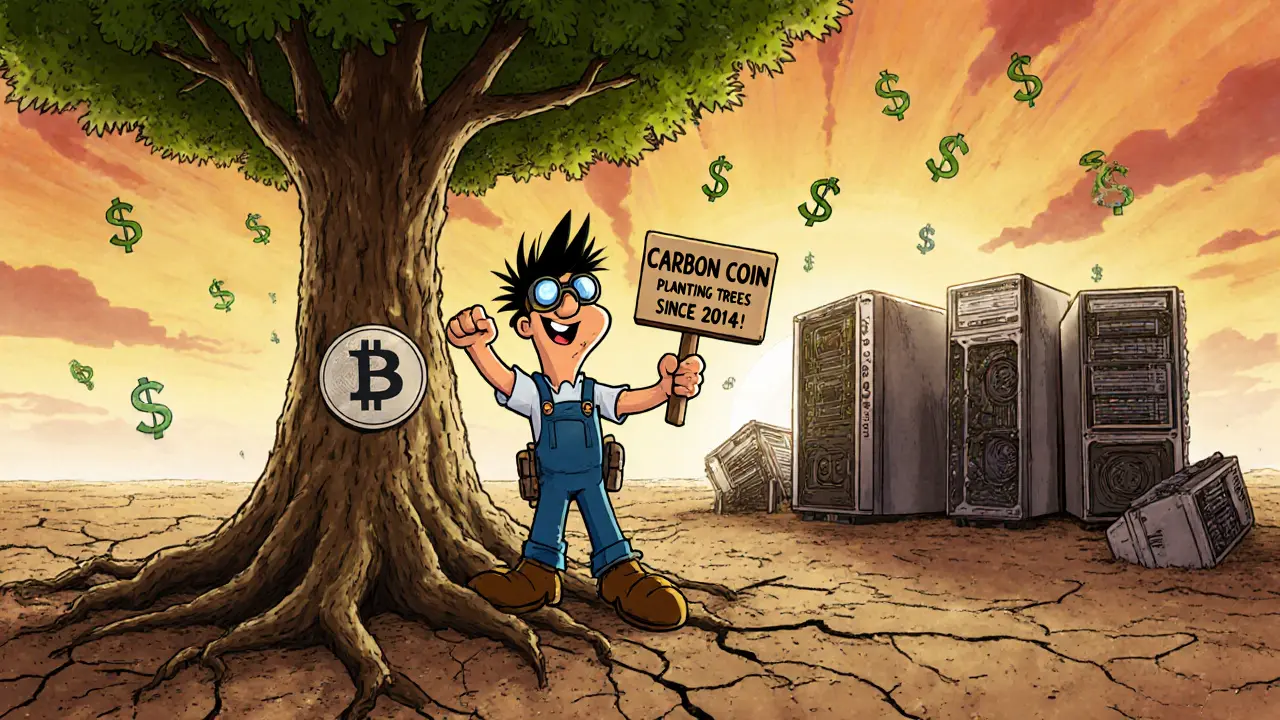
What is Carboncoin (CARBON) Crypto Coin? Facts, Claims, and Reality
Carboncoin (CARBON) claims to be an eco-friendly crypto that plants trees, but has zero trading volume, no community, and no proof of environmental impact. Here's what really happened to it.