ERC-4337 Explained: Account Abstraction and the Future of Crypto Wallets
When you think of a crypto wallet, you probably picture a private key—a long string of letters and numbers that locks your funds. But what if you didn’t need one? That’s the core idea behind ERC-4337, a protocol that enables account abstraction on Ethereum, letting users interact with blockchain apps using smart contract wallets instead of traditional keys. Also known as Account Abstraction, it’s not just a technical upgrade—it’s a rewrite of how people own and use crypto.
Before ERC-4337, every wallet had to be tied to a private key. Lose it, and you lose everything. No recovery. No password reset. No social recovery. ERC-4337 changes that by letting wallets be powered by smart contracts. These contracts can handle logins with email, phone, or even facial recognition. They can set spending limits, auto-pay subscriptions, or require multiple approvals—just like a corporate bank account. This isn’t science fiction. It’s already live on Ethereum, and platforms like Safe and Biconomy are using it to make crypto accessible to people who’ve never held a private key.
ERC-4337 doesn’t replace Ethereum’s existing account system. Instead, it adds a new layer on top. Think of it like adding a user-friendly app interface to a complex backend system. The underlying blockchain stays the same, but how you interact with it? Totally different. And that’s why it matters for smart contract wallets, wallets controlled by code instead of keys, which can be programmed to behave like real-world financial tools. It also connects directly to wallet security, the growing focus on reducing human error in crypto, since 90% of thefts come from lost or stolen keys. With ERC-4337, you can recover your wallet using trusted contacts. You can limit how much you spend in a day. You can even let your wallet auto-pay for gas using stablecoins instead of ETH.
And it’s not just for individuals. DAOs use it to manage multisig funds without complex signing workflows. Apps use it to sponsor gas fees so users don’t need ETH to start. Even institutions are watching closely—because if users don’t need to manage keys, adoption scales faster. That’s why you’ll see ERC-4337 referenced in posts about DeFi onboarding, wallet recovery, and gas fee solutions. It’s the quiet revolution behind the scenes of every new crypto app that says, "Just sign in with Google."
What follows is a collection of real-world stories about crypto’s biggest challenges—and how ERC-4337 is helping solve them. From scams targeting users who don’t understand private keys, to exchanges struggling with onboarding, to institutions looking for compliant ways to enter DeFi—this isn’t theoretical. It’s happening now. And if you’re using crypto in 2025, you’re already feeling the effects of account abstraction—even if you don’t know it yet.
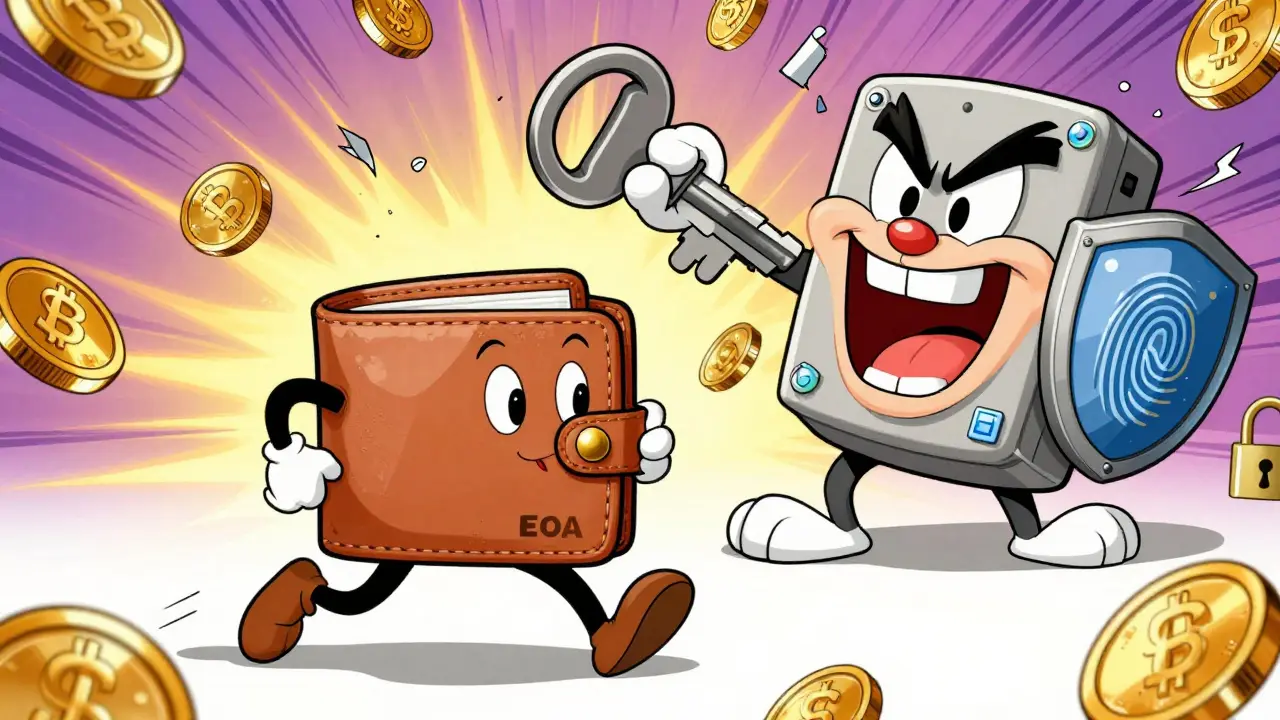
Benefits of Account Abstraction for Smarter, Safer Crypto Wallets
Account abstraction makes crypto wallets smarter, safer, and easier to use by replacing fragile private keys with programmable smart contracts. Learn how it enables social recovery, gas sponsorship, and cross-chain control - and why it’s the key to mass adoption.