Solana TVL: What It Really Means for DeFi and Crypto Investors
When you hear Solana TVL, Total Value Locked on the Solana blockchain, measuring the sum of crypto assets deposited in DeFi apps like lending platforms and exchanges. Also known as total value locked on Solana, it’s the go-to metric for seeing how much real money people trust Solana with—not just speculation, but actual deposits. It’s not a number pulled from thin air. It’s the sum of all tokens locked in smart contracts across DeFi protocols on Solana: staking in lending pools, providing liquidity to DEXs, locking up assets for yield farming. If TVL goes up, it means more people are using Solana’s ecosystem to earn, trade, or save. If it drops, something’s broken—maybe a protocol got hacked, fees got too high, or users found a better place to park their cash.
TVL doesn’t mean much on its own. You have to ask: Compared to what? Solana’s TVL has jumped past Ethereum’s in short bursts, but Ethereum still holds more total value because it’s older, has more established protocols, and attracts institutional money. Solana’s edge? Speed and cost. While Ethereum struggles with $50 gas fees, Solana processes trades for pennies and handles thousands of transactions per second. That’s why DeFi apps like Jupiter, a top decentralized exchange on Solana that aggregates liquidity across multiple DEXs for better prices and Raydium, a liquidity pool and automated market maker built for Solana’s high-speed environment thrive here. They don’t just exist—they get used. Real people, not just bots, are swapping tokens, earning yield, and locking up USDC or SOL because it’s fast and cheap. That’s why TVL on Solana isn’t just a vanity metric—it’s a signal of adoption.
But here’s the catch: TVL can be manipulated. Some protocols inflate numbers by offering absurdly high yields to lure liquidity, then vanish. That’s why you need to look beyond the headline. Is the TVL backed by real, long-term users? Are the tokens locked in the protocol actually useful, or just being moved around for fake rewards? You’ll find both in the posts below—some projects that built real utility on Solana, and others that were just hype machines. Some TVL spikes came from a single airdrop campaign, others from genuine user growth. Some protocols got hacked and lost millions overnight. Others kept growing even when the market crashed. The difference? Real utility. The posts here cut through the noise. You’ll see how Solana TVL behaves under pressure, which DeFi apps actually keep users coming back, and why some projects that looked strong on paper collapsed when the rewards stopped.
What you’ll find here isn’t just data. It’s the real story behind the numbers: who’s using Solana, why they’re staying—or leaving—and what happens when the TVL drops. Whether you’re holding SOL, staking in a DeFi pool, or just trying to understand if Solana is worth your attention, these posts show you what matters—and what’s just noise.
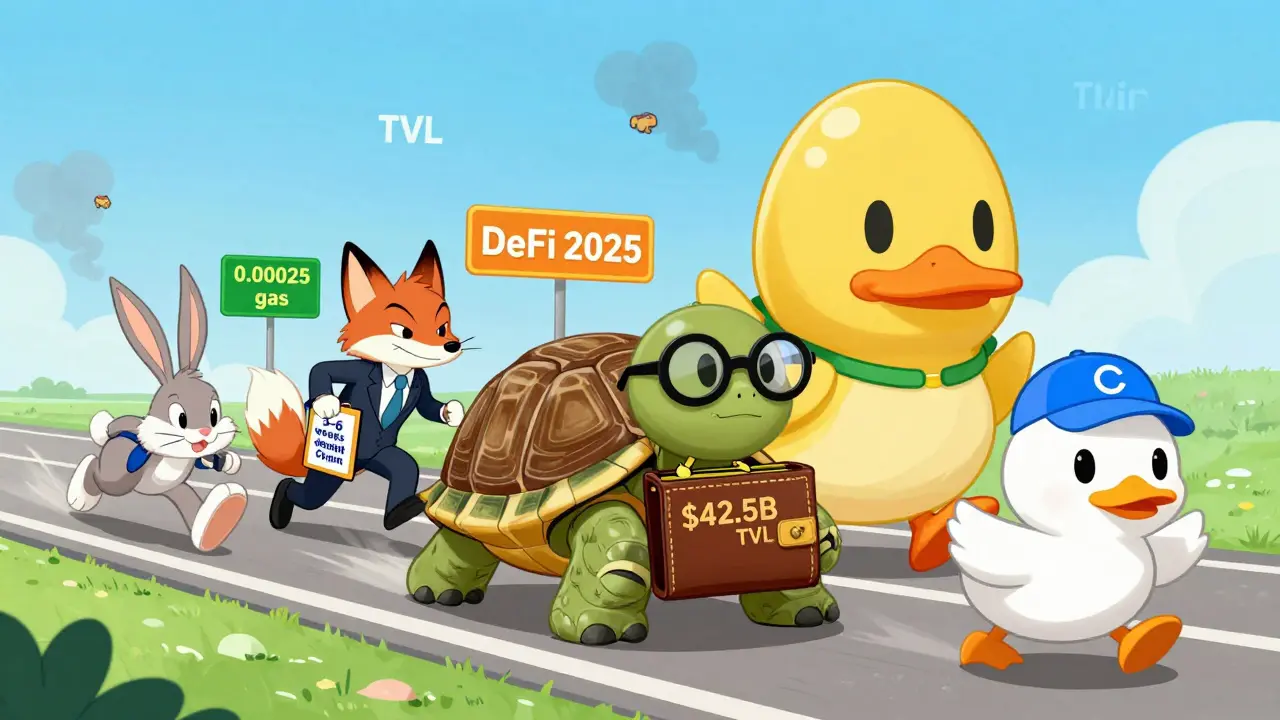
TVL Distribution Across Blockchain Networks in 2025
TVL distribution in 2025 shows Ethereum still leading with $42.5B, but Layer-2s like Base and Solana are gaining fast. Learn how real users, stablecoins, and inflated metrics shape where DeFi money flows.