How to Detect North Korean Crypto Transactions on the Blockchain
 Dec, 14 2025
North Korean Crypto Transaction Tracer
Enter transaction characteristics to see how blockchain intelligence tools like Chainalysis and TRM Labs would detect North Korean laundering patterns:
Based on article details: "flood the zone" technique uses 100+ transactions within 30 minutes across multiple chains
Enter transaction details to see detection confidence level
Between 2017 and 2023, North Korean hackers stole over $3 billion in cryptocurrency. That’s not just a number-it’s the equivalent of funding a nuclear program for years, all through digital theft. The February 2025 hack of Bybit, where $1.5 billion in Ethereum was stolen, wasn’t an anomaly. It was the largest single crypto heist in history-and it was just the latest move in a well-oiled machine. These aren’t lone hackers. They’re state-backed teams with one goal: turn stolen crypto into cash to bypass international sanctions.
How North Korean Hackers Move Stolen Crypto
It doesn’t start with a complex algorithm. It starts with phishing. A single employee clicks a malicious link. A wallet key is stolen. A smart contract is exploited. Then, the real work begins: laundering. The stolen crypto-usually Ethereum or tokens on Binance Smart Chain-gets moved through a series of wallets. Not just a few. Dozens. Hundreds. Each transfer is designed to break the trail. Within hours, the funds are bridged to Solana, then to Bitcoin. Why Bitcoin? Because it’s the most liquid, the most accepted, and the hardest to trace at scale. Hackers don’t rely on old-school mixers like Wasabi Wallet or Tornado Cash anymore. Those are watched. Instead, they use a technique called “flood the zone.” They send thousands of tiny transactions across multiple chains, exchanges, and decentralized bridges in under 30 minutes. It’s not about hiding one transaction-it’s about drowning analysts in noise. In the DMM Bitcoin breach, 4,502.9 Bitcoin-worth $305 million-was stolen. The hackers didn’t just move it once. They shuffled it through 17 different wallets across three blockchains before it hit Huione Guarantee, a Cambodian-based online marketplace linked to a conglomerate known for laundering cybercrime proceeds. This isn’t guesswork. It’s a playbook.What Tools Are Used to Track These Transactions?
There are only a handful of firms that can keep up. TRM Labs and Chainalysis are the leaders. They don’t just watch one chain. They watch them all-Ethereum, Bitcoin, Solana, Binance Smart Chain, Polygon-and the bridges connecting them. Chainalysis Reactor is one of the most powerful tools in the game. Analysts use it to map out transaction graphs. They look for clusters: wallets that send and receive from the same pattern of addresses. They spot the same wallet addresses reappearing after every major hack. They find the footprints left behind-even when the hackers think they’ve erased them. TRM Labs focuses on timing and volume. They’ve noticed that North Korean actors move money faster than anyone else. Their transactions happen in bursts. They use automated scripts to move funds the moment a breach occurs. TRM’s system flags anything that matches the “DPRK signature”: high-frequency transfers, cross-chain swaps within minutes, and movement toward known laundering hubs like Huione or centralized exchanges in Southeast Asia. Both firms use wallet clustering. If 12 different wallets all send small amounts to the same receiving address, and that address then sends to a known North Korean-linked wallet, the system connects the dots. It’s like recognizing a face in a crowd-even if they’ve changed their hair, their coat, and their shoes.Why Traditional Monitoring Fails
Most crypto exchanges and DeFi platforms use basic KYC and AML tools. They check if a wallet is on a sanctions list. That’s not enough. North Korean hackers rarely use wallets that are already flagged. They create new ones daily. Thousands of them. They also avoid centralized exchanges when possible. Instead, they use decentralized bridges and peer-to-peer OTC desks in places like Vietnam, Thailand, and Cambodia. These aren’t regulated. They don’t ask questions. They just move the money-for a fee. Even when a theft is detected, it’s often too late. By the time a blockchain analyst traces the trail, 80% of the funds have already been converted into Bitcoin and moved into cold storage. Some sit untouched for months, waiting for the right moment to be cashed out through underground networks. The FBI’s Internet Crime Complaint Center (IC3) has warned companies: if you handle large volumes of crypto, you’re a target. And if you think your security team is good enough, you’re wrong. North Korean hackers have cracked systems built by Fortune 500 cybersecurity teams. They don’t need zero-day exploits. They just need one careless employee.
What Happens After a Hack?
After the Bybit hack, the FBI attributed the attack to North Korea within 72 hours. How? Because they’d seen this pattern before. The same wallet clusters. The same bridge usage. The same timing. The same end destination: Huione Guarantee. The stolen Ethereum was converted to Bitcoin. Then, the Bitcoin was split into smaller chunks and sent to wallets tied to known DPRK actors. Some of those wallets had been inactive for over a year-until this hack woke them up. That’s the strategy: keep wallets dormant, then reuse them for big operations. DMM Bitcoin shut down completely after its $305 million loss. They didn’t just lose money-they lost trust. Their customers vanished. Their partners pulled out. In crypto, reputation is everything. And once you’re labeled as vulnerable, you’re done.The Bigger Picture: Why This Matters
This isn’t just about crypto theft. It’s about global security. North Korea is under crippling sanctions. Its economy is starved. But its nuclear program? Still funded. Every $100 million stolen in crypto is another missile tested, another submarine built. And the attacks are getting smarter. Recent reports show North Korean teams have been researching cryptocurrency ETFs. That’s not random. They’re scouting the next target: institutional money. Hedge funds. Pension funds. Retirement accounts. If they breach one of those, the scale could be ten times worse than Bybit. The crypto industry can’t afford to ignore this. Exchanges that don’t invest in advanced blockchain intelligence are sitting ducks. DeFi protocols that don’t monitor cross-chain flows are playing Russian roulette. Even small crypto startups are at risk-because a single hack can wipe them out.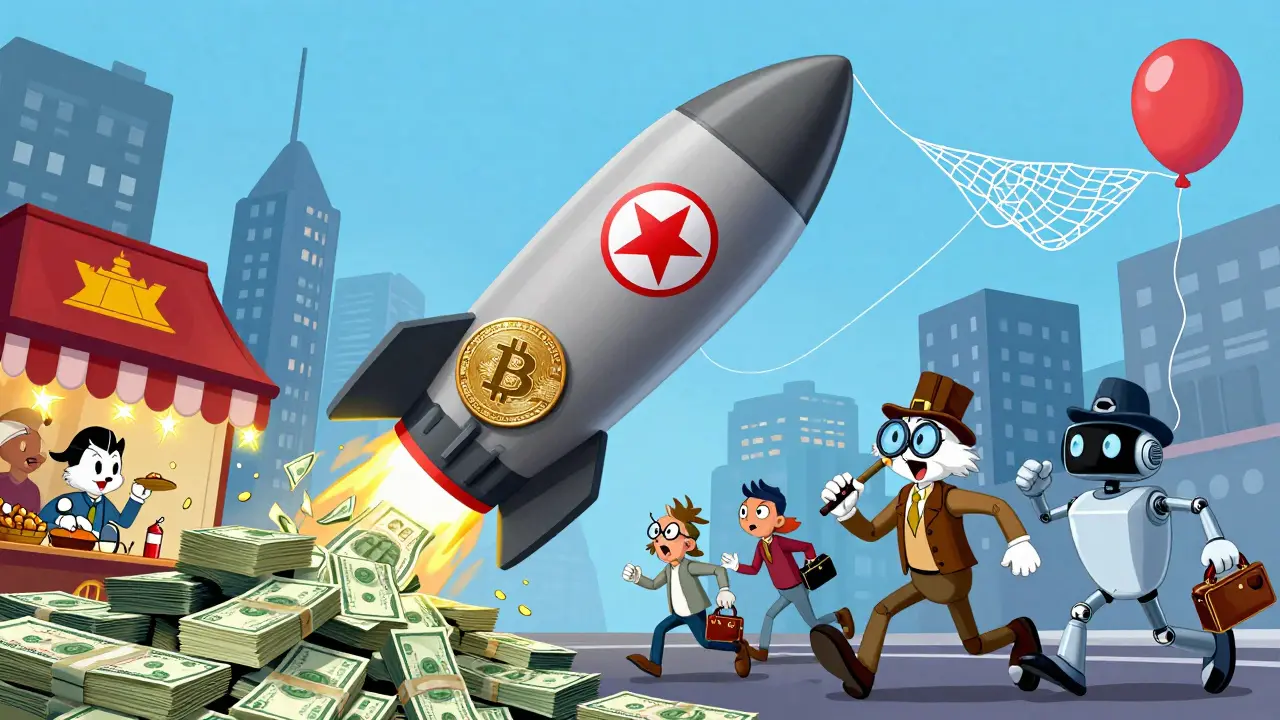
What Can Be Done?
There’s no magic bullet. But there are steps that work:- Use blockchain intelligence platforms like TRM Labs or Chainalysis. Don’t just rely on basic flagging systems.
- Monitor cross-chain activity. If your users are moving funds from Ethereum to Solana to Bitcoin in under an hour, that’s a red flag.
- Track wallet clusters. If the same addresses appear after multiple breaches, flag them-even if they’re not on sanctions lists.
- Work with law enforcement. The FBI and other agencies share threat intel. But you have to reach out first.
- Train your team. Social engineering is the #1 entry point. Phishing simulations, password policies, and multi-signature wallets aren’t optional.
What’s Next?
The next wave of detection won’t just track transactions-it will predict them. AI models are being trained to spot anomalies before a hack even happens. If a wallet suddenly starts sending small test transactions across five chains, that’s not normal. It’s reconnaissance. Some firms are already testing these systems. They’re looking at transaction timing, sender-receiver relationships, and even the language used in smart contract comments. It sounds like science fiction. But in 2025, it’s the only way to stay ahead. North Korea isn’t slowing down. Their hackers are getting better. Their tools are more automated. Their targets are bigger. If the crypto industry doesn’t respond with equal speed and precision, the next $1.5 billion theft won’t be the last. It’ll be the first of many.Can North Korean crypto transactions be fully traced?
Not always-but they can be tracked with high accuracy using advanced blockchain intelligence tools. North Korean hackers use techniques like “flood the zone” to overwhelm analysts, but patterns still emerge. Wallet clustering, cross-chain movement, and timing anomalies help experts link transactions to known DPRK actors. While the final destination may be obscured, the trail from theft to conversion is often visible.
Which blockchains are most targeted by North Korean hackers?
Ethereum and Binance Smart Chain are the most common entry points because they host the most DeFi protocols and centralized exchange tokens. Once stolen, funds are quickly bridged to Solana for faster, cheaper transfers, then converted to Bitcoin for final laundering. Bitcoin is the end goal because it’s the most liquid and hardest to trace at scale.
How do TRM Labs and Chainalysis differ in their detection methods?
Chainalysis focuses on visualizing fund flows with tools like Reactor, mapping out transaction graphs to show how money moves across wallets. TRM Labs specializes in behavioral patterns-timing, volume, and automation. TRM excels at spotting the “flood the zone” tactic, where thousands of rapid transactions overwhelm compliance systems. Together, they cover both the “what” and the “how” of North Korean laundering.
Are mixing services still used by North Korea?
Less so. Traditional mixers like Wasabi Wallet and Tornado Cash are now heavily monitored and sanctioned. North Korean hackers have shifted to speed-based obfuscation: flooding networks with rapid, high-volume transactions across multiple chains. This creates chaos, making it harder for analysts to isolate the stolen funds-not by hiding them, but by drowning them in noise.
Why do North Korean hackers use Huione Guarantee?
Huione Guarantee, linked to a Cambodian conglomerate, acts as a laundering hub. It’s an unregulated online marketplace that accepts cryptocurrency payments and converts them into cash or goods without KYC. It’s been tied to multiple North Korean heists, including the DMM Bitcoin breach. It’s not a bank-it’s a bridge between digital theft and real-world cash.
Can individual crypto users be targeted?
Yes. North Korean hackers target not just exchanges, but wealthy individuals, venture funds, and DeFi investors. They use spear-phishing, fake investment platforms, and compromised wallets. If you hold crypto, especially in large amounts, you’re a potential target. Multi-sig wallets, hardware storage, and avoiding public wallet addresses are essential defenses.
Is there a way to prevent these hacks before they happen?
Not perfectly-but early detection is improving. AI models are now being trained to spot reconnaissance behavior: small test transactions, repeated wallet interactions, and unusual cross-chain activity before a full-scale attack. Exchanges using predictive analytics have reduced breach success rates by up to 40%. Prevention isn’t about stopping every hack-it’s about catching the ones that matter before they’re complete.
Eunice Chook
December 16, 2025 AT 09:26It's not a tech problem. It's a human problem.
And we're all just waiting for the next click.
Ian Norton
December 18, 2025 AT 01:34Nicholas Ethan
December 18, 2025 AT 05:11Stanley Machuki
December 19, 2025 AT 03:51Yeah, it's evil. But also... kinda terrifyingly efficient.
We're not just defending exchanges. We're defending the future.
Kelly Burn
December 20, 2025 AT 04:32These hackers are basically crypto DJs dropping 10k drops in 30 mins. The blockchain is their dancefloor, and analysts are the bouncers trying to count every person who walked in.
Good luck, babes. 🫶
John Sebastian
December 21, 2025 AT 09:26Heath OBrien
December 21, 2025 AT 20:40Taylor Farano
December 23, 2025 AT 17:01Kathryn Flanagan
December 24, 2025 AT 18:17Yes, this feels overwhelming. Yes, the tech is complex.
But you don't need to be a genius to stay safe. Just enable multi-sig. Use a hardware wallet. Don't click random links. That's it.
You got this. I believe in you.
Jessica Eacker
December 24, 2025 AT 19:18Every second they spend shuffling coins through 17 wallets is a second they're not planning the next heist.
Slow them down. That's the game.
Andy Walton
December 25, 2025 AT 23:16Candace Murangi
December 27, 2025 AT 16:53Albert Chau
December 29, 2025 AT 09:09Madison Surface
December 29, 2025 AT 19:02Tiffany M
December 31, 2025 AT 14:28Jessica Petry
January 2, 2026 AT 11:12Scot Sorenson
January 3, 2026 AT 10:55Patricia Whitaker
January 3, 2026 AT 11:54PRECIOUS EGWABOR
January 5, 2026 AT 09:56Caroline Fletcher
January 6, 2026 AT 04:11Kathy Wood
January 6, 2026 AT 19:50Rakesh Bhamu
January 7, 2026 AT 08:28Hari Sarasan
January 7, 2026 AT 19:40