Risk of Crypto Trading for Bangladesh Citizens: Legal, Financial, and Operational Dangers
 Feb, 21 2026
When you live in Bangladesh and think about buying Bitcoin or trading USDT, you're not just taking a financial risk-you're stepping into a legal gray zone where the rules aren't just unclear, they're actively enforced against you. The Bangladesh Bank banned cryptocurrency in 2017, and since then, the government hasn't budged. Not even a little. Even as the world moves toward regulated crypto markets, Bangladesh has doubled down: no mining, no trading, no holding. And yet, people still do it. Thousands of them. Why? Because the money is there, the internet is fast, and the alternatives feel worse. But what happens when you get caught? Or when your local agent disappears with your savings? Or when your bank freezes your account because they suspect you’re trading crypto? This isn’t a hypothetical. It’s happening every day.
Legal Risk: You’re Breaking the Law, Even If No One’s Watching
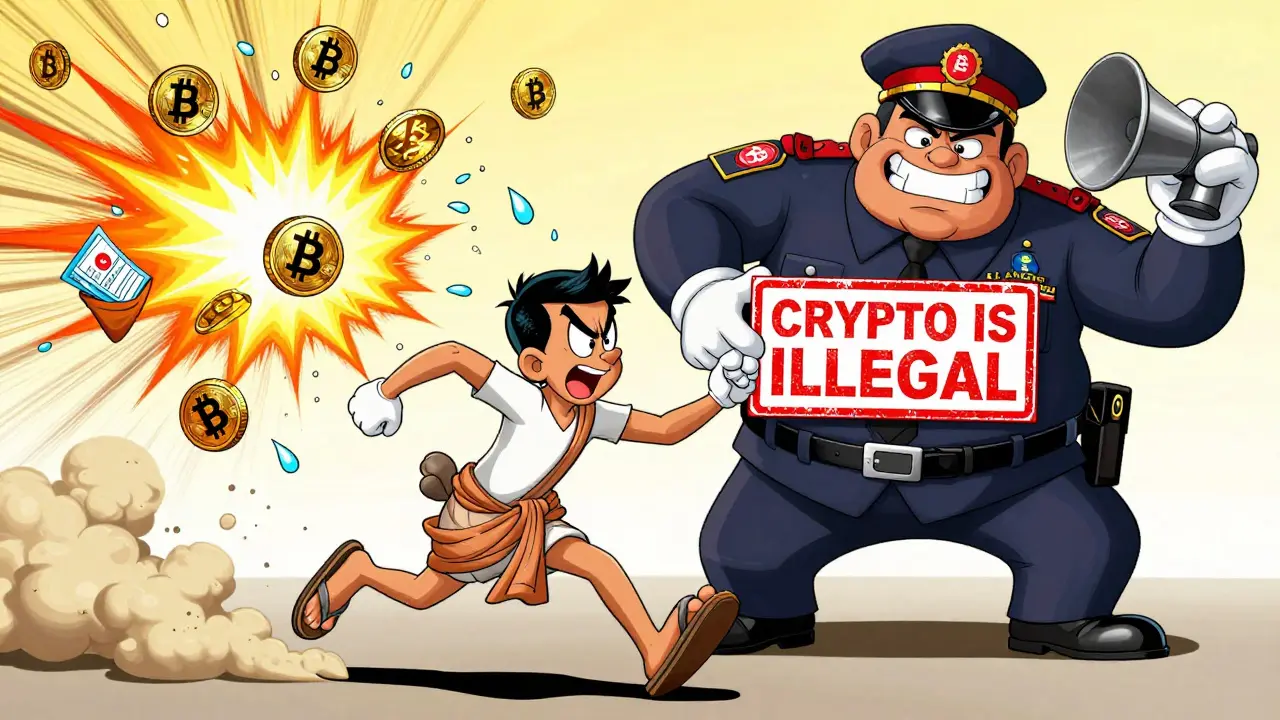
The law in Bangladesh is simple: cryptocurrency is illegal. Not discouraged. Not unregulated. Not gray. Illegal. The Bangladesh Bank’s 2017 circular made it clear-anyone using, trading, or even holding crypto can be prosecuted under anti-money laundering laws. That means fines, asset seizures, or even jail time. No warning. No leniency. Just prosecution.
But here’s the twist: enforcement is patchy. You can still download Binance and KuCoin from the Google Play Store in Bangladesh. Sign up with a local phone number. Deposit Taka. Trade Bitcoin. No ID check. No verification. The apps work. The transactions go through. So why do people think they’re safe? Because they haven’t been caught yet. That’s not safety-it’s luck. And luck doesn’t last when the government starts monitoring bank transfers, tracking Telegram groups, or using biometric data to trace users. In 2025, new rules forced local exchanges to add multi-day biometric checks. Thousands quit overnight. The ones who stayed? They moved to unregulated Telegram channels. Now, the risk isn’t just legal-it’s personal. Your face, your fingerprint, your transaction history-all could become evidence against you.
Financial Risk: The Agent System Is a Wild West
Most Bangladeshi crypto traders don’t use international exchanges directly. They use agents. Local guys in Dhaka, Chittagong, or Sylhet who buy and sell Bitcoin or USDT for cash. They charge a small fee. Maybe 1-3%. Sounds harmless, right? It’s not.
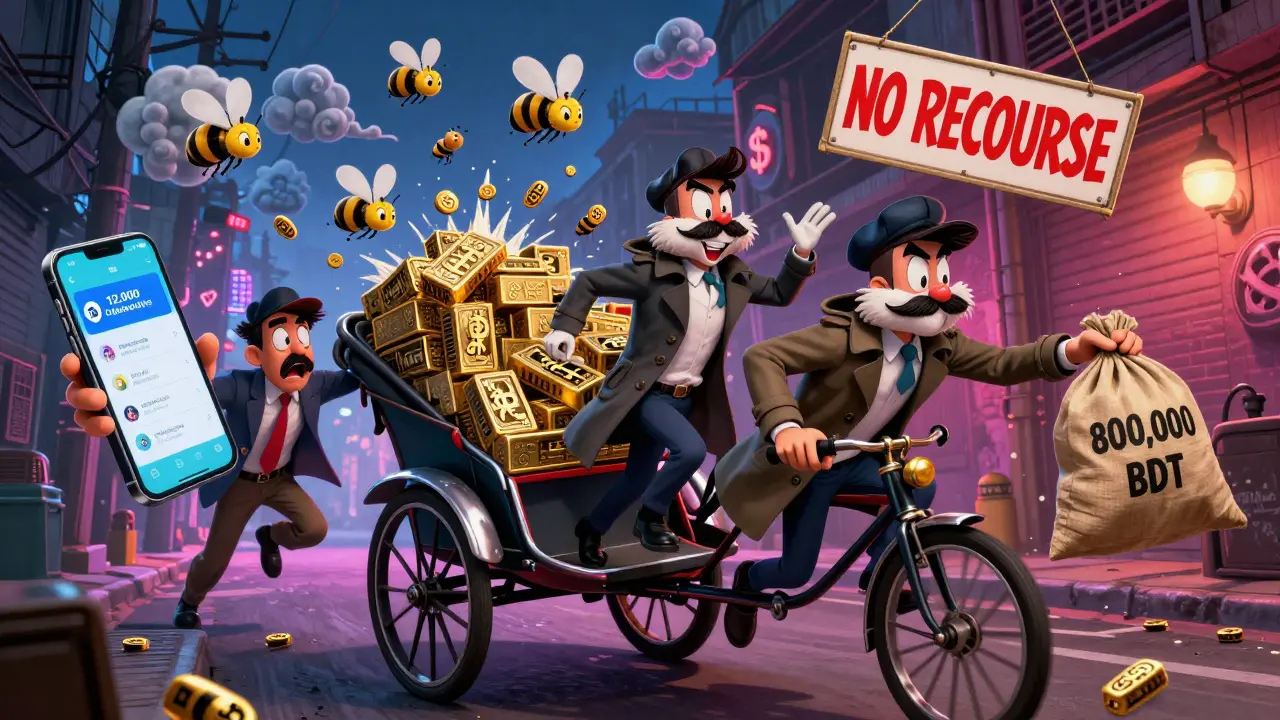
These agents operate without licenses, without oversight, without accountability. There’s no contract. No receipt. No recourse. If the agent runs off with your 500,000 BDT, you can’t file a police report. You can’t sue. You can’t even complain to the bank. The system thrives on trust-and trust gets broken every day. One trader in Rajshahi lost 800,000 BDT after an agent vanished. Another had his payment reversed after a fake USDT transfer. These aren’t rare cases. They’re routine.
And then there’s the credit card route. Some people use their international Visa or Mastercard to buy crypto on Binance or Bybit. Sounds smart? It’s dangerous. Banks in Bangladesh monitor outbound dollar transactions. If you send $1,000 to a crypto exchange, they flag it. You get a call. A visit. A demand for proof. And if you can’t prove it’s for “education” or “travel,” your account gets frozen. Your savings, your salary, your business funds-all locked because of one crypto trade.
Operational Risk: The Underground Is Getting More Dangerous
The 2025 regulatory crackdown didn’t stop crypto trading. It just made it harder-and riskier. Local exchanges lost 30% of users when biometric verification kicked in. That’s not a drop in demand. That’s a mass migration to unregulated spaces. Telegram groups. WhatsApp brokers. Private Discord servers. These aren’t platforms. They’re hunting grounds.
Scams are everywhere. Fake “verified” traders. Fake deposit confirmations. Fake withdrawal links. One Telegram group in Dhaka had over 12,000 members. Within three months, 17 people reported being scammed. No one was arrested. No one was held accountable. The group just got a new admin and kept going.
And then there’s mining. Officially banned. But in Chittagong, warehouses have been quietly rewired with industrial cooling systems. Power bills are paid in cash. No paperwork. No permits. Just noise, heat, and electricity. One operation in Gazipur was raided in late 2024. Eight people arrested. Their computers seized. Their homes searched. The government called it a “terrorist financing probe.” That’s not paranoia. That’s the reality.
Taxation Paradox: Pay Taxes on an Illegal Activity?
Here’s the strangest part: the National Board of Revenue says you must pay income tax on crypto profits. Even though crypto is illegal.
Under the Income Tax Ordinance of 1984, any income-legal or not-is taxable. So if you made 2 million BDT trading Bitcoin, the tax office expects you to declare it. But if you do? You’re admitting to a crime. If you don’t? You’re committing tax evasion. Either way, you’re on the hook. No one has been prosecuted for crypto taxes yet. But that doesn’t mean it won’t happen. And when it does, you’ll be facing double penalties: one for breaking the crypto ban, another for lying to tax authorities.
Comparative Risk: Why Bangladesh Is Worse Than India or Pakistan
India taxes crypto at 30% and takes 1% TDS on every trade. Pakistan lets you buy Bitcoin through licensed exchanges. Both countries have clear rules. Bangladesh has none. Just a ban.
That’s the problem. In India, if you get scammed, you can go to the financial regulator. In Pakistan, if your exchange fails, there’s a recovery process. In Bangladesh? You’re on your own. No consumer protection. No dispute resolution. No insurance. No safety net. You’re not just trading crypto-you’re gambling with your entire financial future.

Technical and Security Risk: No Safe Place to Store Your Crypto
Most Bangladeshi traders use hot wallets. Phone wallets. Easy to access. Easy to hack. Why? Because they can’t use hardware wallets without drawing attention. No one wants to explain why they have a Ledger device in their house.
And if your phone is lost? Stolen? Hacked? Goodbye crypto. No recovery. No customer support. No help from Binance. They won’t reverse a transaction just because you’re from Bangladesh. You’re on your own. And if you use a local agent to hold your crypto for you? That’s worse. They’re not a custodian. They’re a middleman. And middlemen disappear.
Socioeconomic Risk: Your Whole Financial Life Is at Stake
Imagine you’ve been trading crypto for two years. You made money. You paid off your car. You started a small business. Then, one day, your bank calls. “We’ve flagged your account. We need to know about your international transactions.” You explain it’s crypto. They freeze everything. Your salary. Your savings. Your business payments. All gone. For weeks. For months. No access. No explanation.
This isn’t theory. This has happened. And it’s not just about losing crypto. It’s about losing your ability to function in the financial system. No loans. No mortgages. No credit cards. No business accounts. You’re cut off. All because you tried to use a tool the government says doesn’t exist.
And then there’s capital flight. Over $1.2 billion in Bangladeshi Taka flowed to offshore stablecoin platforms in 2025. That’s money leaving the country. Money that could’ve been invested locally. Money that could’ve strengthened the taka. The government blames crypto. But the real issue? People don’t trust the banking system. And crypto, however risky, feels like the only escape.
The Bottom Line: The Risk Isn’t Just Financial-It’s Existential
Crypto trading in Bangladesh isn’t about making money. It’s about survival. Survival in a system that offers no alternatives. But survival here comes with a price: legal exposure, financial loss, social stigma, and total isolation from the formal economy.
There’s no safe way to trade crypto in Bangladesh. Not now. Not in 2026. The ban isn’t going away. The enforcement is getting stronger. The underground is getting more dangerous. And the people who lose money? They have nowhere to turn.
If you’re thinking about starting, ask yourself: Is the potential gain worth losing your bank account? Your freedom? Your future access to credit? For most, the answer is no. For those who still do? They’re not traders. They’re risk-takers. And in Bangladesh, risk-takers don’t get second chances.
Is crypto trading completely illegal in Bangladesh?
Yes. Since 2017, the Bangladesh Bank has banned all cryptocurrency activities, including trading, holding, mining, and transferring crypto. Violations can lead to prosecution under anti-money laundering laws. There are no exceptions, no licensed platforms, and no legal pathways for crypto use.
Can I get arrested for trading Bitcoin in Bangladesh?
Yes. While enforcement isn’t consistent, arrests have occurred. In 2024, eight individuals were arrested for running a crypto mining operation in Gazipur. Others have been detained for using international cards to fund crypto purchases. The law allows prosecution, and authorities are increasingly using bank transaction data and biometric logs to identify offenders.
What happens if I use my credit card to buy crypto?
Your bank will likely flag the transaction as suspicious, especially if it’s a large or recurring transfer to a crypto exchange. You may be contacted for documentation. If you can’t prove the purpose is legal (e.g., travel, education), your account may be frozen. In some cases, the bank reports the activity to the Bangladesh Bank, triggering a formal investigation.
Are local crypto agents safe to use?
No. Local agents operate outside the law and offer zero legal protection. There are no contracts, no verification, and no recourse if they disappear, scam you, or reverse payments. Thousands have lost money this way. While they’re the most common way to trade crypto in Bangladesh, they’re also the riskiest.
Do I have to pay tax on crypto profits in Bangladesh?
Yes. The National Board of Revenue requires income tax on all earnings, including crypto profits, under the 1984 Income Tax Ordinance. But here’s the catch: since crypto trading is illegal, declaring profits means admitting to a crime. This creates a legal trap where you risk prosecution whether you pay taxes or not.
Can I use Binance or KuCoin in Bangladesh?
Yes, you can download and use these apps. But using them is still illegal. The apps remain available because they’re hosted overseas and don’t comply with local regulations. However, using them exposes you to bank monitoring, biometric tracking, and potential legal action. There is no legal protection if you lose funds or get scammed.
What are the risks of using Telegram for crypto trading?
Telegram groups are the most common underground trading platform in Bangladesh. But they’re also the most dangerous. There’s no verification, no dispute system, and no accountability. Scams are rampant. Fake traders, fake deposits, and fake withdrawals are standard. Once you send money, there’s no way to recover it. Thousands have lost savings this way.
Is mining crypto allowed in Bangladesh?
No. Mining is explicitly banned. Grid operators have been instructed to cut power to suspected mining operations. Several underground mining farms have been raided since 2024. Participants face arrest, equipment seizure, and criminal charges under energy and anti-money laundering laws.
Can my bank account be frozen for crypto trading?
Yes. Banks in Bangladesh are required to monitor and report suspicious transactions. If they detect transfers to crypto exchanges or repeated payments to known crypto agents, they can freeze your account. This can affect your salary, savings, and business payments for weeks or months while investigations proceed.
Will Bangladesh ever legalize crypto?
Based on current policy, no. The government has shown no interest in legalizing cryptocurrency. The 2025 regulatory framework added stricter controls, not loosening. Officials continue to cite financial instability, money laundering, and capital flight as reasons to maintain the ban. Experts believe legalization is unlikely before 2030-if ever.
Mae Young
February 22, 2026 AT 05:27Oh, so Bangladesh’s government is the hero here? Protecting the people from... cryptocurrency? How quaint. You know what’s really illegal? The idea that a 1984 tax code can govern 2026 digital finance. The real crime is pretending that banning a technology makes it disappear. It doesn’t. It just drives it underground-where the real predators thrive. And yet, we’re supposed to applaud the state for being "firm"? Please. This isn’t governance. It’s performance art with a side of economic self-sabotage.
Trenton White
February 24, 2026 AT 02:48Interesting how the piece frames crypto as a survival tool. I wonder if the same logic applies to other underground economies-like unlicensed medical clinics or black-market fuel. The desperation is real, but so is the danger. Maybe the answer isn’t legalization, but building trust in the formal system. That’s harder. But it’s the only path that doesn’t end in chaos.
Cheryl Fenner Brown
February 24, 2026 AT 19:54bro. i just used my visa to buy usdt and my bank froze my account 😭. i thought i was being smart. turns out i was just dumb. now i cant pay my rent. also i think the agent i used was a scammer. he vanished. i think he had a cat named bitcoin. idk. just saying. 🐱💸
Michael Teague
February 26, 2026 AT 03:19This whole thing is just dumb. People trade crypto because they’re lazy and want quick money. The government’s just trying to stop them from being idiots. Simple. No need to overthink it.
kati simpson
February 26, 2026 AT 18:09I think the real issue is that people don’t feel safe using banks. If the system worked better, maybe they wouldn’t need crypto. But it doesn’t. So they go elsewhere. That’s not greed. That’s just human nature.
Reggie Fifty
February 28, 2026 AT 11:50Let’s be honest. Bangladesh is just scared because crypto is decentralized. It means people don’t need the state to tell them what to do. That’s a threat. So they ban it. Not because it’s dangerous. Because it’s free. And freedom scares weak governments.
Kristi Emens
February 28, 2026 AT 17:07There’s a quiet dignity in how people adapt. They don’t protest. They don’t march. They just use Telegram. They find agents. They risk everything. And they do it quietly, without fanfare. That’s resilience. Not rebellion. Just survival.
Kaitlyn Clark
March 2, 2026 AT 12:05hey guys i just want to say that if you're trading crypto in bangladesh you're not alone!! i've been there and it's scary but also kinda empowering?? like you're building your own system when the official one fails you. i lost 200k bdt but i learned so much. you got this!! 💪❤️
Michelle Xu
March 3, 2026 AT 13:59The taxation paradox is perhaps the most chilling element of this entire situation. The state demands compliance with a law it refuses to acknowledge. This is not policy-it is bureaucratic absurdity. Citizens are caught in a legal labyrinth where every choice leads to liability. The government is not protecting citizens; it is weaponizing ambiguity.
Ryan Burk
March 4, 2026 AT 00:02lol so the government bans crypto but lets binance apps stay on play store? that’s like banning cars but letting people drive on the highway. what a joke. also who uses telegram for trading? that’s not finance. that’s a cult.
Amanda Markwick
March 5, 2026 AT 15:57I believe there’s hope here. Not because the law will change, but because people are already creating their own systems. They’re building trust networks, sharing warnings, teaching each other how to stay safe. That’s how real change happens-not from the top down, but from the ground up. Keep going. You’re not alone.
Sriharsha Majety
March 7, 2026 AT 14:11in india we pay tax on crypto and its fine. why cant bangladesh just be like that. i mean its not rocket science. just make it legal and tax it. why make people risk jail for a few bucks
Tabitha Davis
March 9, 2026 AT 14:00Oh my god. This is the most dramatic thing I’ve read all week. Let me get this straight-people are risking arrest, jail, and frozen bank accounts… to buy Bitcoin? Honey. You could’ve just won the lottery. Or gotten a second job. Or moved to a country that doesn’t treat you like a criminal. This isn’t bravery. It’s a cry for help wrapped in a crypto hoodie.
Vishakha Singh
March 10, 2026 AT 17:39As someone from India, I see how difficult this situation is. But I also see the courage of those who continue. They are not just traders-they are pioneers. The world will not always be this way. The system will change. And those who endured will be remembered as the ones who kept faith when everything was against them.
Don B.
March 12, 2026 AT 15:26Wow. So the government is evil. And the people are poor victims. And the crypto is just… innocent? Come on. People are getting scammed left and right. They’re not heroes. They’re suckers. And the ones who profit? The agents? The Telegram admins? Those are the real villains. Not the state. The state is just cleaning up the mess.
Andrew Hadder
March 12, 2026 AT 21:18i think the bank freezing accounts is the worst part. not the jail. not the fine. just… being cut off. like you’re not even a person anymore. just a transaction. that’s scary.
Neeti Sharma
March 13, 2026 AT 06:17bangladesh is not a failed state. it is a country that refuses to be fooled. crypto is a western scam. they want our money. our youth. our future. we must protect our economy. this is not about fear. this is about pride.
Robert Kromberg
March 13, 2026 AT 09:01I think we need to stop seeing this as a battle between government and citizens. It’s a failure of institutions. The banks are broken. The tax system is outdated. The legal framework is frozen in time. Crypto isn’t the problem. It’s the symptom. Fix the system, and people won’t need to risk everything just to survive.
Daisy Boliaan
March 13, 2026 AT 22:34you know what’s wild? the fact that people are still doing this. like… in 2026? with all the news? with all the arrests? with all the bank freezes? they still do it. why? because they’re not just trading crypto. they’re trading hope. and hope? hope doesn’t need permission.
Nicki Casey
March 14, 2026 AT 15:29Let’s not pretend this is about money. This is about control. The government doesn’t fear Bitcoin. It fears what Bitcoin represents: autonomy. A world where you don’t need a passport to move your wealth. A world where your bank can’t freeze your life. That’s why they’re escalating. Not because crypto is dangerous. Because it’s free. And freedom is the only thing they can’t control.
Jessica Carvajal montiel
March 15, 2026 AT 04:00Did you know that in 2025, the Bangladesh Bank started using AI to flag crypto-linked transactions? They’re cross-referencing phone numbers, IP addresses, even facial recognition from agent meetings. This isn’t about law anymore. It’s surveillance. And if you’re using Telegram? You’re already in their database. You just don’t know it yet.
Mae Young
March 16, 2026 AT 13:29And yet, the irony? The very people who enforce this ban are the ones who use crypto in private. The officials. The bankers. The judges. They have wallets. They have private keys. They just don’t want you to.