Cryptocurrency Adoption: Real-World Use Cases, Barriers, and Where It's Actually Growing
When we talk about cryptocurrency adoption, the process of individuals and businesses using digital currencies for real transactions instead of just speculation. It's not about how many coins are minted—it's about how many people actually use them to pay for coffee, send money home, or trade without banks. Most people think adoption means Bitcoin hitting $100K, but that’s not it. Adoption happens when someone in Nigeria uses crypto to bypass slow bank transfers, when a gamer in Brazil earns tokens playing a blockchain game, or when a small business in India accepts USDR as payment—even if it’s shaky.
Real crypto regulation, government rules that either enable or block crypto use by exchanges, banks, and users is the biggest gatekeeper. Australia doesn’t ban privacy coins like Monero outright, but it forces exchanges to drop them because of strict anti-money-laundering rules. Taiwan blocks banks from dealing with crypto firms unless they register. Iran? Traders use VPNs to access exchanges, but detection tools are getting smarter. These aren’t theoretical issues—they’re daily realities that shape who can use crypto and how.
And then there’s crypto exchanges, platforms where people buy, sell, and trade digital assets. Not all of them are equal. Bitget works for active traders with copy trading and low fees, but has limited fiat options. RDAX.io offers crazy low fees but hides its regulatory status—big red flag. Meanwhile, exchanges like those supporting UPI in India or Pix in Brazil are built for real people, not just speculators. These platforms aren’t just tools—they’re the actual highways where adoption happens.
What you’ll find below isn’t a list of hype coins or fake airdrops. It’s a collection of real stories: the crypto projects that died because no one used them (Carboncoin, LakeViewMeta), the exchanges that work for specific countries (India, Brazil, Iran), the wallets that actually keep your money safe (multi-sig), and the stablecoins that tried to be real but failed (USDR). We don’t sugarcoat it. If a project has zero trading volume and no community, we say so. If an exchange has no transparency, we call it out. This isn’t about selling you the dream—it’s about showing you what’s actually working, where, and why.
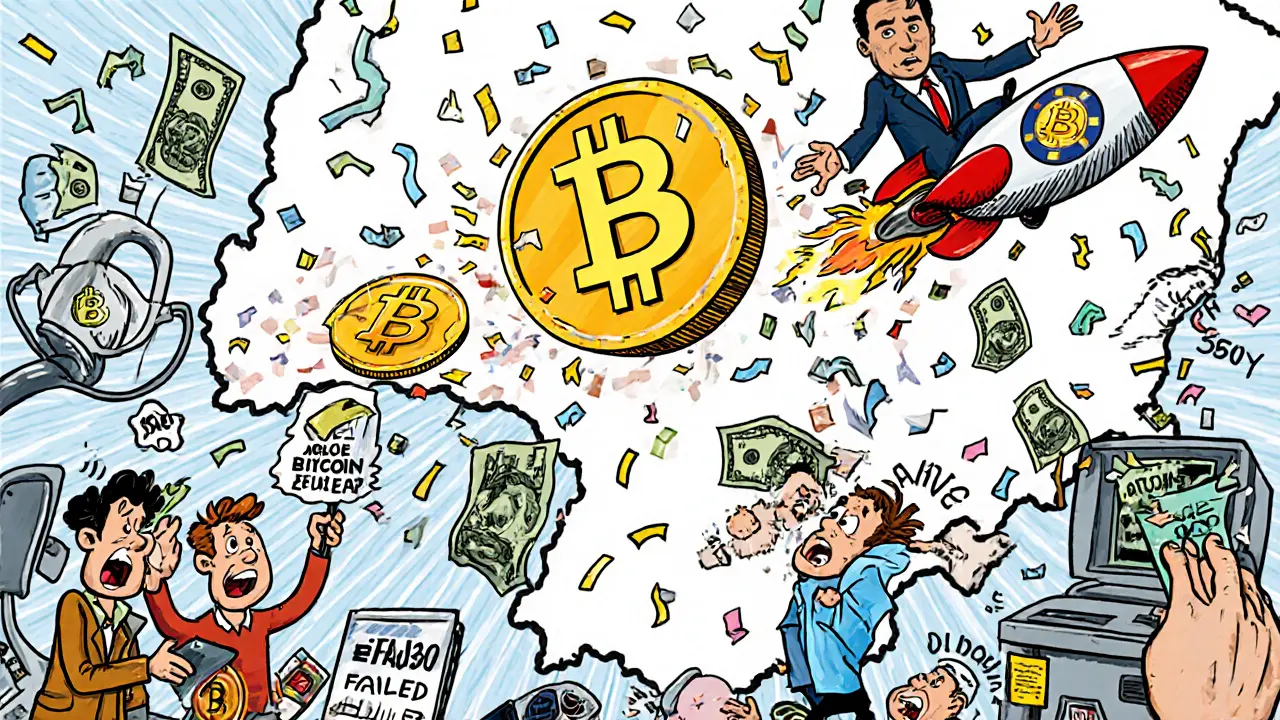
How El Salvador Uses Bitcoin for Its National Economy - And Why It’s Struggling
El Salvador made Bitcoin legal tender in 2021 to boost remittances and financial inclusion. Three years later, most citizens don’t use it. The experiment failed to transform the economy, faced IMF pressure, and left behind a costly lesson in crypto ambition.