DeFi Compliance: What It Really Means for Users and Projects
When you interact with a DeFi protocol, you're not just swapping tokens—you're navigating a web of DeFi compliance, the set of legal and operational rules that govern decentralized finance platforms to prevent fraud, money laundering, and illicit activity. Also known as crypto regulatory adherence, it’s no longer optional. Whether you're using a DEX, lending your stablecoins, or joining a yield farm, compliance rules are silently shaping what you can do, where you can do it, and who can even access the system.
These rules don’t exist in a vacuum. They’re driven by AML crypto, anti-money laundering requirements that force DeFi platforms to track and report suspicious transactions. This is why exchanges like Bitget and CEX.IO now require ID verification, and why platforms like Xave Finance avoid USD middlemen—to stay under the radar of traditional financial oversight. Meanwhile, KYC DeFi, the process of verifying user identities on decentralized platforms, is becoming a hidden gatekeeper. In Singapore, MAS demands strict KYC for any crypto business. In the UAE, VARA licenses tie directly to user verification systems. Even in places like Switzerland, where crypto is welcome, compliance isn’t ignored—it’s built into the system.
It’s not just about legal paperwork. Crypto regulation, the broader legal framework that defines what crypto activities are allowed or banned, is changing fast. Australia blocks privacy coins like Monero because they can’t be traced. China’s Alipay and WeChat Pay shut down crypto-linked payments before they even start. Kazakhstan limits electricity for miners because power theft is rampant. These aren’t isolated cases—they’re part of a global shift. DeFi compliance now means adapting to local laws, not just global ideals. If you’re using a DEX, staking on a Layer-2, or trading stablecoins, you’re already under scrutiny—even if you don’t see it.
And the consequences are real. Algeria bans crypto entirely—with prison time for violators. Afghanistan’s Taliban outlaw Bitcoin, yet people still use it underground. When compliance turns into prohibition, users don’t disappear—they adapt, often at risk. The projects that survive aren’t the ones with the flashiest tokenomics—they’re the ones that understand the legal landscape. That’s why you’ll find posts here about Singapore’s MAS rules, UAE licensing, and how Alipay enforces China’s ban. You’ll also see how privacy coins are quietly removed from exchanges, why some airdrops are scams disguised as compliance, and how zero-circulating supply tokens like ANDX and CARBON are red flags not just for investors, but for regulators too.
DeFi compliance isn’t about stopping innovation. It’s about survival. Whether you’re a trader, a developer, or just someone trying to use crypto without getting flagged, understanding these rules isn’t optional—it’s your first line of defense. Below, you’ll find real cases, real rules, and real consequences. No theory. No fluff. Just what’s actually happening on the ground.
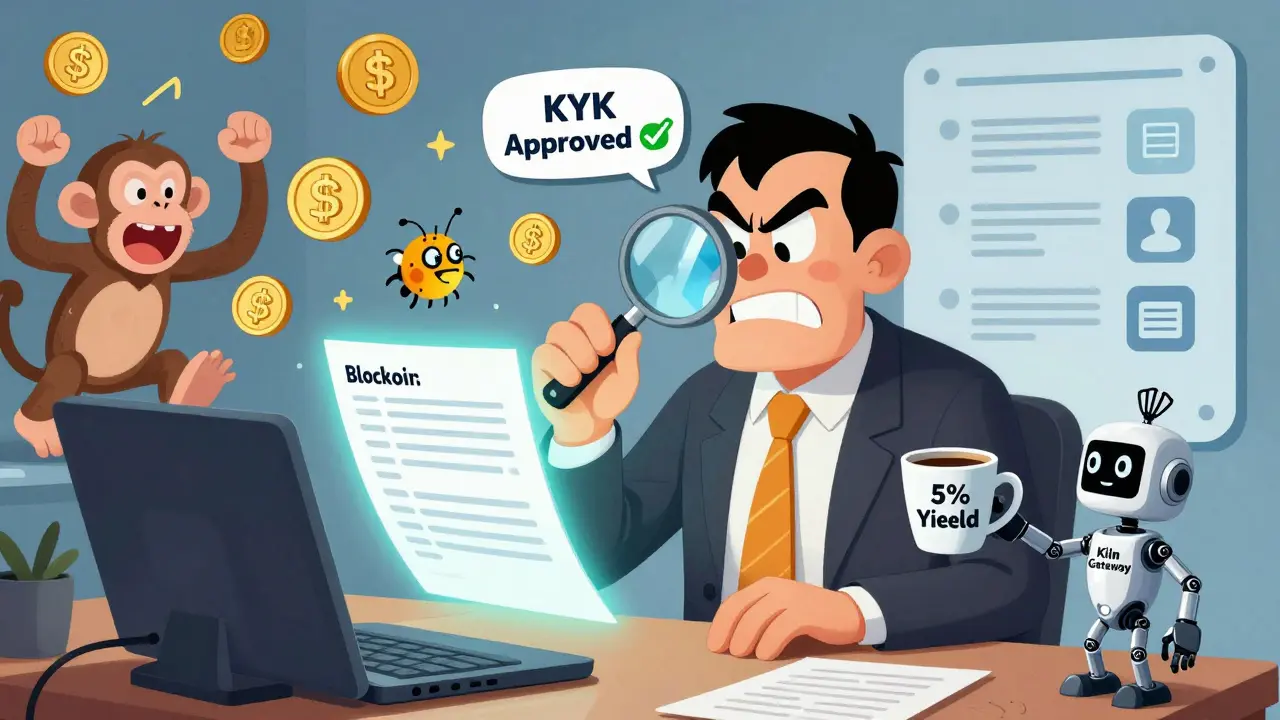
Institutional DeFi Participation: How Banks and Asset Managers Are Entering Decentralized Finance
Institutional DeFi lets banks and asset managers access DeFi yields under regulatory compliance. Learn how tokenized assets, permissioned access, and enterprise gateways are driving $1.2 trillion in adoption by 2027.