What is Social Swap Token (SST)? A Realistic Guide to the Tron-Based Micro-Cap
 Jun, 29 2026
You’ve probably stumbled across Social Swap Token while scrolling through a list of obscure altcoins or digging into the depths of decentralized finance on the Tron blockchain. The ticker is SST, and it promises community-driven trading, governance rights, and access to exclusive events. But here is the hard truth: SST is not your average blue-chip cryptocurrency. It is a micro-cap asset with extremely low liquidity, confusing supply data, and a price that has dropped more than 99% from its historical highs. If you are wondering whether this token is a hidden gem or a risky experiment, you need to look past the marketing buzzwords and examine the actual mechanics, risks, and current state of the ecosystem.
Key Takeaways
- SST is a utility and governance token for the Socialswap DEX aggregator, primarily operating on the Tron blockchain.
- Liquidity is critically low: Daily trading volumes often range between $0 and $700 USD, making large trades impossible without severe slippage.
- Price history shows massive drawdowns: SST has fallen over 99% from its all-time high, currently trading in the sub-cent range (approx. $0.00017 - $0.00045).
- Data inconsistencies exist: Conflicting reports on circulating supply (some sources say 0, others ~342 million) and chain compatibility require careful verification before interaction.
- High-risk profile: Suitable only for experienced DeFi users comfortable with micro-caps; not recommended for conservative investors.
What Exactly Is Social Swap Token (SST)?
To understand SST, you first have to understand the platform behind it. Socialswap is a decentralized exchange (DEX) and token swap aggregator built on the Tron network. Unlike Ethereum-based DEXs like Uniswap, which dominate headlines, Socialswap focuses on the Tron ecosystem. Its main goal is to route trades through the most efficient paths to minimize fees and maximize speed. In this setup, SST serves as the native fuel. It is not just a speculative coin; it is designed to be a utility token that powers specific functions within the platform.
The core use cases for SST fall into three categories: governance, staking, and community access. As a governance token, holders can vote on proposals that shape the future of the Socialswap platform. This includes decisions on new features, fee structures, and partnership integrations. Second, SST enables staking. Users can lock their tokens in solo pools or community pools to earn yield. This mechanism helps secure the network and provides liquidity to the exchange. Finally, SST acts as a membership pass. The project emphasizes social interaction, organizing physical meetups globally. Holding SST grants access to these exclusive events and content, blending digital finance with real-world community building.
The Technical Reality: Tron vs. Ethereum Confusion
One of the biggest red flags for new researchers is the conflicting technical data surrounding SST. Most major platforms-including Coinbase, Binance, Yahoo Finance, and CoinMarketCap-identify SST as a Tron20-standard token. They provide a specific contract address on the Tron blockchain: TBLQs7LqUYAgzYirNtaiX3ixnCKnhrVVCe. If you want to buy or stake SST, you will need a Tron-compatible wallet (like TronLink) and some TRX to pay for transaction fees.
However, some lesser-known trackers, such as CoinPaprika, describe an SST running on the Ethereum blockchain using Proof-of-Stake consensus. This discrepancy is dangerous. In the crypto world, tickers are not unique identifiers. There could be multiple tokens using the "SST" symbol on different chains. Based on the weight of evidence from top-tier exchanges and the project’s own documentation, the primary, actively traded SST is the one on Tron. Always double-check the contract address before sending funds. Sending ETH to a Tron address, or vice versa, will result in permanent loss of assets.

Tokenomics and Supply Mysteries
Understanding the supply dynamics of SST is crucial because it directly impacts potential price movements. Here is where things get murky. Different data aggregators report wildly different figures for circulating supply.
| Source | Total Supply | Circulating Supply | Notes |
|---|---|---|---|
| CoinMarketCap | ~989.88 Million | ~342.52 Million | Self-reported by project; implies ~34.6% circulation. |
| Yahoo Finance / Bitget | 989,889,641 | 0 | Listed as 0 circulation; market cap calculated via FDV. |
| MetaTracker | 990,000,000 | 0 | FDV based on total supply; no active circulation data. |
| LiveCoinWatch | Non-mineable | Unknown | Market cap listed as "-" due to missing circulation data. |
This inconsistency matters. If the circulating supply is truly zero, as some trackers suggest, then there is no active market for the token, and any price quoted is theoretical. If CoinMarketCap’s figure of 342 million is correct, there is at least some token in play. However, even with that supply, the fully diluted valuation (FDV) remains microscopic. At a price of roughly $0.0002, the entire market value of SST is less than half a million dollars. This makes it highly susceptible to manipulation and extreme volatility.
Price Performance and Liquidity Risks
Let’s talk numbers. SST is not performing well. In fact, it is down significantly from its peak. Historical data shows an all-time high (ATH) ranging from $0.12 to $0.46, depending on the tracker and the specific exchange window captured. The most commonly cited ATH is around $0.12 in June 2022. As of mid-2026, SST trades between $0.00017 and $0.00045. That represents a decline of over 99%. For context, if you bought SST at its peak, you would have lost virtually all your capital.
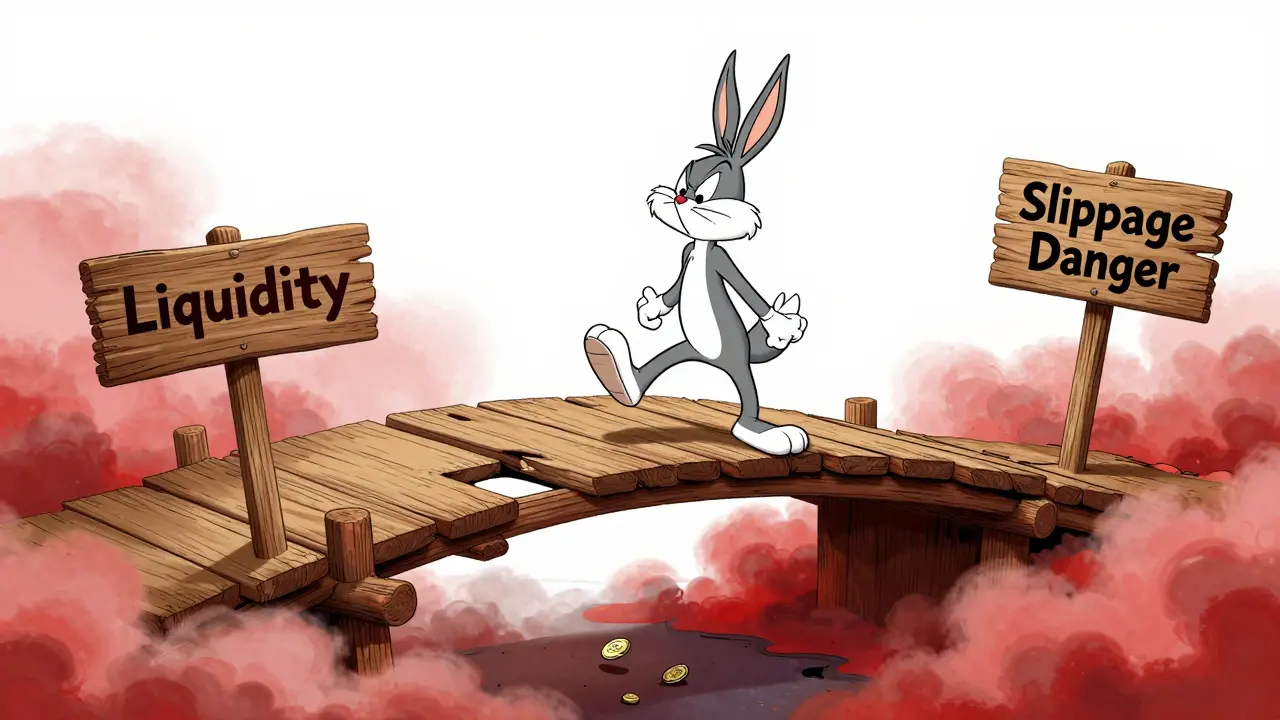
But price is only half the story. Liquidity is the other half-and for SST, it is dangerously thin. Daily trading volumes on centralized exchanges like ProBit Global often hover between $20 and $700. On many days, volume hits $0. What does this mean for you? It means if you try to sell a significant amount of SST, you might not find enough buyers. Your sale could crash the price further, resulting in severe slippage. You might intend to sell $100 worth of tokens but only receive $40 because the order book is empty. This is a classic characteristic of micro-cap cryptocurrencies.
How to Buy and Store SST (Step-by-Step)
If you still decide to proceed, here is the practical workflow. Note that SST is not listed on major centralized exchanges like Binance or Coinbase for direct spot trading. You must use a decentralized approach.
- Acquire TRX: Buy Tron (TRX) on a reputable centralized exchange like Binance, Kraken, or Coinbase. TRX is needed to pay for gas fees on the Tron network.
- Set Up a Tron Wallet: Download a Tron-compatible wallet such as TronLink or Trust Wallet. Secure your seed phrase offline. Never share it.
- Transfer TRX: Send your TRX from the exchange to your personal wallet address.
- Connect to a DEX: Navigate to the Socialswap DEX interface or another Tron-based aggregator that supports SST.
- Import the Contract Address: Since SST may not appear in default token lists, manually paste the official Tron contract address (
TBLQs7LqUYAgzYirNtaiX3ixnCKnhrVVCe) to ensure you are interacting with the correct token. - Swap: Exchange your TRX for SST. Be aware of the spread and slippage tolerance settings.
Risks and Viability Assessment
Is SST a good investment? The answer depends entirely on your risk tolerance. For conservative investors, the answer is a hard no. The token lacks institutional interest, has negligible liquidity, and suffers from data transparency issues. The absence of mainstream analyst coverage or academic research further isolates it from broader market trends.
For high-risk speculators, SST represents a lottery ticket. The argument for upside relies on two factors: a resurgence in the Tron ecosystem and successful execution of Socialswap’s community-building initiatives. If the project manages to increase adoption, improve liquidity, and differentiate itself from larger DEXs, the low base price could theoretically allow for percentage gains. However, "theoretical" is doing a lot of heavy lifting here. The fact that StakingRewards still lists active pools as of June 2026 suggests the project is not dead, but it is certainly dormant in terms of growth.
Regulatory risks also loom. As a DeFi token offering staking rewards and governance rights, SST falls under scrutiny in many jurisdictions. While no enforcement actions have been taken against SST specifically, the broader regulatory environment for DeFi remains uncertain. Changes in law could impact the legality of staking or swapping activities in your country.
Conclusion: Proceed with Extreme Caution
Social Swap Token (SST) is a niche asset with a clear utility within the Tron ecosystem but poor market performance. It serves as a governance and staking tool for the Socialswap DEX, aiming to blend finance with social community events. However, the reality on the ground is stark: near-zero liquidity, massive price declines, and confusing supply data. Before allocating any funds, verify the contract address, understand the slippage risks, and never invest more than you can afford to lose completely. In the world of crypto, visibility equals viability, and SST currently operates in the shadows.
Is Social Swap Token (SST) available on Binance?
No, SST is not listed for direct spot trading on the main Binance exchange. To acquire SST, you must buy TRX on Binance and transfer it to a Tron-compatible wallet, then swap for SST on a decentralized exchange like Socialswap.
What blockchain is SST built on?
The primary and most widely tracked version of SST is built on the Tron blockchain as a Tron20 token. While some minor trackers mention an Ethereum version, the active ecosystem and exchange listings focus on the Tron-based contract.
Why is the circulating supply of SST reported as 0?
Some data aggregators report 0 circulating supply because they cannot verify active on-chain transfers or rely solely on fully diluted valuation models. Other sources, like CoinMarketCap, report a self-supplied figure of ~342 million. This discrepancy highlights the lack of transparent, verified circulation data for the token.
Can I stake SST to earn rewards?
Yes, SST supports staking in solo and community pools within the Socialswap ecosystem. Platforms like StakingRewards list active staking opportunities, allowing holders to earn yield. However, given the token's low liquidity, withdrawing rewards may be difficult.
What is the all-time high price of SST?
Reports vary, but the most commonly cited all-time high is approximately $0.12, reached in June 2022. Some trackers list higher peaks up to $0.46, likely due to anomalies on smaller exchanges. Currently, SST trades at less than 1% of these historical values.
Daniel J. Cox
July 1, 2026 AT 03:29Man, reading about this SST token feels like watching a train wreck in slow motion. It’s wild how people still fall for these micro-cap Tron gems when the liquidity is basically non-existent. I remember back in the day we had actual utility tokens that didn’t require you to manually paste contract addresses just to buy $10 worth of dust. Anyway, good luck to anyone trying to exit their position without getting rekt by slippage. :P
Emma Rémond
July 1, 2026 AT 17:09It is truly disheartening to witness the sheer lack of due diligence exhibited by the average retail participant in this space. The concept of a 'governance' token with zero meaningful voting power and negligible on-chain activity is an oxymoron wrapped in a financial disaster. One must question the intellectual capacity of those who continue to allocate capital to such fundamentally broken instruments. The discrepancy in supply data alone should serve as a glaring red flag for any sophisticated investor.
ELNORA JEFFERSON
July 3, 2026 AT 08:25ugh another one of these dead projects pretending to be alive because someone left a staking pool running. it’s pathetic really. nobody cares about your exclusive meetups when the price is down 99 percent. stop wasting our time with these realistic guides to garbage.
Carol @minaszilda
July 3, 2026 AT 23:36I think it is important to look at the community aspect though. Even if the financials are weak, maybe the social element has value for some people. Just be careful and don't put in money you need for rent. Stay safe everyone.
Trent Erman1
July 5, 2026 AT 22:14Hey guys! 👋 Great article breaking down the risks here. It’s super important to know that TronLink is essential for this stuff. Don’t forget to secure your seed phrase offline! 🔒 If you’re diving into DeFi, knowledge is power. Keep learning and stay bullish on security! 🚀💪
Fiona Ellis
July 6, 2026 AT 13:51You really shouldn’t be giving advice on wallet security without mentioning hardware wallets specifically. It’s irresponsible to suggest software wallets for anything other than tiny amounts. Also, why are you using so many emojis? It makes your point less credible. 🙄
Trent Erman1
July 8, 2026 AT 04:47No worries Fiona! 😊 Hardware wallets are definitely the gold standard for large holdings. I was just keeping it simple for beginners. Thanks for adding that context! 🙌
Nicole Woessner
July 9, 2026 AT 20:38i feel like the confusion between the eth and tron versions is the real killer here. people send funds to the wrong chain all the time and then blame the project. it’s just messy and i hate seeing people lose money over basic errors like that.
Sajjad Ghorbani Moghaddam
July 10, 2026 AT 05:07Yeah, checking the contract address is step one. Always verify before you swap. It’s easy to get tricked by fake tokens with similar names. Stay sharp out there.
Scott Miller
July 10, 2026 AT 06:25LISTEN UP! This token is a trap! A total scam designed to bleed dry the ignorant masses! You want to make money? Get out of these micro-caps NOW! Buy Bitcoin or go home! Stop being sheep and start thinking for yourselves! WAKE UP!
nancy jarecki
July 12, 2026 AT 01:36The inefficiency of the current market structure regarding low-cap assets is appalling. The fact that aggregators list tokens with zero volume is a failure of oversight. I find it tedious to even read about these failed experiments. The jargon of 'community-driven' is merely a veil for unregulated speculation.
Robert Hundley
July 12, 2026 AT 18:31Yo Scott, chill out man. Not everything is a scam, sometimes projects just fail to gain traction. But yeah, definitely high risk. Let’s keep it civil and help each other learn. :) Peace!
Melissa L
July 14, 2026 AT 13:49honestly i dont get why ppl bother with tron based dexes anymore. its always such a mess with fees and gas. plus the ui is usually terrible. just stick to eth or solana imo. easier for my brain.
Routh Middaugh
July 16, 2026 AT 08:11I suppose there is merit in both arguments; however, one must consider the specific use case. Tron offers speed, albeit with different UX challenges. It is not black and white, really. We should remain open to different ecosystems while acknowledging their respective flaws. Isn't that right?
ross harris
July 17, 2026 AT 16:42This whole setup is a beautiful little cage for the gullible. The 'social' aspect is just a shiny lure dangling in front of a shark tank. They feed on your hope while the devs drain the liquidity pool like vampires sucking blood from a corpse. Deliciously tragic, really.
Carl Belgrave
July 19, 2026 AT 16:34Typical foreign tech nonsense. Why do we let these overseas projects operate without proper oversight? It’s a disgrace to American investors. We need strict regulations to protect our citizens from this digital trash. Support local, secure networks only!
Carl Hanzel
July 19, 2026 AT 23:11You’re all missing the point. The token isn’t failing because of bad tech; it’s failing because the market hates innovation. The early adopters were too smart for this crowd. Now you cry about losses while sitting on the sidelines. Pathetic.
John Curry
July 20, 2026 AT 21:52There is a profound sadness in the life cycle of these micro-caps. They are born with promise, nurtured by hype, and then abandoned to the void. It reflects a deeper existential crisis in the crypto space. We chase novelty until it becomes obsolete, then mourn what never truly existed. How fleeting it all is.
Jon Milton
July 21, 2026 AT 04:12Look, I’ve been around since the ICO days. Some of these projects die, sure. But others pivot. The key is diversification. Don’t put all your eggs in one basket, especially not a basket with holes in it. Stay friendly, stay informed, and watch your six.
Rebecca Shoniker
July 21, 2026 AT 13:39The regulatory implications are severe! Failure to comply with evolving securities laws will result in catastrophic outcomes for holders. The ambiguity surrounding governance rights is a legal minefield. Proceed with extreme caution; the liability exposure is significant.