Smart Wallet: What It Is, How It Works, and Why It Matters for Crypto Security
When you hold crypto, a smart wallet, a digital wallet that uses programmable logic to enforce rules like multi-signature approval, time locks, or access controls. Also known as programmable wallet, it doesn't just store your coins—it protects them with built-in logic that stops unauthorized moves. Unlike a basic wallet that lets anyone with the private key spend everything in one click, a smart wallet can require two people to sign off, delay transactions by 24 hours, or even block transfers to known scam addresses. This isn't sci-fi—it's what institutions, DAOs, and serious holders use to avoid hacks and internal theft.
Smart wallets relate directly to multi-signature wallets, a type of smart wallet that requires multiple private keys to authorize a transaction. Also known as multi-sig wallet, it’s the foundation of security for teams managing shared funds. You see this in the BNC airdrop by Bifrost, where teams used multi-sig setups to distribute tokens safely. It’s also why the OwlDAO airdrop required users to connect wallets with strong security practices—because if your wallet can be drained with one click, you’re already at risk. Then there’s decentralized identity, a system that lets you prove ownership of your wallet without handing over personal data to third parties. Also known as self-sovereign identity, it ties your wallet to your digital persona without needing an email, phone number, or KYC form. That’s critical when exchanges like Bitget or CEX.IO require identity verification but you still want to keep your financial life private. Smart wallets can integrate with decentralized identity to let you prove you’re you—without revealing who you are.
These aren’t just features—they’re survival tools. In places like Algeria and China, where crypto is banned, people still move value using wallets they control. In Kazakhstan, where power is rationed, miners rely on secure wallets to protect earnings from theft. Even when airdrops like TOPGOAL’s or Ancient Kingdom’s fail, the wallets people used to claim tokens stayed safe—if they were smart wallets. The difference between losing everything and keeping your assets often comes down to whether your wallet has rules, or just a key.
What you’ll find below isn’t a list of product reviews—it’s a real-world look at how smart wallets shape security, access, and control in crypto. From multi-sig setups used by DAOs to how privacy coins interact with wallet restrictions, these posts show you what works, what fails, and why the right wallet choice can mean the difference between holding value and losing it all.
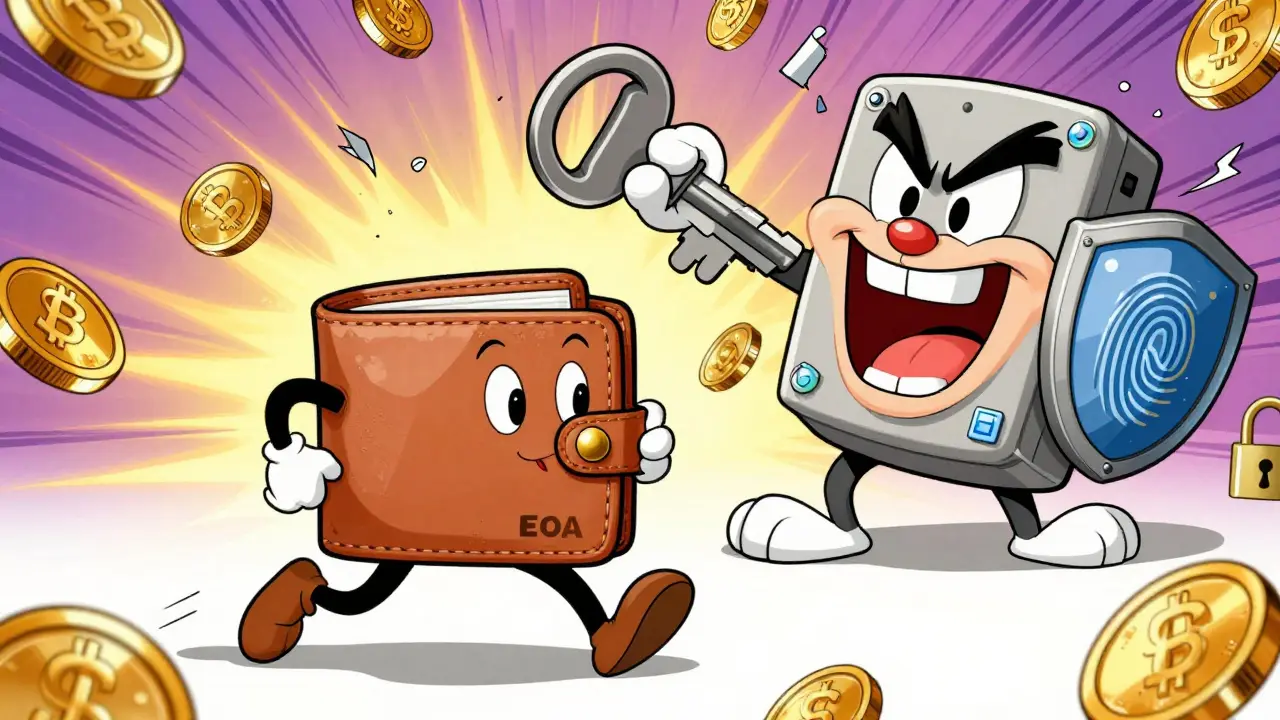
Benefits of Account Abstraction for Smarter, Safer Crypto Wallets
Account abstraction makes crypto wallets smarter, safer, and easier to use by replacing fragile private keys with programmable smart contracts. Learn how it enables social recovery, gas sponsorship, and cross-chain control - and why it’s the key to mass adoption.